
Early Life and Entry into Professional Cycling
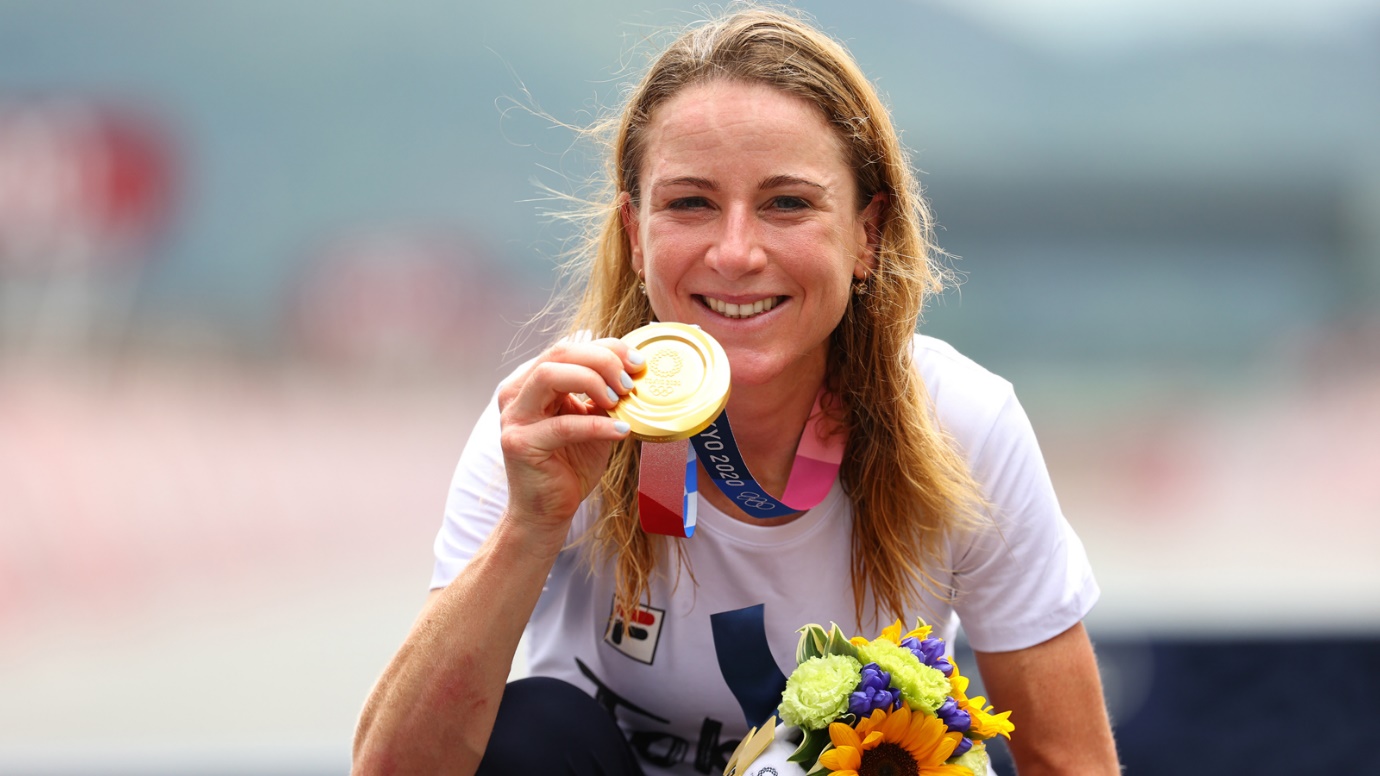
Annemiek van Vleuten is a Dutch professional road cyclist who has been a dominant force in the sport for several years. She was born on October 8, 1982, in Vleuten, a town in the Dutch province of Utrecht (Mulder, 2021). Van Vleuten comes from a cycling family, and her father was a professional cyclist (Barrero et al., 2020). She started cycling at a young age and quickly showed promise (Mulder, 2021).
Van Vleuten debuted as a professional cyclist in 2008, riding for the Dutch team Vrienden van het Platteland (Schneider, 2020). However, she struggled with injuries and illness in her early career, which impacted her performance. After recovering from her surgery, Van Vleuten made a comeback. She won her first national road race championship in 2014 (Schneider, 2020). She also won the women’s time trial at the European Road Championships in the same year.
Career Setbacks, Injuries, and Recovery
Van Vleuten’s biggest misfortune occurred in the women’s road race at the 2016 Rio Olympics, where she crashed on the descent of the Vista Chinesa climb while leading the race (Fairley et al., 2018). Despite her injuries, she returned to cycling and won the individual time trial at the 2019 Road World Championships (Valenzuela et al., 2022). The crash was severe, and she suffered three spinal fractures and a severe concussion.
Major Achievements and Competitive Strengths
Van Vleuten is known for her exceptional performance in time trials and climbing. She has won several races, including the Giro Rosa, La Course, and the Strade Bianche. Van Vleuten is a member of the professional women’s cycling team Movistar Team Women, which she joined in 2021 (Ryder et al., 2021). In addition to her successes in cycling, Van Vleuten has advocated for women’s cycling and has spoken out about the gender inequality in the sport (Lucas, 2019). She has called for equal prize money and opportunities for women in cycling and has been an outspoken critic of the lack of media coverage for women’s races.
Personal Reflection on Inspiration and Resilience
I love road cycling and watched the beginning of the men’s 2022 Tour de France in Copenhagen, Denmark, last summer. Unfortunately, I was not there physically to watch the Tour de France Femmes, as I live in a different country, but I became very interested in the event. I have been following Annemiek van Vleuten on social media since her Victory in the Tour de France femmes.
Annemiek van Vleuten’s story is interesting because of her perseverance and resilience in adversity (Schneider, 2020). Additionally, her recovery from a severe injury at the 2016 Rio Olympics and subsequent triumphs is a testament to her mental and physical strength (van Erp et al., 2021). Van Vleuten’s advocacy for women’s cycling and gender equality is also noteworthy, as it is an issue that affects many sports and industries.
Annemiek van Vleuten has faced several personal troubles and challenges throughout her career. One of the most significant incidents occurred during the road race at the 2016 Rio Olympics, where she suffered a serious injury after a crash (van Erp et al., 2021). During the race, Van Vleuten was in the lead and had a substantial advantage over her competitors when she crashed on a steep descent(Malchrowicz-Mośko et al., 2019). She sustained a fractured spine and a severe concussion and was immediately rushed to the hospital. The injuries she sustained were severe enough to keep her out of competition for several months (Muros et al., 2019). The incident was challenging for Van Vleuten as she had been in excellent form leading up to the race and was a strong medal contender.
After the accident, Van Vleuten struggled with the emotional aftermath of the crash. She later described the experience as a “nightmare,” and it took a toll on her mental health. However, she remained determined and worked hard to make a successful comeback (van Erp et al., 2021). Additionally, Van Vleuten faced other challenges earlier in her career, including an illness that forced her to take a break from competition for several months.
References
Barrero, A., Le Cunuder, A., Carrault, G., Carré, F., Schnell, F., & Le Douairon Lahaye, S. (2020). Modeling stress-recovery status through heart rate changes along a cycling grand tour. Frontiers in Neuroscience, 14(6), 576308.
Fairley, S., Gibson, H., & Lamont, M. (2018). Temporal manifestations of nostalgia: Le Tour de France. Annals of Tourism Research, 70(6), 120-130.
Lucas, S. (2019). The Red Zinger/Coors Classic bicycle race: Commemorations and re-cycled narratives. Sport History Review, 50(2), 173-186.
Malchrowicz-Mośko, E., Młodzik, M., León-Guereño, P., & Adamczewska, K. (2019). Male and female motivations for participating in a mass cycling race for amateurs. The skoda bike challenge case study. Sustainability, 11(23), 6635.
Mulder, E. (2021). Unexpected movements as meaningful expression in play: Strange twists of the body. In Play, Philosophy and Performance (pp. 173-187). Routledge.
Muros, J. J., Sánchez-Muñoz, C., Hoyos, J., & Zabala, M. (2019). Nutritional intake and body composition changes in a UCI World Tour cycling team during the Tour of Spain. European journal of sport science, 19(1), 86-94.
Ryder, S., McLachlan, F., & McDonald, B. (2021). Riding in a Man’s World: Gendered Struggles in Professional Women’s Road Cycling. In The professionalisation of women’s sport (pp. 175-191). Emerald Publishing Limited.
Schneider, A. J. (2020). Cultural nuances: doping, cycling and the tour de France. In Doping in Sport (pp. 36-50). Routledge.
Valenzuela, P. L., Mateo-March, M., Zabala, M., Muriel, X., Lucia, A., Barranco-Gil, D., & Pallarés, J. G. (2022). Ambient temperature and field-based cycling performance: insights from male and female professional cyclists. International Journal of Sports Physiology and Performance, 17(7), 1025-1029.
van Erp, T., Kittel, M., & Lamberts, R. P. (2021). Demands of the Tour de France: a case study of a world-class sprinter (part I). International Journal of Sports Physiology and Performance, 16(9), 1363-1370.