
Introduction
Implementing digital strategies is one of the most effective methods to enhance brand equity and meaningfully engage with customers. This approach generally encompasses various techniques, ranging from digital advertisements in notable journals to social media interactions with clients. Nevertheless, brands must adopt these strategies to remain competitive in the contemporary market, where customer demands are constantly increasing (Gomez, 2022). The current chapter thoroughly examines Cartier’s digital perspectives, showing how the three types of online engagement significantly increase brand value.
Promotion Types
Paid
The first type of digital perspective concerns paid promotion, meaning that the brand must invest additional funds into the advertisement. This method is highly relevant for attracting new customers who might be familiar with the digital platform but not the brand itself. Moreover, this approach is mutually beneficial when both stakeholders have large client bases.
Cartier’s advertisement in relevant journals, such as Vogue, is one of the most notable examples of this type. For instance, Vogue Business features a wide range of articles and promotions related to Cartier. Moreover, all of the mentions are highly positive, explaining the latest trends in jewelry and Cartier’s success as the leading company in the industry (Vogue Business, 2022). Evidently, Vogue also benefits from this cooperation, turning it into a mutually profitable relationship.
Owned
The second type concerns owned digital platforms that can be used for marketing purposes. These online spaces are generally websites, social media, and apps, although Cartier utilizes external web applications (Collis & Collis, 2018). In other words, Cartier primarily focuses on its website, which the company uses to distribute news and valuable information, as well as social media platforms, which are critical to the company’s online engagement. The example of the homepage below effectively conveys the luxury brand’s image, catering to a diverse range of demographic groups.
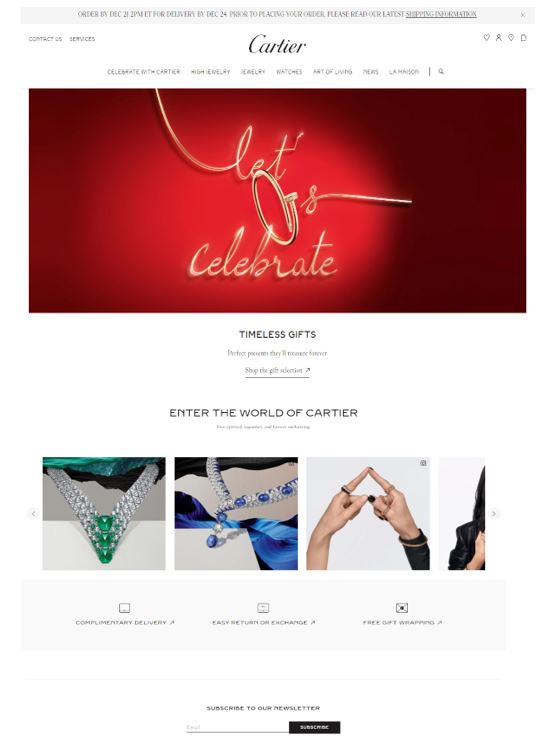
Additionally, the owned website provides many information links and articles about the current jewelry collections, Cartier’s sustainability efforts, and commitment initiatives (Cartier, 2022a). In other words, it offers content not only to potential buyers but also to investors who might be interested in the company. Moreover, the website links to other associated channels, such as pages on social media platforms. The brand is active and relevant on Instagram, Twitter, YouTube, Pinterest, and several Chinese platforms (Tindall, 2021). As a result, owned types of digital content play a crucial role in the brand’s marketing efforts.
Earned
Lastly, discussing the earned type of digital branding is critical, arguably the most significant for Cartier. This concept generally encompasses people’s perspectives and opinions on the brand. Hence, a thorough analysis of this type enables a more comprehensive understanding of the brand and its public image. Many experts recognize the utmost importance of brand perception and recommend using online media to engage with the audience (Cheung et al., 2020). Cartier is highly active on social media platforms, utilizing both Western media, such as Instagram and YouTube, and Chinese apps, including Douyin and WeChat.
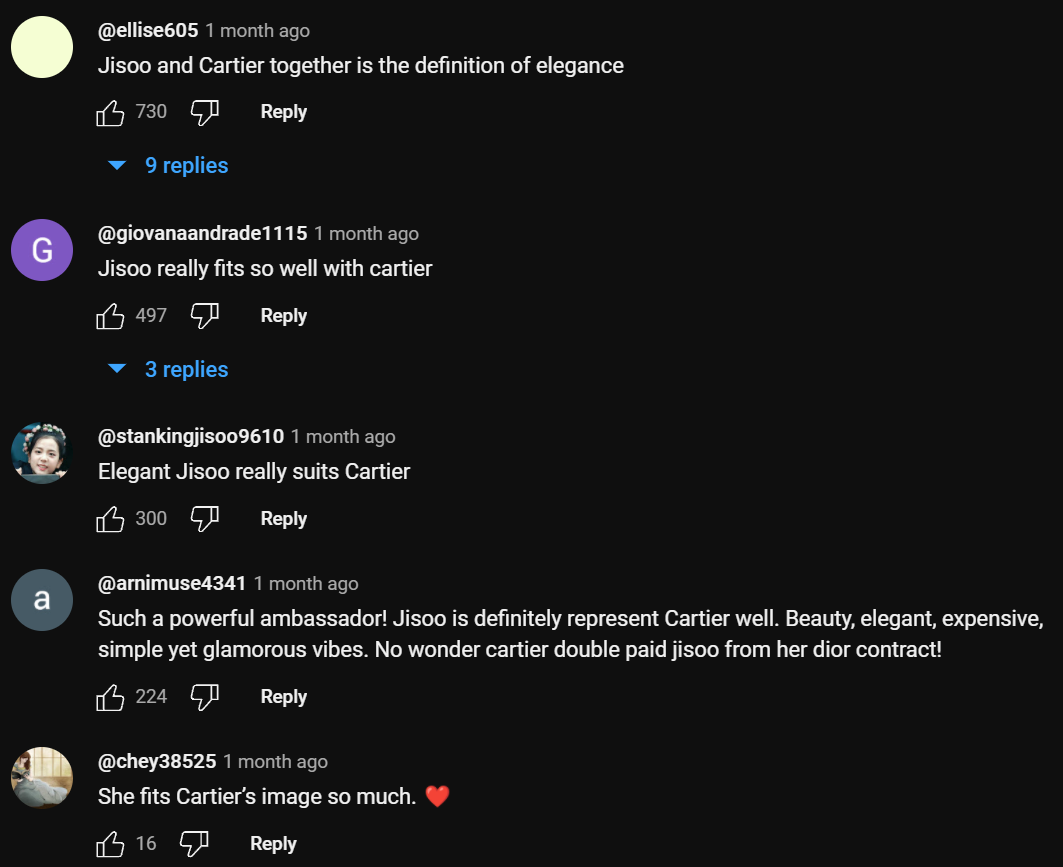
Additionally, the content on YouTube caters to other Asian markets, including people from South Korea and India. Videos with ambassadors from these countries have the highest number of views and the best like-to-dislike ratios (YouTube, n.d.). For instance, the advertisement featuring JISOO, one of the most notable K-pop singers and actresses in South Korea, has approximately 14,000 likes and 224 dislikes (Cartier, 2022b). The figure below demonstrates the comments with the highest number of likes from the video.
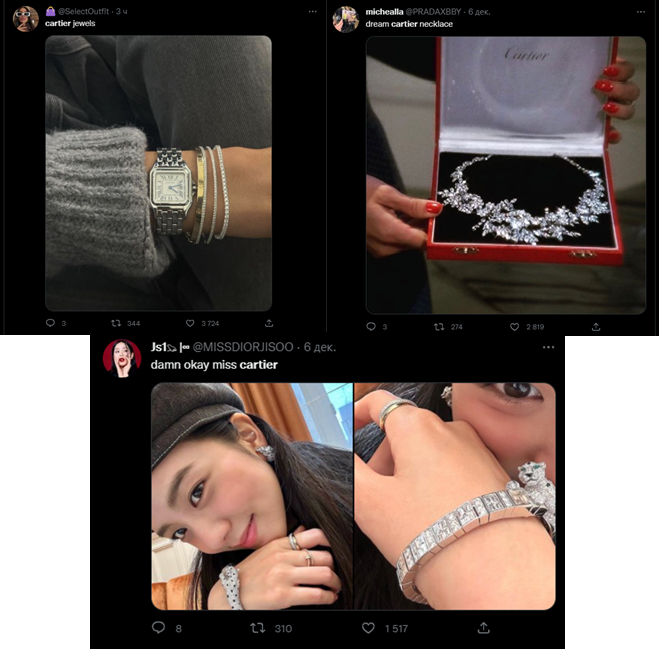
Other social platforms demonstrate a similarly high level of online engagement. Posts and comments on Twitter indicate that people care about the brand and its ambassadors, with a predominantly positive reaction. Moreover, Twitter showcases how much people care about celebrities representing the brand — many tweets concern K-pop stars and Western celebrities. Figure 3 illustrates several Twitter posts with a high number of likes and shares.
Metrics
Metrics analysis is a helpful instrument for understanding the brand and its marketing efforts, particularly in the earned type of digital content. It typically displays trends on social media, including the growth of the fan count and the level of online engagement. Figure 4 presents the general evaluation of the social media platforms on BoomSocial.
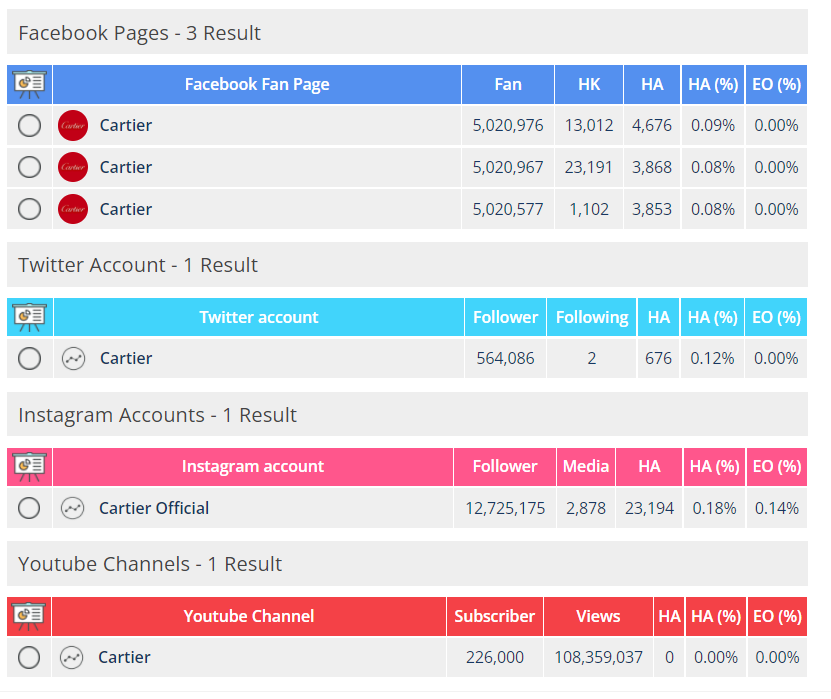
The table above shows that Cartier is gradually increasing its fan base on Facebook, Twitter, and Instagram. The trend is positive, while the weekly growth rate generally varies from 0.08% to 0.18%. Considering the sheer number of followers, these rates reflect the high level of interaction between the brand and its customers.
Conclusion
In summary, Cartier’s digital perspectives and marketing efforts are critical in improving the brand’s equity and public image. The analysis has shown that most social media followers react favorably to Cartier’s posts, with an overall positive trend on Facebook, Twitter, and Instagram. One of the outliers that clients appreciate is the brand’s collaboration with notable celebrities. The comments on YouTube and the majority of posts on Twitter concern Cartier’s ambassadors, clearly indicating that partnering with more celebrities for advertisements and campaigns is an intelligent marketing strategy. Ultimately, Cartier’s digital presence significantly enhances brand value through online engagement and targeted marketing efforts.
References
BoomSocial. (2022). “Cartier” search results. Web.
Cartier. (2022a). Cartier. Web.
Cartier. (2022b). Cartier Maison Cheongdam: JISOO. YouTube. Web.
Cheung, M. L., Pires, G., and Rosenberger, P. J. (2020). The influence of perceived social media marketing elements on consumer–brand engagement and brand knowledge. Asia Pacific Journal of Marketing and Logistics. Web.
Collis, W. and Collis, D. J. (2020). How to build a digital brand that lasts. Harvard Business Review. Web.
Gomez, R. (2022). Digital marketing: Best practices and strategies for your brand. Sprout Social. Web.
Vogue Business. (2022). Cartier. Web.
Tindall, R. (2021). From Cartier to Gucci: 5 luxury brands that nailed their China marketing. China-Britain Business Council. Web.
YouTube. (n.d.). Cartier. Web.