
Introduction
The internationally accredited healthcare institution, Cleveland Clinic Abu Dhabi, is part of the Cleveland Clinic’s global healthcare network. The famous medical center is dedicated to first-class patient care, groundbreaking research, and educating the next generations of doctors and nurses in the United Arab Emirates and around the world (Cleveland Clinic Abu Dhabi, n.d.a). Excellence and patient-centered care have made Cleveland Clinic Abu Dhabi one of the leading hospitals for comprehensive, integrated medical services across a wide range of specialties. Health organizations must have an organizational structure and cultural values.
Organizational Structure and Cultural Values
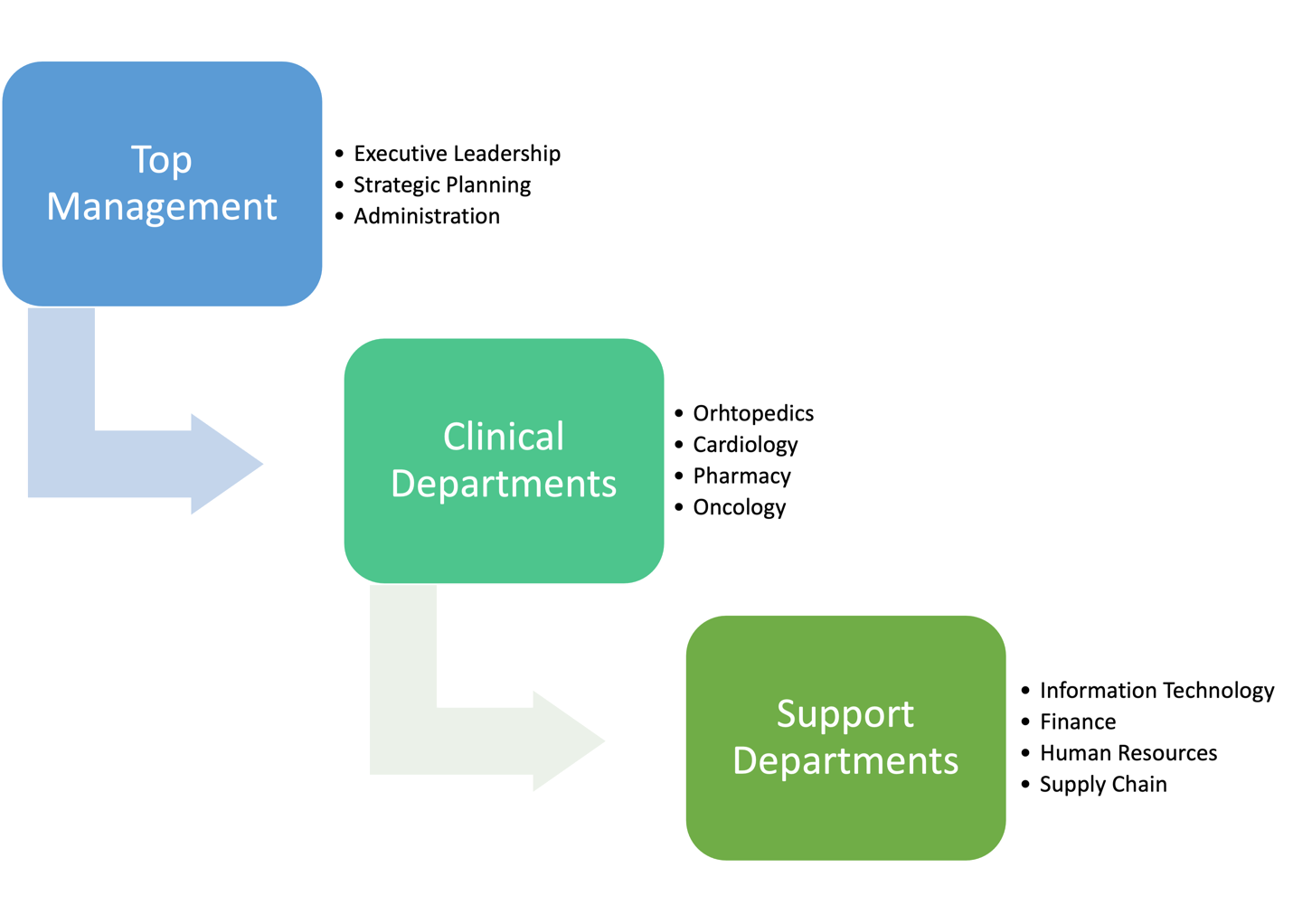
Cleveland Clinic Abu Dhabi’s Organizational Structure Chart
Cleveland Clinic Abu Dhabi is a multi-specialty hospital in Abu Dhabi, United Arab Emirates, that delivers critical and acute care services. The organizational structure chart of Cleveland Clinic Abu Dhabi shows a well-built hierarchy with approximately 364 staffed beds, ensuring proper and effective management and delivery of healthcare services (Cleveland Clinic Abu Dhabi, n.d.b). The hospital’s leadership ensures that departments have clear roles and responsibilities, enabling the rest of the organization to perform well.
Major Cultural Values Followed by Cleveland Clinic Abu Dhabi
Some of the core values at Cleveland Clinic Abu Dhabi include patient-centeredness, innovation, and collaboration. It has been committed to delivering world-class health services to patients from diverse backgrounds in a manner that is empathetic, inclusive, and respectful, and that respects individual needs and preferences. One of the values embraced by the Cleveland Clinic Abu Dhabi is continuous learning and improvement.
So caregivers are advised to ensure they are up to date on the latest medical research and technology (Cleveland Clinic Abu Dhabi, n.d.a). It also encourages teamwork and interdisciplinary collaboration by fostering a culture in which health professionals work together to achieve better patient outcomes. Besides, Cleveland Clinic Abu Dhabi is committed to environmental sustainability and community engagement as part of its responsibility as a global citizen (Cleveland Clinic, n.d.). These are values that are embedded in the very fiber of the organization.
Change Management
SWOT Analysis of Cleveland Clinic Abu Dhabi
Cleveland Clinic Abu Dhabi has strengths, including top-notch services, strong leadership, and sustainability. These strengths position the organization well in a competitive healthcare environment, enabling it to deliver high-quality care and attract top talent. However, the organization is also hampered by weaknesses, such as its limited ability to adapt to rapid change and the potential to integrate technologies poorly (SWOTAnalytica.com, n.d.). Addressing these weaknesses is important to ensure the organization’s success and growth. One key opportunity for Cleveland Clinic Abu Dhabi is the growing demand for advanced healthcare services in the region.
For instance, investment in advanced technologies such as health care, telemedicine, electronic medical records, and supply chain management software can help address weaknesses in the poor integration of technology into the health care system. In the process, investment in such technologies will improve the firm’s ability to adapt to rapid change, hence improving operational efficiency. Moreover, it is important to leverage organizational strengths, such as best-in-class services and strong leadership, to optimize supply chain processes. Implement lean manufacturing principles, improve inventory management, and strengthen supplier relationships.
Other threats apart from these are competitors and regulatory changes in their external environment. As a healthcare unit in the healthcare industry, Cleveland Clinic Abu Dhabi needs to be innovative and stand out from the rest to maintain a cutting-edge position. Further, the organization would face other challenging points, such as changes in regulations, including reimbursement structures and compliance requirements (Zoschke et al., 2023). The institution can leverage the increasing demand for more advanced healthcare services in the locality to tailor specialized new service options.
This could manifest in the broadening of medical service offerings, new treatment modalities, or even cross-border collaborations and agreements in healthcare. It can also consider providing ongoing training and development opportunities for its staff to enhance knowledge and skills through specialized training programs and workshops. Quality improvement initiatives, such as patient feedback and performance evaluations, can also be integrated into the change management process.
The ADKAR Model for Managing Change
ADKAR is one of the most used models in change management. Using this model, Cleveland Clinic Abu Dhabi might be on the right track, leading its people and organization through changes. ADKAR stands for Awareness, Desire, Knowledge, Ability, and Reinforcement (Kolbergytė and Dromantaitė, 2022). Creating awareness of changes, such as flexible work hours, can enhance employee satisfaction and productivity, especially in today’s dynamic work environment.
Further, embracing technological advancements, such as integrating new technologies, can streamline processes, improve efficiency, and keep organizations competitive in the market. Enhancing communication channels and the benefits the change will accrue to the Cleveland Clinic Abu Dhabi to cultivate staff understanding of the reasons for and the effect of the change on the organization. This primarily involves communicating the weaknesses identified, the opportunities available, and the threats to the organization.
Effective leadership and clearly defined communication channels play a pivotal role in building a Desire for the change required. It will instill a desire for change among the staff, enabling them to take on the required transformation. Harrison et al. (2021) assert that equipping employees with the required skills to effect change through knowledge and training programs would make them better able to adapt and implement new practices. The ADKAR model ensures that people in an organization are well prepared and supported enough for change to be effective and results to be successful and sustainable.
Tools to Manage Resistance to Change
The common challenge that any organization inherently faces is resistance to change. Cleveland Clinic Abu Dhabi uses several tools and techniques to manage resistance to change. According to Borkowski and Meese (2020), this can range from communication strategies to address concerns and misconceptions, to training programs to build staff skills and confidence, to incentives to motivate staff to adopt new practices.
This means that change management frameworks are likely to be applied by the hospital, such as the ADKAR model, as they will help guide the change process in effectively preparing and supporting staff. In addition, critical resources will include manuals, online modules, and videos for reference during the training process. This will extend to IT support to ensure the hospital’s technology infrastructure is aligned with the change management initiative.
Steps to Achieve Competitive Advantage in the Market Environment
Cleveland Clinic Abu Dhabi may gain a competitive advantage in the market only if it continues to innovate and differentiate itself from competitors. This can be achieved through strategies such as investing in cutting-edge technology, offering specialized services, and building strong alliances with healthcare providers and stakeholders (Kolbergytė and Dromantaitė, 2022). Furthermore, the hospital may base its differentiation strategy on its class in the global healthcare services market, strong leadership, and commitment to sustainability (Willmington et al., 2022). By leveraging its competitive strengths to address weaknesses, such as the need to adapt more comfortably to rapid change and some gaps in technology integration, the Cleveland Clinic Abu Dhabi can enhance its competitive advantage to ensure long-term success and growth in the increasingly dynamic healthcare industry.
Steps and Descriptions
- Leverage Strengths
- Capitalize on top-notch services, good leadership, and sustainability.
- Provide high-quality, specialized healthcare services.
- Differentiate from competitors.
- Address Weaknesses
- Overcome inability to adapt to rapid changes.
- Improve technology integration.
- Enhance organizational agility.
- Capitalize on Opportunities
- Develop innovative and specialized service offerings.
- Explore cross-border collaborations and partnerships.
- Expand reach and capabilities.
- Mitigate Threats
- Monitor changes in healthcare regulations.
- Implement proactive measures for compliance.
- Address competitive threats from other providers.
- Differentiation Strategy
- Emphasize world-class healthcare services, strong leadership, and sustainability.
- Invest in cutting-edge technologies and specialized services.
- Create a unique value proposition for patients and stakeholders.
- Continuous Innovation
- Foster a culture of innovation and adaptability.
- Stay ahead of industry trends and evolving patient needs.
- Regularly review and update strategies and tactics.
- Output: Sustainable Competitive Advantage
- Cleveland Clinic Abu Dhabi achieves a competitive advantage in the healthcare market.
- Differentiates itself from competitors through unique strengths and offerings.
- Continuously innovates and adapts to market changes.
Techniques Used to Implement Changes
Cleveland Clinic Abu Dhabi employs several modalities to implement change effectively and helps create a culture of continuous improvement and innovation. Stakeholder involvement is one of those—involving them in the whole change process (Devi and Thekkekara, 2023). Involving stakeholders is sure to foster integration of different perspectives and early identification of potential obstacles in the process. This approach increases the likelihood of successful change implementation while also building trust and commitment among stakeholders.
Two essential ways in which Cleveland Clinic Abu Dhabi ensures successful change implementation are effective communication strategies and comprehensive training programs. This includes transparent communication of the reasons for change and its impact, thereby giving staff members a sense of ownership and accountability for change (Cleveland Clinic, n.d.). This transparency is essential for winning the trust and commitment of employees, who have been informed about everything the transition entails. Extensive training programs also ensure staff are equipped with the requisite skills and knowledge to handle the new ways of doing things with confidence and competence.
Pilot projects are an important technique used by Cleveland Clinic Abu Dhabi, enabling the facility to test changes at a small scale before implementing them at full scale. This would surface potential challenges and required tweaks to minimize risk and build staff confidence and buy-in for successful change implementation (Kolbergytė and Dromantaitė, 2022). Feedback mechanisms must be in place to enable continuous improvement and adjustment of change initiatives. By proactively seeking staff and stakeholder feedback, the hospital will be able to identify such points of weakness, make the necessary modifications, and create a system for learning and improvement within the organization that will hopefully increase the chances of successful change implementation.
Monitoring and Controlling Changes
Performance Indicators to Benchmark Upon
Effective monitoring and control of changes within the organization are critical to the success and sustainability of the implemented change. Performance indicators are used to assess the level of performance of a change initiative within the organization (Kerzner, 2022). To do this, Cleveland Clinic Abu Dhabi will ensure that changes take into account KPIs such as patient satisfaction, staff turnover, financial performance, and clinical outcomes.
Key performance indicators should be monitored with regular data collection and analysis to give a view of the impact of changes. It will be a platform for decision-making and change, facilitated by performance reviews, reports, and feedback mechanisms. Cleveland Clinic Abu Dhabi will optimize performance and secure success in change initiatives by embracing a culture of continuous improvement and aligning monitoring processes with its strategic objectives.
Conclusion
Cleveland Clinic Abu Dhabi is a renowned global health organization with robust organizational structures and cultural values that promote patient-centered, innovative, and collaborative care. Using the ADKAR model for change management, the organization can proactively raise awareness, foster desire, equip staff with knowledge and skills, and reinforce changes to fill gaps and fully exploit opportunities in the competitive healthcare landscape. Techniques that drive the adoption of new practices and culture toward continuous improvement and innovation include stakeholder engagement, communication strategies, training programs, pilot projects, and feedback mechanisms. Properly controlling and monitoring the changes implemented, supported by performance indicators, and addressing resistance will give Cleveland Clinic Abu Dhabi a competitive advantage in the market, ensuring its long-term success and growth.
Reference List
Borkowski, N. and Meese, K.A. (2021) Organizational behavior in health care. Burlington, MA: Jones & Bartlett Learning.
Cleveland Clinic (n.d.) Mission, vision & values.
Cleveland Clinic Abu Dhabi (n.d.a) Home.
Cleveland Clinic Abu Dhabi (n.d.b) Who we are.
Devi, R.M. and Thekkekara, J.V. (2023) ‘Change management: a survey of literature in view of analysing the advantages of ADKAR Model’, RGUHS Journal of Allied Health Sciences, 3(2).
Harrison, R. et al. (2021) ‘Where do models for Change Management, improvement and implementation meet? A systematic review of the applications of change management models in healthcare’, Journal of Healthcare Leadership, 13, pp. 85–108.
Kerzner, H. (2023) project management metrics, KPIs, and dashboards: a guide to measuring and monitoring project performance. Hoboken, NJ: John Wiley & Sons.
Kolbergytė, A. and Dromantaitė, A. (2022) ‘A theoretical analysis of managerial growth in the context of organizational change‘, Sustainability, 14(8).
SWOTAnalytica.Com (n.d.) Cleveland Clinic SWOT Analysis (10 steps) – Strengths, weaknesses, opportunities & threats.
Willmington, C. et al. (2022) ‘The contribution of benchmarking to quality improvement in healthcare. A systematic literature review’, BMC Health Services Research, 22(1).
Zoschke, I.N. et al. (2023) ‘SWOT analysis and recommendations for community health workers and stakeholders responding to COVID-19 health inequities‘, Health Promotion Practice.