
Description of the Artworks
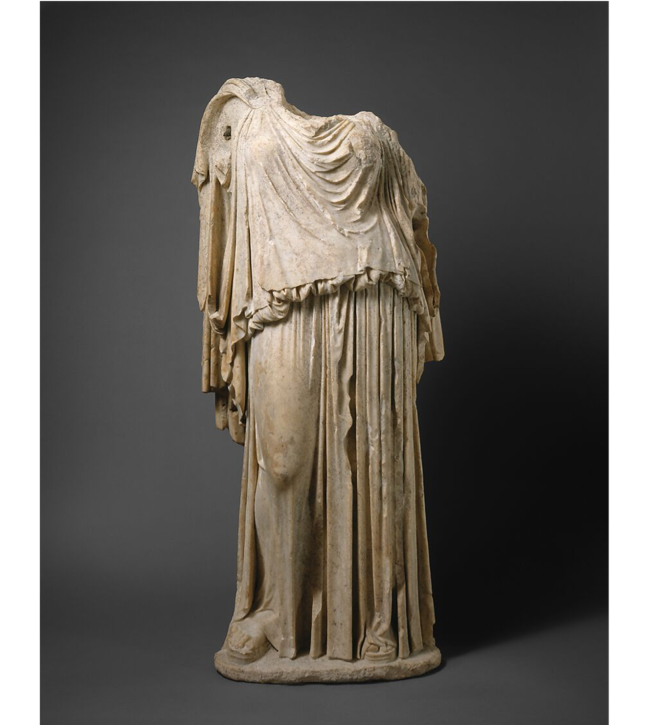
Marble Statue of Eirene
The marble statue of Eirene is an incredible piece of Roman art. Although the statue is a copy of a Greek bronze original, it can genuinely be considered a masterpiece. The statue depicts a graceful female figure holding a child in her arms. It has a height without plinth of 69 3/4 in and is probably made of Pentelic marble (Kephisodotos, ca 14-68 CE).
Although the woman does not have a head, from the surviving parts of the sculpture, one can assume about her beauty. The author has extremely carefully detailed the statue, especially the drapery of the clothing. Thanks to such techniques of Kephisodotos, it seems that the woman is in motion, and her elegant clothes do not fall off. I chose this piece because it conveys calm and peace through the elegant female figure.
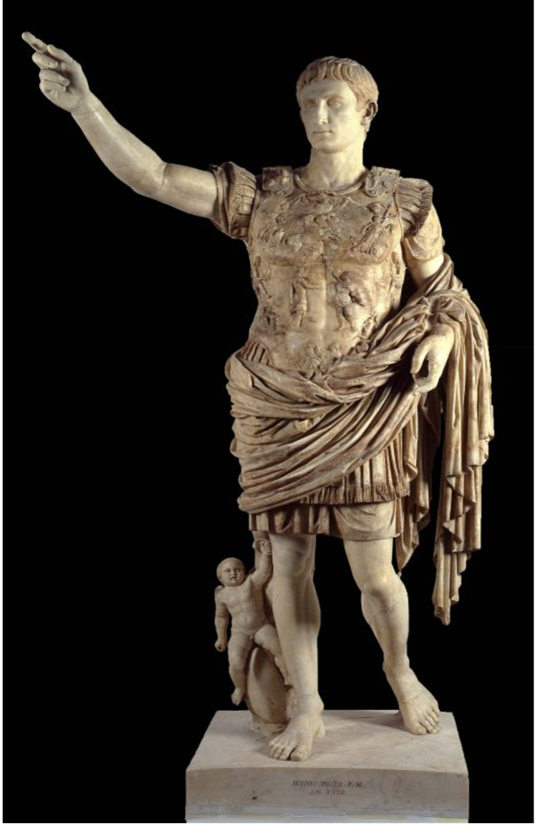
Augustus of Primaporta
Augustus of Primaporta is an early first-century marble statue depicting the Roman Emperor Augustus. The man raises his hand, demonstrating his leadership and power. He is dressed in military armor, symbolizing his victories on the battlefield. However, his thighs are wrapped in exquisite fabric, demonstrating the emperor’s wealth (Augustus of Primaporta, 1st century AD).
There is a cupid near the emperor’s right foot, which may symbolize the divine origin of August. The general appearance of this sculpture gives the impression that the ruler is at the center of the universe, as depicted by the artists. I chose this work because it exemplifies the idealization of rulers inherent in the art of the Roman Empire.
Comparison
Comparing these two works reveals many similarities and notable differences. For example, both works of art idealize the human form. The people depicted in the sculptures have graceful proportions and facial features. In addition, both statues have significant symbolism that plays a significant role in their understanding. Eirene symbolizes prosperity and peace, and the statue of Augustus of Primaporta depicts power. Additionally, the overall appearance of the sculptures is quite similar, as each has a high level of detail and depicts children.
However, there are some differences between these works of art. One key difference is the sculptures’ origin, since the Augustus of Primaporta is an original Roman work of art. At the same time, the statue of Eirene is a copy of a Greek original. The cultural context of the sculptures is crucial for understanding their significance within the broader Greek and Roman cultures (Fiero, 2020). While the statue of Eirene may have been used for decorative purposes, the statue of Augustus of Prima Porta is a clear example of the Roman emperor’s glorification.
Summary
In conclusion, both sculptures are shining examples of the art of the Roman Empire. However, they demonstrate the culture of this state from different sides. As a copy of a Greek statue, the Eirene sculpture serves a decorative function, depicting an elegant woman with a child. It symbolizes calm and peace, which is precisely the opposite of the warlike image often associated with the Roman emperor. Augustus of Primaporta is an original work by Roman sculptors that highlights the cultural trend of praising rulers in art.
References
Augustus of Primaporta [Marble]. (1st century AD). MuseiVaticani, Vatican City, Vatican.
Fiero, G. (2020). Landmarks in Humanities (5th ed.). McGraw-Hill.
Kephisodotos. (ca. 14–68 CE). Marble statue of Eirene (the personification of peace) [Marble]. The Metropolitan Museum, New York, NY, United States.