
Introduction
A flexible working schedule stands for the diverse approach of working time policies that the employee can adjust. In the modern world, there is a need for improvements in employee productivity, job satisfaction, and work-life balance. To constantly develop and remain competitive, modern companies must focus on adapting their internal processes.
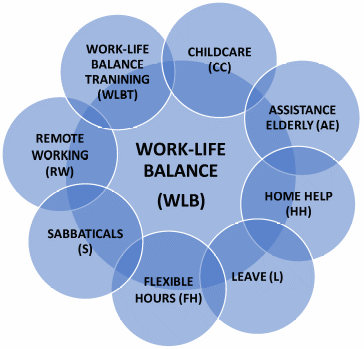
A flexible working schedule serves the purpose of work-life balance, as defined in Figure 1. The work-life balance of any worker consists of work-life balance training, childcare, assistance for older people, home help, leave, flexible hours, sabbaticals, and remote working. The given approach of work-life balance provides a healthier life for workers and makes them more committed to their duties. Thus, as part of it, companies should review flexible working schedules to meet individual needs.
Flexible Working Schedule Test
The introduction of a flexible schedule improved work-life balance, which, consequently, increased productivity. Speaking of the local solution to the issue, it is worth considering the introduction of a flexible schedule or a remote format in the test mode. Thus, employees can independently set task deadlines according to the hours of maximum productivity.
Since this issue is individual and only some feel comfortable working in the format of the 9-to-5 working day, introducing such a policy will require a personalized approach. It is worth realizing that it will lead to positive results despite the time and resources needed to reform working hours. Therefore, establishing a flexible, personalized schedule for employees improves time management and focus on work tasks, improving the company’s efficiency.
Flexible Working Schedule Benefits
Increased productivity is a primary benefit of a flexible work schedule. Increased concentration, focus, and efficiency can result from allowing people to choose their working hours based on their natural energy peaks and personal preferences. Employees may maximize their productivity with the freedom to work when they are most productive, leading to higher-quality work and better performance.
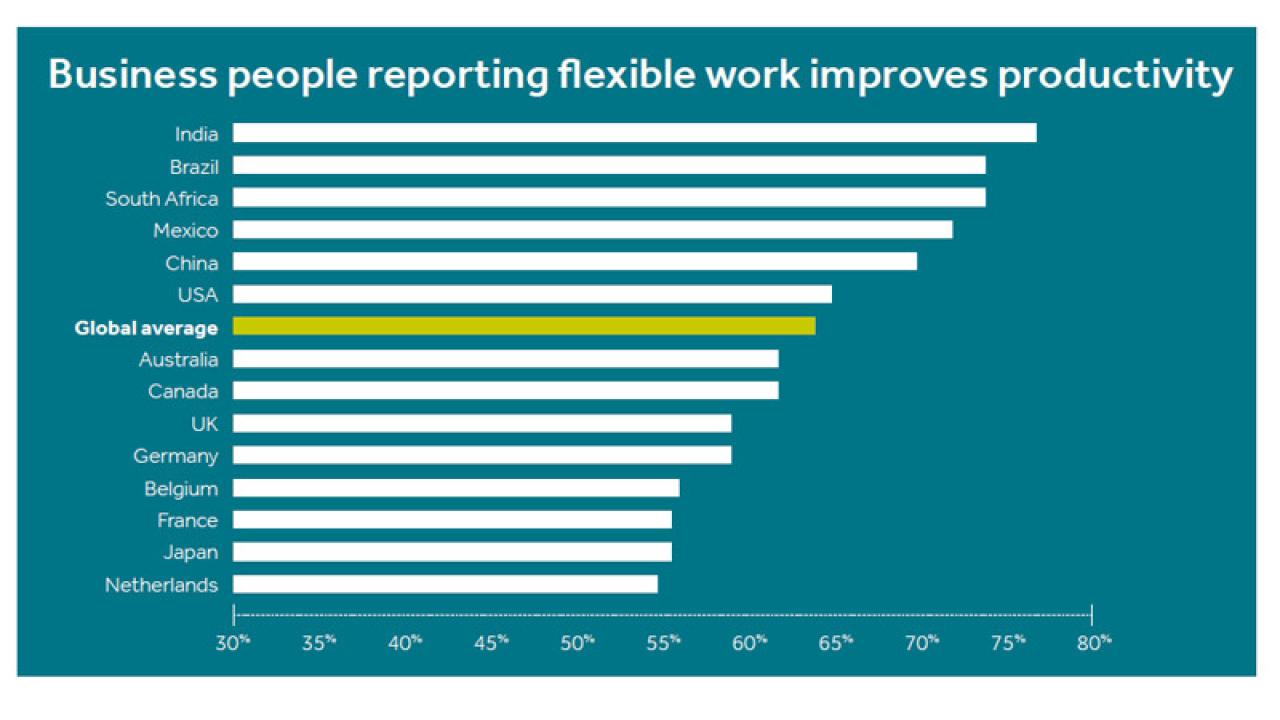
Figure 2 (Conn, 2022) illustrates that flexible work improves productivity worldwide, while more and more countries choose to have flexible hours rather than fixed. Moreover, a study by Irawanto, Novianti, and Roz (2021) showed that schedule flexibility in the form of a remote format had a positive effect on employees’ ability to manage time and improve concentration on work tasks (Irawanto et al., 2021).
A flexible work schedule positively impacts an individual’s physical and mental well-being. A better lifestyle is encouraged by the option to incorporate exercise, take breaks, or partake in stress-relieving activities during the workday. Employees can emphasize self-care activities like consistent exercise, wholesome food, and downtime without jeopardizing their professional obligations. As a result, there will be less absenteeism, better concentration, and more resistance to job pressures.
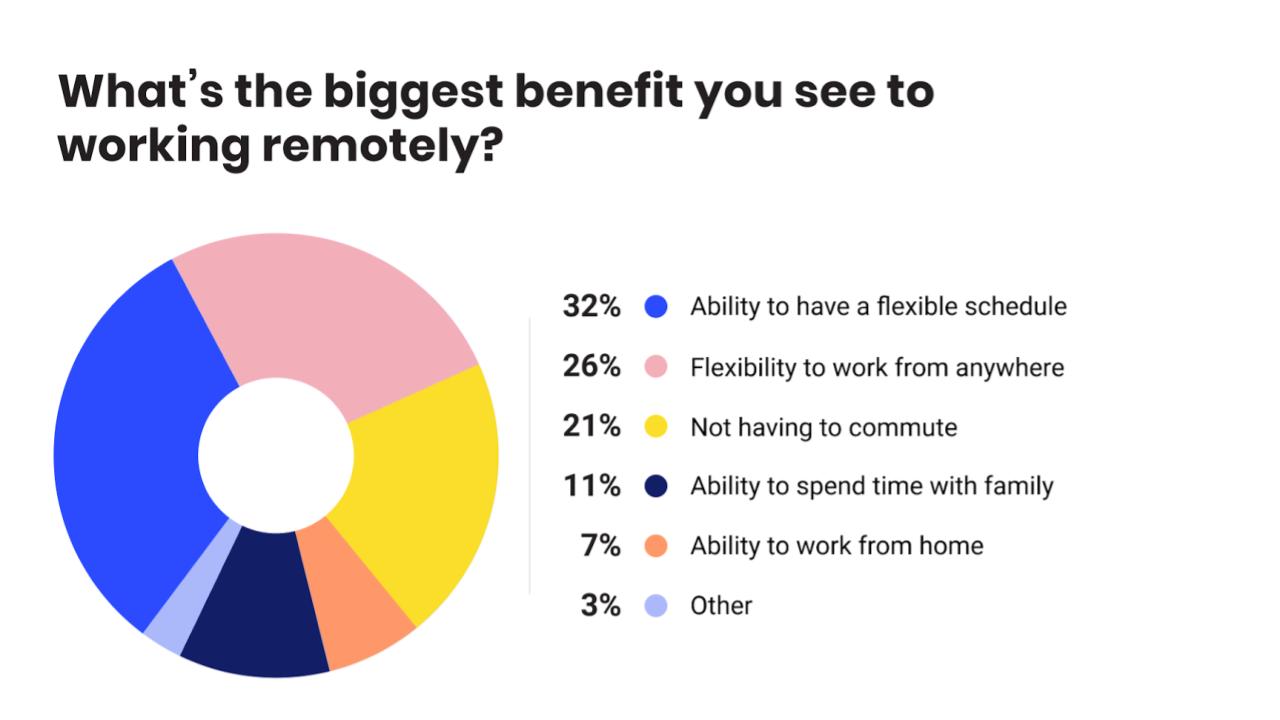
As shown by Figure 3, a State of Remote Work report (2020) found that most of the perceived benefits of working remotely were having a flexible schedule. It makes the point that remote work is one of the ways of effectively implementing a flexible schedule.
Employees frequently experience stress and financial strain due to their commutes to and from work. The need for regular commutes is diminished or eliminated when a flexible work schedule is used, saving both time and money. Employees can avoid rush-hour traffic, packed public transportation, and the ensuing physical and mental stress by working remotely or altering work hours.
This decrease in the stress caused by commuting translates into a better work environment, higher morale, and better mental health. Shifrin (2021) points out that a flexible schedule was associated with better physical health, a lower degree of absenteeism, and overall improvements in health maintenance by workers. The ability to have better health also impacts productivity; thus, it is vital for many companies.
Flexible work arrangements are supported by organizations that show a dedication to the happiness and well-being of their staff members. This commitment subsequently fosters employee engagement, motivation, and loyalty. Flexible working is in increased demand among the younger generation, along with the demand from industrialized countries (Chung & Lippe, 2020). People become more committed to their work and feel more appreciated when they can set their schedules. Increased employee retention and the attraction of top talent to the company are results of the consequent job satisfaction and positive work environment.
Consequently, an employee can work flexibly while temporarily switching to a fixed schedule during the seasonal load or internship for a higher position. Moreover, depending on the type of company activity, specific projects or their stages require the personal presence of specialists. When implementing a flexible schedule, it is necessary to consider the employee’s desire and work type.
Therefore, specific work tasks require presence in the office and collaboration with colleagues in person. In addition, sometimes there is a need for business meetings and business trips. Taking into account these aspects, as well as the customs and culture of the company, the introduction of flexible hours results in improved recruitment of workers.
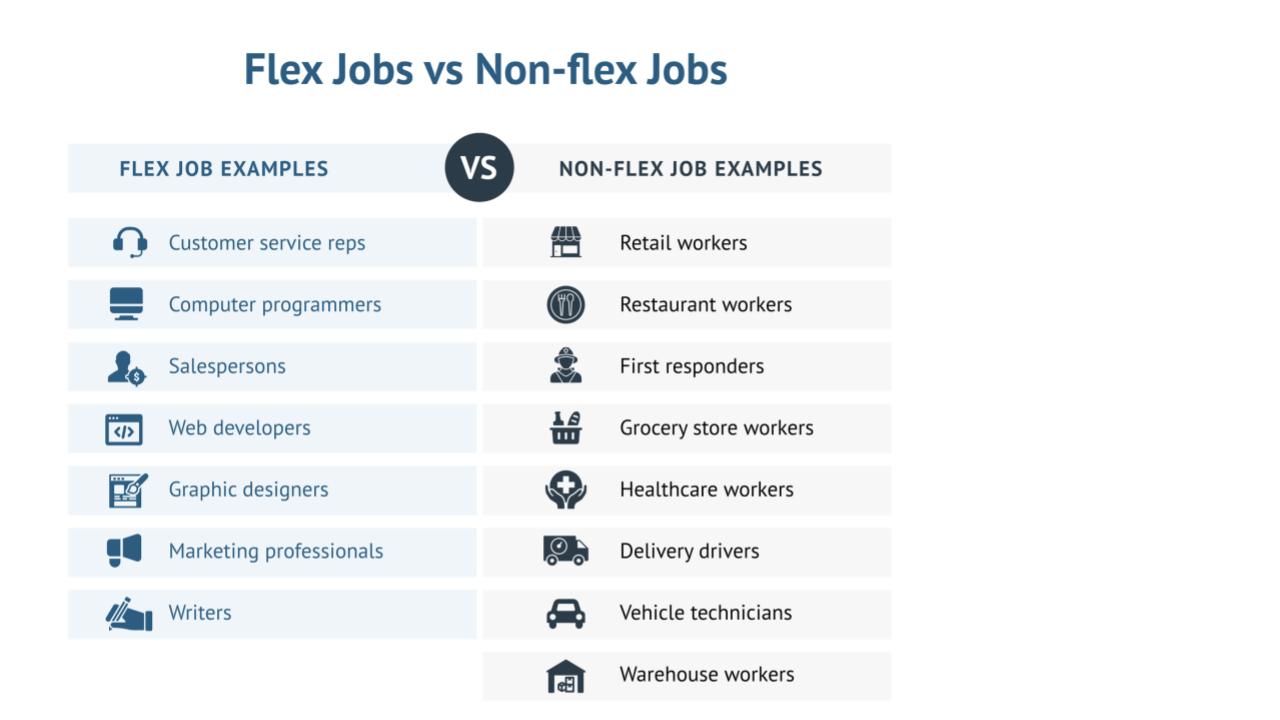
Figure 4 illustrates the differences in the possible professional areas in which a flexible working schedule can be implemented. More flexible job examples include customer service, computer programmers, salespersons, web developers, graphic designers, marketing professionals, and writers. Non-flexible job examples are retail workers, restaurant workers, first responders, grocery store workers, healthcare workers, delivery drivers, vehicle technicians, and warehouse workers. Given the difference in the professional spheres, the company should consider this chart when implementing a flexible working schedule.
Conclusion
A flexible work schedule has many advantages for both firms and people. Individual needs are prioritized, which boosts productivity, encourages work-life balance, lessens commute stress, and improves physical and mental health. Due to the requirement of the younger generation to have a flexible working schedule, the human resource department must have work hours that are more suitable for employees to have a better and healthier balance (Sanchez–Hernandez et al., 2019).
Additionally, it increases employee retention and engagement, creating a more contented and motivated team. Accepting the power of flexibility in the workplace is a positive step toward establishing a better, more effective, and fulfilling work environment for all as society changes and adapts. A flexible working schedule may become the norm in the future.
There is more and more necessity from different working fields to have a more flexible work-life balance. Furthermore, it is possible to have an increasing number of employees who work remotely with hours that are not fixed for them. As shown by Irawanto et al. (2021), the work from home perfectly fits a flexible working schedule, where an employee is responsible for arranging the time and job responsibilities during the day. As the company must fit modern needs, the test should also be implemented soon. Overall, it is also essential to conduct a survey or any other research to find workers’ opinions on flexible working schedules.
References
Chung, H., & Van der Lippe, T. (2020). Flexible working, work–life balance, and gender equality: Introduction. Social indicators research, 151(2), 365-381. Web.
Conn, R. (2022). What is a flexible work schedule? How it works, pros and cons, and everything you need to know. Recruitee. Web.
Irawanto, D. W., Novianti, K. R., & Roz, K. (2021). Work from home: Measuring satisfaction between work–life balance and work stress during the COVID-19 pandemic in Indonesia. Economies, 9(3), 96. Web.
Sunchez-Hernundez, M. I., Gonzulez-Lopez, O. R., Buenadicha-Mateos, M., & Tato-Jimunez, J. L. (2019). Work-Life balance in great companies and pending issues for engaging new generations at work. International Journal of Environmental Research and Public Health, 16(24), 5122. NCBI. Web.
Shifrin, N. V., & Michel, J. S. (2022). Flexible work arrangements and employee health: A meta-analytic review. Work & Stress, 36(1), 60-85. Web.
Soper, J. (2022). What is a flexible work schedule policy? Fit Small Business. Web.
State Of Remote Work. (2020). Buffer, Web.