
Introduction
Artwork is used in public spaces as a learning resource to reflect the processes of human existence. It is a versatile and enjoyable craft that utilizes various substances and materials to convey creators’ ideas, emotions, cultural narratives, and social values. Public art often serves as a medium to engage communities and provoke thought about shared experiences and human connections. This essay will focus on the chosen work of art, “The Older Man and His Dog,” designed in 1997 by the renowned female artist Glenna Goodacre.
Sculpture Analysis
The Older Man and His Dog art is located explicitly at Park Place, outside the Human Sciences Building at Texas Tech University. The artist considers the natural environment when developing and producing the artwork. Public art exhibits characteristics such as interaction between the subject and the community, site specificity —the location where the art is produced —and the public space where it is displayed (Baldini, 2019). The location and existence of the art in the public space make it public art.
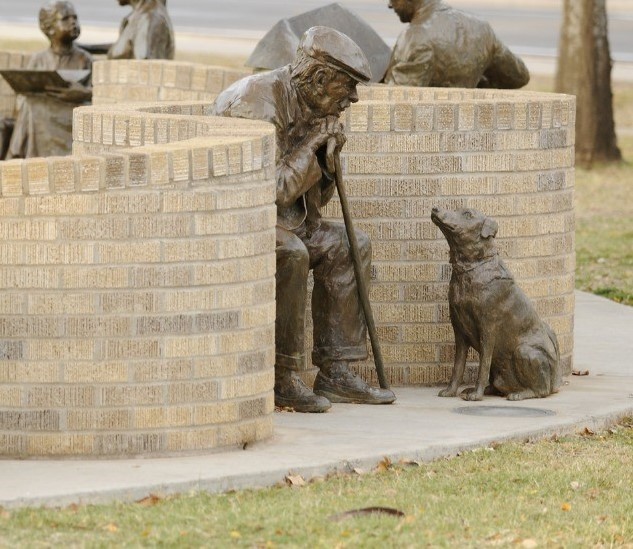
This artwork is admirable and deserves to be interpreted in various ways visually. The artist aimed to convey how experiences preserved in historical memory can be shared with the academic community through artwork (Baldini, 2019). The bronze statues have a vivid texture and demeanor that evoke the in-person experience, allowing the public to gather information. Goodacre aimed to create a work that appealed to all audiences, including children and adults (Texas Tech University, 2022). This piece of art is site-specific because it includes outdoor and sculptural elements.
Conclusion
Art installations greatly enhance socio-cultural, aesthetic, and life cycles. This is now a universally understood concept of urban design. Art provides access to lucrative opportunities and fosters an environment where people can thrive. It draws students to exciting and educational settings. Goodacre’s work is a perfect example of artwork with a specific, deep meaning.
References
Baldini, A. (2019). The Public-Art Publics: An Analysis of some structural differences among public-art spheres. De Gruyter. Web.
Texas Tech University. (2022). Public art collection: Texas Tech University System. Web.