
Head-to-Toe Assessment
A comprehensive head-to-toe physical assessment is the most effective method of identifying system issues and their impact on patients’ health. For the present assignment, the hypothetical person is a 40-year-old male with obesity (observable) and hypertension/type 2 diabetes (revealed via assessment). While the paper provides a brief overview of several assessed systems, it primarily focuses on the two most problematic systems: the cardiovascular and endocrine systems.
Assessed Systems
In physical assessment, one should focus on the following systems: head, eyes, ears, nose/mouth/throat, lungs, heart, abdomen, musculoskeletal, neurologic, endocrine, and genitourinary. They constitute the fundamentals of human health, and any abnormalities in these systems might manifest as prominent diseases (Jarvis & Eckhardt, 2023). For this reason, healthcare professionals must approach physical assessment with care and thoroughly document their findings to propose an effective treatment methodology.
Systems Review
Regarding the head system, the patient denies headaches, a history of injury, dizziness, and neck pain. Objectively, there are no lumps, lesions, tenderness, or trauma. Regarding the ears, the patient reports normal hearing and no infections or earaches. Objectively, the skin is normal; there is no redness, lesions, tenderness, or any signs of hearing loss.
Next, the patient’s vision is 20/20 for both eyes, fields are normal by confrontation, sclera is white, and there are no lesions. For nose/mouth/throat, the patient denies any pain, sinus problems, allergies, or dental issues. Regarding all these systems, the necessary equipment includes a flashlight, an otoscope, and an ophthalmoscope (Jarvis & Eckhardt, 2023). Although I did not have the equipment to examine the larynx, it could have been done via a laryngoscope.
Next, regarding the systems with abnormal findings, the patient reports palpitations, chest discomfort, and shortness of breath. BP 132/81 mm Hg, pulse 94 bpm, no thrill, and no murmur. The subjective and objective findings indicate an early stage of hypertension (Jarvis & Eckhardt, 2023). The necessary equipment includes a stethoscope, alcohol wipes, and a small ruler (Jarvis & Eckhardt, 2023).
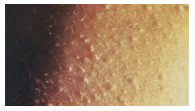
Regarding the endocrine system, the focus is on the thyroid gland, skin, and hands/feet. Necessary equipment, in addition to the instruments mentioned, includes a blood glucose meter and a blood test kit. Objectively, the glucose level is 7.6 mmol/L, the skin is dry; follicular hyperkeratosis (see Figure 1) and poor wound healing are present. Ultimately, the findings for these systems are abnormal and suggest hypertension and type 2 diabetes.
Regarding the remaining systems, the findings are normal and reported below:
Respiratory: no history of lung disease or pain. Notable shortness of breath during physical activity.
Musculoskeletal: no arthritis, stiffness, or joint pain. BMI is 30.1, which indicates a lower level of obesity but no direct impact of weight on musculoskeletal issues (Jarvis & Eckhardt, 2023). The range of motion in the shoulders is restricted slightly.
Abdomen: no pain, nausea, vomiting, or indigestion. Appetite is normal, and the patient reports no food intolerance.
Neurologic: no history of seizures, stroke, fainting, blackouts, tremor, paralysis, or coordination problems.
Genitourinary: no pain, burning on urination, or dysuria.
Overall, the instruments used for a complete head-to-toe assessment included a flashlight (head), an otoscope (ears), a stethoscope (heart/lungs), an ophthalmoscope (eyes), and a pulse oximeter/blood pressure cuff (heart/lungs) (Jarvis & Eckhardt, 2023). Supplementary instruments also included a ruler, an examination bed, and a tongue depressor; however, these are not necessary for a comprehensive examination. Finally, I lacked instruments such as a laryngoscope, a vision chart, a reflex hammer, and testing devices for checking musculoskeletal conditions. I used alternatives, including obtaining more subjective information from the patient (for the larynx, eyes, and reflexes) and simple physical exercises to assess the patient’s musculoskeletal range of motion and muscle balance. After a comprehensive physical assessment, it is appropriate to order laboratory tests of the patient’s blood and urine, as well as a lipid profile.
Laboratory Findings
Normal laboratory findings for the client’s age (40 years old) are the following (Jarvis & Eckhardt, 2023):
Fasting glucose level: 4-5.9 mmol/L;
BP: 100-120/60-80 mmHg;
BPM: 60-100;
Hemoglobin (Hb): 13.5-17.5 g/dL;
pH: 4.5-8.0;
Total Cholesterol: <200 mg/dL.
Regarding age-specific health screenings, the patient has entered middle adulthood (40-59 years old), which suggests the need for more frequent checks of cardiovascular and endocrine health. Regarding immunizations, annual influenza shots remain critical at this age (Jarvis & Eckhardt, 2023).
Differential Diagnoses
In the examined case, the patient suffers from early stages of hypertension and type 2 diabetes, which are manifested due to increasing weight (level 1 obesity) and an unhealthy lifestyle. The diagnoses are most likely correct based on laboratory findings (glucose, BP, BMI) and the extremely high comorbidity between the conditions (Jia & Sowers, 2021). Furthermore, hypertension, diabetes, and obesity constitute the major risk factors for early death, especially when comorbid with heart- or lung-related diseases, including COVID-19 (Escobedo-de la Peña et al., 2021). Other potential diagnoses include kidney diseases, various endocrine/thyroid disorders, and even obstructive sleep apnea, but based on the provided information, they are differential.
Plan of Care
The plan of care for the 40-year-old male patient with hypertension and type 2 diabetes (two priority nursing diagnoses) focuses on lifestyle modifications. Based on the research, a lack of physical activity and unhealthy nutrition are the direct risk factors for the mentioned conditions, obesity, and other cardiovascular diseases (Cleven et al., 2020). Therefore, the effective management of hypertension and diabetes is impossible without decisive changes to one’s lifestyle.
Therefore, the two interventions in this context are changes to nutrition and physical exercise routine. Regarding nutrition, the patient should aim to reduce his sodium intake, increase vegetable intake (fiber/limited fat), and restrict calorie intake (El Meouchy et al., 2022). For instance, iterations of the Mediterranean diet have been successful in mitigating risk factors for diabetes and hypertension while also receiving positive patient feedback on taste and convenience (El Meouchy et al., 2022). Next, regarding physical exercise, the patient should aim to engage in at least 30 minutes of easy aerobic training 4-5 days per week and early-level strength training for 30 minutes 3 times per week (El Meouchy et al., 2022). These changes are essential to mitigate the examined conditions.
Regarding pharmacology, medications might be used for managing early-stage diabetes and hypertension, but it is appropriate to start with lifestyle changes first. Antihypertensive drugs typically include ACE inhibitors and beta-blockers, while antidiabetic medications frequently include semaglutide, exenatide, and liraglutide (El Meouchy et al., 2022). However, it is critical to remember that lifestyle changes are prioritized over pharmacology for long-term health management and gradual improvement. It also means that the patient’s condition must be regularly evaluated and the dosages adjusted (El Meouchy et al., 2022). This evaluation aspect is critical, as it allows monitoring of the patient’s progress and response to the chosen treatment modality, and adjustment of the plan if necessary.
Finally, regarding health promotion strategies, patient education is pivotal and arguably the most significant part of the treatment. The client must be thoroughly consulted regarding the dangers of hypertension/diabetes, risk factors, complications, and the impact of lifestyle transformations. After all, proper management of the conditions is impossible without the patient’s cooperation and willingness to make positive changes. Following these recommendations, the client can successfully mitigate hypertension/diabetes and lead a healthy life.
References
Cleven, L., Krell-Roesch, J., Nigg, C. R., & Woll, A. (2020). The association between physical activity with incident obesity, coronary heart disease, diabetes and hypertension in adults: A systematic review of longitudinal studies published after 2012. BMC Public Health, 20, 1-15.
El Meouchy, P., Wahoud, M., Allam, S., Chedid, R., Karam, W., & Karam, S. (2022). Hypertension related to obesity: Pathogenesis, characteristics and factors for control. International Journal of Molecular Sciences, 23(20).
Escobedo-de la Peña, J., Rascón-Pacheco, R. A., de Jesús Ascencio-Montiel, I., González-Figueroa, E., Fernández-Gárate, J. E., Medina-Gómez, O. S., Borja-Bustamante, P., Santillan-Oropeza, J. A., & Borja-Aburto, V. H. (2021). Hypertension, diabetes and obesity, major risk factors for death in patients with COVID-19 in Mexico. Archives of Medical Research, 52(4), 443-449.
Jarvis, C., & Eckhardt, A. (2023). Physical examination and health assessment (9th ed.). Elsevier.
Jia, G., & Sowers, J. R. (2021). Hypertension in diabetes: An update of basic mechanisms and clinical disease. Hypertension, 78(5), 1197-1205.