
Background
In healthcare, providing quick, effective care can increase patients’ comfort and reduce pain. Additionally, in this case, trust in medical workers increases, and the importance of medical assistance remains stable. Home care has also become a popular and effective approach for managing serious conditions, which include epilepsy and seizures (Mah et al., 2021).
Nevertheless, to ensure safe, high-quality home assistance, it is important to provide nurses with modern equipment and to train them with the necessary knowledge and skills through orientation programs. These proposals aim to educate young professionals at universities on promptly addressing issues and to emphasize the importance of educational information for seizure management. The practice can help to achieve positive patient outcomes within 30 days.
Therefore, this research paper will delve into a specific medical condition, explain relevant nursing theories, and propose plans to enhance the quality of home assistance. Moreover, it will identify potential barriers based on background knowledge and demonstrate how to overcome them.
Medical workers should understand the concepts of seizures and epilepsy before providing relevant support. According to Steriade et al. (2021), seizures and epilepsy are neurological conditions that develop abnormal electrical activity in the brain. There might be different forms that remain under control, but sometimes patients cannot follow their movements, and outcomes can be unpredictable. These diseases affect millions of people worldwide, and attacks may decrease well-being.
Traditionally, patients diagnosed with seizures and epilepsy should be treated in hospitals with special equipment. Nevertheless, with the fast development of the medical sphere, it became possible to help patients in the common home environment. There are many additional advantages, such as reduced costs and a pleasant atmosphere.
While home treatment has many benefits, it is important to remember that challenges may arise. Unlike hospital settings, home environments may lack immediate access to professional equipment in urgent situations. The human body’s reaction to different types of treatment is unpredictable, and some allergic responses may worsen the problem (Steriade et al., 2021). In these situations, the experience and knowledge of medical assistants are crucial, and they should be prepared to address all issues in accordance with protocols. Nursing curricula at colleges and universities usually allocate limited hours to seizures and epilepsy (Klein et al., 2023). Therefore, the response time remains high, and the integration of home treatment is slowing.
Clinical Problem Statement
The clinical problem statement is related to the main advantages and disadvantages of the home treatment of seizures and epilepsy. The causes of these body conditions can be random, requiring prompt recognition and ongoing support. Inadequate education and ignorance of the topic in educational institutions can lead to poor adoption of new treatment techniques and patient safety issues. Different types of seizures and unusual symptoms might force young medical workers to mix the diagnoses and provide the wrong medication, causing psychological damage to patients and their families. Furthermore, the transition to home care requires medical workers to train caregivers who will always be with the patient to assist in emergencies.
Seizures and epilepsy are complicated health issues that are deeply studied in neurological classes. Nurses and doctors should clearly understand the central nervous system and related functions of the brain and spinal cord (Johnson, 2018). Figure 1 shows the complexity of the process provided by Steriade et al. (2021).
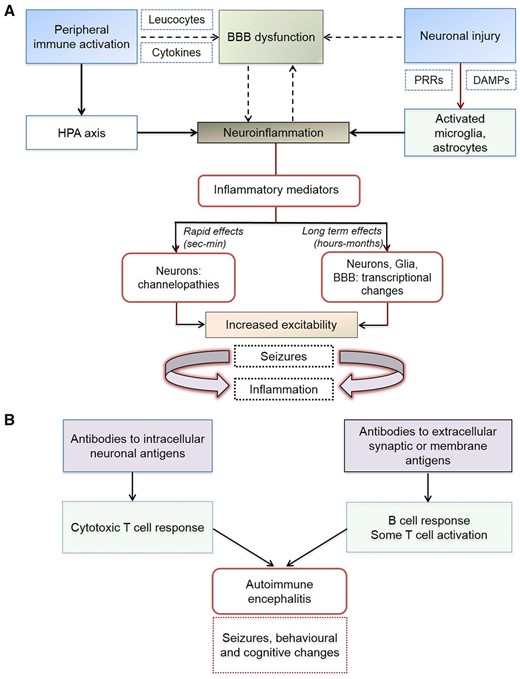
Assistants who spend little time educating themselves about these medical conditions might not be able to respond promptly and help patients when an attack occurs. These healthcare concepts should be thoroughly studied across all organizations in the medical sphere to ensure that home transfers yield more benefits than drawbacks. With the relevant knowledge, new interventions can be provided and psychological problems avoided by addressing clinical issues.
Purpose of the Change Proposal
The purpose of the change proposal is to show the world’s healthcare development process. Home treatment is becoming increasingly popular, and workers in this field are working to make assistance more comfortable for patients with severe diseases. In recent years, there has been a growing recognition of the benefits of home care, allowing people to feel safe in their familiar home environment (Mah et al., 2021). The additional purpose of the proposal is to bridge the gap between traditional college education and the specific demands of patients with seizures and epilepsy. Nurses and caregivers should be equipped with the necessary instruments to support individuals with healthcare conditions and be able to maintain stable life activities while traveling to the hospital in case of an emergency.
Additionally, the proposal aligns with the focus of healthcare on evidence-based practice and quality improvement. Literature research papers summarize that educational programs are grounded in the most current and effective approaches to managing problems such as seizures and epilepsy (Chiang et al., 2020). This aspect supports the idea that patient care is based on the best available evidence, promoting the safety and effectiveness of treatment plans. Moreover, collaborative education and work within an open community can accelerate the development of new interventions. Effective communication and coordination between healthcare workers, caregivers, and nurses can improve the approaches to care provision.
PICOT Question
To address the clinical problem, the PICOT question can be used to ensure the research is sufficiently in depth. According to Lira and Rocha (2018), the PICOT framework includes population, intervention, comparison, outcome, and time. This guided framework for the change proposal can facilitate understanding of the health issues and propose specific treatment plans.
The proposal’s PICOT question serves as a basic framework for understanding the clinical cases of seizures and epilepsy. The request stated as follows: “In patients’ in-home care with seizure/epilepsy (Population), education/orientation is earnestly necessary for nurses/staff upon hire, family, and caregivers (Intervention), compared to the limited instructional time in traditional college (Comparison). This proposal aims to prepare for effective interventions and achieve quality patient outcomes. (Outcome) within 30 days (Time)?”
The population of interest includes patients diagnosed with seizures or epilepsy who receive help at home. People can receive support at every stage of the disease, and age, background, or gender do not play a massive role. The intervention aspect of the concept proposes comprehensive education for nurses, doctors, caregivers, and other staff who participate in in-home treatment.
The courses aim to provide in-depth knowledge and practical skills in recognizing medical conditions in patients, first aid, and psychological support. The comparison highlights the issue of inadequate education at colleges regarding home assistance in severe cases. Traditional help includes hospitalization and the use of special equipment. However, comprehensive programs in home care settings are at odds with the current education approach in many medical institutes.
The desired outcomes include improved seizure management within 30 days, as proposed in the initial PICOT question. Furthermore, it is predicted that case severity and frequency will decrease, and patients’ satisfaction will increase. It is allowed to use up to 30 days to evaluate outcomes, fill the gaps, and improve educational courses.
Literature Search Strategy and Its Evaluation
To gather relevant information from the internet, it is essential to consult reliable sources published in medical portals, journals, and databases. For example, PubMed, CINAHL, AND Google Scholar helped to retrieve more information about the spread of medical conditions. The literature research strategy focuses on such techniques as using specific keywords.
For instance, relevant information was found through searches for “seizure,” “epilepsy,” “home care,” “medical education,” and “nursing.” Synonyms and other common words were also used to extend the search. Boolean operations also helped to find more specific literature, as the use of connecting words like “and” and “or” made the keywords clearer. For instance, the “seizure and epilepsy home care” search yielded a vast array of reliable works that helped to deepen our understanding of the topic.
There was also an inclusion criterion allowing the use of articles published within the last five years. It is also important to use papers published in English, ensure they have been reviewed by professionals, and post them in physical or electronic journals. Key information, such as study design, sample size, interventions, and conclusions, was extracted from each article to inform the change proposal and enhance its informativeness. The literature evaluation process included a check for relevance and quality.
Moreover, the screening technique was used to identify articles more closely related to home care or to seizures and epilepsy in general. The selected papers underwent critical appraisal to assess the methods used in the research. In this case, statistical analysis was used to assess the strength of the proposed evidence. Therefore, the relevance of the change proposal was identified and addressed for further comprehensive education in the medical sphere. All chosen articles discussed studying interventions with outcomes and impact on patients in the home setting.
The consistency of findings was improved, making it easier to replicate results and learn new things efficiently. Every literature review also included recommendations to apply best practices in seizure and epilepsy management. Additionally, the sections with limitations and gaps were carefully evaluated and implemented. Some areas of improvement were identified through limited research, and it is essential to strengthen new information with evidence-based practices. By critically assessing the literature, the change proposal can aim to provide high-quality support to patients with severe diseases.
Nursing Theory Utilized
To guide comprehensive education, the Diffusion of Innovation nursing theory can be used. Dearing and Cox (2018) stated that this idea in the nursing sphere focuses on innovations and new practices. It allows you to stay on trend and adopt recent technological advances more quickly.
The theory emphasizes the importance of effective communication and leadership to facilitate the implementation of innovation. By applying the Diffusion of Innovation nursing theory, the education process can be enhanced, and home care, in this case, can become a widely adopted practice in the medical sphere. The idea proposes that change occurs when information becomes available to the public, stakeholders are actively engaged, and the environment welcomes new and unique practices (Dearing & Cox, 2018).
The theory also highlights the role of opinion leaders, who can influence the population and increase social awareness of new technologies in the healthcare industry. People usually have role models, and it is important to choose the right celebrities to ensure widespread news coverage. These opinion leaders can be nurses, teachers, or caregivers who spend significant time working in medical environments.
Utilizing this nursing model, the change proposal can foster a supportive environment, helping workers become more motivated to study new material. Hospital staff should understand that home treatment of seizures and epilepsy may not always be successful, and, in some cases, lethal outcomes may appear (Asadi-Pooya et al., 2022). Unexpected death in epilepsy (SUDEP) is not common to this health problem, but may occur when medical workers do not have enough experience in first aid (Asadi-Pooya et al., 2022). The risks remain low, but implementing relevant education and nursing practices can help mitigate potential issues. Therefore, communication between healthcare professionals and the integration of new studies remain crucial in this industry.
Implementation Plan with Outcomes
The production of the implementation plan should include potential outcomes to ensure that workers strive to achieve them. Firstly, the educational program should be developed in collaboration with professors from universities and colleges. By creating a comprehensive course, students will be able to recognize types of seizures and epilepsy to provide effective treatment.
Cultural sensitivity and effective communication should also be incorporated into education programs to meet the diverse needs of patients. Program delivery should be spread into several parts to allow students to analyze the material accurately and apply it in real-life practice. Hands-on experience, in this case, should enhance further studies in this field.
Evaluation of the outcomes is also crucial, as medical experts can start sharing their knowledge and skills with others to enhance various inventions in home assistance for severe diagnoses. By collecting insights from colleagues, more opportunities can be opened up, as every person may have a diverse perspective on current problems. Finally, quality control should be considered, and the treatment outcomes should always stay positive.
Evidence-Based Practice in Intervention Plan
Evidence-based practice (EBP) was guiding the development of the intervention plan. It was used to analyze available evidence, clinical expertise, and values of potential patients. The program’s intervention, which included a literature review, clinical expertise, patient preferences, and control over trends, was also guided by the EBP. Findings from approved articles identified best practices to incorporate into education plans to further motivate workers.
Moreover, alongside the research papers, some clinical expertise was evaluated regarding home care in cases of seizures and epilepsy. In evidence-based practice, patients’ reflections are presented, making it easier to stay sensitive to cultural norms, ages, and races. Lastly, all results within the framework are closely monitored to ensure that workers comply with conventions and that patients remain satisfied with medical services.
Nursing Intervention’s Evaluation Plan
The proposed nursing intervention primarily focuses on providing additional education to healthcare workers to assist patients with epilepsy in their homes. Nevertheless, it is essential to evaluate the effectiveness of the plan developed. This testing can include several steps, including pre- and post-intervention evaluations, when possible outcomes are predicted before execution and compared to the actual conclusions.
Patients should also be asked to give their feedback on the new treatment technique. However, it is important to make these questionnaires anonymous and optional for each person to avoid pressure. These qualitative responses can help identify gaps and fill them in the near future.
Checklists should also be developed before implementing new medical frameworks to enable workers and patients to remain prepared for unexpected situations. All cases must be added to the common database for further evaluation and progress checks. It is essential to manage improvements over time to ensure the healthcare industry continues to improve.
Barriers to Implementation
The most common barrier to plan implementation is limited resources, as there may not be enough funding or staffing to conduct trial testing procedures. Some healthcare professionals may resist changing the standard way of epilepsy treatment and stand for assistance within hospitals. The effectiveness of home assistance is not fully understood, and the risks remain high.
Medical staff might also not have enough time to attend extra classes, which impedes the development of new interventions in this field. Lastly, some individuals may not be comfortable with technology. For the older generation, remote learning might not be available, and the number of educated experts is decreasing.
Solutions
To overcome these barriers without incurring additional risks, support can be found in investors and celebrities who may be interested in promoting new ideas in the medical sector. Furthermore, it is important to hold regular briefings to reassure professionals that, without the new medical experiments, the healthcare industry will stop developing and the evolutionary process will slow down. Information delivery should also be flexible, and workers should be able to access materials independently during free time for studying. Online and offline classes should be created to ensure that experts from different generations stay up to date with modern trends. Consequently, every worker can find the most convenient type of education.
References
Asadi-Pooya, A. A., Trinka, E., & Brigo, F. (2022). Counseling about sudden unexpected death in epilepsy (SUDEP): A global survey of neurologists’ opinions. Epilepsy and Behavior, 128, 1-7.
Chiang, S., Moss, R., & Patel, A. D. (2020). Seizure detection devices and health-related quality of life: A patient – and caregiver – centered evaluation. Epilepsy Behavior, 105.
Dearing, J. W., & Cox, J. G. (2018). Diffusion of innovations theory, principles, and practice. Health Affairs, 37(2).
Johnson, E. L. (2018). Seizures and epilepsy. Medical Clinics, 103(2), 309-324.
Klein, P., Krauss, G. L., & Steinhoff, B. J. (2023). Failure to use new breakthrough treatments for epilepsy. Epilepsia, 64(6), 1458-1465.
Lira, R. P. C., & Rocha, E. M. (2019). PICOT: Imprescriptible items in a clinical research question. Arquivos Brasileiros de Oftalmologia, 82(2).
Mah, J. C., Stevens, S. J., & Keefe, J. M. (2021). Social factors influencing utilization of home care in community-dwelling older adults: A scoping review. BMC Geriatrics, 21(145).
Steriade, C., Titulaer, M. J., & Vezzani, A. (2021). The association between systemic autoimmune disorders and epilepsy and its clinical implications. Brain, 144(2), 372-390.