
Introduction
Firm CEOs must develop a strategic plan to address an underperforming business. GemBra is a good example of reducing performance after the initial manager hands over the top management to his daughter, Shona. Examining GemBra’s organizational structure reveals that the firm faces several challenges, including a poorly defined existing business strategy, inconsistencies in communication flow, inadequate horizontal communication, delayed feedback, top-down management, and inefficient formal business processes. Therefore, the primary factor that adversely affects GemBra’s performance is the ineffective use of information and communication technology. Solving this issue through multi-stage business process management (BPM) strategic analysis can stimulate the firm’s positive growth.
Analysis
GemBra focuses on selling a wide range of products, including but not limited to videos, CDs, and books. Effective communication is critical for businesses to excel. However, as observed in the organization structure description, various issues influence the free flow of information in GemBra. Shona can employ multiple strategies to mitigate barriers to information flow. First and foremost, she should eliminate paper records and set up a digital record transfer to enable instant transfer of information (Mishra, 2021). By doing so, the business will market its products effectively, while also quickly receiving information about any changes that need to be made.
Design
The current project aims to increase GemBra product sales. By ensuring a free flow of information, responses to queries from marketers and customers can be meaningfully used to improve products. As the firm expands, it anticipates meeting the needs of both local and international customers. Such needs cannot be successfully met without access to market responses.
Model: Strategic Level Solution Design
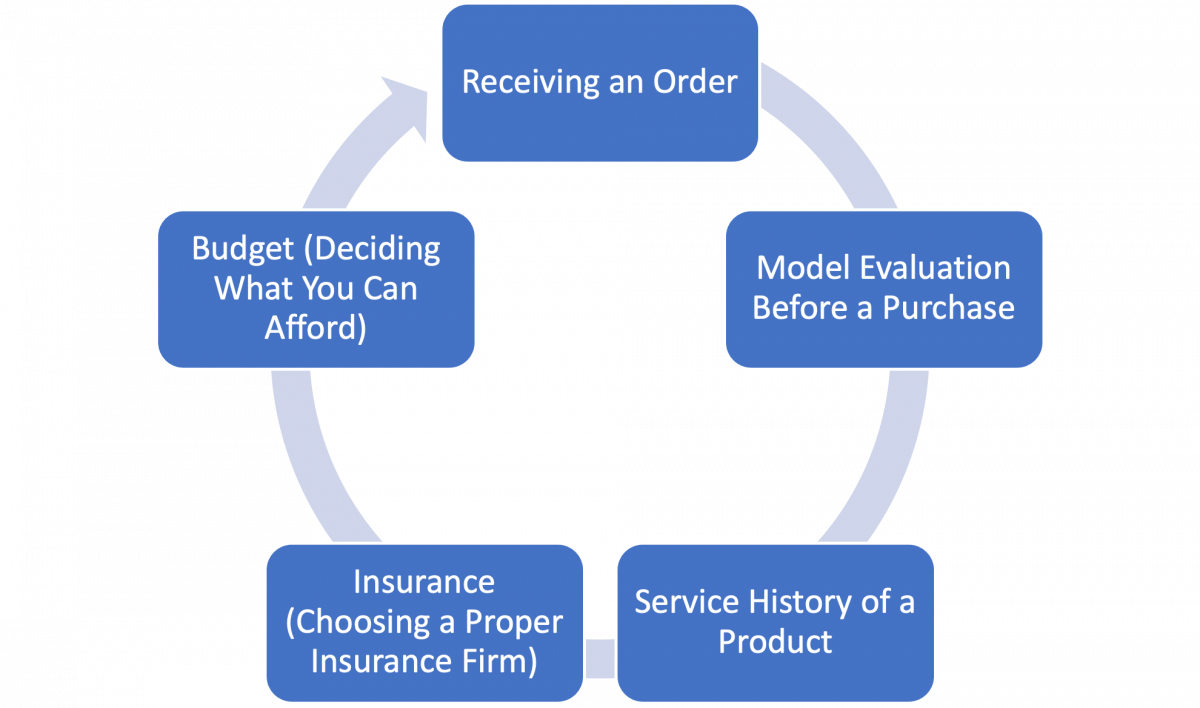
Figure 1 is a graphical representation of the business processes in a business practice model. It utilizes standardized flowcharts to represent individuals’ choices and the progression of the process.
Implementation: Business Logics and Rules Analysis
In GemBra, rules and regulations should be set up to govern how the firm manages its information flow. These rules will ensure a smooth flow of messages in the supply chain. First, GemBra must integrate an appropriate mode of payment. The use of debit or credit cards is accepted for transactions in most businesses (Kir & Erdogan, 2021). In addition, when purchasing GemBra’s products, a note should be issued to the clients indicating that once goods are sold, they cannot be returned unless on specific occasions. The business should also establish rules regarding the treatment of consumers and customers without favoritism.
Monitoring and Preventing Errors
There is a chance of several errors when resolving lanes into separate pools. To minimize this probability, Shona should consider various issues. First, the pools represent the participants in the sale process. Depending on the viewpoint, Laguna and Marklund (2018) noted that pools could be groups or individuals. In reality, considering all stakeholders inside the pool is the option that Shona should seek to gain complete control over the sales process. Put, considering sales as an end-to-end process, Shona will have one pool representing the entire firm. The customers can be placed in a separate pool, and Shona must consider them in all decisions regarding the sales process.
Communication for Optimization
There are several types of communication flows within an organization. These include downward, upward, diagonal, and horizontal movements. Downward is the flow of information from senior members to junior members. This is mainly through giving instructions. Upward communication can occur from junior to senior members, mostly when presenting ideas or complaints.
Diagonal flow occurs from members to staff and from staff to juniors. The horizontal flow of information typically occurs between people within the same group at the workplace. (Rajani and Garg 2018). This flow of information allows proper coordination at the workplace. GemBra should adopt all types of information flows to conduct business successfully.
Conclusion
Effective and efficient information flow is crucial for any business. Suppose Shona wishes to mitigate the declining sales within GemBra. In that case, she should adopt ICT devices and software that will enhance faster and more accurate communication among departments or between the firm and its customers. Accessing customers’ feedback regarding products is crucial to ensuring their satisfaction.
Reference List
Kir, H. and Erdogan, N. (2021) ‘A knowledge-intensive adaptive business process management framework,’ Information Systems, 95, p.101639.
Laguna, M. and Marklund, J., (2018) ‘Business process modelling, simulation, and design,’ Chapman and Hall/CRC.
Mishra, L. (2021) ‘Design a business plan for setting up a Maternity nursing home in Himachal Pradesh, India,’ ZENITH International Journal of Business Economics & Management Research, 11(2), pp.17-32.
Rajani, V. and Garg, D. (2018) ‘Types for information flow control: Labelling granularity and semantic models,’ In 2018 IEEE 31st Computer Security Foundations Symposium (CSF) (pp. 233-246). IEEE.