Problem Background
Caring for geriatric patients requires more attention to various details, as their health significantly differs from that of the younger generation. Changes in health determine the specifics of the medication usage for a given population. In particular, older adults exhibit distinct pharmacokinetic and pharmacodynamic features, as well as decreased liver function, and similar changes (Rochon & Schmader, 2023).
An influential problem is polypharmacy – these patients usually require many drugs for various conditions (World Health Organization, 2019). For example, on average, nursing home patients in the U.S. should take about seven or eight drugs a day (Rochon & Schmader, 2023). At the same time, a third of patients need more than nine types of medication a day (Rochon & Schmader, 2023). Patients and providers need to take into account medication compatibility, time, and routes of admission to maintain the effectiveness of treatment
Given the difficulties associated with taking drugs in the older generation, the process is often associated with problems and errors. According to Shelton (2023), about 16-27% of nursing home patients have experienced medication errors. The most frequent consequences of errors include neuropsychological problems and gastrointestinal and hemorrhagic events (Rochon & Schmader, 2023). At the same time, studies have shown that more than 40% of such incidents among patients in nursing homes are preventable (Rochon & Schmader, 2023). Consequently, the problem of drug errors affecting geriatric patients attracts attention and is therefore worth studying at Hampton VA Medical Center.
Process Review
Medication management for patients involves many steps, from prescribing to monitoring the effect after administration. These steps are accompanied by various difficulties, which can lead to errors, such as distraction or problems with sending an order (Bengtsson et al., 2021). Administering a drug to patients is one of the most critical steps, where the risks of errors are increased; therefore, by focusing on improving it, specialists can reduce the number of mistakes.
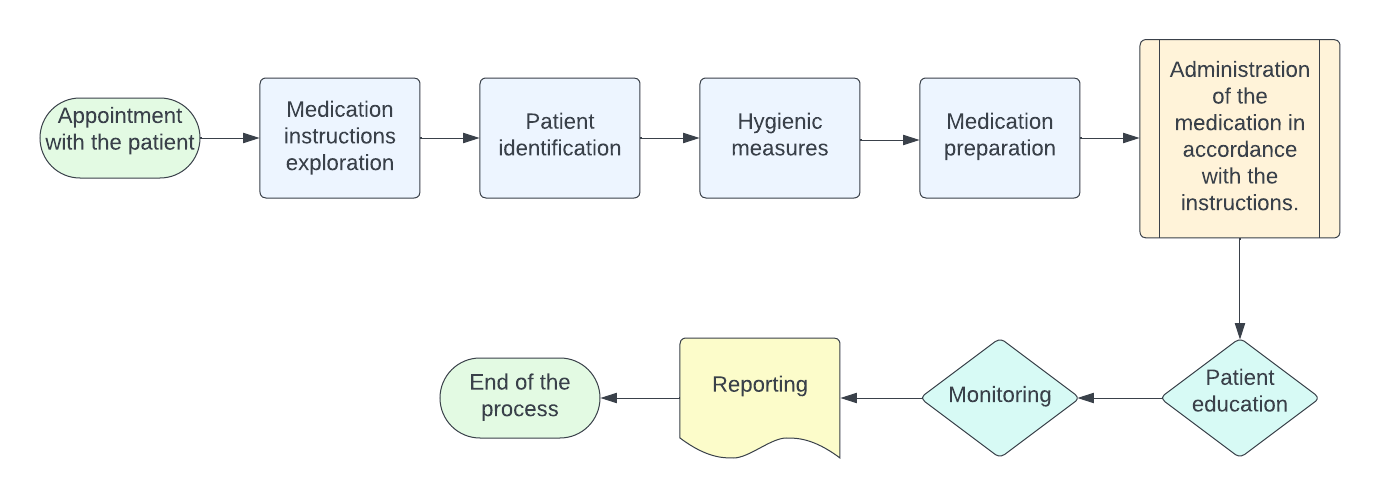
Figure 1 in Appendix A illustrates the critical steps for administering drugs to patients at the Community Living Center, Hampton, VA Medical Center. Registered nurses are key individuals responsible for ensuring the safe administration of drugs (Bengtsson et al., 2021). A careful investigation of the administration process is necessary to minimize the risks of medication errors.
The current administration process begins with a review of the drug order. Then, the nurse must identify the patient to avoid administering the medicine to the wrong person. Nurses must also adhere to hygienic measures to minimize the risk of patient infections. Before issuing the medication, the specialist prepares the necessary equipment and the drug.
The way the medication is administered depends on its type; therefore, the nurse needs to review the instructions and choose the desired path carefully. If necessary, the nurse informs the patient about the drug taken, its properties, and side effects. After administration, the nurse fills out the documents and can monitor potential problems.
Associated Risks
The current process involves several risks, which can lead to medication errors. In particular, misunderstanding or confusion in instructions can lead to the wrong dose or drug administration route. Inaccurate patient identification leads to the resident being able to receive unnecessary medication and the other not receiving the necessary treatment. Lack of hygiene can be a reason for infections and additional complications in the patient’s condition. Improper preparation of the medicine causes the manifestation of side effects or the absence of the necessary therapeutic effect.
A patient’s lack of awareness about medicine may lead to withdrawal of drugs in the future or failure to identify side effects. Finally, if the specialist overlooks complications, the patient’s condition can deteriorate significantly, requiring new treatment. As a result, the administration process is accompanied by significant risks and requires constant improvement.
References
Bengtsson, M., Ekedahl, A. I., & Sjöström, K. (2021). Errors linked to medication management in nursing homes: An interview study. BMC Nursing, 20(1), 1-10.
Rochon, P. A., & Schmader, K. E. (2023). Drug prescribing for older adults. Wolters Kluwer: UpToDate.
Shelton, P. (2023). Medication errors in nursing homes. Nursing Home Abuse.com.
World Health Organization. (2019). Medication safety in polypharmacy: Technical report.
Appendix A