
Introduction
Orthographic mapping is an essential facet of literacy development among young students. Teachers in early educational settings must understand what it is, how it works, and how it relates to literacy development to provide sufficient instruction for pupils. Therefore, orthographic mapping is a crucial element in early literacy development, as it promotes reading and spelling development, and can be developed by families and teachers in children both with and without exceptionalities.
Orthography Definition
Firstly, before delving into orthographic mapping, it is important to define orthography. Orthography is, essentially, the traditional spelling technique of a given language. It refers to the rules and norms of writing words and how to arrange letters (Eisnor, 2022). Students need a solid grasp of this sphere to quickly decode and remember new words and how sounds connect to letters.
Orthography and Literacy Development
Knowing what orthography is, one can understand how orthographic mapping relates to the development of literacy. Orthographic mapping is an act of creating an imaginary map of letters and sounds that combine into words (Sedita, 2020). This happens when readers connect language sounds to the letters that correspond to them and also when they connect letter patterns to words. This process, although seemingly basic, is fundamental for reading comprehension, spelling precision, and fluency (Harsanti, 2020). Hence, orthographic mapping is important, as it improves a reader’s ability to recognize and produce written words.
Literacy Development Through Orthographic Mapping
Knowing how orthographic mapping relates to literacy development, it is possible to create instructional strategies for children with and without exceptionalities. For children without exceptionalities, orthographic mapping is critical for reading development. Understanding the relationships between letters and sounds, as well as identifying letter patterns within words, improves reading comprehension, spelling accuracy, and overall reading fluency.
Explicit training in orthographic mapping, phonics, and phonemic awareness can benefit typically developing students (Harsanti, 2020). Activities that focus on connecting sounds to letters and patterns, as well as the utilization of materials such as orthographic mapping charts, help to establish a solid literacy foundation.
Children with special needs, such as dyslexia or other learning difficulties, benefit greatly from tailored teaching in orthographic mapping. Explicit education and multimodal learning, such as visual aids, technology, and interactive games, can make a significant difference (Moats, n.d.; Joseph, n.d.). Inclusive teachers should accommodate different learning styles and use materials such as the orthographic mapping chart to help students with special needs achieve important skills.
Student-Friendly Resource
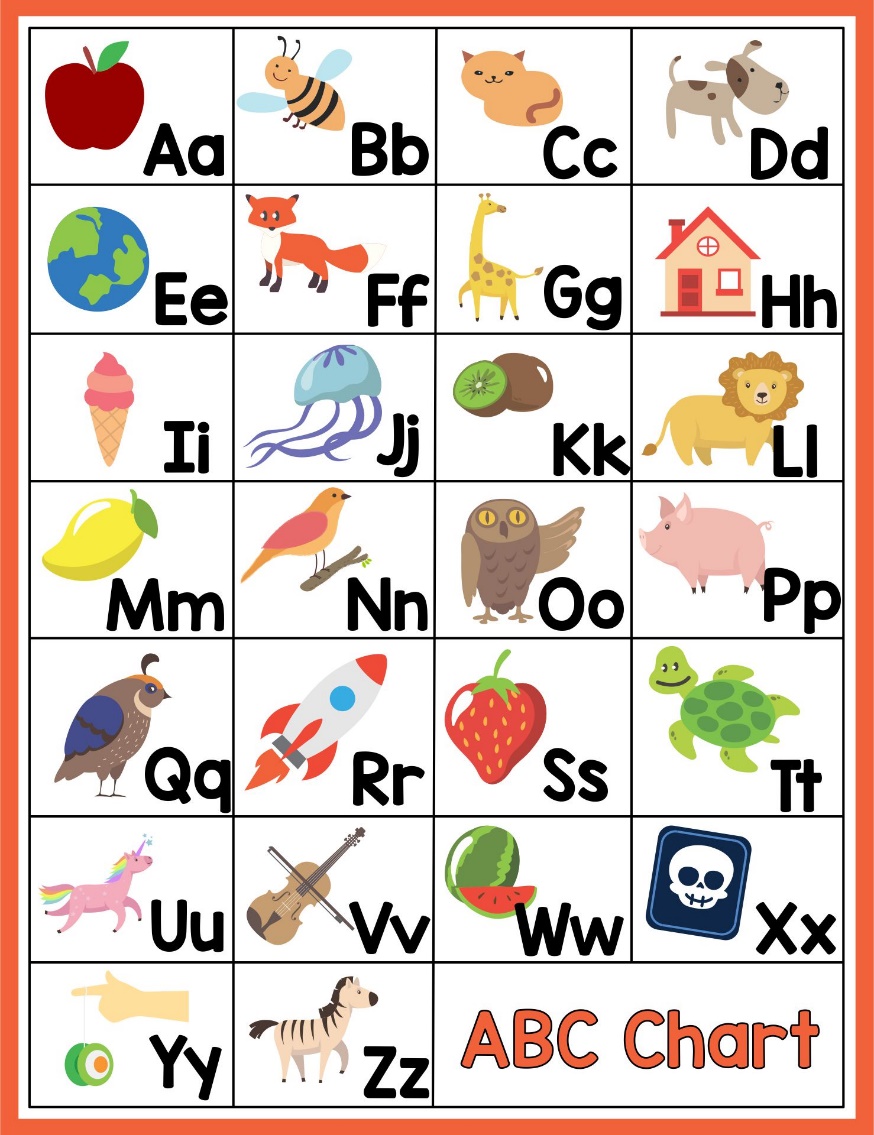
This student-friendly orthographic mapping chart visualizes letter-sound links, encouraging young learners to develop critical phonemic awareness. By connecting each letter to its associated visual and initial sounds, the chart raises awareness of letter-sound association. Furthermore, the chart helps to learn word structure by visually illustrating the links between letters and sounds. It acts as a memory aid, helping to retain these associations and contribute to core reading and spelling skills. In essence, this resource provides a multi-sensory learning environment that encourages early reading skills in an entertaining and accessible way.
Sight Words vs. High-Frequency Words
In literacy training, it is critical to distinguish between high-frequency and sight words. Sight words, such as those that can be identified using orthographic mapping, improve fluency and comprehension. Adults naturally recognize sight words, including high-frequency phrases.
Explicit phonics training, combined with high-frequency word acquisition, incorporates phonics patterns into reading and spelling tasks in literacy education (“The How of Teaching”, 2022). Orthographic mapping, for example, makes it simple to distinguish sight words like “the,” improving reading fluency. High-frequency words, such as “said” and “because,” require specialized phonics instruction. This comprehensive technique ensures a sophisticated understanding and helps teachers tailor lessons for successful literacy development.
Activity for Families
An interesting sight-word scavenger hunt is an excellent way for families to improve their children’s memory skills without relying on rote memorization. Parents can create a list of appropriate high-frequency words and phrases. Then, youngsters explore books and household items, identifying these words in meaningful contexts. The approach promotes contextual learning by focusing on the relationship between sight words and their presentation in meaningful situations.
Conclusion
To summarize, orthographic mapping is critical for early literacy, influencing how children read and spell. Educators who recognize orthographic nuances lay a solid foundation for young learners with exceptionalities by providing targeted instruction in inclusive environments. Hence, teachers can improve students’ experiences by using activities such as sight-word scavenger hunts and tools like orthographic mapping charts to build comfortable reading and writing skills in early learners.
References
Alphabet Sounds Chart Printable (2024). Printablee.
Eisnor, L. (2022). Orthographic Mapping: a Tool for Success in Reading, Vocabulary, Word Knowledge, Meaning, and Self Teaching in the Primary Grades. Grand Valley State University.
Harsanti, H. R. (2020). The Use of Orthography to Increase Young Learners’ Basic Literacy: Spelling Ability. ELT Worldwide: Journal of English Language Teaching, 7(2), 89.
Joseph, L. (n.d.). Best Practices in Planning Interventions for Students With Reading Problems. Reading Rockets.
Moats, L. (n.d.). How Spelling Supports Reading. Reading Rockets.
Sedita, J. (2020). The Role of Orthographic Mapping in Learning to Read. Literacy Lines.
The How of Teaching High Frequency Words (2022). ALL Ohio.