
A formatting or citation style is a specific approach to creating and organizing both academic papers and in-text citations/references. The most popular citation styles are MLA (Modern Language Association), which is typically used for papers on literature, ethics, history, philosophy, music, art, and others, and APA (American Psychological Association), which is used for papers on social sciences, psychology, management, nursing, and other topics.
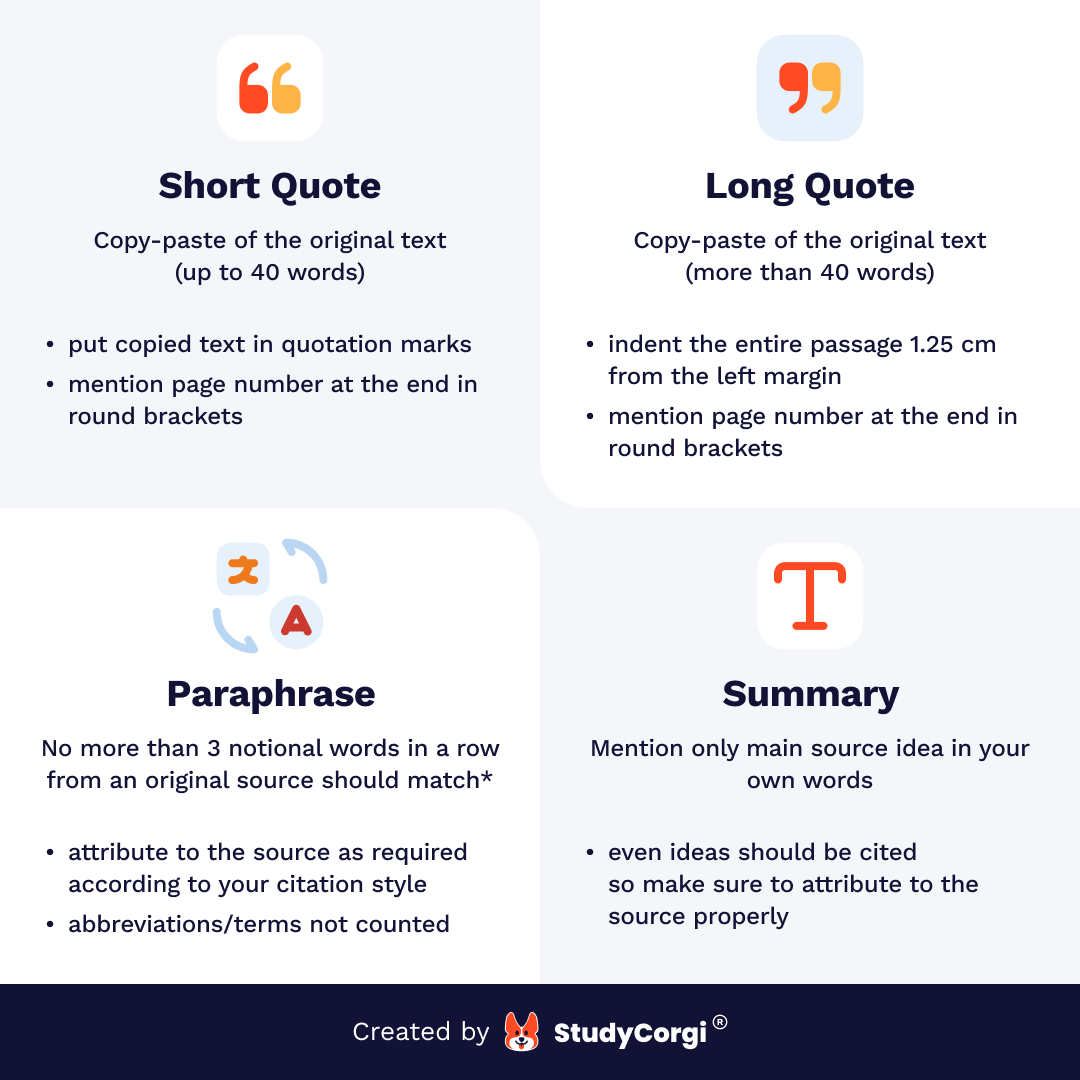
Quoting
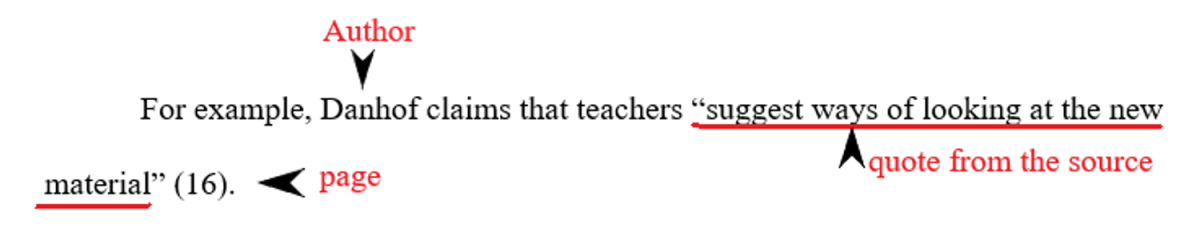
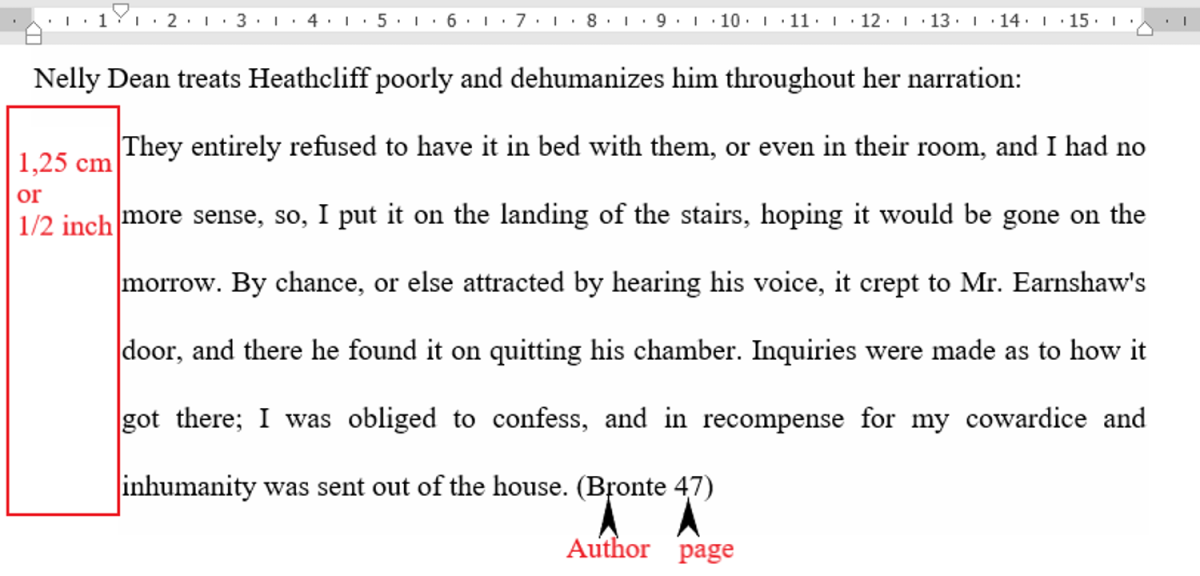
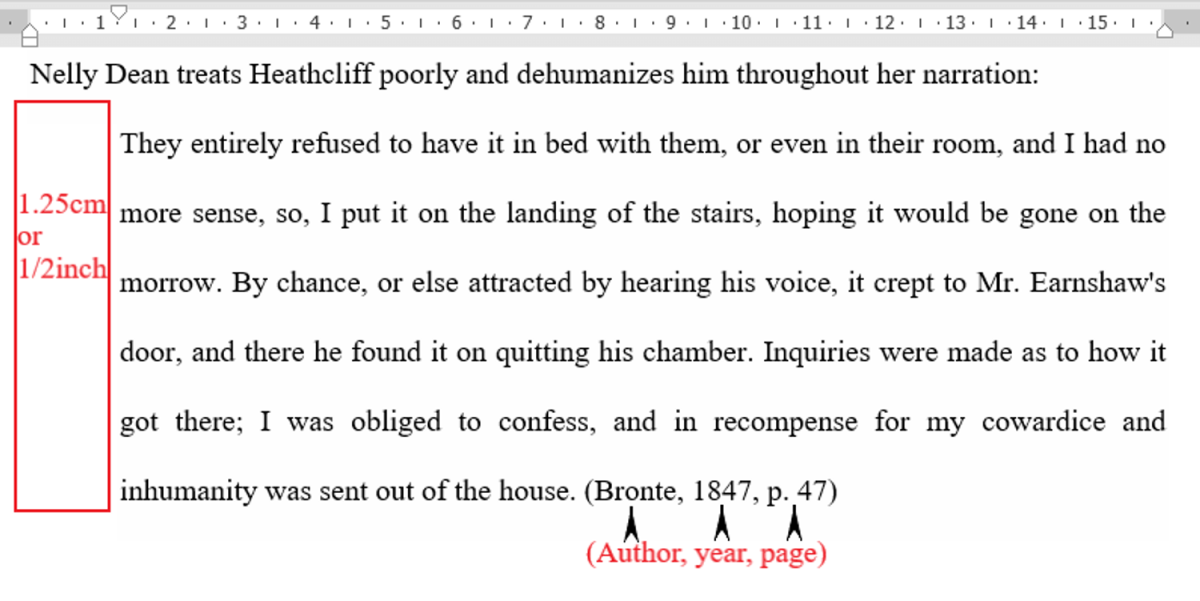
Quotations must be identical to the original, using a narrow segment of the source. They must match the source document word for word and must be attributed to the original author.
Samples of Quoting (Short Quotes)

Samples of Quoting (Long Quotes)
Paraphrasing & Summarizing
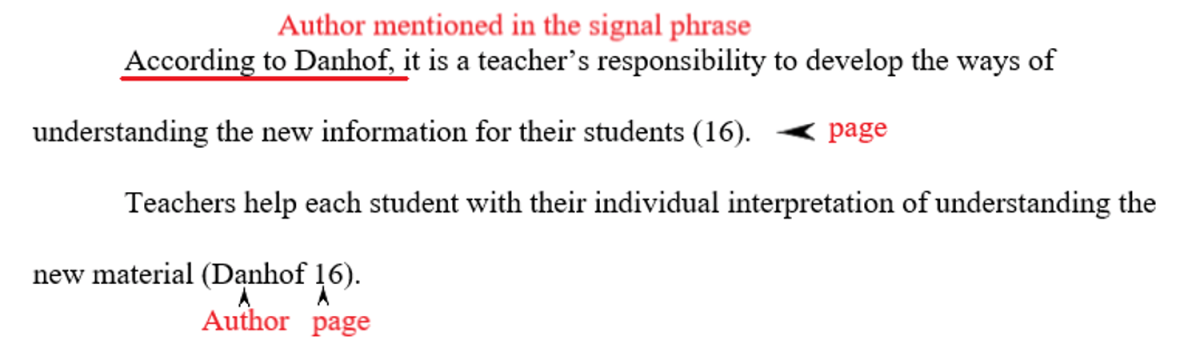
Paraphrasing involves putting a passage from source material into your own words. A paraphrase must also be attributed to the original source. Paraphrased material is usually shorter than the original passage, taking a somewhat broader segment of the source and condensing it slightly.
Summarizing involves putting the main idea(s) into your own words, including only the main point(s). Once again, it is necessary to attribute summarized ideas to the original source. Summaries are significantly shorter than the original and take a broad overview of the source material.

❓ FAQ
❓ When should one opt for a short quote instead of paraphrasing format when citing?
If it is a passage bearing a distinct idea with more than 3 notional words directly copied from the original text.
❓ What is the correct citation according to MLA 9?
At the beginning of The Great Gatsby, Nick Carraway ponders over the nature of judgments and hope and tells readers that “Reserving judgements is a matter of infinite hope” (Fitzgerald 5).
❓ What is the correct citation according to APA 7?
At the beginning of The Great Gatsby, Nick Carraway ponders over the nature of judgments and hope and tells readers that “Reserving judgements is a matter of infinite hope” (Fitzgerald, 2002, p. 5).