
Organizational Profile and Structure
Royal Albert Hall is an iconic venue in South Kensington, named after Prince Albert. It was built in 1871 as a realization of the prince’s vision for Albertopolis (Royal Albert Hall, 2023). It holds a special place in the hearts of people worldwide. With its Royal Charter and continual buzzing activity, it has become one of the world’s most beloved and popular performing venues.
Its Grade I listed building has been scrupulously preserved and enhanced as a result of significant investment to accommodate a varied range of public activities that benefit society. It aims to inspire artists and audiences through its unique history, iconic auditorium, and innovative programming. It receives over 1.7 million visits annually for live experiences, and millions more experience it online (Royal Albert Hall, 2023). The facility is available for public tours during the day, features live music in Verdi, and offers free exhibitions. It is also known for the Elgar Room, a state-of-the-art small-scale performance space.
Objectives
The main objective of the Hall is to preserve and enhance its Grade I listed building while promoting arts and sciences by organizing a range of events and activities. The firm aims to increase investment in artistic projects by allocating more funds, organizing additional events, and fostering more collaborations. It is focused on increasing its current ability to conduct 400 shows and surpass 1.7 million annual attendance (Royal Albert Hall, 2023). This concerted effort is aimed at ensuring that the events taking place on its stage truly reflect the essence and reputation of its esteemed venue.
The organization is also proposing to increase investment beyond the stage performances. These will include the reintroduction of some of its TV shows, such as late-night jazz and classical morning series (Royal Albert Hall, 2023). Another objective is to expand its engagement space by introducing projects such as cross-curricular workshops. Some of these spaces include Discover Music and Math, Discover Music and Science, the Young Producers Scheme, and Future Makers (Royal Albert Hall, 2023).
These goals have been put in place to ensure that it extends the population currently watching its live performances by close to 200,000 (Royal Albert Hall, 2023). Furthermore, the Hall is aiming to invest more in digital engagement. In the upcoming years, its focus will be on creating immersive digital content that complements and enhances the Hall’s promoted events. It is trying to expand its audience reach through various platforms, including email, the website, and social media channels. The goal is to captivate and engage individuals in unique ways that resonate with their interests and preferences.
Consumer Trends
The hall is focused on monitoring and adhering to most of its consumer trends to ensure better customer satisfaction. It has placed a strong emphasis on diversity in the services it provides. Customer diversification is the process of identifying and targeting new markets to expand a business’s client base. The charity is focusing on increasing its income and publicity by attracting a wider range of audience segments, including young people, families, and individuals from diverse backgrounds. The artistic program is also diversified, featuring various genres such as music, comedy, dance, theater, film, and sports. This approach helps reduce reliance on ticket sales while enhancing social impact and enriching cultural offerings.
The focus on customer diversity will ensure it achieves its objective of reaching a broader audience. According to Blooploop (2020), current tourists are more attracted to facilities and activities that they can enjoy with their whole family. The Hall recognizes this tactic and utilizes it as one of its strategies to achieve its objectives. For example, the Hall will organize performances by Albert’s Band in the Elgar Room for families over the next school holidays. Additionally, they will offer a range of engaging programs for people of all ages (Royal Albert Hall, 2023).
There will be a regular schedule of Classical, Jazz, and Opera classes, as well as Storytelling and Music sessions, for children aged 0 to 4. They have planned a variety of events for individuals and community groups, such as dementia-friendly film screenings and music therapy workshops. The charity also offers Dance for Parkinson’s classes, providing a unique opportunity for individuals with Parkinson’s disease to engage in dance (Royal Albert Hall, 2023). In addition, there will be Songbook performances and an afternoon Coffee Club, where one may listen to live music while sipping a cup of coffee.
Sustainability Performance
The hall is committed to ensuring sustainability through embracing environmentally friendly practices in several ways. It has invested heavily in transforming its buildings to ensure efficient energy usage and reduce greenhouse gas emissions. Some of these investments include ventilation upgrades and improvements to heating and lighting systems. According to the 2021 report, the organization has replaced all the conventional lighting with LED technology. This has resulted in a reduction in electricity consumption by more than 66% (Royal Albert Hall, 2023).
Furthermore, the facility has installed an intelligent filter system that automatically adjusts the fan speed according to the carbon dioxide levels within the occupied spaces (Royal Albert Hall, 2023). New LED lights with PIR control have been installed throughout the building, including the catering facilities and the parking area. Lighting control was installed in freshly renovated cooking areas. Replacement of outdated belt-driven fans with EC fans within the Hall’s primary air-handling equipment (Royal Albert Hall, 2023).
Installation of a new CO2-controlled Variable Air Volume system in the Hall accommodations and backstage facilities. The design for replacing the Auditorium House System’s Halogen bulbs with LED lamps has advanced. Additionally, the organization has greatly reduced its use of print marketing materials. By leveraging digital platforms and tools, including a new website, mobile app, and digital program offerings, they have significantly reduced their reliance on traditional printed materials.
Financial Management
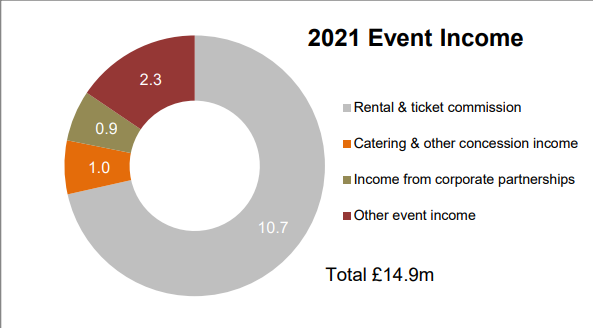
The hall has various streams of income from commercial activities, performances, bank interests, and philanthropic support. The primary source of income is revenue collected from ticket sales for shows organized by the facility. Additionally, there are fees for visitors who participate in tours and other experiences. It also rents the space to outside organizers who want to showcase their performances. The charity raised €10.7 million by selling tickets and renting out spaces in 2021. The other source of revenue is catering and other concession services offered by the Hall. It earned €1 million from this service during the same financial year (Royal Albert Hall, 2023).
It also depends on the support of philanthropists, donors, and sponsors for its revenues. Philanthropic funding has played a significant role in supporting the Corporation, particularly during the COVID-19 pandemic. According to the 2021 report, the hall acquired donations worth €4.8 million from well-wishers (Royal Albert Hall, 2023). These philanthropic donations are mainly from honorary fellows, trusts, patrons, friends, and philanthropy boards.
The other major source of revenue for the facility is the sale of seats. These are annual contributions by members for the seats and other miscellaneous items, which raised €2.3 million for the Corporation in 2021 (Royal Albert Hall, 2023). Additionally, it obtains loans from the government to help cover some of its expenditures. In 2021, for example, it received €20.74 million from the state, which it used to repay other loans such as CBILs (Royal Albert Hall, 2023). It also received a grant from the government’s Coronavirus Job Retention Scheme. Figure 1 illustrates the revenue from various sources for the hall.
Corporate Governance and Evaluation
The governing body for the charity is called the Council. It consists of 23 trustees, of whom 18 are selected from members who are seat holders (Royal Albert Hall, 2023). A seat holder is a member of the Corporation who has the right to access seats in the hall (Royal Albert Hall, 2023). The primary responsibility of the council is to determine the strategic direction of the organization in line with its objectives. It is also responsible for formulating policies and ensuring proper management.
The facility has committees formed under the purview of the Council; each one operates under specified terms of reference as defined in the Hall’s Constitution. They focus on addressing a specific area within the organization. Some of these committees include safeguarding, conflicts, seat rate, fabric, development, programming, governance and ethics, members liaison, marketing and PR, and remuneration and HR (Royal Albert Hall, 2023). The Finance, Audit, and Risk Committee is responsible for reviewing and providing recommendations to the Council on various financial matters.
The next management level is the executive team, which is responsible for managing the daily activities of the hall. The Chief Executive Officer heads it and consists of five directors. These include Director of Finance and Administration, Artistic and Commercial, Building and Operations, External Affairs, and Visitor Experience (Royal Albert Hall, 2023). They make policy recommendations to the Council, establish controls and procedures, and oversee day-to-day operations.
The charity formulates its objectives during the AGM meetings attended by the president, council, and executive members. The strategic goals are developed as a five-year business plan, for example, for the years 2022-2027. It is established based on the advice from the various committees and the views of the stakeholders. The Royal Albert Hall adheres to the standards of good corporate practice as outlined in the UK Corporate Governance Code. Some of the standards outlined in the code include promoting long-term sustainable goals and upholding the company’s values and strategies, such as integrity (Financial Reporting Council, 2018). The code also requires the board to establish frameworks for prudent and effective control and engagement with stakeholders.
Impact of Key Stakeholders
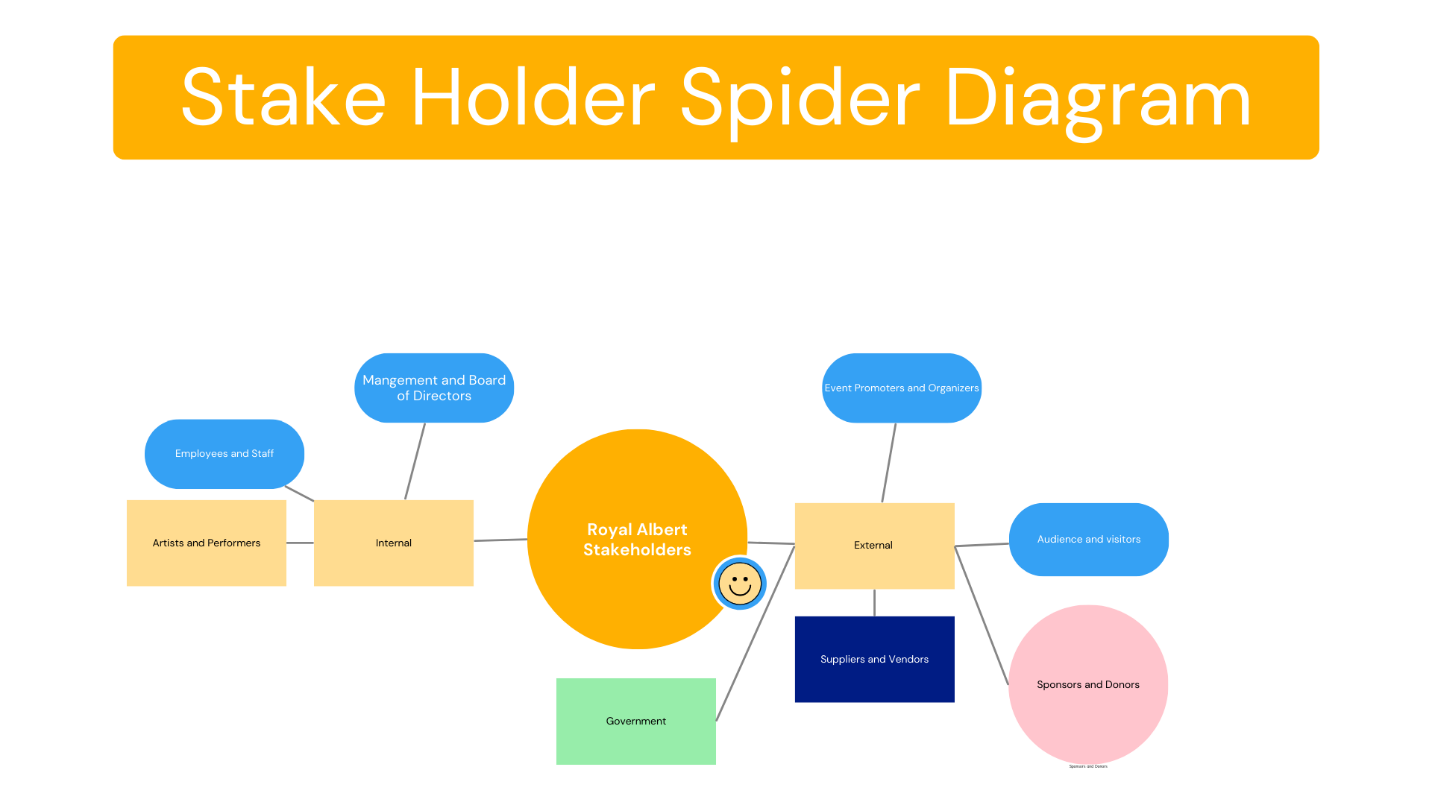
Stakeholders are very important for any organization to run smoothly. According to Braun (2019), a stakeholder is an individual or a group of people who have a vested interest in a business and facilitate its operation and existence. They can be categorized as internal, external, direct, or indirect. The firm can control internal ones, while it has no control over the external ones.
On the other hand, direct stakeholders have an immediate influence over the business, while indirect stakeholders do not have such control. Some of the key stakeholders include artists, audiences, donors, sponsors, government agencies, partners, and the media (Royal Albert Hall, 2023). The artists and performers play a crucial role in the charity, helping it meet its daily obligations to its clients. Partners come on board as collaborators, that is, organizing events in partnership with the organization. Others hire the hall and its facilities for their private performances.
The other type of key stakeholders are the audiences without whom the artist’s performance will be in vain, and hence render the charity useless. They visit the hall for various reasons, including to watch performances and tour the historic facility (Royal Albert Hall, 2023). The proceeds from entrance and entertainment fees form one of the major sources of income for the facility. This helps it meet its objectives, as it does not rely on government funding. They also provide feedback and spread word-of-mouth recommendations. However, dissatisfied audiences can have a negative impact by voicing complaints or boycotting.
Additionally, donors play a very important role in the charity. The Hall receives donations from its members and other philanthropists (Royal Albert Hall, 2023). They support the charity’s financial sustainability and social impact. The government is also a key stakeholder by regulating the operations of the Hall and providing loans and grants. The other stakeholder is the media, encompassing both social and mainstream media. They play an essential role in broadcasting some of the Hall’s programs, hence helping it reach a wider audience. Figure 2 illustrates the various shareholders of the Royal Albert Hall.
Current Issues Affecting the Stakeholders
The current business environment is facing several issues that affect the stakeholders. Some of the challenges include the COVID-19 pandemic, fluctuating energy prices, climate change, and internal business problems. The recently concluded COVID-19 pandemic has had severe effects on various industries, with a particularly significant impact on the tourism and hospitality sector. The current spread of the Omicron variant of COVID-19 hurts the audience, artists, and donors (Lawrence and Weber, 2022). There is a high risk of contracting the virus among visitors and performing artists when they attend events at the Hall. It has also led to reduced ticket sales, as well as cancellations and postponements of some shows.
Fluctuations in energy prices are currently a global issue with varied effects on stakeholders. The operating costs have risen, resulting in very high margins that reduce consumers’ purchasing power (Worthington, Britton, and Thompson, 2023). It has also affected the donors and forced the government to formulate new regulations, thereby impacting the facility’s operation. Therefore, it has led to financial strains amongst the sponsors, members, and audience, hence undermining the charity’s sustainability and profitability. Furthermore, it poses challenges in maintaining the building and its programs.
Due to the effects of climate change, there has been an increased emphasis on addressing the environmental impacts of the venue. This has been facilitated through various means, including corporate social responsibility (CSR), which encompasses education and awareness creation (Braun, 2019). According to Demirag (2018), CSR has been widely accepted by businesses, and all companies that want to reap big financial gains must take CSR seriously. The firm has also invested heavily in ways to reduce its energy consumption and carbon emissions. These additional costs are passed on to visitors through increased ticket fees and strict rules aimed at ensuring eco-friendly practices. The donors also have to dig deep in their pockets through the fundraising activities to ensure these objectives are met.
Recommendations
The Royal Albert Hall’s administration has displayed exceptional leadership and strategic vision. However, the hall still has some opportunities to improve its management and operations. Firstly, the council can focus more on collaboration with corporate sponsors to reduce its expenditures and increase profit margins. By diversifying its revenue streams, the organization can reduce its dependence on ticket sales and enhance its financial stability.
Secondly, it should conduct a thorough review of its expenses to enhance its financial efficiency. This will involve renegotiating contracts with suppliers to secure better terms and optimizing staffing levels in response to demand. Lastly, the charity should enhance its data analytics and performance measurement systems to obtain and analyze feedback from the customers. It will provide relevant information and strategies to meet audience preferences, enabling informed decisions regarding programming choices, pricing strategies, and resource allocation.
Conclusions
In conclusion, the facility has maintained its position as one of the world’s premier music halls over the years, while also adapting to the industry’s ever-changing trends and challenges. The management team has expertly combined attempts to preserve the hall’s rich history with a desire for renovation and innovation. They have put together an impressive lineup of programs for a diverse range of audiences, ensuring that the hall remains a vital cultural institution. Furthermore, the Royal Albert Hall’s ability to attract top-tier artists and performers has cemented the venue’s image as a distinguished and highly sought-after institution.
Despite the high expenditures of preserving and administering such a historic location, the council has effectively secured its financial sustainability. They have effectively maintained the hall’s operations and ensured its long-term viability through careful cost-cutting measures, the investigation of other revenue streams, and smart collaborations. Aside from their financial competence, their dedication to community participation and outreach efforts is admirable.
Reference List
Blooploop (2020) ‘Key trends that will shake up the visitor.’
Braun, R. (2019) ‘Corporate stakeholder democracy politicizing corporate social responsibility.’ New York, NY: Central European University Press.
Demirag, I., 2018 Corporate Social Responsibility, Accountability, and Governance: Global Perspectives. 1st ed. Abingdon; Routledge.
Financial Reporting Council (2018) ‘The UK corporate governance code.’ London, Financial Reporting Council.
Lawrence, A.T. and Weber, J. (2022) ‘Business and society: stakeholders, ethics, public policy. Seventeenth edition.’ New York: McGraw Hill.
Royal Albert Hall. (2023) ‘Annual Report 2021.’
Worthington, I., Britton, C. and Thompson, E. (2023) The Business Environment: A Global Perspective. 9th ed. Hoboken, NJ: Pearson.