
Introduction
Soccer Shots is known as a reputable soccer program for children. Since 1997, Soccer Shots has become a successful franchising business with over 300 territories spread across 43 states and 2 Canadian provinces (About, n.d.). Soccer Shots, named the top children’s fitness franchise in the United States by Entrepreneur Magazine, is committed to using soccer to improve children’s lives. It provides age-appropriate skill-building and character development, along with an expertly designed curriculum and fully trained coaches.
Stakeholders
To ensure a thorough understanding of all stakeholders’ viewpoints and needs, it is imperative to gather insights from diverse sources. Parents/guardians of children participating in Soccer Shots, franchise owners, coaches, and community organizers are examples of program stakeholders. On their experiences and the program’s effect on their development, parents can offer input. Coaches provide information about the practical aspects of curriculum delivery. Community organizers may offer insights into the program’s wider societal impact, while franchise owners can discuss operational difficulties and areas for improvement.
Overview
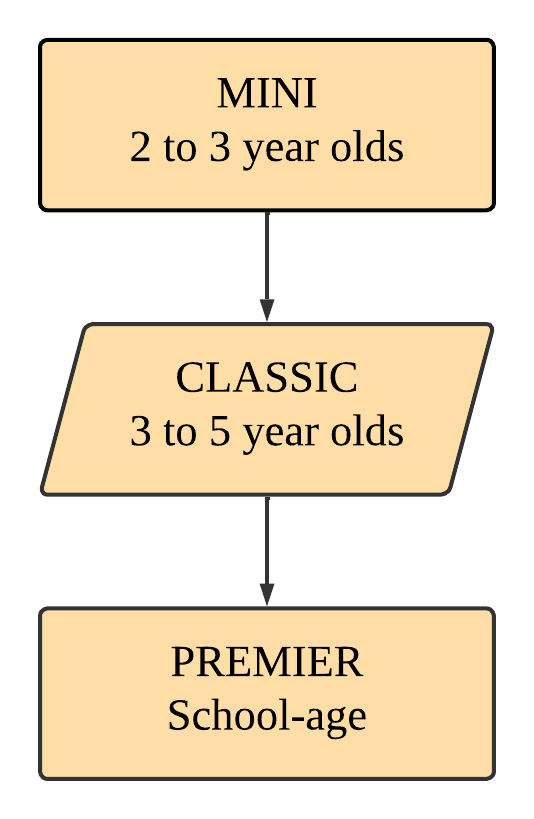
This synopsis provides a thorough understanding of Soccer Shots’ current service offerings and lays the groundwork for future analysis and sustainable design. For kids ages 2 to 8, Soccer Shots provides organized programs in three levels: Mini (2–3), Classic (3-5), and Premier (K–2) (Figure 1). With entertaining exercises and encouraging feedback, each program focuses on developing age-appropriate soccer skills, character traits, and physical fitness.
Accuracy
Assessing the accuracy of the current service process from the viewpoints of the different parties involved—parents, coaches, franchise owners, and community organizers—is crucial. If I were in their position, I would ensure that the current programs’ framework appropriately accounts for the developmental needs of kids ages 2 to 8. Another aspect to consider is the ongoing focus on the main objectives: fostering character, competence, and confidence in a secure setting. Furthermore, I would take into account any possible weaknesses or omissions in the current programs, such as incorporating environmentally and sustainably friendly practices into the materials and the delivery of the programs.
Challenges
Challenges in implementing Soccer Shots’ sustainable service design include sourcing environmentally friendly materials for equipment. To rectify that, the company can consider educating stakeholders about the benefits of sustainability and ensuring sustainable practices are accessible. In addition, making the initial investments in staff training and infrastructure, as well as overcoming possible resistance to change, may be necessary for the transition to sustainable practices. To tackle these obstacles, strategic planning, stakeholder collaboration, and a dedication to ongoing improvement are imperative.
Action Plan
Proposed action steps include:
- Shift to sustainable materials for equipment and uniforms.
- Introduce composting and recycling programs during sessions.
- Look into ways to power buildings using renewable energy sources.
- Work on sustainability projects with nearby organizations.
- Give parents and coaches training on sustainable practices.
Conclusions
Soccer Shots’ sustainable service design plan takes an all-encompassing approach to meeting the demands and expectations of diverse stakeholders while accounting for the environment. By assessing the accuracy of current services and identifying potential obstacles, the plan outlines concrete measures to move toward sustainability. These include sourcing environmentally friendly materials, implementing recycling programs, and collaborating with neighborhood organizations.
References
About. (n.d.). Soccer Shots.
Programs. (n.d.). Soccer Shots.