
Introduction
The apparent conceptualization of realism and relativism in relation to social construction has been central to several debates and disagreements. The Museum of Childhood’s collection encompasses all facets of childhood, spanning from the mid-19th century to the present. In addition to child care, home, nursery, and school life, a considerable costume collection reflects the trends and lives of children (McNamee, 2019). Additionally, the museum exhibition often features a photography archive. Therefore, this essay explores the concept of social construction of childhood with references to eight images derived from BBC News.
Furthermore, the essay begins by explaining the concepts of social construction, social agency, and how childhood is socially constructed. The essay then links the eight images to the social construction of childhood by connecting them to theoretical debates on social constructivism. Lastly, the essay concludes by drawing key themes together and suggesting why this exhibition and the idea of social construction are essential for understanding childhood.
Social Construction
A social construct or construction is the meaning, concept, or connotation that society attaches to an item or event and adopts concerning how it views or interacts with the object or event. According to social constructionism, things have no independent basis except for the mental and linguistic representations that people form about them throughout history, thereby constituting their shared reality (McNamee, 2019). From a linguistic perspective, therefore, social constructionism focuses on meaning as an internal reference within language, rather than external reality.
The concept of social construction of childhood has a diverse meaning in society. In sociology, social constructionism is a theory that suggests some conceptions of physical reality originate through a collaborative process (Danermark, 2019). Conversely, the social construction theory of childhood posits that various cultures have distinct perspectives on what childhood entails (Ingram, Schneider, and DeLeon, 2019). Consequently, how children are cared for varies significantly between nations, eras, and cultures (Sorin and Galloway, 2006).
According to James and Prout (1990), childhood, which should not be confused with biological immaturity, is neither a natural nor a universal characteristic of human cultures. As such, it represents a distinct socioeconomic and cultural aspect in many civilizations (Parsons, 1951). This makes it challenging to execute the United Nations Convention on the Rights of the Child with the same focus in all nations.
Image Exhibition on the Social Construction of Childhood
Child Abuse as a Social Construct
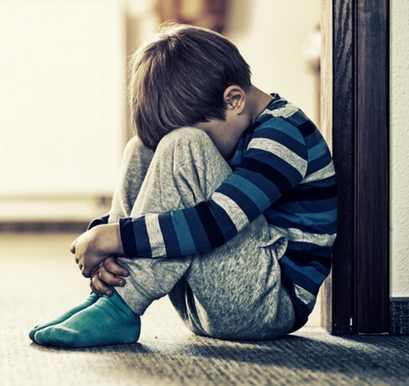
The figure above (see Figure 1) is a picture of a child who is undergoing child abuse. As the concept of child abuse varies across time, culture, location, social and political beliefs, religions, and systems, child abuse had to be defined in the Western world (Rogers, 2003). Historically, children were powerless in society and marriage owing to financial dependence and societal restrictions. This eventually resulted in mistreatment and abuse; hence, it was socially constructed (McNamee, 2019).
However, only societies that are ready to condone social involvement in child-rearing might construct the above description as child abuse (Qvortrup, 2009). Specifically, this did not occur until the later part of the 20th century, but it allowed experts to act, design, and enforce legislation to safeguard and assure children’s future safety (Rogers, 2003). In this case, the agency fits within the child abuse as a social construction by enacting such practices as child rescue movements and the Child Rights Act.
Childhood and War as a Social Construct
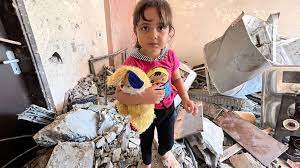
Most people have recently begun to recognize that conflict has several adverse effects on children. War destroys the essentials of existence, including schools, health care, decent housing, and food (Chaffin, 2006). The image of the child linked with war (see Figure 2) is based on the concepts of innocence and helplessness, along with the vulnerability idea formed by NGOs and charities, which promotes the perception that children are innocent and should not be present in or participate in wars (Tomison, 2001). In essence, in war-prone countries, the innocence of the child is not felt as the consequences of war on children are not a new concept to those countries, and as such, it is socially constructed. Therefore, the agency at the museum exhibition fits in this category to advocate for policies and directly address the psychological needs of children in war-zoned nations such as Afghanistan.
Child Soldiers as a Social Construct
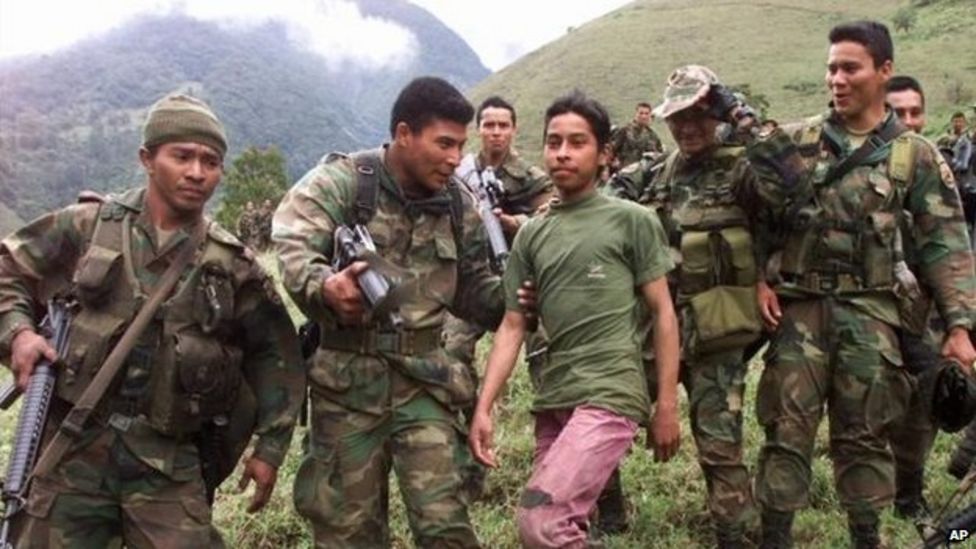
From the image above (see Figure 3), the idea that child soldiers are abducted and kidnapped contributes to the impression that they are fragile, innocent, and powerless. Since 2006, however, a new narrative including “child warrior” has evolved, with writers such as David Rosen presenting a much-needed study of youngsters who enlist for military duty (Rosen, 2005). To separate themselves from children kidnapped and forced to participate, youngsters who claim to be volunteers use the phrase “child soldier” to identify themselves (Rosen, 2005). The term carries connotations of helplessness and victimization due to campaigns led by humanitarian organizations and charities. Therefore, the social agency should use the image to advocate for children’s rights regarding the use of children in the military.
Childhood and Leisure as a Social Construct

Peer culture is the primary indicator of distinct and diverse child culture. Peer culture is a consistent collection of activities or routines, artifacts, beliefs, and concerns that youngsters create and share via contact with peers (Corsaro, 1997). Play facilitates the development of specific physical, communicative, and cognitive abilities while providing a forum for resolving sentiments, personal issues, and ambiguities around peer interactions (James and James, 2012).
Chris Jenks’ Apollonian upbringing is an excellent example of a lovely youngster. According to Jenks (2005), Apollonian infancy was after the sun and light gods, symbolizing everything good: joy, laughing, and sunlight. Using this vision (see Figure 4) as a guide, the social service agency may collaborate with groups like Outdoors Alliance for Kids (OAK) to design a future where all children, youth, and families can easily access safe chances to interact with nature.
Commoditized Child as a Social Construct
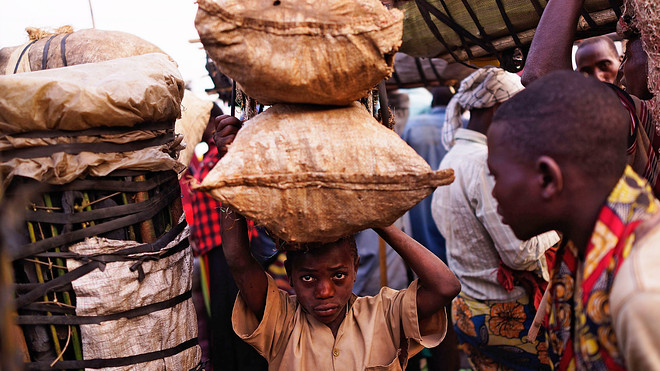
The commodity kid is seen less for their inherent value as a human being and more for their monetary value. Adults use the commodity kid for their own financial and personal benefit. In her research on Bolivian children, Samantha Punch discovered that youngsters as early as five were expected to begin outside and in-house labor (as cited in Punch and Tisdall, 2016). Nonetheless, the basis of the commoditized child viewpoint is that parents or adults would utilize children to make money for their benefit without regard for the child’s well-being.
In child labor, children are treated as commodities when forced to work. From the model above (see Figure 5), it can be deduced that the image of the kid will be utilized by the social agency in the exhibition to address the problem of child labor and to condemn the practice among the members of society (McNamee, 2019). In an increasingly globalized world, the United Nations’ demand for all children to finish primary education is motivated by a desire to abolish child labor and give children chances for upward mobility.
The Digital Native Child as a Social Construct
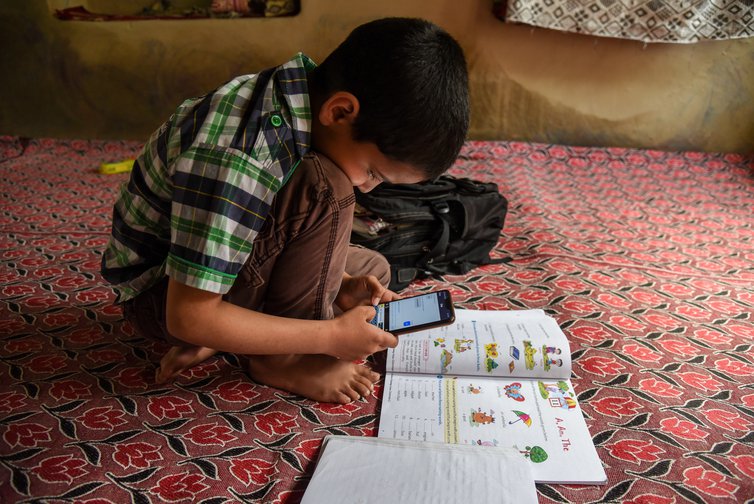
Based on the image above (see Figure 6), people often believe that youngsters nowadays are digital natives. A digital native is naturally adept at handling digital technology such as phones. Young children can navigate computers relatively quickly and are proficient at coding and piloting the maze of data on desktop mainframes.
The digital learning curve is significantly less steep for young individuals than adults, as was apparent during the COVID-19 pandemic and the lockdown laws. Whether this results from a social construct or perception is unknown (Parsons, 1951). Therefore, the agency at the Museum exhibition may use the picture to demonstrate the digitization of the modern child and the media’s effects on children.
The Sexualized Child
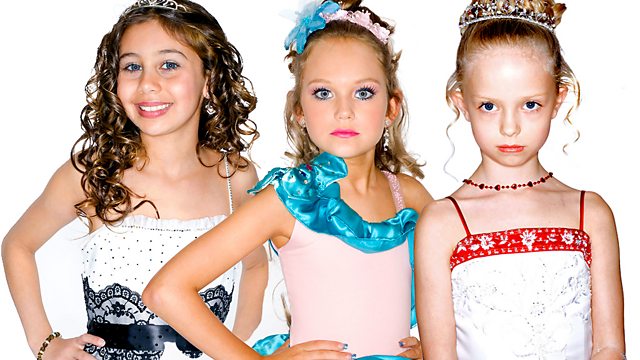
Modern media are to blame for the pervasive sexualization of children. Many advertisements for high-end clothes feature children assuming adult-like postures (see Figure 7). People often see photographs of exceptionally young females wearing cosmetics and adopting provocative postures. Here, the child is often shown in a manner that conveys sexuality. However, pictures of the sexualized child also evoke thoughts of society’s shadows (Kehily, 2008).
The Routes Model by Ward and Siegert acknowledges the diverse etiological pathways that lead to child sexual abuse (Osbourne and Christensen, 2020; Dangerfield et al., 2020). Decreasing socioeconomic inequalities is an integral approach to deterring child sexual abuse (CSA). Therefore, the social agency fits this concept by advocating for narrowing the socioeconomic curve gap between the rich and the poor through the museum exhibition.
The Gendered Child as Social Construct
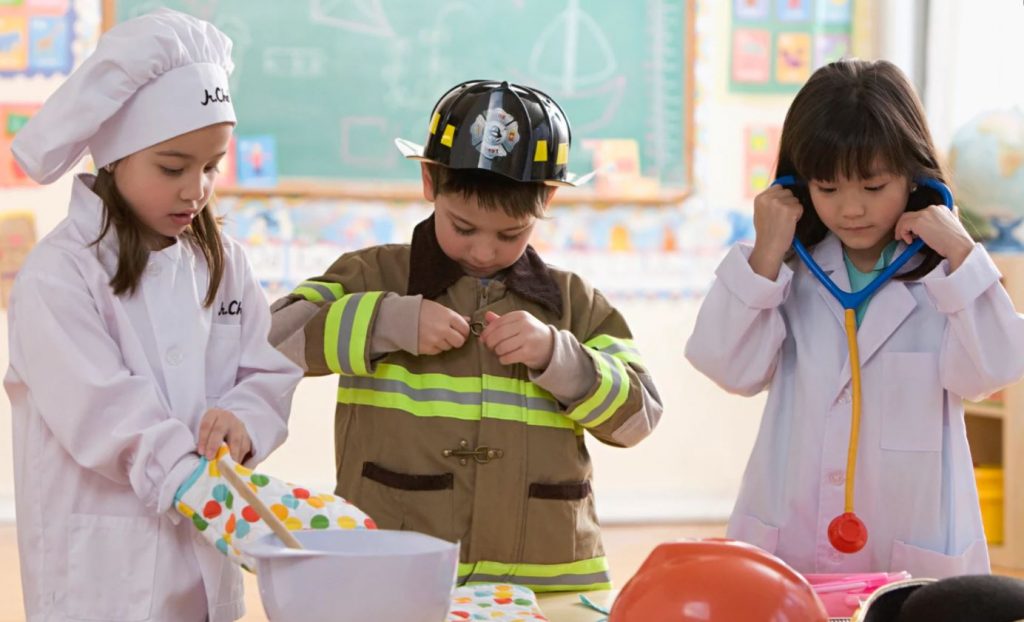
Many feminist academics also discuss the social creation of gender while discussing the social construction of childhood. For instance, Judith Butler acknowledges the existence of gender performativity in children and the social constructivism in gender roles (Shams, 2020). The social creation of gender in infancy lies at the junction of these two notions (Skočajić et al.,2020).
Social and cultural theories under the ‘new’ sociology of childhood assert that gender norms are ingrained in children from an early age. In their research on adolescents, Brannen et al. (1994) discovered that Asian parents are more prone than other parents to be harsh with their girls. As such, gender role separation has been in existence for the past decades.
However, some authors have differing opinions concerning gender roles. For instance, Hillman (1993) discovered that boys are more likely to be allowed greater independence, such as going out alone after dark and engaging in potentially dangerous activities such as crossing the street or riding. This subculture differed for young boys, who were more likely to be seen outside.
According to Boe and Woods (2018), parents also impact the gender stereotypes of their children. From the above photograph (see Figure 8), it seems that the boy is used to “boys’ work,” and the females are engaged in “girls’ work.” In the agency-like display, the goal would be to dissuade the concept of gender work relations to empower both sexes’ roles in society.
Conclusion
Childhood is the condition of being a child and is often contrasted with maturity. The theory of childhood as a social construct states that childhood is not governed by biological age but by culture. The key themes evident from the images and the concept of social constructions are poverty and culture.
Socioeconomic status heavily influences a child’s ability to participate in extracurricular activities (Valentine, 2004). Childhood is a social construction enforcing the systemic marginalization of youth, creating natural consequences for individuals and society. This research vehemently agrees that, as a social agency, there is a need to move away from seeing children as a problem that must be contained or corralling children for their safety.
The agency and other organizations must stop generating policies to institutionalize children further; instead, they must focus on children’s rights. For instance, since theories of the social construction of childhood comprise the philosophies that childhood is a distinct period of life, that it is not universal, it is susceptible to cross-cultural variances. Ariès (1962) explains the evolution of views about children, their nature, duties, and obligations across time by tracing the evolution of the social construction of childhood. However, with the eight exhibits, the agency addresses a child’s social construction, building a platform for the child’s growth and education within society.
Reference List
Ariés, P. (1962) Centuries of Childhood. Harmondsworth, Middlesex UK: Penguin Books.
Bates, L. (2015) Young children must be protected from ingrained gender stereotypes.
BBC News (2022a) Child abuse survivors lose faith in redress payment scheme.
BBC News (2022b) ‘Gaza’s children are used to the death and bombing‘.
BBC News. (2015) World Bank: Extreme poverty ‘to fall below 10%’.
BBC News. (2016). Colombia Farc rebels hand over child soldiers.
BBC News. (2020a). Covid in Scotland: Children exempt from some outdoor restrictions.
BBC Three (2009). Baby beauty queens.
Boe, J. L. and Woods, R. J. (2018) ‘Parents’ influence on infants’ gender-typed toy preferences,’ Sex Roles, 79(5), pp. 358-373.
Brannen, J. et al. (1994) Young people, health and family life.Buckingham: Open University Press.
Corsaro, W. A. (1997) ‘Children’s peer cultures and interpretive reproduction’, in Corsaro, W. A. (ed.) The sociology of childhood. California: Pine Forge Press, pp. 95-115.
Danermark, B. (2019) ‘Applied interdisciplinary research: a critical realist perspective,’ Journal of Critical Realism, 18(4), pp. 368-382.
Dangerfield, D. et al. (2020) “Theories That Explain the Sexual Abuse of Children.” The Wiley Handbook of What Works with Sexual Offenders: Contemporary Perspectives in Theory, Assessment, Treatment, and Prevention, pp. 23-37.
Hillman, M. (1993) Children, Transport and the Quality of Life.Westminster: Policy Studies Institute.
Inamdar, N. (2021) Byju’s and the other side of an edtech giant’s dizzying rise.
Ingram, H., Schneider, A. L. and DeLeon, P. (2019). Theories of the policy process. Routledge.
James, A. and James, A. (2012) Key concepts in childhood studies. 2rd ed. New York, N.Y: SAGE Publication
James, A. and Prout, A. (1990). Constructing and Reconstructing Childhood. Basingstoke: Falmer.
Jenks, C. (2005). Childhood. 2nd edn. Oxon USA: Routledge.
Kehily, M. J. (2008). Understanding Childhood. In: Kehily, M J. (ed.). An Introduction to Childhood Studies, (2nd ed., pp. 1 – 16). Maidenhead: Open University Press.
McNamee, S. (2019). The social study of childhood (1st ed). Red Globe Press.
Osbourne, M. G. and Christensen, L. S. (2020) ‘Pathways to child sexual offending: applying Ward and Siegert’s pathways model on offenders convicted of penetrative offenses on children,’ Sexuality & Culture, 24(6), pp. 1756-1773.
Parsons, T. (1951) Social system. London: Routledge.
Punch, S. and Tisadall, K. (eds.) (2016) Children and young people’s relationships: learning across majority and minority worlds. New York, N.Y: Routledge.
Qvortrup, J. (2009) ‘Childhood as structural form’, in Qvortrup, J. Corsaro, W. A. and Honig, M. S. (eds.) Palgrave handbook of childhood studies. London: Palgrave, pp. 21-33.
Rogers, S. W. (2003) ‘What is a child?’, in M. Woodhead, M. and Montgomery, H. (eds.) Understanding childhood: an interdisciplinary approach. UK: The Open University, pp. 1-43.
Rosen, D. (2005) Armies of the Young: Child soldiers in war and terrorism. New Jersey: Rutgers University Press.
Shams, P. (2020). Judith Butler and subjectivity. Singapore: Palgrave Pivot.
Skočajić, M. M. et al. (2020) ‘Boys just don’t! Gender stereotyping and sanctioning of counter-stereotypical behavior in preschoolers,’ Sex Roles, 82(3), pp. 163-172.
Sorin, R., & Galloway, G. (2006). Constructs of childhood: Constructs of self. Children Australia, 31(2), 12-21.
Valentine, G. (2004) Public space and the culture of childhood.Aldershot: Ashgate.