
Introduction
Nursing has changed dramatically over the last century, and one reason for this transformation is the involvement of humanitarian organizations. The American Red Cross (ARC), founded by Clara Barton in 1881, played a critical role in both national and international healthcare missions. Barton decided that America needed a humanitarian, value-based organization after witnessing the horrors of the Civil War firsthand.
In 1869, she traveled to Switzerland and learned about the International Red Cross’s efforts during the Franco-Prussian War, which was the main inspiration for the ARC. The organization became a symbol of hope and peace during these challenging times, underscoring society’s need for nurses. As a result, ARC changed the way people perceived medicine in the 19th century for the better, and these perspectives still linger to some extent in the 21st century.
Literature Review
For the present assignment, two scholarly sources from the ProQuest database were selected. The first book is the historical review of ARC in the United States, written by Julia Irwin (2013) and published by Oxford University Press. It analyzes historical events from the late 19th and early 20th centuries exclusively, which is appropriate for the paper.
The second credible source is the article regarding the impact of ARC disaster management programs on societies (Harve & Li, 2024). It provides excellent material about the current perceptions of ARC and nursing in general, addressing both positive and negative aspects. Using these two articles, it is possible to estimate the impact of ARC on American nursing and compare perceptions from the late 19th century with public views in the 2020s.
Discussion
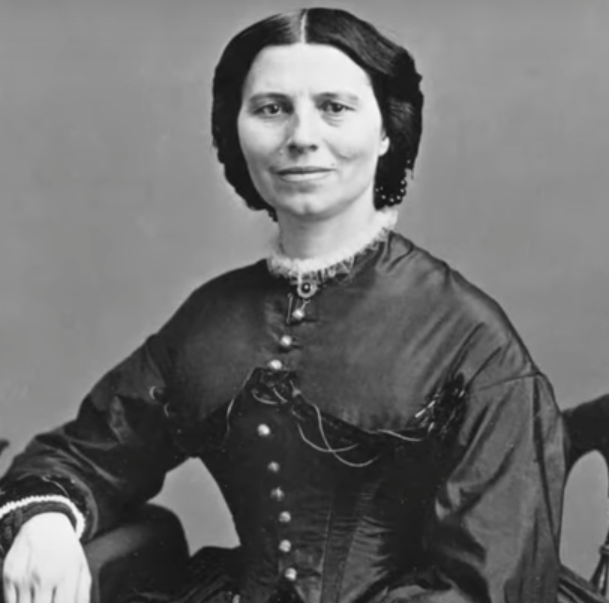
The founding of ARC in 1881 drastically changed the perception of nursing. Clara Barton, who was proclaimed the “Angel of the Battlefield,” insisted that America needed humanitarian organizations to ensure a peaceful nation (see Figure 1). In this sense, ARC not only transformed how people viewed nursing but also created a functional, value-based healthcare institution (Irwin, 2013).
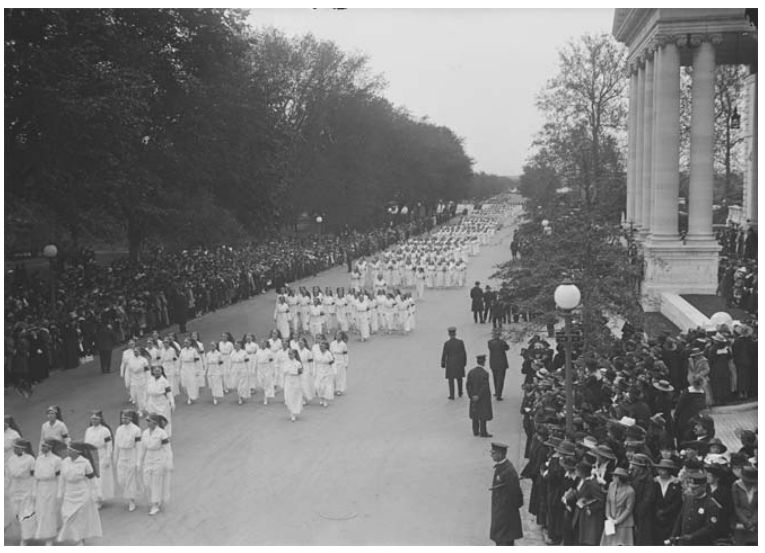
The role of nursing has become even more significant in the United States during subsequent wars, including World War I (Irwin, 2013). During this time, ARC fulfilled its initial mission, such as helping people in need, and served as a political instrument to demonstrate the US’s willingness to support its allies in Europe (Irwin, 2013). Public approval of both ARC and nursing was high, as people viewed nurses as heroes who helped war victims (see Figure 2).
Today, while most people still think of nurses as symbols of hope, the overall perception is less optimistic. For instance, according to Harve and Li (2024), the media portrays ARC as a “trusted source” (p. 7). At the same time, many people believe that nurses and ARC, in particular, are not fulfilling their obligation of helping people in need (Harve & Li, 2024). For example, the organization has been accused of making disaster preparedness instruments inaccessible to vulnerable populations and instead focusing on privileged groups (Harve & Li, 2024). Overall, ARCs and nurses are still respected in the United States, but their reputation is less positive than it was in the late 19th and early 20th centuries.
Conclusion
In summary, the nursing profession has undergone significant changes since the founding of ARC. Once perceived as selfless heroes who save people on the battlefield, healthcare professionals are today more knowledgeable about the faults of healthcare organizations and the political nature of some humanitarian missions. It is inevitable to an extent since information is more accessible than ever. However, it also means that nurses should be more accountable for their decisions than ever and control the image of nursing by helping people in need. It is critical to maintain a positive reputation for the profession to ensure that people trust nurses and are open to collaboration and dialogue, which, in turn, can improve the quality of provided care.
References
American Red Cross. (n.d.). Clara Barton.
Harve, M. A., & Li, D. (2024). Social impacts of the American Red Cross (ARC) disaster interventions: A scoping review. Cureus, 16(2).
Irwin, J. F. (2013). Making the world safe: The American Red Cross and a nation’s humanitarian awakening. Oxford University Press.