
Introduction
Within this work’s framework, an elementary school student was studied in several areas: reading, writing/spelling, math, observation, and behavior. A seven-year-old boy named John Smith was chosen as the individual on whom the tests were conducted. He is in the second grade at a local elementary school. Before the intervention, the boy’s parents provided consent. It is worth noting that the boy has no disabilities, and he has not been diagnosed with any developmental abnormalities.
Reading
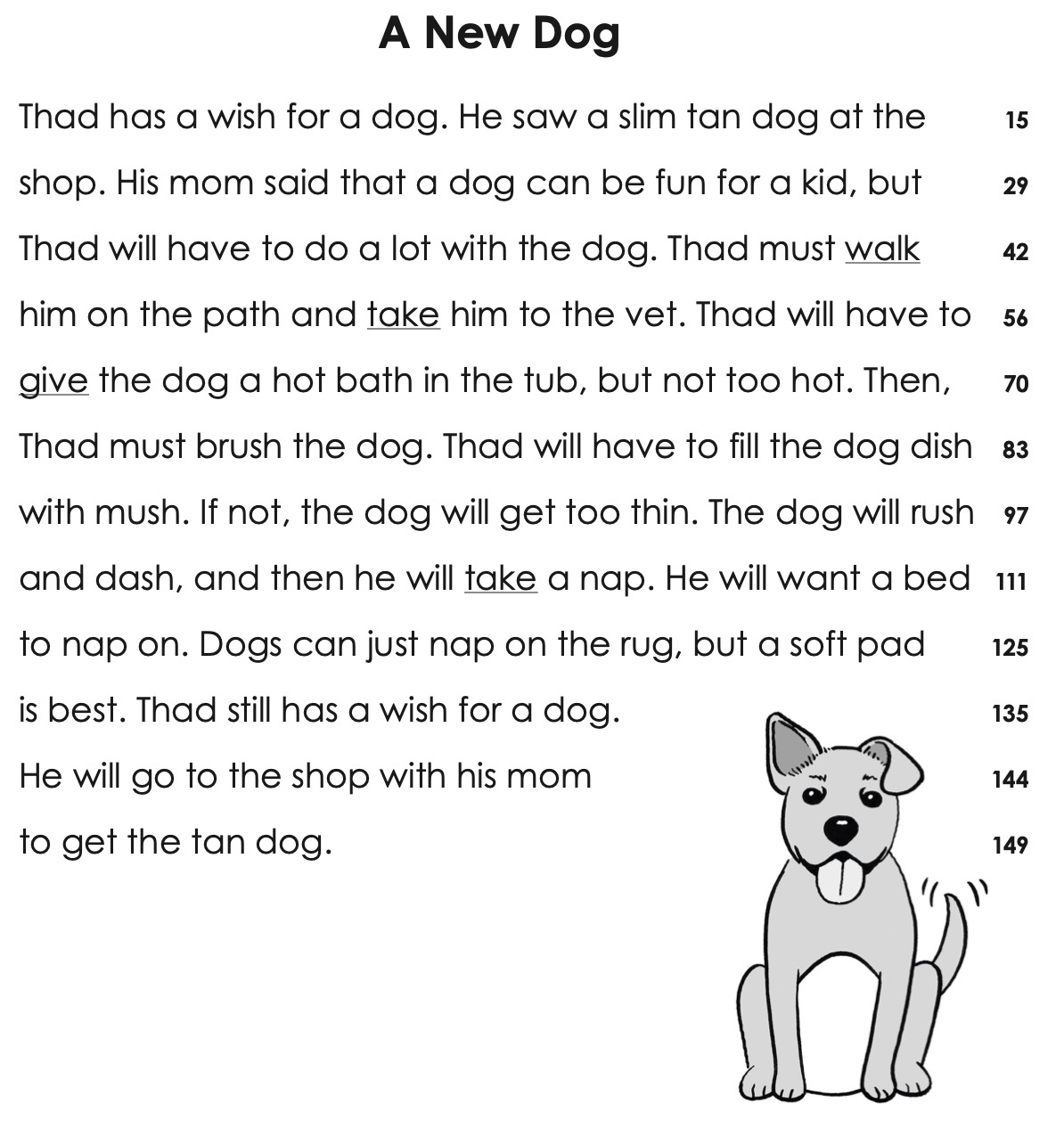
The first type of assessment conducted with John was a test of his reading skills. A choice was made for the student to conduct an oral reading fluency test with curriculum-based measurement directions. This type of assessment of an individual’s abilities involves providing the individual with a passage of text to read aloud to the teacher. This kind of evaluation was chosen because it is suitable for the student’s level of study and can involve the student deeply, as it touches on an interesting topic for the boy.
This assessment was administered in a separate room at the boy’s house. This choice is due to limiting distractions, such as the appearance of other family members. The table where the student was sitting was cleared of any other objects that could distract the child. The work was completed as prescribed, and the boy behaved with interest and calm enough during the intervention; that is, he showed a high level of participation.
The results obtained during the assessment administration were relatively high. When the boy read the text, all his errors were noted, including misreading words and skipping them. The words correctly per minute were divided by the total words read at the one-minute mark to get the result. John got a 75%, which is good enough for his level.
The findings offer a chance to gain deeper insight into the child’s learning abilities and behavior. This happens by tracking how he reacts to mistakes, corrects himself, or skips difficult words. John showed that he can determine where mistakes were made and knows the intonational aspects of reading the text.
When conducting this assessment, I liked its adaptability to a particular student and his interests. Hence, I knew John loves dogs, so I chose this text. The difficulty was caused by test preparation, which required minimizing distractions for the child. I would use this assessment in my classroom, as I consider it a simple yet effective way to test reading skills.
Math
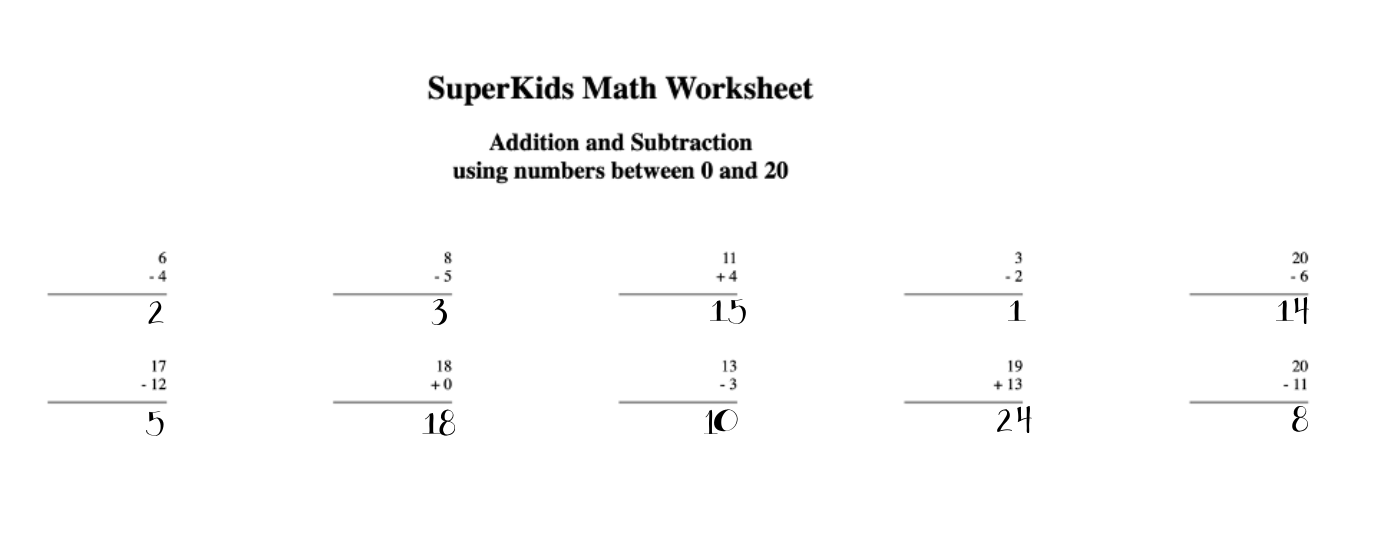
As a test of mathematical knowledge, an assessment of addition and subtraction was chosen. This intervention used numbers from 0 to 20 to assess the student’s skills. That is why this assessment method was chosen, and the student is experiencing some difficulties in this area.
During the testing, a separate room was also chosen. All potential distractions have been removed to achieve the most realistic evaluation results. The assessment was completed as prescribed, and the subject’s behavior and level of participation were satisfactory.
The intervention to assess John’s mathematics abilities showed high performance, with John completing 8 of 10 tasks. The child performed the addition and subtraction tasks well enough and showed that this skill is easily given to him. After a while, he began to make mistakes in the tasks, which indicates several aspects. First, he has difficulty with scores above 20 and experiences fatigue when performing math tasks for long periods, which affects his results.
John’s ability test results help understand the child’s academic skills. In other words, he shows satisfactory addition and subtraction skills characteristic of his age and level of training. Regarding behavior, fatigue may lead to irritability and difficulty concentrating on tasks.
I liked this assessment because it provides an opportunity to understand how a child performs mathematical manipulations. This is because the child audibly pronounced each step when performing addition and subtraction. The difficulty was due to the management of emotional state, which has a substantial impact on students’ academic outcomes (Friend, 2023). I would apply this assessment in the classroom because it is universally applicable to all learners.
Writing/Spelling
A curriculum-based measurement writing probe was chosen to test writing and spelling skills. This approach implies providing the beginning of the text for them to continue. This type was chosen because it provides an opportunity to identify the student’s problems in writing and spelling and to track the level of imagination.
Like the previous assessment methods, this intervention was conducted in a separate room where only the educator and learner were present. The evaluation process was completed as prescribed, without any complications, and the boy showed a high level of participation.
This assessment showed that the student has a relatively low score and many spelling problems. Thus, the boy showed difficulties in writing several words, for example, “siled,” “rane,” “boet,” and “fliped.” However, it is worth noting that the student is at an early educational level, which may account for several errors in the text. The important part is that the student independently reported difficulties with writing words.
The results showed that the student performed unsatisfactorily. Regarding behavior, the assessment noted that the boy becomes significantly irritated when many errors occur. He desires to be better, but does not understand how to manage his emotions or regulate his impulses. Thus, this intervention provided opportunities to better understand the relationship between the boy’s mental state and his academic success.
The central aspect of this assessment that I liked was the opportunity to showcase the student’s creative component. The main difficulty was helping the boy achieve a level of concentration that would attract attention and yield the most productive results. I would use this assessment in the classroom, as it promotes the development of learners’ writing skills and shows their difficulties.

Behavior/Interest
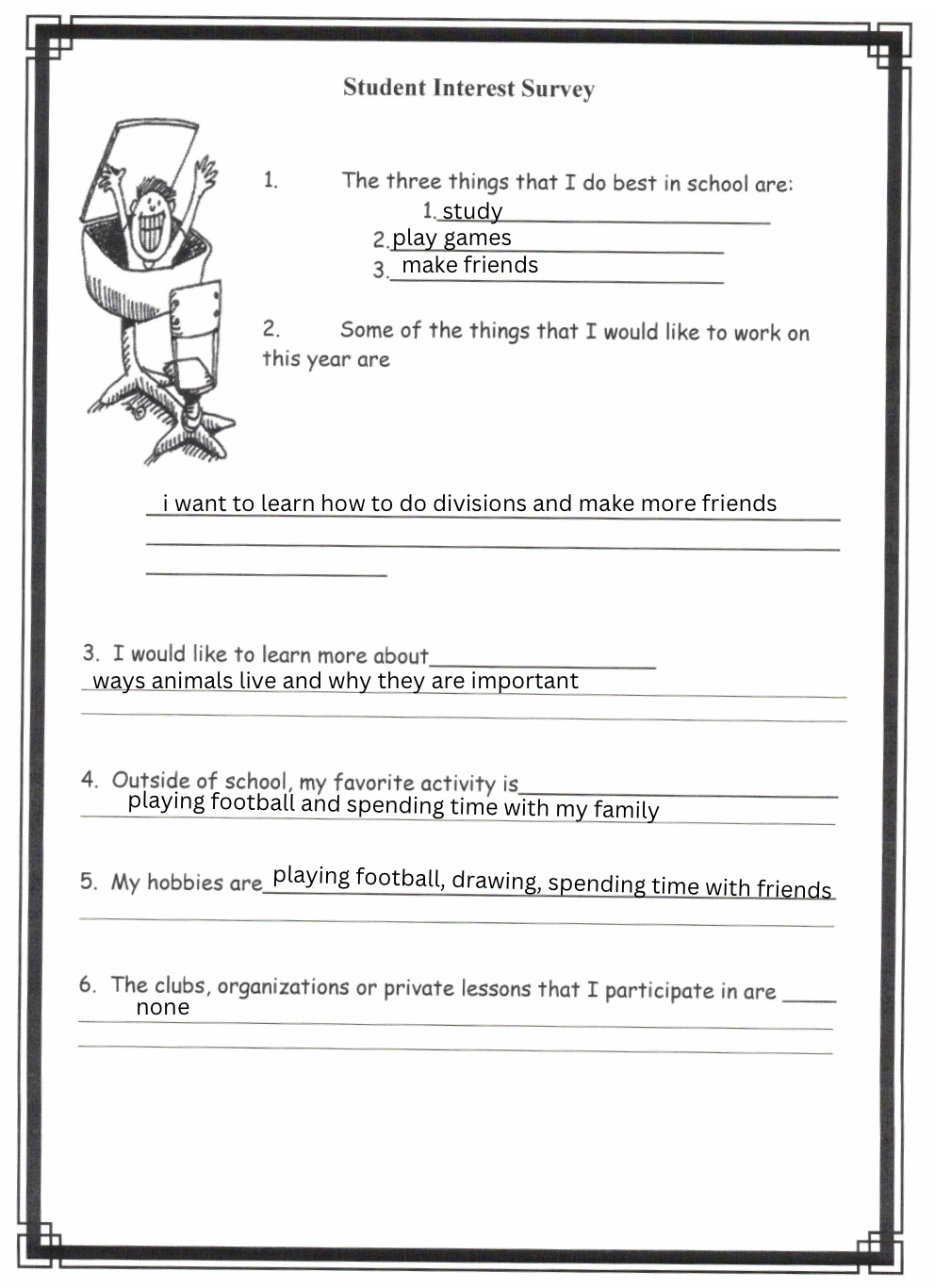
John was chosen to provide a student interest survey to assess behavior and interests. The value of this approach is that it helps to determine how individuals can be motivated and the degree of involvement a student has in the educational process. The survey consists of several questions about the child’s areas of interest, both within and outside the school environment. This type of assessment was chosen due to John’s age and developmental level. The testing experience was conducted under the same conditions as in previous assessment approaches.
This assessment was one of the most involving for the student, affecting the boy’s areas of interest. In other words, he showed high engagement and excitement when talking about what he likes. It is also worth noting that a high degree was shown in the field of relationships, as John greatly emphasizes communication and rapprochement with family, loved ones, and friends.
The results obtained help understand the child’s behavior both in the school environment and outside it. Thus, this approach helped identify John’s main areas of interest, which can be taken into account when working with him to improve his skills. A high level of activity and a desire to explore the world can motivate greater involvement in the academic process.
Reflection on this intervention to assess behavior and interests showed positive outcomes. It made clear the importance of awareness of these areas and of students’ needs when building an educational program and implementing interventions (Cohen & Spenciner, 2021). I would use this assessment policy in the classroom, as it increases students’ motivation. The difficulty lies in managing children’s emotions when delving into this topic.

Observation
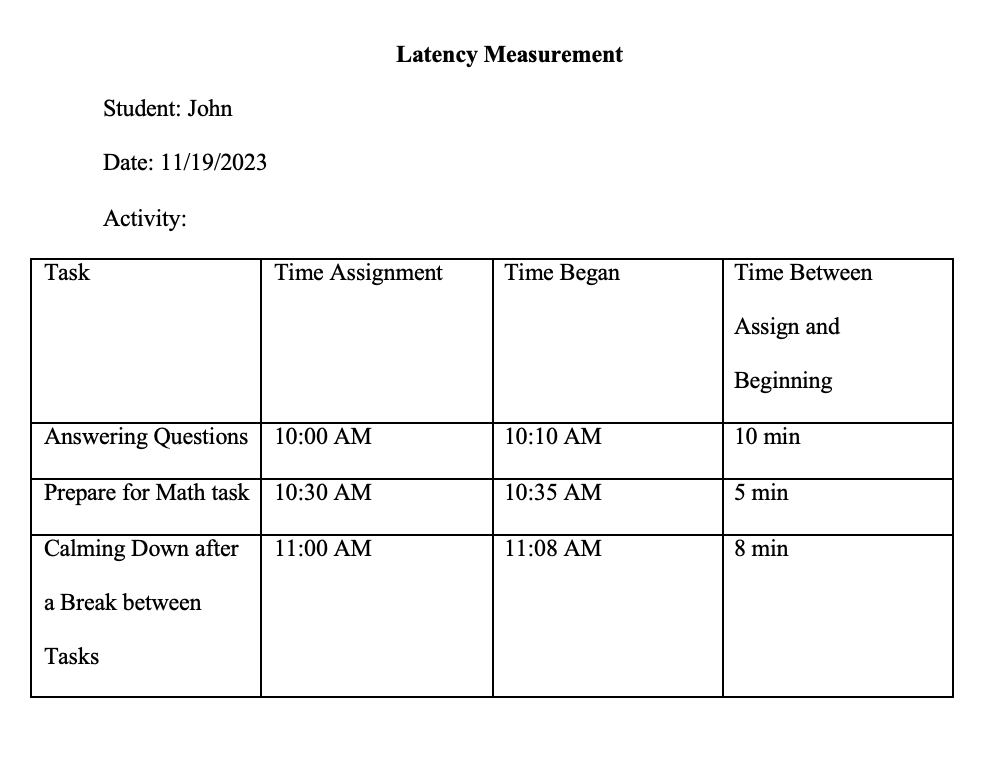
When conducting evaluation procedures to measure John’s skills, such as reading, writing/spelling, math, and behavior, additional aspects of the boy’s character were also observed. Among them, the speed of answering questions, the ability to prepare for an intervention in time, and the speed of calming down after a break were highlighted. This approach was chosen because it can show the student’s ability to switch between activities and the speed of their responses.
The testing experience was administered without any complications and was completed as prescribed. The student did not show significant deviations and participated in the activities introduced by the educator. Additionally, the student presented relatively satisfactory behavior and a high level of participation.
The evaluation results showed that John has difficulty switching between rest and concentration to complete tasks. It took him eight minutes to get into a calm state and start engaging with the activity the teacher assigned him.
Moreover, he answered the questions for a long time because, despite the absence of distraction factors, his general attention span is relatively short. Thus, this clarifies the child’s behavior in the academic process. In other words, his emotional state can sometimes hinder his involvement and concentration in the educational process.
Conducting this intervention on the prevention of individual behavior provided an opportunity to expand the understanding of the complexities that can hinder John’s academic success. The difficulty in implementing it in the classroom may be that it will require additional resources to track each student individually. However, when working personally with each student to assess their latency, I would use this approach in an educational setting.
References
Cohen, L. G. & Spenciner, L. J. (2021). Assessment of children and youth with special needs. Pearson.
Friend, M. (2023). Special education: Contemporary perspectives for school professionals. Pearson.