
Guidance Approach
While many methods can be employed to teach children to adopt positive behavior patterns and thrive academically, one approach that educators actively use is the guidance approach (GA). The method refers to the process of addressing each pupil’s unique qualities and helping them move toward solutions that would facilitate advancement (Bilgin et al., 2022).
School-age individuals are considered to be in the most need of such assistance, as they often lack sufficient life experience to adequately respond to challenges. GA is not meant to control people, but rather to introduce alternatives to a person that can be chosen in different situations (Bilgin et al., 2022). Accordingly, teachers can utilize GA to support children in their educational endeavors by guiding students on how to conduct themselves.
Benefits
GA offers considerable benefits in both demeanor and instruction. While having the potential to increase educational achievement, GA can also foster positive attitudes toward learning and school, facilitate the application of conflict resolution competencies, and reduce dropouts (Moono et al., 2020). For example, in terms of teaching science-related topics, GA can strengthen knowledge integration by expanding the pool of ideas and helping individuals differentiate between viewpoints and derive explanations (Gerard et al., 2019).
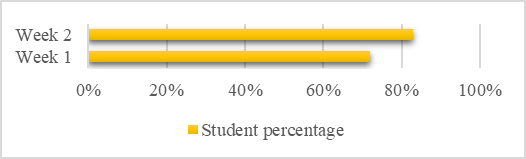
Graph 1 illustrates how GA may impact pupils based on research findings that examined student participation in a club designed to support their academic goals. After the first week of the second trial, 72% of learners exhibited scholarly improvement, with the percentage rising to 83% by the end of the second term. While such results do not mean that all children will be equally advantaged by GA, the findings suggest that GA is a promising approach to academic success (Moono et al., 2020). Therefore, GA provides benefits in enhancing learners’ behavior toward the perception of instruction and assisting them in reaching better results in the classroom.
Home/School Technology
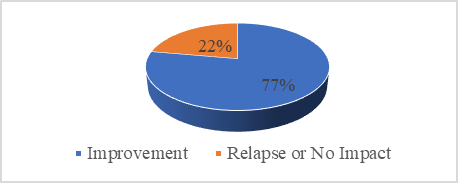
An activity families can implement based on GA and technology to support home/school connection is reading with their children through digital books. Parents play a crucial role in the academic achievement of young learners. For instance, Graph 2 displays findings from research that revealed 77% of participants in the assessment showed improvement in school conduct due to familial interventions (Moono et al., 2020).
One way for parents to help their kids thrive academically is by reading books on electronic devices, as this exercise can support pupils’ progress in understanding words and concepts (Eutsler & Trotter, 2020). Children should be explained the content of a story approved by the teacher in a home setting, and answer questions related to the story.
Building GA
GA can build safe, positive learning environments while encouraging healthy social patterns by directing individuals toward better choices and conduct. On the one hand, guidance activities influence a pupil’s cognitive, emotional, and psychomotor capacities in a balanced manner. As a result, students’ challenges, such as the inability to focus on the lesson or a negative attitude toward the course material, can be addressed, leading to a more productive class atmosphere (Bilgin et al., 2022).
On the other hand, GA can enable social relationships and advancement. GA is important for character development from a young age, as it nurtures the qualities necessary to be part of a community (Bilgin et al., 2022). For instance, during discussions, learners can be encouraged to understand others’ perspectives by being prompted to seek sentiments that differ from, rather than correspond with, their own opinions (Gerard et al., 2019). Accordingly, GA can facilitate better learning environments and social improvement by directing students toward beneficial changes. Such a transformation can be enabled by considering the following steps:
- Closely interacting with pupils to determine their strengths and needs;
- Developing methods to assist each person to learn in their unique way;
- Discouraging conduct that negatively impacts lessons and peers;
- Encouraging a supportive and inclusive atmosphere in the classroom.
Examples
One instance of instructional activity based on GA to meet the needs of early education students concerns math. Clements et al. (2021) suggest that children should be taught number sense elements, such as comparison, conservation, and digit reading, from kindergarten to prevent hardships in their academic future. To acquire mathematical competence, pupils can progress through distinct levels of thinking based on cognitively guided instruction. For example, the teacher can assess students’ capabilities and conduct an activity by first explaining number words, followed by basic verbal counting, and then move to connect measuring terms and objects (Clements et al., 2021). Enabling young learners’ mathematical abilities can be beneficial as they progress to more advanced classes.
Another GA-based instructional activity for early education individuals concentrates on reading. Eutsler and Trotter (2020) state that childhood literacy is a crucial subject and propose utilizing digital devices to enhance this competency. It appears that kids are more engaged when using an electronic book and exhibit better character recognition. For example, toddlers who read using technology have a greater chance of correctly identifying animals from the story than those who use print books. Nonetheless, young pupils require adult contribution since digital literature is simply a tool (Eutsler & Trotter, 2020). Therefore, to promote literacy competence, the teacher can use a gadget to familiarize students with a story and then ask questions about the plot.
References
Bilgin, R., Yildiz, Y., & Yildiz, A. (2022). A review of the aims and principles of guidance activities in schools. International Journal of Social Sciences & Educational Studies, 9(3), 29-38.
Clements, D. H., Vinh, M., Lim, C. I., & Sarama, J. (2021). STEM for inclusive excellence and equity. Early Education and Development, 32(1), 148-171.
Eutsler, L., & Trotter, J. (2020). Print or iPad? Young children’s text type shared reading preference and behaviors in comparison to parent predictions and at-home practices. Literacy Research and Instruction, 59(4), 324-345.
Gerard, L., Kidron, A., & Linn, M. C. (2019). Guiding collaborative revision of science explanations. International Journal of Computer-Supported Collaborative Learning, 14, 291-324.
Moono, M., Sikota, E., Munsaka, L., Matimba, J., Mubita, L. S., Chongo, C., & Chirwa, B. (2020). Effects of guidance and counselling on the academic performance of learners. International Journal of Academic Research and Development, 5(5), 36-43.