
Introduction
Burberry, with more than 150 years of history, is the pinnacle of style and creativity. Acknowledging the need to maintain relevance in a rapidly changing market, Burberry has made digitization a key component of its business strategy. Burberry wants to lead the way in digital innovation to both survive and influence the future direction of premium fashion. Burberry aims to establish itself as a leader in the global luxury market and as the benchmark for excellence in the digital fashion ecosystem by implementing continuous digital initiatives.
Context and Rationale
Beyond its quest to recreate its brand identity and elevate its status to the top among globally renowned luxury fashion businesses, Burberry also relies heavily on digital transformation to drive its success. Burberry, indeed, foresees the vital role that digitalization plays in organizational evolution and concept generation in markets where customer preferences are fluctuating and emerging technologies are dynamically reshaping the environment.
Burberry wants to be known only for the digital capabilities, powered by its reputation for high craftsmanship and design, to reach wider audiences and deliver a great experience (Armitage and Roberts, 2021). By being innovative in its product category, advertising, and in-store experience, Burberry is set to cater to a wide range of customer demographics and continue to lead the luxury market, where competition is a bit too fumbling. Burberry’s aspiration for digital transformation is to cultivate a brand image characterized by sophistication and quality, ensuring it meets consumer demand worldwide.
Ambition
Burberry is steadfastly dedicated to strengthening its brand position and promoting innovative fashion design. Its goal is to become a globally recognized, highly regarded luxury brand by strategically directing its business and capitalizing on its vast retail network through a variety of channels. The brand’s reliable yearly revenue, which ranges from £742.9M to £2.5B, and total sales, which also range from £772.9M to £2.5B, are important markers of the market’s stability and potential for expansion (Park and Rhee, 2021, p. 7).
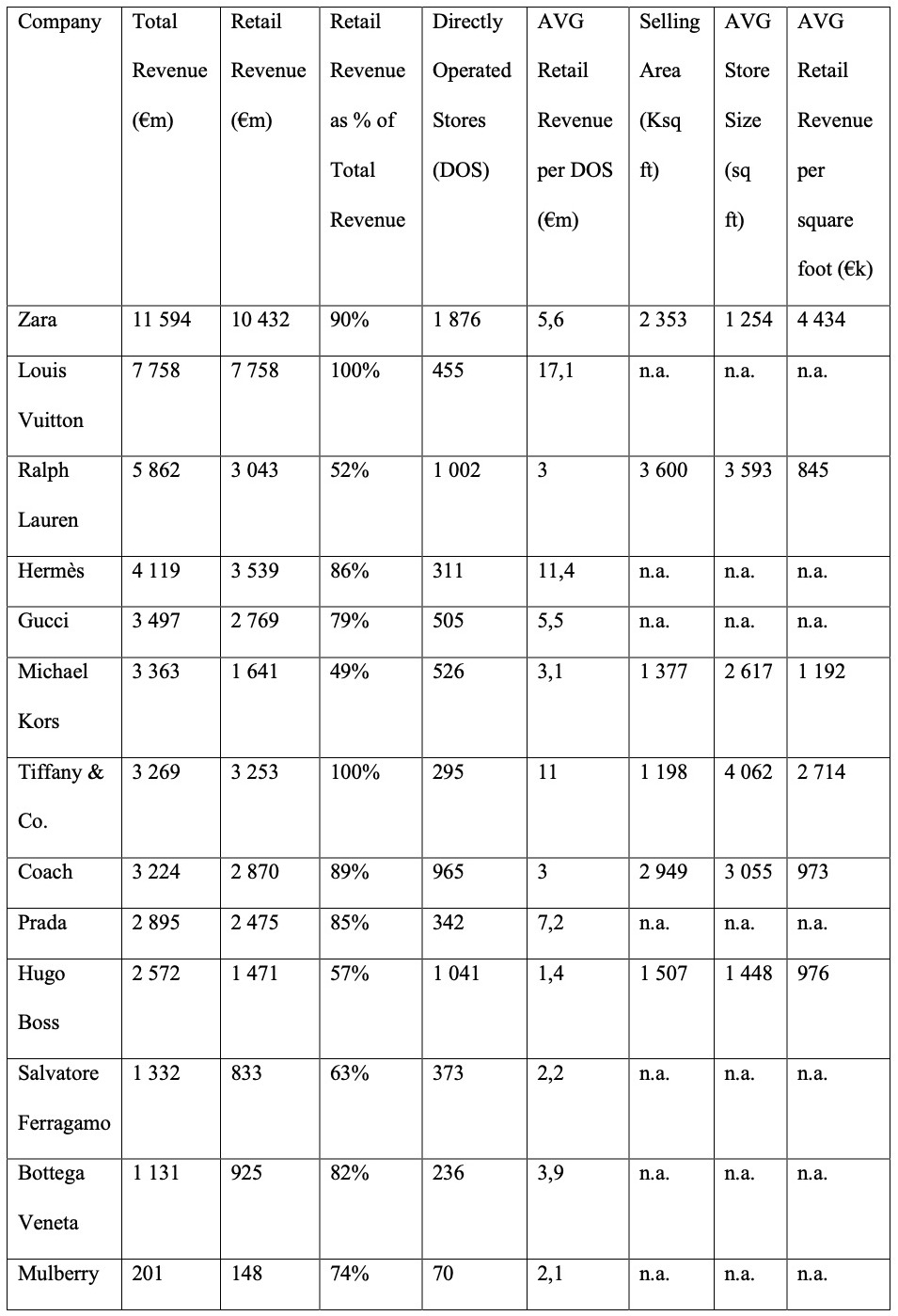
Burberry’s business strategy is centered on innovation, with a particular emphasis on leveraging its global retail presence and varied product offerings to serve a wide range of consumer demographics. Burberry’s specialty retail stores in the UK have average financial performance ranging from £1.23 million to £3.73 million per store, with retail revenue shares as high as 90% (Armitage and Roberts, 2021). This performance highlights the brand’s unwavering commitment to fostering innovation in fashion design to meet changing customer demands and stay ahead of industry trends.
Burberry has set new key performance indicators (KPIs) as a top priority for performance improvement. Using sales data from its network of outlets, stable hiring growth, financial consolidation, and KPI updates, these indicators are intended to measure performance. The organization uses data-driven insights to evaluate the performance of all business areas and to analyze its performance against strategic goals (Silva et al., 2020, p. 19). Burberry is also focusing on improving its production and delivery processes to meet the market’s growing needs. The company aims to provide its consumers with high-quality products and timely delivery by refining production methods and supply chain structures.
Burberry cultivates a culture of collaboration by establishing relationships with partners in a range of industries and utilizing its vast worldwide retail network. With 372 locations across the globe, Burberry deliberately fosters collaboration and shared principles, driving synergy between franchise stores, retail stores, concessions, and travel retail outlets. Burberry is well-positioned to grow its market share, with retail revenues peaking at 90% and average retail sales per store ranging from £1.23 million to £3.73 million (Park and Rhee, 2021, p. 7). The company, which employs 4,651 to 10,309 full-time equivalents (FTEs), plans to use employee input to develop and effectively penetrate growing markets (Pantano et al., 2022, p. 38). To boost its retail and digital reach, Burberry places a high priority on expanding its network of directly controlled stores.
As part of its marketing strategy, Burberry places a high priority on smart media and advertising campaigns to increase customer interaction and brand identification. It seeks to increase its audience reach by leveraging digital channels such as Facebook and Instagram, as well as television, and by expanding its store network and generating more income online. Burberry seeks to increase customer interaction and brand awareness by focusing on improving performance indicators and return on advertising spend, with retail sales density averaging £550 to £1100 per square foot (Xiao and Kan, 2022, p. 45). Its confidence in staff as essential resources fostering productivity and innovation is emphasized by its investment in talent development.
Assessment Framework
PESTEL Analysis
An essential technique for examining the macro-environmental elements influencing Burberry’s business operations is the PESTEL Analysis (Silva et al., 2020, p. 19).
Political
- Changes in trade policies can affect Burberry’s supply chain.
- Compliance with regulations related to intellectual property rights.
Economic
- Economic downturns might affect the demand for luxury goods.
- Currency changes might affect Burberry’s profitability.
Social
- Market trends will determine the company’s ability to sell its products.
- Generation Z has emerged as a customer group, dictating marketing strategies.
Technological
- Burberry has been given a chance to improve its digital presence.
- Technological advancements and inventory management systems can lead to efficiency improvements.
Environmental
- The increasing number of people becoming aware of environmental issues may change how consumers perceive Burberry products.
- Climate-related events could influence the activities of the brand.
Legal
- Protecting against counterfeits and unauthorized use remains pertinent to safeguarding branding.
- When data privacy laws relating to customers’ data collected via digital channels are not adhered to, it becomes difficult for Burberry’s online business venture.
SWOT Analysis
Strengths and Weaknesses
A SWOT analysis is also important for understanding all aspects of the company. Burberry explores complex connections between technology and sustainability, such as managing intellectual property and reducing carbon emissions, going beyond superficial evaluations. Burberry’s strengths lie in its enormous brand, international presence, and innovative online initiatives, including deep social media engagement and unique customer engagement. However, there are weaknesses, such as reliance on economic cycles in the luxury market and exposure to currency risks.
Opportunities and Threats
Opportunities include expanding into emerging markets such as China and adopting technological advancements to enhance digital integration (Park and Rhee, 2021). Nevertheless, threats include intense global competition, changing consumer preferences, potential disruptions from worldwide political tensions, and regulatory changes that could affect Burberry.
Industry and Market Analysis
The luxury fashion industry, including Burberry, is in the mature stage of its life cycle. The marketplace is overpopulated with established players offering similar products. Moreover, it has a slow growth rate and stiff competition. Innovations are primarily incremental rather than radical.
Market consolidation, in which larger companies acquire smaller ones to increase their market share, is also common (Xiao and Kan, 2022). Furthermore, organizations invest in diversification and internationalization to remain profitable. As such, the industry’s growth rate has stabilized, and firms now strive to maximize efficiency and maintain their market share rather than achieve rapid, expansive, or disruptive progress.
Value Net Model
Value Net Model promotes value generation and stakeholder participation across distribution channels. The Value Net model evaluates interactions among interested parties to identify opportunities to generate and obtain value (Xiao and Kan, 2022). Burberry’s retail and online touch-points with consumers, along with its collaborations with vendors and channels, are the main hubs of value exchange in the business.
Furthermore, technological partnerships help improve digital experiences by building on collective strengths. The market is driven forward through competition that leads to differentiation and innovation. Policymakers set both industrial norms and safeguards for consumer sovereignty.
Strategic Components
Vision
Burberry intends to boost its standing as a high-end fashion brand recognized globally for its creativity, exquisite craftsmanship, and dedication to diversity by leveraging its vast network of department stores and online presence. While staying true to its rich past, the brand hopes to inspire and transform the fashion industry (Armitage and Roberts, 2021, p. 20). Innovative design techniques and state-of-the-art technologies will be combined to achieve this.
Mission
Burberry wants to enthrall customers, encourage them to support the company, and bring about constructive improvements in the fashion sector. By fusing contemporary and traditional elements, it aims to foster a culture of creativity and constant innovation and to build genuine relationships with its audience (Pantano et al., 2022, p. 38). In addition to engaging consumers, Burberry hopes to build brand loyalty and drive significant progress in the fashion industry.
Objectives
Maintaining Burberry’s leadership position in the high-end fashion sector is central to the company’s strategic goals. First and foremost, the business aims to surpass rivals such as Estée Lauder, Kering, and Ralph Lauren by significantly increasing its overall revenue. Burberry aims to enhance revenue growth through multiple distribution channels, including online, wholesale, and retail sales, by capitalizing on its superior products and multi-channel approach (Yoon and Kwak, 2020, p. 70). Furthermore, the brand is dedicated to enhancing its reputation and brand equity through rigorous pricing strategies and an emphasis on innovation. Burberry places a high priority on maximizing shareholder value through operational effectiveness optimization.
Table 1. Revenue
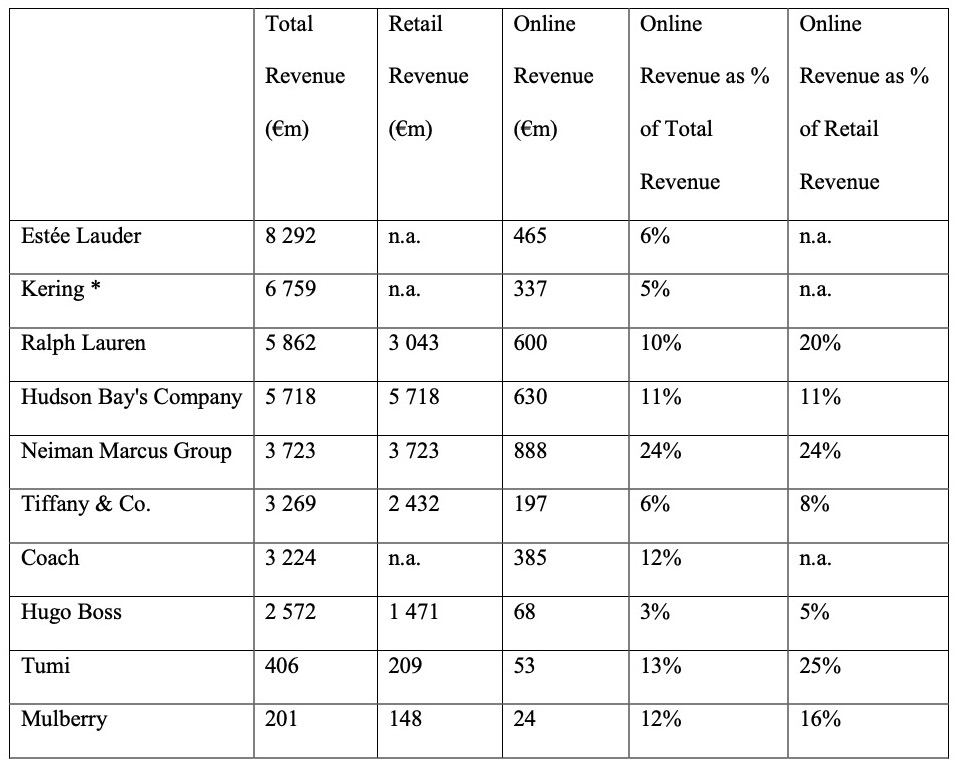
Table 2. Revenue Distribution
Key performance indicators (KPI)
Over time, Burberry has demonstrated its strategic savvy through several key performance indicators (KPIs). Notably, thanks to a well-executed expansion plan, its retail section has continuously shown sales growth, with yearly rates ranging from 1% to 14%, the creation of new retail spaces has produced remarkable growth rates ranging from 21% to 3% (Yoon and Kwak, 2020, p. 70; See Table 4). Burberry’s wholesale income has increased over time despite market volatility, demonstrating the success of its wholesale approach.
Furthermore, the consistency of licensing revenue underscores the company’s ability to adapt to market changes while maintaining the integrity of its brand. Burberry’s impressive operational efficiency and financial stability are demonstrated by its ability to sustain significant adjusted operating margins (9.8% to 20.3%) and robust gross margins (52.1% to 70.2%) (Park and Rhee, 2021, p. 7; see Table 1). Burberry has a reputation for overcoming obstacles while maintaining profitability.
Cash flow from operating activities = Operating profit + Non-cash expenses – Changes in working capital – Taxes. The table below shows the cash flow from operating activities.
Table 3. Cash Flow from Operating Activities
Steps to Calculate the Cash Flow
Deduct non-cash expenses (such as amortization, net impairment charges, and depreciation) from operating earnings annually. Refund any operational profit deductions made for variations in working capital (stock increases, receivables decreases, payables increases). Deduct the amount of taxes paid.
Models
Operating Model
Positioned on agility, Burberry’s operating model offers various opportunities for cross-functional collaboration within the firm and for designing marketing strategies with the customer at the core to excel in the highly dynamic luxury fashion market. Aversion to agile methodology could make the process drawn out and hinder the company’s ability to adapt its products and services to market fluctuations or ever-changing consumer preferences, leading to a loss of competitiveness (Yoon and Kwak, 2020, p. 70).
Collaboration among departments like design, production, marketing, and retailing work hand in hand, thus yielding harmony of values and innovation. Continually paying close attention to the customer is vital to Burberry, which tailors its product mix to fluctuating purchasing habits; ultimately, the brand is increasingly enjoyed by its customers, fostering loyalty. Through this consumer-centric perspective, this brand stays on top of the game, keeping up with the changing trends of the luxury fashion market.
Business Model
Burberry is known for its unwavering commitment to innovation. The company is always looking for new things to offer, and it uses cutting-edge fashion technology to create new styles and materials. Burberry, well-known for its dedication to superior quality, always uses the finest materials and expert craftsmanship to satisfy its customers.
Burberry has skillfully integrated its online and offline operations to address the challenges of the digital era, characterized by heightened competition and blurred industry boundaries. This has resulted in distinctive and immersive shopping experiences that have boosted sales and improved brand recognition (Yoon and Kwak, 2020, p. 70). Burberry maximizes sales and operations by leveraging digital infrastructure, providing customers with easy access to a variety of channels for simple shopping, recommendation engines, and uninterrupted transactions. This strategy objective seeks to increase client comfort while increasing business operational efficiency.
Implementation Plan
Burberry’s growth objectives and major goals are strategically connected with its implementation plan, which is intricately woven together. Burberry expands its retail footprint through a wealth of quantitative data and an extensive network of concessions, outlets, directly operated shops (DOS), travel retail stores, and franchise locations. Burberry strives to boost its retail presence to improve customer accessibility and brand visibility, as evidenced by the growth of directly run stores from 260 to 484 over the years; store numbers have varied from 327 to 551 (Pantano et al., 2022, p. 38).
Burberry prioritizes skill development and training, supports the growth of its distribution network, and adjusts to changing market conditions, demonstrating a dedication to both operational excellence and consumer happiness. Burberry maintains effective output and promotes business growth by closely controlling its human costs, which vary from £148.7 million to £468.1 million (Silva et al., 2020, p. 19). This reflects the company’s leadership and dedication to excellence in the premium apparel sector.
Burberry places a high priority on supply chain optimization, highlighting operational efficiency and timely delivery of high-end goods at competitive prices. Retail expansion projects are driven by data-driven insights, and organizational coherence and agility are fostered by a strong change management framework (Xiao and Kan, 2022, p. 45). Consumer and financial data improve marketing initiatives by helping target advertising and increase brand engagement across a variety of channels.
Strategic Communication Plan
Burberry uses a multi-channel strategy to successfully communicate its vision, goals, and advancements through its strategic communication plan. Employees have open communication, exchange thoughts, and coordinate efforts with the company’s direction through town hall meetings. Burberry targets a larger audience by using digital channels, such as social media, to share updates and solicit feedback to customize products (Silva et al., 2020, p. 19). Executive briefings define individual roles in achieving goals and ensure alignment across all organizational levels.
Change Management
For Burberry’s communication strategy to successfully traverse organizational shifts, change management principles should be incorporated. Burberry can support a smooth adaptation by identifying the need for change, assessing its implications, and creating customized implementation plans to reduce resistance. Thorough training and development programs enable staff members to adapt to change effectively, and the implementation of continuous evaluation and feedback systems promotes continued development (Pantano et al., 2022, p. 38). By adopting a comprehensive strategy, Burberry not only strengthens its ability to withstand market changes but also fosters a culture of creativity and flexibility.
Conclusion
Burberry’s adoption of digital technologies is indicative of a radical change in the high-end fashion industry, emphasizing the importance of innovation to its international growth. By carefully combining smart technology with a focus on consumer needs, Burberry abandons its conventional image in favor of a more colorful one. Burberry’s consistent stability amid market challenges underscores its ability to withstand current and upcoming crises. The company’s willingness to embrace e-commerce’s future is evident in its ability to adapt to changing consumer demands, particularly in online purchasing.
Reference List
Armitage, J. and Roberts, J. (2021) ‘The globalization of luxury fashion: The case of Gucci’, Luxury, 6(3), pp.227-246.
Pantano, E. et al., (2022) ‘A strategic framework for technological innovations in support of the customer experience: a focus on luxury retailers’, Journal of Retailing and Consumer Services, 66.
Park, J. and Rhee, Y. J. (2021) ‘Analysis of digital marketing strategies of luxury fashion brands‘, Journal of the Korea Fashion and Costume Design Association, 23(1), pp. 87-102.
Silva, E.S. et al. (2020) ‘Big Data in fashion: transforming the retail sector’, Journal of Business Strategy, 41(4), pp.21-27.
Xiao, Y.Q. and Kan, C.W. (2022) ‘Review on development and application of 3D-printing technology in textile and fashion design‘, Coatings, 12(2).
Yoon, S.N. and Kwak, T.G. (2020) ‘A study on ‘See now, Buy now’, the latest trend of the new supply chain management of a luxury fashion brand, Burberry in the digital era‘, Journal of the Korea Fashion and Costume Design Association, 22(2), pp.29-43.