Introduction
Competency-based education is a modern way of learning and teaching that emphasizes specific skills, abilities, and competencies, demonstrating that it is more vital than the traditional system, which is based on the time students spend studying. Recently, this approach has become more popular and relevant, as studies demonstrate that students achieve much better results when using it. This method is result-oriented, and knowledge acquisition is tailored to individual needs based on many factors.
Description of Competency-Based Education
Competency-based education (CBE) is a practical approach to teaching that personalizes instruction, promoting engagement across diverse groups and social environments. It also allows them to master a skill or competency on their own (“Competency-based education (CBE),” n.d.). It positively impacts the K-12 system by tailoring instruction to individual needs, promoting a deeper understanding of information, and increasing student engagement and skill proficiency.
Research shows that it allows learners to move at their own pace, thereby improving their achievement (Neary, 2020). It considers all characteristics and diverse learning needs and promotes equality in education. It is important to note that the method’s effectiveness depends on many factors, including demographic composition, teacher training and qualifications, institutional support, and others. The cases of competency-based education emphasize the importance of carefully implementing it, paying attention to many features, and continuously evaluating it to achieve good results.
Developing a CBE-Based Plan
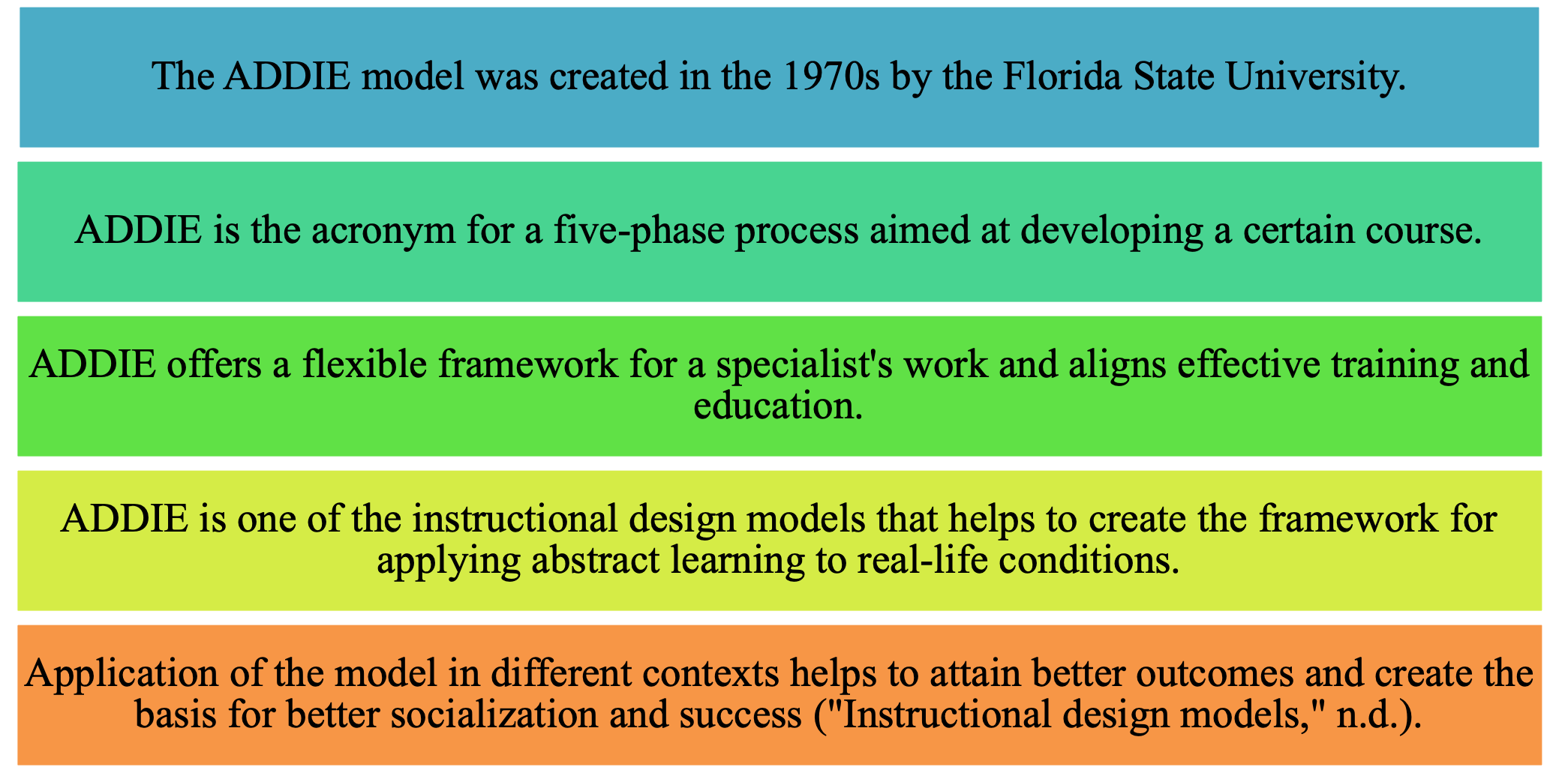
To use this approach for grades K-4, elementary school students’ developmental characteristics and needs must be understood and addressed. A variant of the instructional design model is the ADDIE model, which specifies specific phases for designing an effective intervention (“Instructional design models,” n.d.). When making a lesson plan on CBE, there are some things to consider. For instance, the following plan can be offered:
- Setting: K-4, Elementary school
- Topic: At the shop
- Purpose: to learn vocabulary related to shopping
- Aim: Students will learn how to use special words to perform a role-play
- Multiple Intelligences: Verbal, kinesthetic, visual, spatial, logical, mathematical, emotional, social
- Competency: learning, managing information, and situations.
- Vocabulary: shop, to buy, to sell, product, money, change, shop assistant, milk, bread, sugar
- Procedure: pretend students are at a shop making purchases. A teacher acts as a shop assistant.
- Assessment: to evaluate behavior, interaction, use of vocabulary, and emotional intelligence.
The Plan’s Evaluation Using ADDIE Model
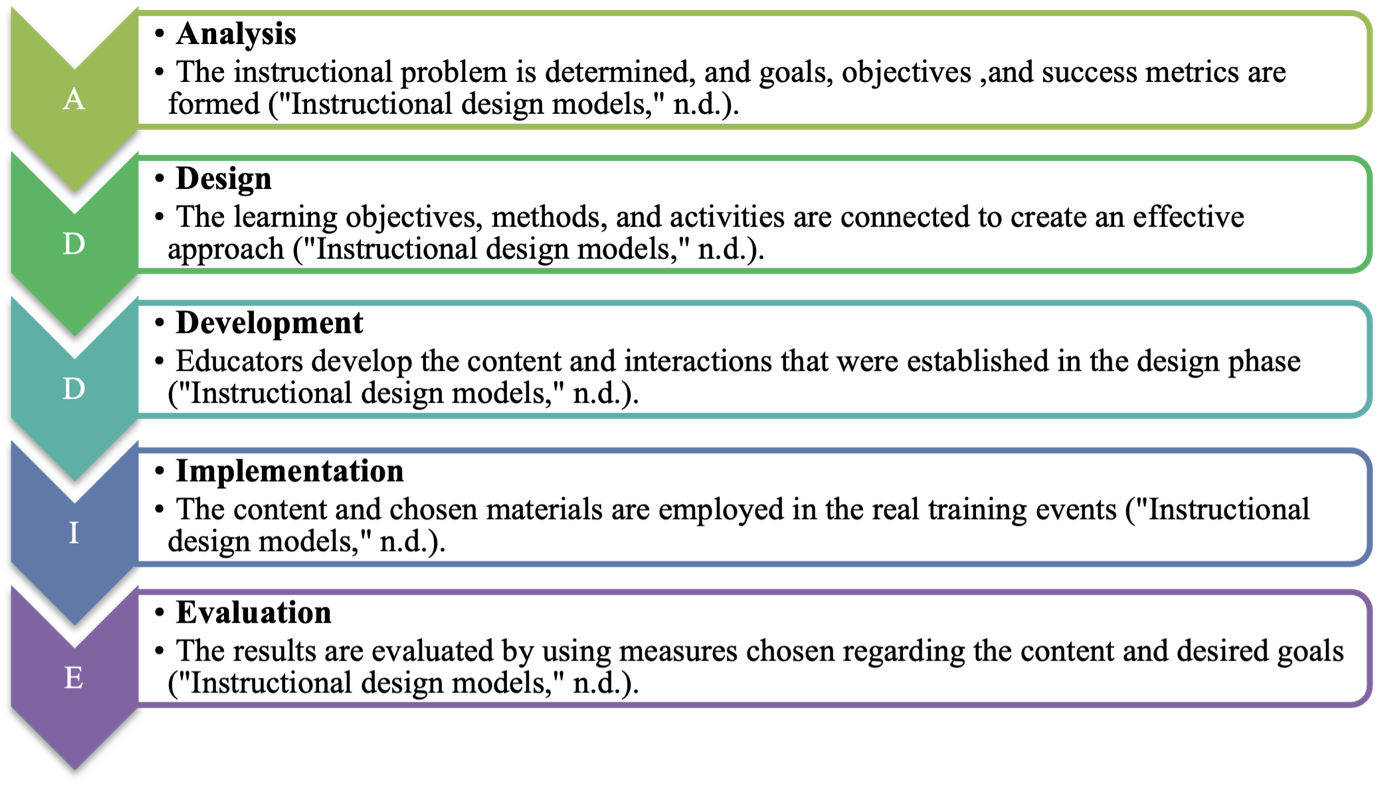
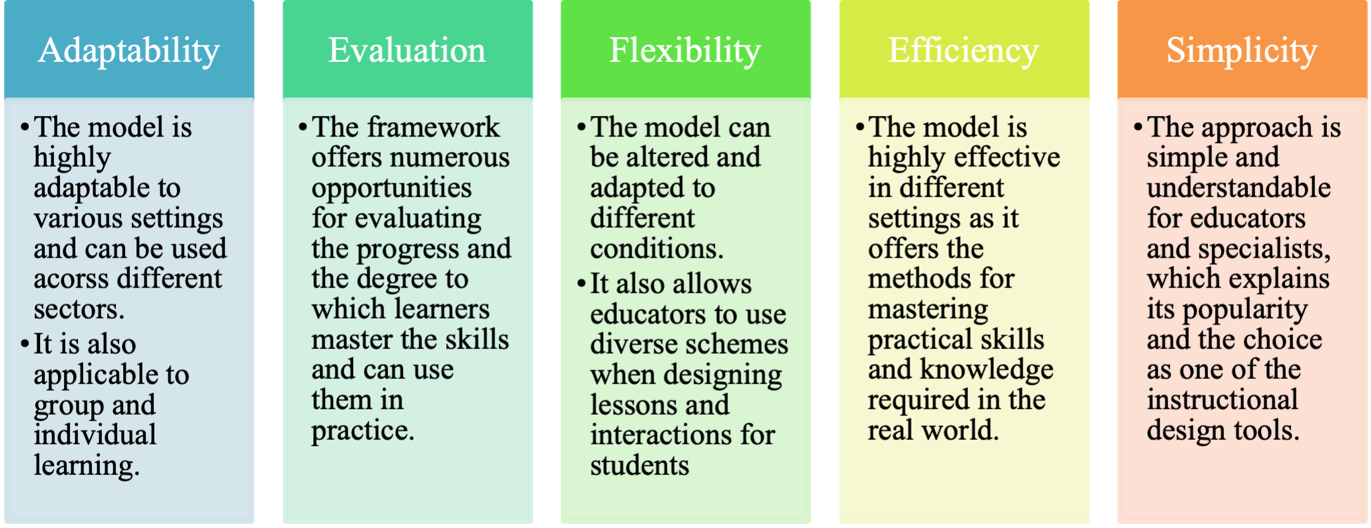
The effectiveness of the proposed CBE model can be proven by the ADDIE design. Thus, the ADDIE model has specific phases: analysis, design, development, implementation, and evaluation (“Instructional design models,” n.d.).
Analysis
A thorough analysis of the goals and competencies for K-4 students, considering various features: academic standards, age, and social and emotional development. By defining the desired result and the skills students should master by the end of their studies, they can understand what CBE is and its positive impact.
Design
Practical experiences and interactivity for different styles and interests are good. It is necessary to do everything possible to support students at varying levels of information while providing opportunities for self-learning and reflection.
Development
It is helpful to use presentations, educational games, interactive exercises, and role-play to improve understanding.
Implementation
Providing support and assistance, monitoring the process, encouraging collaboration among learners, and giving feedback.
Evaluation
Fair according to previously defined criteria. Using different assessment methods, explain and promote better results (Chappell et al., 2020). In competency-based education, which focuses on learning needs and goals, it is crucial to conduct assessments tailored to age, subject, and other factors.
Conclusion
To sum up, competency-based education has great potential, as its results are very good. By evaluating the effectiveness of this approach and developing specialized applications based on instructional design principles, teachers can create meaningful learning experiences. Competency-based education promotes mastery, engagement, and equity in the childhood education system. It is undoubtedly essential to support new ways and methods of teaching and to look for those that are personally suitable for teachers and children, that are best for them. Such a positive attitude towards learning and a willingness to change and improve work are significant and lead to better results, knowledge, and skills that align with personal needs and capabilities.
References
Chappell, C., Gonczi, A., & Hager, P. (2020). Competency-based education. In P. Hager & A. Gonczi (Eds.), Understanding adult education and training (pp. 191-205). Routledge.
Competency-based education (CBE). (n.d.). Educause.
Instructional design models. (n.d.). InstructionalDesignCentral.
Neary, D. M. (2020). Competency-based learning puts students at the center. It’s perfect for now. EdSurge.
Appendix: ADDIE Model