
Critical Path Method
Critical Path Method (CPM) belongs among the waterfall project planning approaches. It lies in defining critical and non-critical tasks necessary to complete the project. This way, project managers can assess the anticipated project duration and interdependencies of each activity to determine which ones are most critical to the project (Griffin et al., 2022). They may use it to create a clear project plan and assign highly qualified workers to the most important tasks without overburdening the timeline.
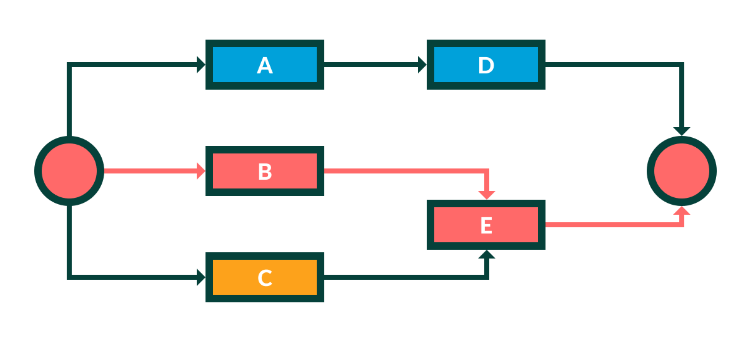
When the design’s and project’s constituent parts are primarily known and understood by all parties involved, CPM performs exceptionally well. The focus of CPM is on either delivering the project at its final stage, such as finishing the construction of a building, or reporting after achieving certain milestones, for instance, after every completed floor (Griffin et al., 2022). Overall, the CPM’s main strength is the ability to accurately predict the project timeline.
Agile Project Management
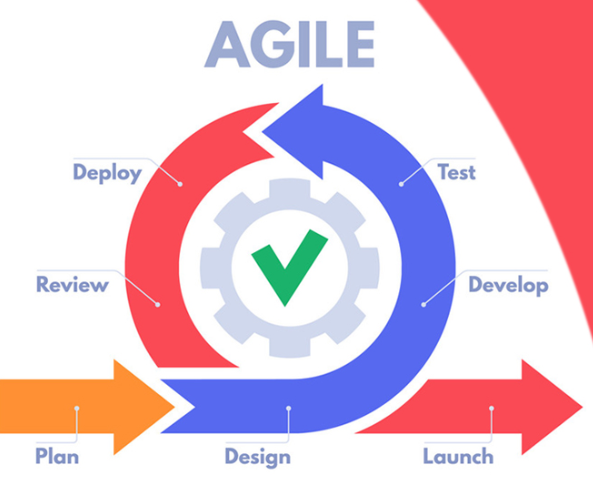
Agile approach is a gradual and iterative technique that enables modifications at any stage of project development. Additionally, it enables continuous client communication to ensure they are aware of the project’s status. The agile approach offers managers the freedom to create quick work cycles, even when the project’s direction is unclear (Griffin, 2022). For instance, customers do not define all the functionalities when developing software. The missing properties are then continuously added to the project during development.
Appropriateness for Innovation Projects
Innovation projects tend to be high-risk and high-reward endeavors due to the ambiguity that often surrounds them. Namely, they tend to be inspired by an idea or a theoretical possibility, which only allows them to make vague predictions and guesses of the project’s final state and future outcomes. Therefore, the agile approach suits such projects best, as it involves adjusting the project direction after every cycle based on the current available information.
References
Griffin, M. B., Thomas, J. Y., & McMurtrey, M. E. (2022). The evolution of project management: The future is now? Journal of Management Policy & Practice, 23(2).
Kukhnavets, P. (2021). How critical path method drives project management success. GANTTPRQ.
VINSYS. (2023). What is agile project management & its process?