
Labyrinth Cube
The Labyrinth Cube toy is presented as a multifunctional developmental tool. The child is expected to master each facet of the cube, which contains a separate game. Tasks to be performed include correlating the shapes of different figures, determining the appropriate color, the trajectory of movement, and working with the gears. The initial purpose of the cube is to develop skills in counting and determining time. Additionally, this game fosters cooperative play among children, helping them develop communication skills and teamwork abilities.
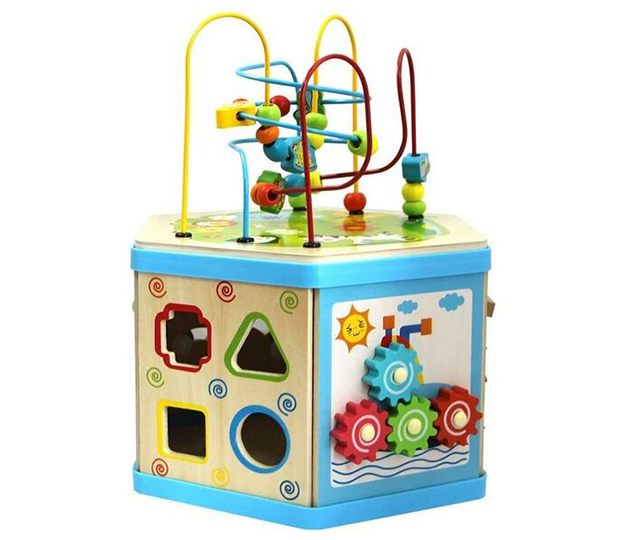
Periodic use of this product by a child helps develop spatial thinking and fine motor skills. The cube’s level of complexity corresponds to the basic cognitive needs typical of a three-year-old, as it is at this stage that the rudiments of logical comprehension of reality are formed. A significant new development is the child’s need to learn the rules of the game independently (Hains and Jennings 32). The toy itself does not come with any instructions. Moreover, it is not expected that parents or teachers will explain how to use the cube; hence, the cube contributes to the development of independence and ingenuity.
Magic Square
The Magic Square Toy is designed for children aged 3 to 7. It is made from natural dye-treated materials that are safe for ingestion. The point of the game is for the child to create a large square using the suggested shapes, which are arranged in several levels. The game itself belongs to the puzzle genre, which allows for multiple correct ways to assemble the pieces to form the desired square (Hains and Jennings 37). All the molds in the kit have smooth, rounded corners and meet all necessary safety standards. The design of this product suggests that it can be transported in a compact form. The primary new formation that forms the data puzzle is imagination.
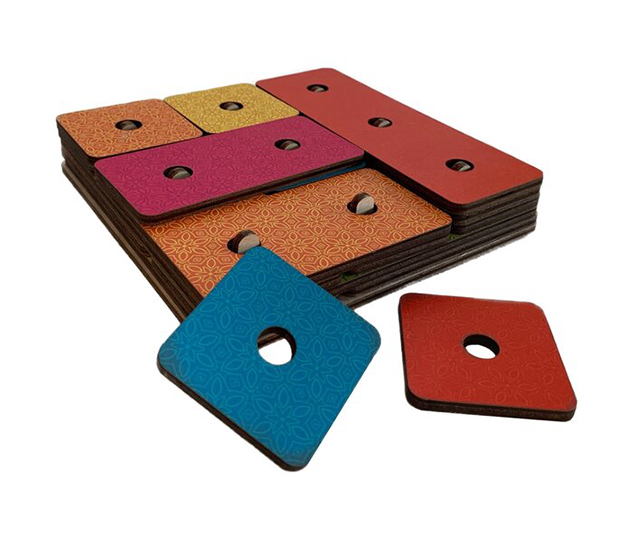
Children need to keep in mind the square that must be assembled, and each time they assign the position of the figures obtained in the game to the ideal version, a filled space will result. Moreover, a child should use the ability to compare the shape of objects and their size to decide whether a particular component of the puzzle is appropriate (Hains and Jennings 51). Because of the game’s peculiarities, participants need fine motor skills to place each piece correctly. It is worth noting that this game also involves teamwork, which promotes the development of communication skills and effective teamwork.
Balance Board
This device is a balance board that can help children aged 3 and older become aware of their bodies. The design is a board with a hinge; balance can be achieved only if the participant stands on both feet and reaches the desired balance by feeling their body’s center of gravity. To make the process more engaging, different maze drawings can be applied to the board surface. A non-deep forehead with a small ball inside typically characterizes the latter’s trajectory. The child is supposed to perform appropriate movements to bring the ball from the starting point to the finishing point after reaching the required balance.
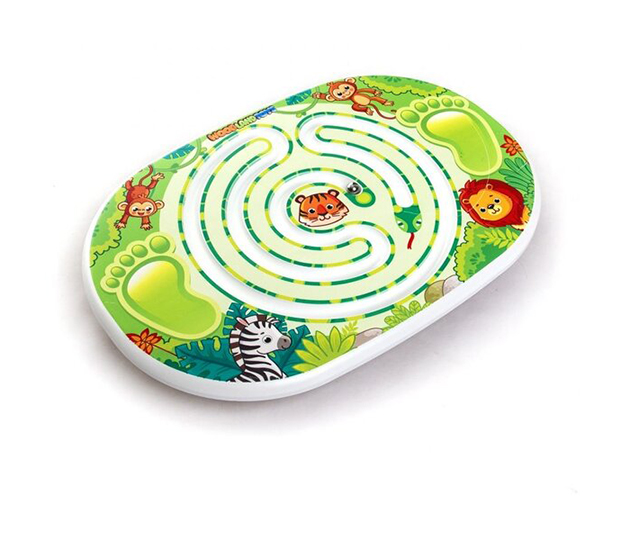
Balancing is new for a three-year-old, so it is recommended that an adult be present when the child is placed on the board. A teacher or parent should support the child until it is clear that balance has been achieved. Moreover, when introducing the game, an adult should be present throughout the session to ensure insurance against falls and create a comfortable, safe atmosphere. Later on, the child can get up on the board independently without assistance, and the physical tasks may become increasingly complex (Hains & Jennings, p. 40).
The game is beneficial in the cognitive sphere because it helps form the child’s ideas about the boundaries of the body, weight, center of gravity, and other spatial parameters. It also develops dexterity, coordination, and concentration. The only disadvantage to consider is the presence of a small ball, which the child may risk swallowing; therefore, adult supervision is necessary.
Work Cited
Hains, Rebecca C., and Nancy A. Jennings. The Marketing of Children’s Toys: Critical Perspectives on Children’s Consumer Culture. Macmillan, 2021.