
Introduction
Women’s age at first birth keeps on changing with time. Multiple factors have been linked with the age of a first-time mother, such as education level, income, and fertility. In the 21st century, technological development through globalization has affected the age at which women prefer giving birth.
Education has made most women focus on their academic levels, reducing the chances of women getting pregnant at an early age. The financial burden has also been a key factor as most women have a different perception regarding giving birth when one is not financially stable enough to cater to one’s needs and that of the baby. Medical development has also changed the age of women giving birth as contraceptives have increased significantly. The current research evaluates the women’s age at first birth as it is critical to inform them of the preferred age for first birth and possible factors that may have promoted its occurrence.
Histogram Analysis
Figure 1 below shows the histogram of the age of women at first birth. From the histogram, it can be deduced that women aged 15 to 18 have the least number of first births, with only one woman having a birth at this age. This can be linked to the fact that education is crucial in reducing early pregnancy as it helps young girls understand its risks and challenges. Those aged 45 years and above do not have first birth, which implies that from the data, there is low fertility for women above this age. The histogram also shows that women aged 24 to 30 have the highest frequency of first-time pregnancy compared to the rest of the groups. This can be explained by such aspects as education, economy, religion, contraceptives, and family planning programs. Above the age of 33, first birth reduces significantly.
Education is a significant factor in reducing the birth rate in many countries. According to Gotmark and Andersson (2020), increased education among women has a critical effect on lowering women’s fertility and raising the age of first birth. Education affects childbearing decisions and family relations. Higher and longer education creates women empowerment, raising the age of getting married, family size, and the time of nearing a child (Roustaei et al., 2019). Although there is age variation, most women have responded positively to age changes (Gotmark & Andersson, 2020). This explains why the first births are high at 27 and above and lower at age 15. Furthermore, first birth differs significantly between less and more educated women.
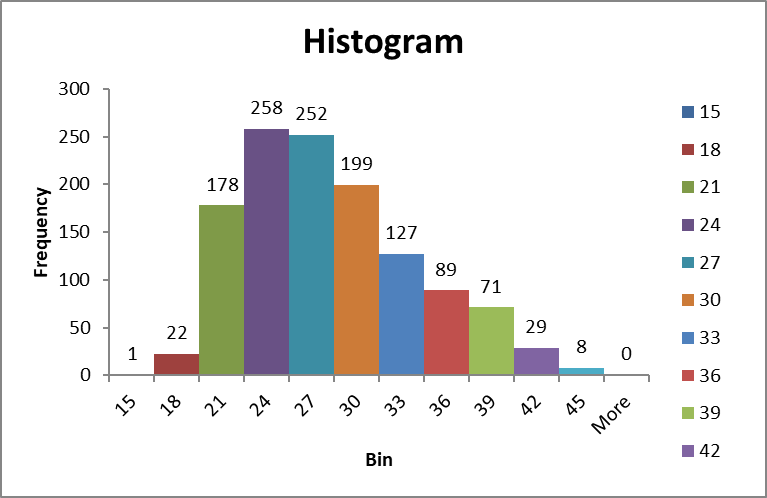
The economy also has a role in explaining the shape of the histogram in Figure 1 above. Economic changes have a role in defining the changes in the age at which women prefer to have their first birth. Technology has increased education investments, making it expensive when one has multiple children (Gotmark & Andersson, 2020; Roustaei et al., 2019). This makes families have fewer children at a later stage, increasing the age of first childbirth and reducing women’s fertility rate. In developed countries with industrial productivity and a growing economy, the age of first birth rises, making the fertility rate rely on education rather than GDP.
Religion also has a role in informing the birth rate. Countries in the Middle East oppose the use of family planning and contraceptives (Gotmark & Andersson, 2020). This increases the chances of the first birth rate in the early 20s and mid-20s, similar to Figure 1 above. Countries that use contraceptives and family planning tend to have a low fertility rate, increasing the age of first birth (Gotmark & Andersson, 2020). Education also informs the use of contraceptives, as learned women have a different perception of using contraceptives compared to their counterparts.
Hypothesis Testing
- H0: The mean age of women giving birth is 37 years old. (Null Hypothesis).
- H1: The mean age of women giving birth is not 37 years old. (Alternative Hypothesis).
Table 1 – One Sample t-Test.
The average age of women in the gestation demographic is 27.26. This implies that most women have their first childbirth at the age of 27. From Table 1 above, it can be deduced that the mean age of women is different from 37, t (1233) = -59.2099, p = 1.00. The p-value is greater than 0.05; therefore, the null hypothesis is rejected. This is because the p-value is not significant enough to support the null hypothesis. Therefore, it can be said that 37 is not the average age of women giving birth. The hypothesized mean for first birth among women differs significantly from the average age.
Conclusion
The age of first childbirth has significantly increased per the current data set. Most first childbirth begins from 24 to 33. This trend is associated with several factors, such as education, economy, religion, and the use of contraceptives. The positive trend in education among women has increased, resulting in women’s empowerment and increased age for first childbirth. Religion informs women’s choices; countries in the Middle East have policies restricting contraceptives and family planning, resulting in variations in the age of first birth. Furthermore, economic changes affect women’s choices when determining the family size and age of the first child.
References
Gotmark, F., & Andersson, M. (2020). Human fertility in relation to education, economy, religion, contraception, and family planning programs. BMC Public Health, 20(1), 1–13. Web.
Roustaei, Z., Raisanen, S., Gissler, M., & Heinonen, S. (2019). Fertility rates and the postponement of first births: A descriptive study with Finnish population data. BMJ Open, 9(1), 1–8. Web.