
Introduction
The economy is a complex system that encompasses various dynamics, including business cycles. While some business cycles are characterized by economic prosperity, others are marked by economic contraction. Inflation is the process by which the purchasing power or value of money declines due to an increase in the cost of goods and services (Shunmugasundaram et al., 2021).
Inflation refers to a rapid and substantial rise in the general price level, primarily dealing with the monetary aspects of products and services (Shunmugasundaram et al., 2021). Unemployment occurs when individuals over a certain age are currently available for work but are neither employed nor self-employed (Shunmugasundaram et al., 2021). Major economic health indicators include both inflation and unemployment. High unemployment and inflation may negatively impact Gross Domestic Product (GDP) growth, potentially leading to a recession.
Meanwhile, low levels of inflation and unemployment can lead to economic growth. When reflecting on the influence of unemployment and inflation, it is crucial to focus on racial inequality, with racial minorities being affected more. Thus, with significant challenges, such as the global pandemic affecting inflation, GDP, and unemployment, the most vulnerable groups to such drastic effects are racial minorities.
Data
Table 1 – Percent Change From Preceding Period in Real Gross Domestic Product (Bureau of Economic Analysis, n.d)
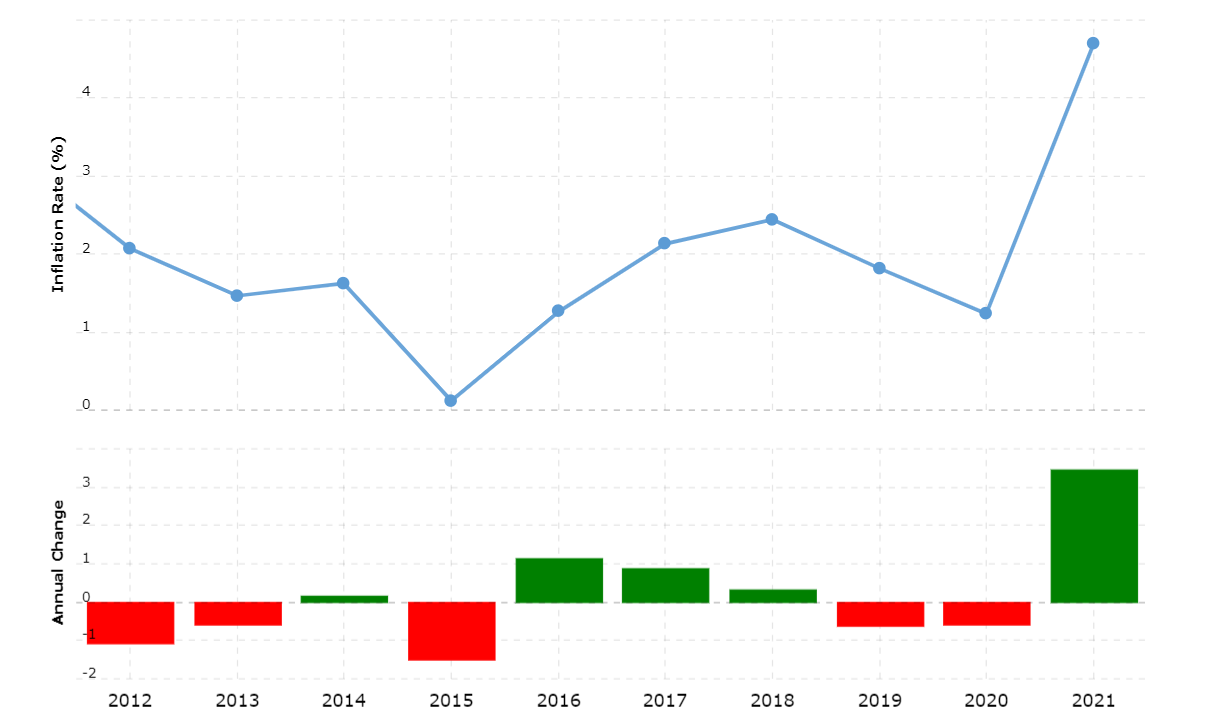
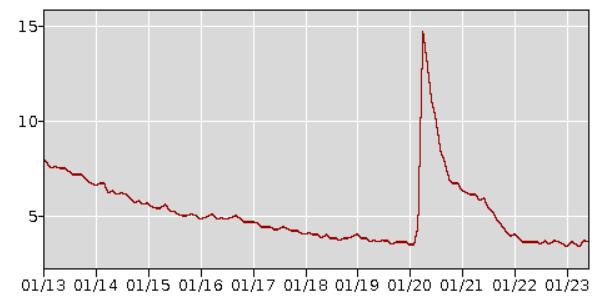
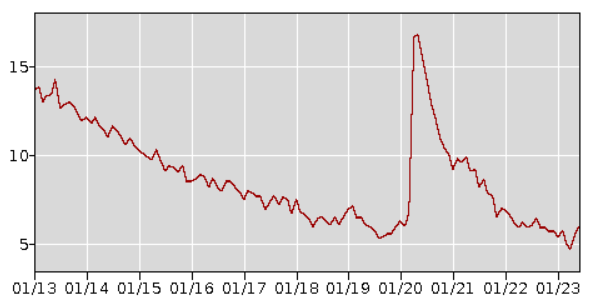
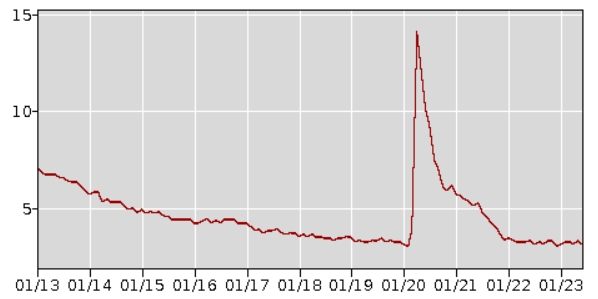
Table 2 – White Labor Force and Unemployment Rate (Bureau of Labor Statistics, 2023, and Smith et al., 2021)
Table 3 – African American Labor Force and Unemployment Rate (U.S. Bureau of Labor Statistics, 2023, and Smith et al., 2021)
Reflection and Critical Thinking
As seen in Table 1 and Figures 1 and 2, the economy expanded for almost six years, from 2013 to 2019, with GDP experiencing mild corrections throughout the period and the unemployment rate steadily decreasing. Overall, such a situation set in motion the most extended period of economic expansion in history. The majority of labor force indicators improved throughout 2019 (Edwards & Smith, 2020). The Current Population Survey’s gauge of employment increased by 2.0 million, totaling 158.6 million by the year’s end (Edwards & Smith, 2020). The employment-population ratio (the proportion of people aged 16 and older who are working) additionally increased, reaching a high of 61.0 percent (Edwards & Smith, 2020). Nevertheless, after reaching its lowest in 2019, the economy faced immense issues.
The COVID-19 pandemic and attempts to contain it forced firms to cease operations or close, resulting in an unprecedented number of temporary job cuts. As a result, a decade-long growth cycle came to an early end in 2020. As the COVID-19 pandemic abruptly ended the economic upswing and had a significant negative impact on the job market in the United States, total civilian employment decreased by 8.8 million over the course of the year (Smith et al., 2021).
As shown in Figure 2, the number of unemployed people increased in 2020, peaking at nearly 15 percent before declining to 6 percent by the end of the year. Although some people were able to work from home, the number of individuals who were temporarily laid off from their jobs increased significantly throughout the year (Smith et al., 2021). Therefore, out of the whole decade, unemployment was at its lowest in 2019, and its peak was in 2020, driven by the global pandemic.
Another factor significantly linked to unemployment is inflation. The reverse effect can be seen since, unlike unemployment, which was decreasing until 2019, inflation was rising. As shown in Figure 2, inflation increased gradually from 2015 to 2021. Therefore, it becomes evident that, before the pandemic, rising inflation contributed to a decrease in unemployment. The reason is that increased aggregate demand raises prices, encouraging businesses to increase production and hire more staff, which in turn lowers the unemployment rate. Therefore, reduced unemployment rates are accompanied by increased inflation.
Core inflation surged in 2021 and 2022 as the labor market tightened and the unemployment rate-to-job openings ratio rose. As seen in Figure 2, the unemployment rate began to decline again to its lowest rate of 2019 after the pandemic’s peak in 2021-2022. The reason is that rapid inflation resulted from the government’s interventions aimed at reviving economic activity. Companies started raising prices as employees demanded higher pay (Hernandez, 2023). The connection between employment opportunities and unemployment, as well as inflation projections for the future, are two elements that explain where inflation is headed.
What is interesting in the trends is the disparity between the White labor force and the African American labor force. For example, in 2019, when unemployment was at its lowest level in a decade before the pandemic, the White Civilian labor force was over 12.71 million, with the unemployed exceeding 400,000. As a result, the unemployment rate in fiscal year 2019 was 3.2%. However, while the pandemic significantly affected the labor force and unemployment rates for this racial group, Figure 3 shows a notable rebound in the years that followed. The unemployment rate in 2022, at 3.5%, indicates that it has successfully returned to its pre-pandemic levels.
Meanwhile, the African American labor force did not experience the same level of employment revival. As shown in Figure 4, the African American labor force in 2019 consisted of approximately 20 million individuals, with an unemployment rate of 5.8%. However, the post-pandemic levels of African Americans and their White counterparts differ significantly, with the former’s unemployment level being set at 6.1.
When comparing Table 2 and Table 3, it becomes evident that, although both groups returned to similar pre-pandemic levels, a significant disparity remains between them. African-American populations were disproportionately affected by the COVID-19 pandemic. Since racial disparities in employment create barriers to establishing economic equality and reducing income gaps, these challenges require research and resolution.
After analyzing the issue, it becomes apparent that there are connections between the trends in general unemployment, problems faced by the White and African American racial groups, inflation, and GDP growth. As seen previously, economic expansions often result in lower unemployment rates and faster GDP growth, which, in the given scenario, lasted from 2013 to 2019. In contrast, a fall in GDP growth and a decrease in economic mobility might result from prolonged unemployment, which was evident from 2020 to 2021. Thus, while low inflation rates might result in increased economic activity, high inflation rates can slow down GDP growth.
Solution
Therefore, the primary issue that must be addressed is the vulnerability of the labor force and racial disparities in terms of equal employment opportunities. The government can implement several approaches to control inflation while promoting the well-being of the labor force in the country. To resolve the labor force issue, fiscal policy must be involved in the process by utilizing specific levers.
The first examples of such levers can be increased spending on infrastructure projects and education. Such approaches will not only create more jobs and opportunities but also boost organic economic growth. An additional step to managing the employment situation is through tax incentives. For instance, to sustain employment, the authorities can provide tax incentives to companies that hire those who have been unemployed for an extended period.
Moreover, given the current economic conditions, it is of utmost importance to address the issue of inflation in the most effective manner, which can be done through monetary policy. To decrease high inflation levels and return them to pre-pandemic levels, it is crucial to emphasize the need to raise interest rates. Another step that can help prevent inflation from rising is to decrease spending.
If I were in charge of the U.S. economy, I would apply a combination of fiscal and monetary policies. My primary goal would be to sustain economic growth while gradually reducing inflation, creating jobs, and narrowing income disparities. I would pay more attention to government spending and inflation at the moment, in order not to print more money to circulate in the economy and trigger further inflation. Meanwhile, I would look at trends in unemployment and income disparities. In terms of employment and workforce, I would prioritize education and workforce development initiatives, which will help encourage a more skilled and competent labor force.
Conclusion
In general, racial minority groups tend to experience more severe impacts during significant crises, like a global pandemic that influences inflation, GDP, and unemployment. The discrepancy between the White workforce and the African American labor force is what makes the trends interesting. The COVID-19 epidemic had a disproportionately negative impact on African-American communities. Since the racial difference in employment places obstacles in the way of achieving economic equality and closing income inequities, these issues demand investigation and resolution.
References
Bureau of Economic Analysis. (n.d.). National income and product accounts.
Edwards, R., & Smith, S. M. (2020). Job market remains tight in 2019, as the unemployment rate falls to its lowest level since 1969. Monthly Labor Review, U.S. Bureau of Labor Statistics.
Hernandez, R. (2023). What caused inflation to spike after 2020? Monthly Labor Review, U.S. Bureau of Labor Statistics.
Macrotrends. (n.d.). U.S. inflation rate 1960-2023.
Smith, S. M., Edwards, R., & Duong, H.C. (2021). Unemployment rises in 2020, as the country battles the COVID-19 pandemic. Monthly Labor Review, U.S. Bureau of Labor of Statistics.
Shunmugasundaram, M., & Periyasamy, P., & Karthika, R. (2021). Statistics for management. Thakur Publication Private Limited.
U.S. Bureau of Labor Statistics. (n.d.). Databases, tables & calculators by subject.
U.S. Bureau of Labor Statistics. (2023). The employment situation.