
Background
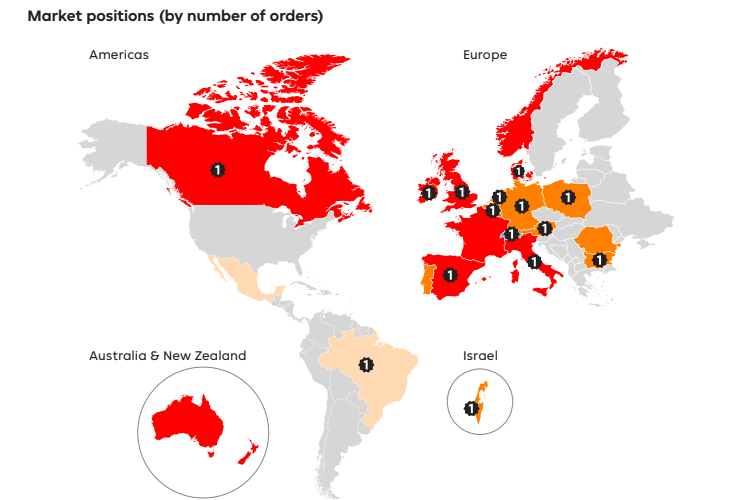
The company Just Eat has become one of the largest businesses in the world, offering online food ordering services. The company’s core activity is to help customers order takeaway food from various restaurants in different cities. The company’s story began in 2001 when a group of Danes sought to simplify online food ordering. The platform began operating in the United Kingdom in 2021 and has since expanded to other countries, including Brazil, Canada, and India. The company makes deliveries from over 30000 restaurants worldwide, with which it partners. This portfolio will focus on Just Eat Company segmentation, targeting, positioning, market mix, and evaluation of the effectiveness of its marketing efforts.
Segmentation, Targeting, and Positioning of Just Eat
Segmentation
Geographical Segmentation
Geographical segmentation divides the general market by geography, including continents, countries, states, zip codes, neighborhoods, and cities. Just Eat must segment the market geographically for its marketing strategies, as customers have different preferences, cultures, and administrative systems (Just Eat, 2019). Additionally, if the customer needs transportation, it is essential to segment geographically, as the cost of serving may vary.

Demographic Segmentation
Segmenting the market demographic involves dividing the market into sections based on factors such as income, gender, occupation, age, ethnicity, and religion. As Just Eat’s products offer superior value, the company segments its customers based on the prospective customer’s income and life cycle stages. The company’s commonly used demographic segmentation framework is PRIZM (Pro, no date). This segmentation framework utilizes geographic data in conjunction with other demographics, consumer behavior, and consumer information to help the company understand and effectively reach its prospects and customers.
Psychographic Segmentation
Psychographic variables in marketing include activities, lifestyle-oriented interests, and opinions. For example, Just Eat uses psychographics to categorize customers into various groups based on their buying patterns, views on social issues, consumption habits, hobbies, personality characteristics, and leisure activities (Just Eat, 2021). The Values and Lifestyle Survey is one of the company’s most commonly used behavioral frameworks for psychographic analysis. This segmentation is necessary because customers in the same demographic exhibit varied characteristics, depending on their environment and life experiences during their formative years.
Behavioural Segmentation
This form of segmentation categorizes consumers into groups based on their knowledge, attitudes, product usage, and other responses to services and products. The behaviour of the customers helps the company identify their needs and wants. Behavioural variables are more effective than other segmentation strategies in creating customer segments for the freemium service model. In addition, behavioural segmentation helps the company provide customers with features that they need more of.
Targeting
After identifying market segments, Just Eat decides how many and which ones to target. The choice of the target market depends on various factors, such as entry and regulatory barriers. The organization’s vision and mission are consistent with Just Eat’s (Just Eat, 2019). Collaborators are essential to market success and must have sufficient infrastructure to effectively target customer segments. Product life cycle stages are highly relevant in international scenarios due to economic, regulatory, and political considerations.
Other factors include financial resources, segment structural attractiveness, and the company’s comparative weaknesses and strengths to better market in the target market. In 2021, Just Eat’s orders were about 274 million (E., 2022). The company holds a 45% market share in the United Kingdom, with its closest competitors being Uber Eats, at 26%, and Deliveroo, at 27% (E., 2022).
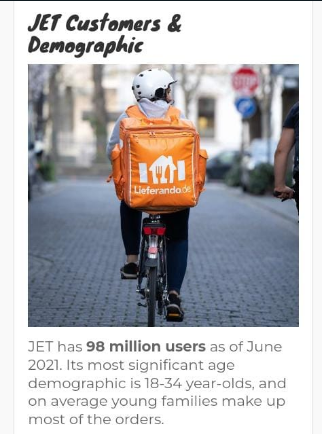
Just Eat targets individuals seeking takeaway or delivery meals from local restaurants in the UK. Consumers must have internet access to place an order through the Just Eat website. The company targets the 18- to 34-year-old age group, who are the primary customers making the most orders. Just Eat targets young families, who are more likely to order takeaway food, like all families with many children (E., 2022). Male customers are generally more likely to eat out and are often targeted, unlike female customers, as cooking tasks are often perceived as being for women in most cases.
Positioning
Just Eat positions its product to create a distinct image and provide customers with a special reference point and identity for its services and products (Just Eat, 2021). The positioning has enabled the direct company’s customers to utilize e-commerce and has helped reduce production costs in the food industry. Several factors influence the positioning decisions of the Just Eat Company.
The current portfolio is essential when Just Eat assesses whether the new products are filling vacant market gaps. In cases where competitors can imitate or replicate products and services quickly, Just Eat faces challenges in defending its market position. The corporate image of Just Eat positions new products to be consistent with the organization’s brand, primary competencies, and image. Just Eat positions its product to be consistent with the consumer’s ecosystem, making it more acceptable. The company allocates marketing resources, including capabilities and finances, to position products in the desired segments.
Marketing Mix Ps
Promotion
The company’s marketing strategies highly emphasize promotional tactics and strategies. The strategies allow the company to interact with customers and influence them directly. For example, Just Eat’s promotional activities employ a 360-degree approach to its marketing strategies (Addison, 2019). According to Kotler et al. (2022), promotion is crucial for accelerating the adoption of services and products. Additionally, it facilitates the sale of services and goods in challenging market conditions, providing adequate sales support.
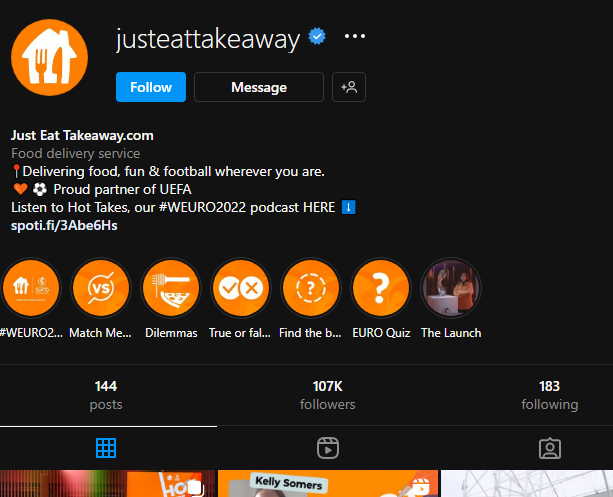
The company utilizes digital marketing by maintaining profiles on various social media platforms and websites. Digital marketing enables the company to use the feedback provided and incorporate it into broader marketing and organizational strategies (Addison, 2019). Just Eat maintains a corporate website that highlights the company’s product information and provides details about ongoing campaigns and sales. Social media advertising is beneficial because it is both cheaper and more effective, thanks to the increased internet usage. Due to the high user engagement and customer following, advertisements on social media platforms such as Facebook, Instagram, YouTube, and Twitter expose users to frequent promotional content. This is an advertising business model in which advertising sales support a revenue generation strategy.
Just Eat achieves promotions through word of mouth by using community influencers in its promotional endeavors. The company identifies brand ambassadors in the communities who are confident and robust in promoting the organization. These community influences provide products that help promote the company. In addition, they encourage buyers by highlighting the company’s benefits and promoting sales through persuasive marketing.
Just Eat uses conventional marketing by placing advertisements in consumer-related magazines. Consequently, the company utilizes out-of-house hoardings in high-density locations, which enhances the company’s visibility and contributes to building a stronger brand recall. Additionally, Just Eat produces TV advertisements with an emotional appeal. This strategy is beneficial due to its extensive ability to reach and attract a large number of people (Andrews & Shimp, 2017). The advertisement has evolved to incorporate slice-of-life characteristics and elements, emphasizing the functional benefits of the products.

Product
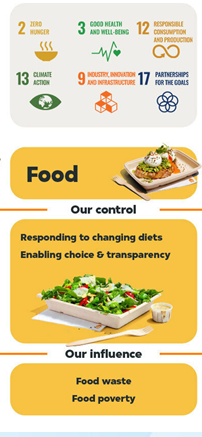
Just Eat products primarily consist of foods that customers can order online or directly from stores. The company employs packaging strategies, including branding and attractive aesthetics, to capture the attention of potential consumers. According to Andrews and Shimp (2017), packaging enables companies to convey motivational messages to consumers, such as sweepstakes, updates, promotions, and discounts.
The company sells its products under categories; each service has separate product lines, and all products are sold under the brand name ‘Just Eat’ (Just Eat 2019). The company offers a wide range of products, allowing customers to select the one that suits them best. Unlike other competitors, the products sold are highly differentiated, with distinct features provided to customers; hence, their products are rendered unique.
Just Eat produces high-quality products compared to competitors, and consumers are willing to pay higher prices for services and products. Adding value at various stages of the value chain during production enables the company to maintain high product quality (Chaffey & Ellis-Chadwick, 2019). To guarantee the consistent quality of the products, the company purchases raw materials from reputable sources.
These products are processed in well-kept surroundings. The business sells goods renowned for their classic style, which are also practical for customers to use. The items that Just Eat manufactures and sells are generally straightforward to use, and they provide clear instructions on how to use them.
The company has a substantial portfolio of products, which enables it to reach various target segments in the market. The broad portfolios add more value to the Just Eat Company and allow for financial strength. The company offers functional product benefits to consumers, distinguishing itself through its delivery of both nutritional and emotional benefits. When products are available in different sizes, it helps increase market penetration (Kotler et al., 2022). The sizes can be purchased and used according to consumers’ needs, and by producing different sizes, the company has increased trial rates and helped improve product accessibility.
Place
Just Eat sells its products directly to customers through its online website and to wholesalers, who in turn sell to various retailers, which then sell to customers. The company has over 500 retailers nationwide (Just Eat, 2021). This concept employs intensive marketing strategies, where the company promotes its products to as many retailers as possible (Andrews & Shimp, 2017).
This tactic ensures that clients can quickly access the merchandise in various regions of the country. Just Eat receives a significant amount of traffic to its website and generates substantial online sales. To ensure prompt shipments, the business has collaborated with delivery service providers. Through an integrated omnichannel delivery system that links its online and physical stores, the company makes its products easily accessible to customers. The business receives raw materials for manufacture from more than 500 vendors. (Just Eat 2021).
Just Eat has developed a close working relationship with the suppliers to achieve innovation and introduce new and active product features. With greater control over operations, including the structure and style of its restaurants, Just Eat continues to operate its locations across all areas. The business has direct client interactions and collects vital consumer feedback and behavioral data. According to Kotler et al. (2022), licensed stores decrease the risk of physical and financial investments in stable markets. Authorized retailers help the business expand quickly into new markets, boost sales of products that align with regional cultural norms, and enhance brand standards and quality.
Just Eat has created a functional online platform for placing and monitoring orders. This concept promotes sales using social media platforms, where the business accepts orders via calls, texts, and a virtual storefront. The business also maintains goods inventories with online stores such as eBay and Amazon (Just Eat, 2019). Using the internet increases sales and makes products more accessible to customers (Chaffey & Ellis-Chadwick, 2019).
Additionally, Just Eat sells its goods at hypermarkets and supermarkets throughout the region, reaching a diverse range of target demographics. These processes reflect a strategy that enables the company to improve cost efficiency and expand its market. As a result, the company reaches a wider audience and generates more sales, while a sound delivery system increases customer trust and boosts demand.

People
The company’s market mix places significant focus on people development and building. The company has people on the sales team who play a significant role in its marketing efforts (Just Eat, 2021). These individuals are trained to persuade customers and respect their preferences, considering their needs and values.
Customer contact persons in the customer service department assist customers with any product-related issues, guiding them through the process of resolving these issues. Some employees collaborate with merchants to obtain the raw materials essential for preserving and raising the grade of the finished goods. Retail employees assist clients by answering their questions and guiding them to the products that best meet their needs.
Just Eat ensures staff members attend frequent training sessions to advance their skills. Training activities identify employees’ development, progression, and growth needs (Jain & Sharma, 2019). Just Eat strengthens its employees’ organizational commitment and fosters loyalty, enabling them to be more productive. To establish organizational ownership, the business involves employees in decision-making at various management positions and solicits feedback for various products and projects.
The company motivates employees through a creative and exciting organizational culture. Providing extra rewards programs and bonuses to its employees, along with an appreciation program, is essential. The company acknowledges and appreciates the various performances of its employees.

Metrics of Marketing Effectiveness
Metrics Just Eat Company Uses
Just Eat evaluates the effectiveness of marketing efforts through several methods. The company assesses the return on marketing investment (ROMI) and the overall return on investment (ROI) to determine marketing performance. Return on marketing investment measures the success of campaigns in terms of the revenue generated from marketing spending.
Return on marketing investment is based on the revenue the company generates per dollar spent on advertising. For example, if the company spends $150 to advertise its products and gets $750 in sales, the return on marketing investment is 7.5. On the other hand, return on investment (ROI) is the metric that measures the profit generated per dollar spent on an advertisement (Just Eat, 2019). For example, if the company generates a profit of $300, then its return on investment is 3.
The company assesses the total customer acquisitions to set expectations for the sales and marketing team. The company needs to determine the number of customers it must acquire to enable budgeting accordingly and provide the marketing and sales teams with common goals to work towards. The company utilizes these metrics to provide the sales and marketing teams with direction and clarity, enabling them to contribute to the company’s growth and success. The success of these metrics occurs when the target number of customers is reached. This measure shows the direct results of people calling in to place orders or visiting stores.
The company evaluates the cost per thousand impressions (CPM), also known as the cost per mille. This metric represents the cost of obtaining one thousand advertisement impressions from a single webpage (Just Eat, 2019). This metric measures the number of engagements or digital viewers the company receives from its advertisements.
The measurement serves as a benchmark to evaluate the approximate cost of an advertising campaign. The metric is calculated by dividing the cost of placing an advertisement by the number of impressions it gets. The CPM helps compare the efficiency of various advertisement opportunities and evaluate the total cost of the campaigns.
Additionally, each company has revenue goals for each quarter and year. Just Eat assesses its success by analyzing whether it hits its goals. Reaching goals is highly related to sales and marketing strategies, and assessing whether the response team can deliver and execute effectively for customers. Revenue evaluation is a general metric that indicates the success and profitability of a business.
Suggestions for Evaluation
The company may benefit from using key performance indicators (KPI) to evaluate the effectiveness of marketing strategies. For example, the confirmation rate on the call-to-action performance indicator focuses on promotional programs that ask customers to perform specific actions (Krizanova et al., 2020). For example, customers may be encouraged by a specific campaign to take action before a certain sales deadline. In addition, the company may assess its success by dividing the number of successful engagements by the number of content distributions to determine the percentage of customers who responded to the call to action.
Social media analytics can be helpful for the company in providing information to assess the number of conversations and leads generated from social media. The analytics may pay close attention to the most popular post, overall weekly traffic, and the number of new followers, friends, or connections (Krizanova et al., 2020). The analytics may additionally reflect on the number of shares, likes, and comments generated by the advertisement.
Additionally, new technologies may be used to assess the success of marketing efforts. An example of these technologies is the use of sensors to track the number of customers entering stores. An example of these senses is the infrared people counter, which sends invisible signals after detecting people entering or exiting stores. The thermal people counter utilizes thermal technology and can be fitted on ceilings facing downward to count the number of people passing underneath. Finally, conversion rate optimization techniques can be used to collect data about the company’s website and visitors, helping it understand how people use the site and identify potential changes to increase conversion rates.
Reference List
Addison (2019) ‘Marketing mix just eat plc’. Essay48. Web.
Andrews, J.C., and Shimp, T.A., (2017) ‘Advertising, promotion, and other aspects of integrated marketing communications’, Cengage Learning.
Chaffey, D. and Ellis-Chadwick, F., (2019) ‘Digital marketing: strategy, implementation & practice’, Pearson uk.
E. (2022) Just eat takeaway statistics: How many people use jet in 2022?, Tours in Amsterdam. Web.
Jain, T.K. and Sharma, A., (2019) ‘Impact of Training and development on Employee Performance in Retail Sector’, A Review paper. Web.
Just Eat (2019) Just Eat Annual Report. Web.
Just Eat (2021) Just Eat Annual Report PDF,Doc ,images. Web.
Justeat business model : Check all about its working and revenue model (no date) JustEat Business Model : Check All About its Working and Revenue Model. Web.
Kotler,P., Keller, L.K. and Chernev, A., (2022) ‘Marketing Management Global Edition’, 16th ed. Harlow Essex. Pearson.
Krizanova, A., at al., (2019) ‘The effectiveness of marketing communication and importance of its evaluation in an online environment’, Sustainability, 11(24), p.7016.
Pro, EMBA (no date) ‘Just eat (United Kingdom) marketing segmentation, targeting, differentiation, positionin solution. Web.