
Introduction
Advertisements are vital in communicating critical corporate marketing messages and appeals to consumers, inducing them to purchase a product or service. Advertising is one of the key tools for business development, and a significant amount of research is devoted to enhancing the effectiveness of such ads. Nevertheless, it is not uncommon for advertising to unintentionally or intentionally mislead audiences by providing distorted or partial facts. The basis of such misrepresentations is often a violation of mathematical logic and, typically, a desire to enhance the image of a product or service beyond its actual value. This report critically examines three examples of advertisements that contain logical fallacies.
Logical Fallacies in Ads
Appeal to Popularity
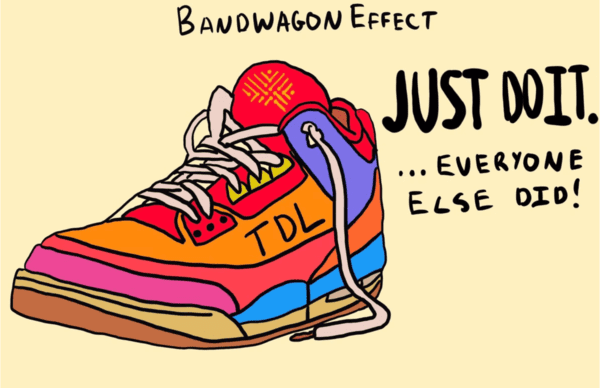
Violations of logic are common in advertisements found in newspapers, magazines, social media, and billboards. Figure 1 below shows an example of a Nike ad that explicitly calls for action because everyone else did, which can be rewritten as “If everyone else did, then you just do it.” Obviously, such a phrase does not reflect real logic since the opinion or choice of the majority should not compel an individual to act in the same way.
This ad creates the false effect of belonging to some community of consumers who have already purchased the sneakers, which should encourage the individual to make the same choice. However, the correct wording would be “Many people have appreciated the benefits of our sneakers. You can too,” since there is no specific appeal in this phrase, but rather an invitation, and a reference to some abstract community is retained.
False Cause
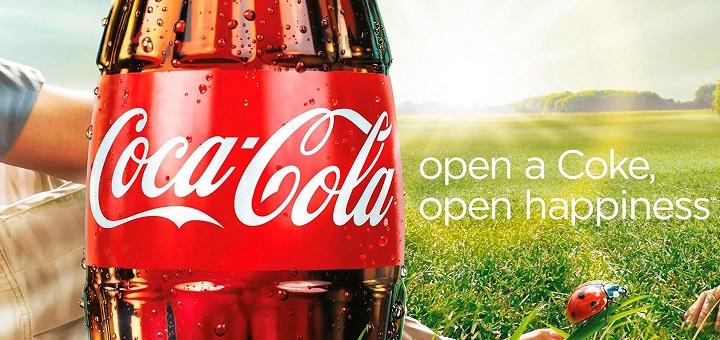
Examples of logical fallacies can also be based on creating a distorted consequence from a specific consumer action. Figure 2 contains an illustration of a misleading Coca-Cola advertisement, indicating that if an individual opens (buys) a bottle of the drink, it will bring happiness. Obviously, the connection between carbonated beverages and happiness is either nonexistent or much more complicated, and drinking Coca-Cola cannot guarantee happiness for every consumer. It would be much more correct to write in the ad, “Open a Coke. And maybe it will give you happiness.”
Hasty Generalization
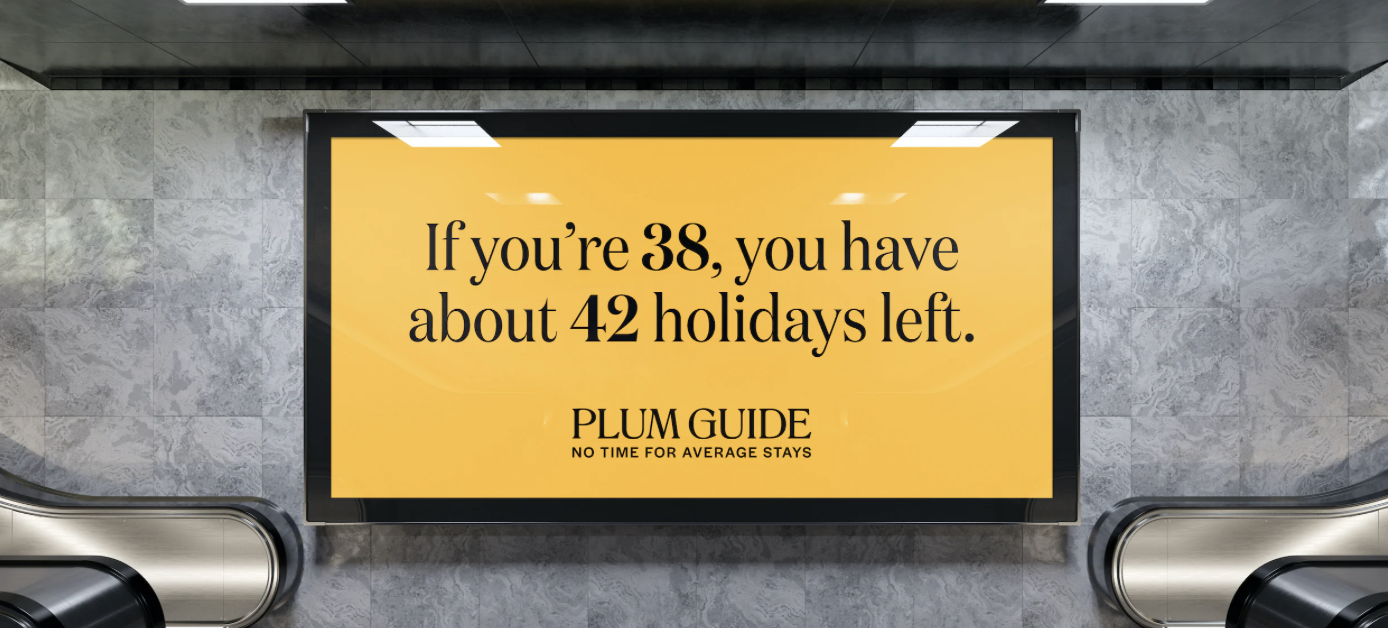
Another illustration of misleading advertising is Figure 3, which shows a social ad from Plum Guide. The company does not offer to buy a product or service, but instead appeals to man’s natural fear of dying, hinting at the opportunity to escape the “average stay.” The distortion in this ad is likely based on statistics about average life expectancy, as it suggests that a 38-year-old person has approximately 42 more years (or holidays) to live. The logical violation is that the ad is addressed to everyone, but not every 38-year-old will live to be 80 years old: some will live longer, some shorter. It would be more correct to write, “If you are 38, you are 42 years away from your average life expectancy.”
Conclusion
The three examples discussed revealed violations of mathematical logic in the advertisements, making it difficult to determine whether this was done intentionally or unintentionally. Nevertheless, one reason for such errors could be the intentional desire of marketers to mislead audiences or create a more evocative and attention-grabbing text. In particular, the report suggested three adjustments to the advertising text; however, it is easy to see that their selling power was lost in comparison to that shown in the pictures. In other words, by choosing honesty or transparency, marketers may sacrifice the quality of these ads, making them less effective.
Works Cited
Khan, Rukham. “The 10 Most Common Logical Fallacies in Advertising and How to Spot Them.” All New Business, 2022. Web.
Lister, Mary. “13 of the Most Persuasive Ads We’ve Ever Seen.” Word Stream. 2021. Web.
Williams, Eliza. “Ad Campaigns of the Year 2022.” Creative Review. 2022. Web.