
Introduction
Any armed conflict worldwide has a far-reaching impact on global society and the countries of the global community, given the interconnectedness of states in the contemporary globalized world. The invasion of Russia into Ukraine and the ongoing war have a continuous negative impact, reaching countries far beyond the directly impacted region. The involvement of NATO in the conflict has led to higher oil prices and inflation, which, coupled with the recession and the COVID-19 aftermath, endanger the global economy. This paper analyzes NATO’s involvement in the Russian-Ukrainian conflict from an economic perspective to highlight the close relationships among global actors.
The History of NATO
NATO is an international organization that aims to sustain peace by bringing countries together in a treaty focused on conflict management. The organization prioritizes security through political and military means. Politically, “NATO promotes democratic values and enables members to consult and cooperate on defense and security-related issues to solve problems, build trust and, in the long run, prevent conflict” (NATO, 2024, para. 2).
As for the military actions, the security of states is managed in a peaceful conflict resolution with the possibility of crisis management using special operations. According to Mackintosh (2022), after the collapse of the Soviet Union, NATO began expanding by admitting Eastern European countries that had formerly been part of the USSR, thereby threatening Russia’s security.
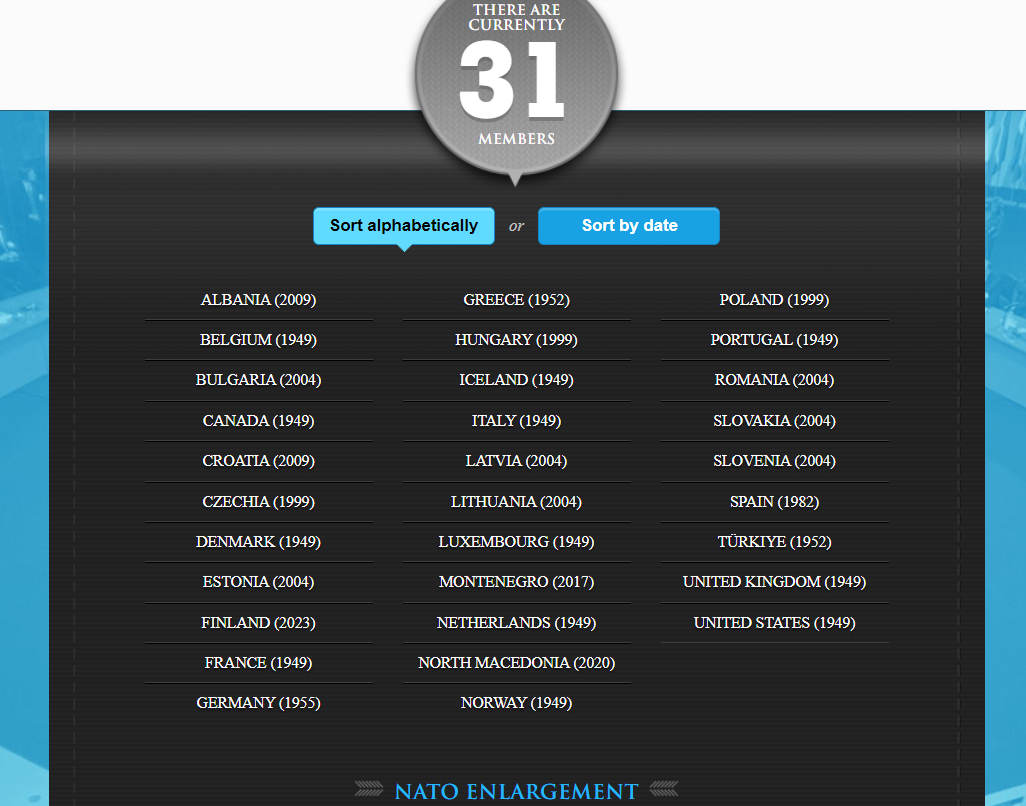
As shown in Figure 1, NATO currently has 31 member states, a strong alliance. Thus, the purpose of this organization is to maintain international peace by engaging in diplomatic cooperation to resolve international conflicts. The collision of interests between NATO and Russia emerged from long-term tensions during the Cold War between the USA, which represents NATO, and the Soviet Union, which represents Russia.
For that matter, the expansion of NATO closer to the Russian borders was perceived by Putin’s administration as a threat to Russia’s security. It became especially threatening when Ukraine expressed its willingness to join NATO, which ultimately caused Russia to invade the territories of independent Ukraine.
The Impact of the Conflict on Oil Prices
It has been an ongoing issue that the global community is negatively impacted by the implications of the war that Russia started in Ukraine, due to trade and economic issues. Indeed, as stated by Mbah and Wasum (2022), Russia’s invasion of Ukraine has had a detrimental effect on global oil prices because Russia is one of the leading players in the distribution of natural resources. Indeed, since Russia demonstrated its unreliability as an EU partner due to the war, its export of oil and gas became obstructed due to bans and sanctions.
For that matter, new routes and sources of oil began to emerge, driving global prices higher. The same conclusions about the relationship between oil prices and the conflict were reached by Liadze et al. (2023), who state that the price increase is due to instability in Russia’s international reputation, sanctions, and economic weaknesses. Thus, there is a close relationship between security issues and global resource availability.
International Trade Hardships Due to the Conflict
The conflict has international economic implications, including inflation across multiple countries, particularly the USA. Indeed, as scholars state, “Europe is the region affected most, given trade links and reliance on Russian energy and food supplies; emerging markets are affected less than advanced economies” (Liadze et al., 2023). Nonetheless, when one considers the USA as a country whose trade is affected by the conflict, it might be possible to admit that the reduction in imports from Ukraine into other countries has complicated earlier-established supply chains, which now need to be adapted.
Nonetheless, “Ukraine is not a significant trading partner for any major economy; Russia has a great exposure to the EU, the UK, and the USA, which is why its exclusion imposes difficulties (Liadze et al., 2023, p. 3). Such measures require the inclusion of multiple international actors in terms of trade agreements, which necessitates additional management and resource allocation. Ultimately, the problematic issues with international trade lead to economic crises on an internal and international scale, which complicate intra-state cooperation
Conclusion
To summarize the conflict and its impact on international trade, the invasion of Russia into Ukraine has international relations-based causes and results in global-scale economic outcomes. In particular, since Russia is one of the largest exporters of natural gas to the world’s largest countries, sanctions on its fuel complicate resource supply chain management and ultimately raise oil prices. Furthermore, the reliance on Ukrainian grain and the export blockade resulting from the war also have negative consequences for international trade. Overall, the conflict’s outcomes are disturbing for the global economy and international trade, which is why the global community should cooperate to end the war.
References
Liadze, I., Macchiarelli, C., Mortimer‐Lee, P., & Sanchez Juanino, P. (2023). Economic costs of the Russia‐Ukraine war. The World Economy, 46(4), 874-886.
Mackintosh, E. (2022). What does Putin want in Ukraine? The conflict explained. CNN.
Mbah, R. E., & Wasum, D. F. (2022). Russian-Ukraine 2022 War: A review of the economic impact of the Russian-Ukraine crisis on the USA, UK, Canada, and Europe. Advances in Social Sciences Research Journal, 9(3), 144-153.
NATO. (2024). Member countries.