
Introduction
The greenhouse effect is the process through which atmospheric gases such as methane, nitric oxide, carbon dioxide, and water vapor trap heat from the sun in the Earth’s atmosphere. The gases causing the greenhouse effect are known as greenhouse gases. Just like the wall of a greenhouse, they allow heat from the sun to pass through and warm the planet but prevent it from escaping back to the atmosphere (Mikhaylov et al., 2020). The heat trapped causes an increase in the planet’s temperatures, warming and making the earth’s surface a suitable habitat for living things. The effect is vital in maintaining the earth’s climate (Mikhaylov et al., 2020). Nonetheless, it can also be harmful if their concentration in the atmosphere is too much, as it has been in recent years due to human activities of burning fossil fuels and deforestation.
Main Body
Water vapor is the most plentiful component of greenhouse gas in the atmosphere. Unlike other gases such as methane, carbon dioxide, and nitric oxide, water vapor is not released directly into the atmosphere due to human activities (Koll & Cronin, 2018). Alternatively, it is recycled through natural processes, such as transpiration in plants and evaporation from the oceans. In addition, water vapor is a more effective greenhouse gas than methane and carbon dioxide, meaning that it is more efficient in trapping heat in the atmosphere and warming the earth’s surface (Koll & Cronin, 2018). Nonetheless, the amount of water vapor in the atmosphere is not constant and can vary depending on the air’s temperature and humidity.
In terms of its action in the atmosphere, water vapor is a short-lived gas. Thus, it does not remain in the atmosphere for long, and it is quickly removed through precipitation (Koll & Cronin, 2018). On the other hand, other greenhouse gases, such as carbon dioxide, can remain in the atmosphere for hundreds of years. Even though water vapor is a significant contributor to the greenhouse effect, its impact is not as long-lasting as other greenhouse gases.
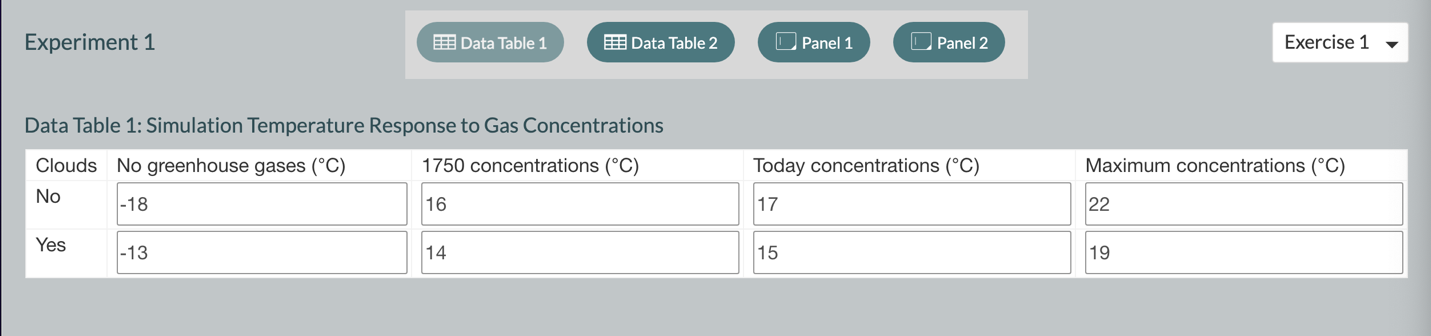

Increased forest fires, extreme weather conditions, invasive pests, and diseases, among the many threats, have characterized current climatic change. Results from table 1 in the simulation show current carbon dioxide concentrations to be 17 when there are no clouds and 15 when there are clouds. These are high levels of temperature resulting from increased carbon dioxide production from human activities. Table 2 shows that the current greenhouse gas composition has increased dramatically since 1750. Therefore, the simulation supports the relationship between human-emitted greenhouse gases and the present climatic change that has resulted in the increased greenhouse effect, which is a major contributor to the current climatic change.

Panel 2 observation indicates that it is approximately 2 degrees cooler when there are clouds. Adding clouds to the simulation helped reduce the greenhouse effect by reflecting some sunlight before it reaches the earth’s surface, creating a cooling effect that can mitigate the greenhouse impact (Mikhaylov et al., 2020). In addition, clouds help regulate the temperature of the earth’s surface by trapping heat during the day and releasing it at night (Mikhaylov et al., 2020). Overall, clouds are vital in regulating the earth’s climate by contributing to the greenhouse effect and controlling the impact of sunlight.
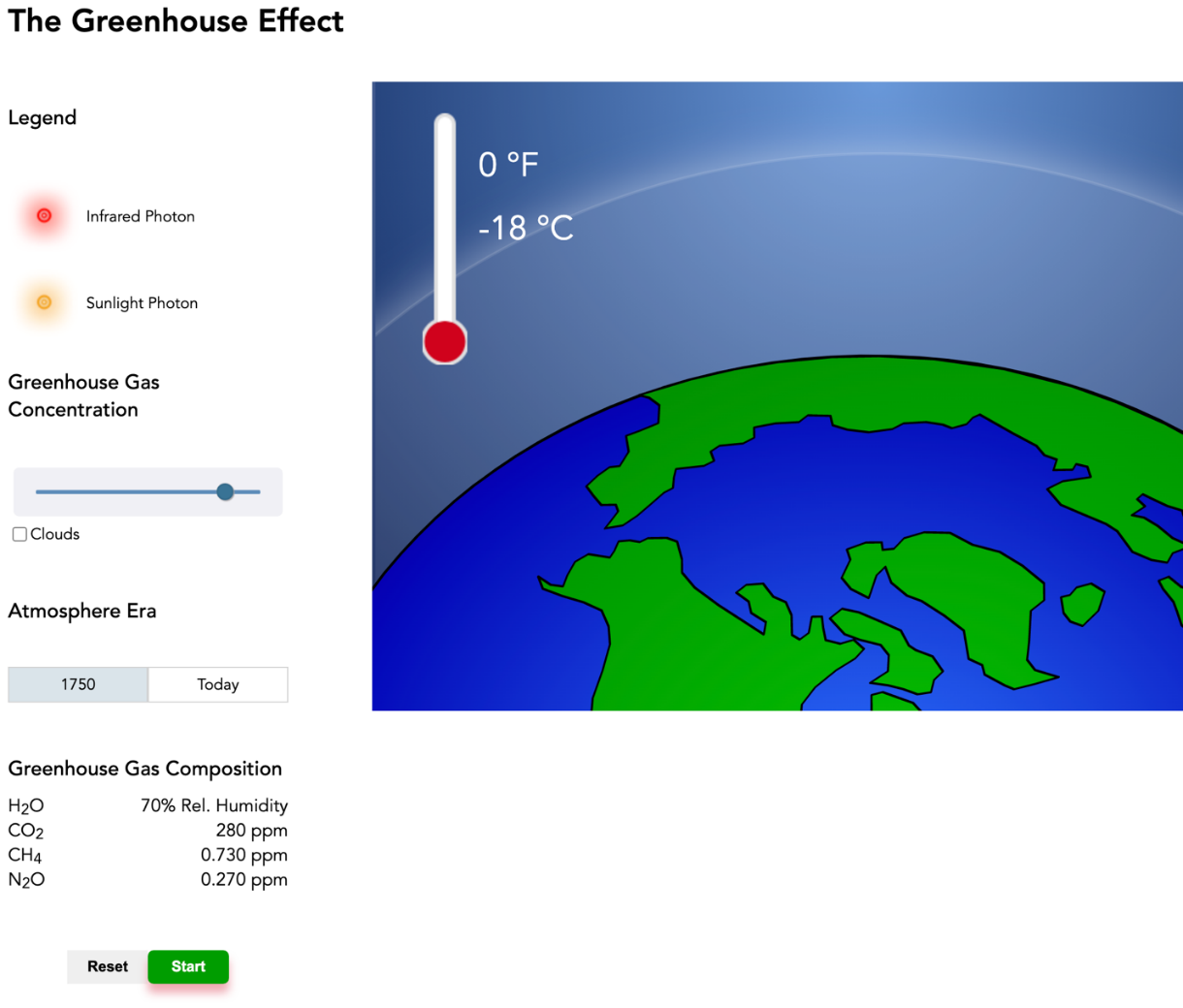
The environment would be significantly impacted if the earth warmed to the temperature recorded for maximum greenhouse concentration in Data Table 1. The increased concentration of greenhouse gases would trap more gases from the sun, causing a temperature increase (Mikhaylov et al., 2020). A range of consequences would be experienced, such as more frequent and severe heatwaves, droughts, and extreme weather conditions. The increased temperature could also cause the polar ice caps to melt, leading to a rise in sea levels (Mikhaylov et al., 2020). As a result, the coastal areas would flood and displace many people. In addition, warmer temperatures could lead to increased incidences of wildfires and biodiversity loss as plants and animals struggle to adapt to the changing climate (Mikhaylov et al., 2020). Overall, maximum greenhouse gas concentration could significantly impact the environment, people, and wildlife that depend on it. Therefore, it is vital to take appropriate measures to reduce greenhouse gas emissions, slow down the rate of climate change, and avoid reaching these levels.
Conclusion
There are several actions that I can take to reduce the emission of greenhouse gases and help prevent climatic change. I can reduce energy consumption: one of the primary sources of greenhouse gas emissions is burning fossil fuels to generate electricity. Therefore, by cutting the use of fossil fuels, I can reduce emissions of greenhouse gases. I can ensure that lights are switched off when not in use, adopt energy-efficient products, and insulate the home to reduce heating and cooling needs. I can change my transportation habits: for instance, I can use a bike, walk, or public transportation instead of driving to help reduce emissions. Overall, there are many interventions that one can take to help reduce the production of greenhouse gases and combat climate change. Therefore, by making small changes in my lifestyle, I can greatly impact our planet’s health.
References
Koll, D. D., & Cronin, T. W. (2018). Earth’s outgoing longwave radiation linear due to H2O greenhouse effect. Proceedings of the National Academy of Sciences, 115(41), 10293-10298. Web.
Mikhaylov, A., Moiseev, N., Aleshin, K., & Burkhardt, T. (2020). Global climate change and greenhouse effect. Entrepreneurship and Sustainability Issues, 7(4), 2897. Web.
HOL Science. (2022). The Greenhouse Effect. Web.