
Introduction
Workflow management is critical to ensure tasks are completed on time and budget. This process involves recognizing a task’s different phases and resources and ensuring that the workflow flows seamlessly between them. This task examines two cases of workflow systems where there is a tremendous amount of work to be done, and it moves in a constant flow through various team members with one activity or resource while seeking to achieve a common goal. This report examines the flow of the swimlane process flow chart process, considering representations of current work progress and imperatives. It also uses five gestures centered on the TOC to recommend changes impacting flow.
Document Production Project
Swimlane Process Flow
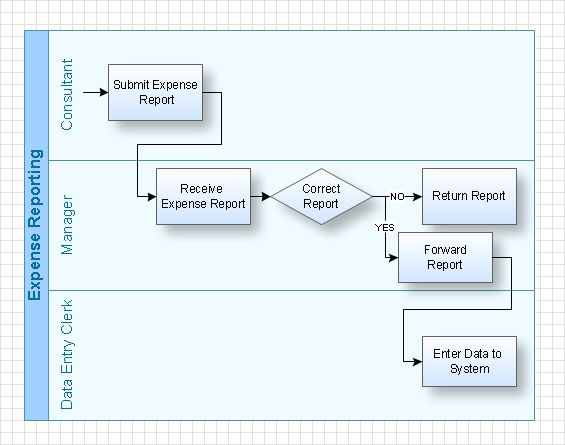
Stages and Resources for Document Production
- Input: The facility supervisor submits several documents for submission.
- Design team: The planning group creates a baseline for each report.
- Review team: The audit group studies the plans and makes important improvements.
- Approvals: Reports are sent to relevant partners for approval.
- Finalizing: Completed notes are sent for printing.
Current Flow of Work Management and Performance Assessment
Work progress is monitored by the Task Manager, who is responsible for ensuring that documents are delivered on time and within budget. As Bazsova (2017, p. 67) recommends, work-in-progress performance is assessed by tracking the progress of each record across stages and assets, which is accomplished using management tools such as Trello or Asana.
Identification of Constraints
Within the framework of this stream, a study group is required. The research group is responsible for ensuring that the records are accurate and meet the needs of partners (Heller, 2020, p. 39). For instance, if the study team cannot finish its work on time, a bottleneck will be created for the whole task.
Steps of Change
The suggested change is based on TOC’s five focusing steps.
Step 1: Define Constraints
The imperative difference is the elevation group.
Step 2: Make a Choice Based on Constraints
Ching (2018, p. 26) suggests that a key change to utilize constraints involves allocating more resources, including sub-teams, time, and equipment. For instance, the project manager may recruit more members to each team or conduct comprehensive training before the project commences.
Step 3: Subjecting Everything Else to the Selections Above
At this stage, all stages and other assets must be subject to the study group, meaning their work must receive the most critical needs, and the various stages or assets must be adjusted to ensure the audit team has everything needed to complete the job.
Step 4: Removing the Imperative
Another change that can be made is eliminating the requirement by mechanizing the interaction of questions and answers (Meredith and Samuel J. Mantel, 2018, p. 17). This step may include using advanced calculation tools to identify errors and provide ideas for progress.
Step 5: Review of Interactions
This phase should be periodically reviewed to ensure work progress continues into the next phase.
Benefits of the Proposed Changes
Allocating more resources to the teams will help reduce task delays because the group can review notes more quickly. Technologizing survey interactions will also help reduce errors and improve the nature of records. Applying mechanization and mechanical technology in the welding system can reduce lead times and extend orders for goods (Rose, 2019, p. 96).
This case will reduce build time for number one and allow the group to handle more work. Using robotics can also reduce the risk of errors and injuries associated with manual welding, affecting the overall health of the manufacturing interaction. Also, robotization can reduce the labor costs associated with welding because fewer workers are expected to perform.
Supply Chain Management Project
Swimlane Process Flow
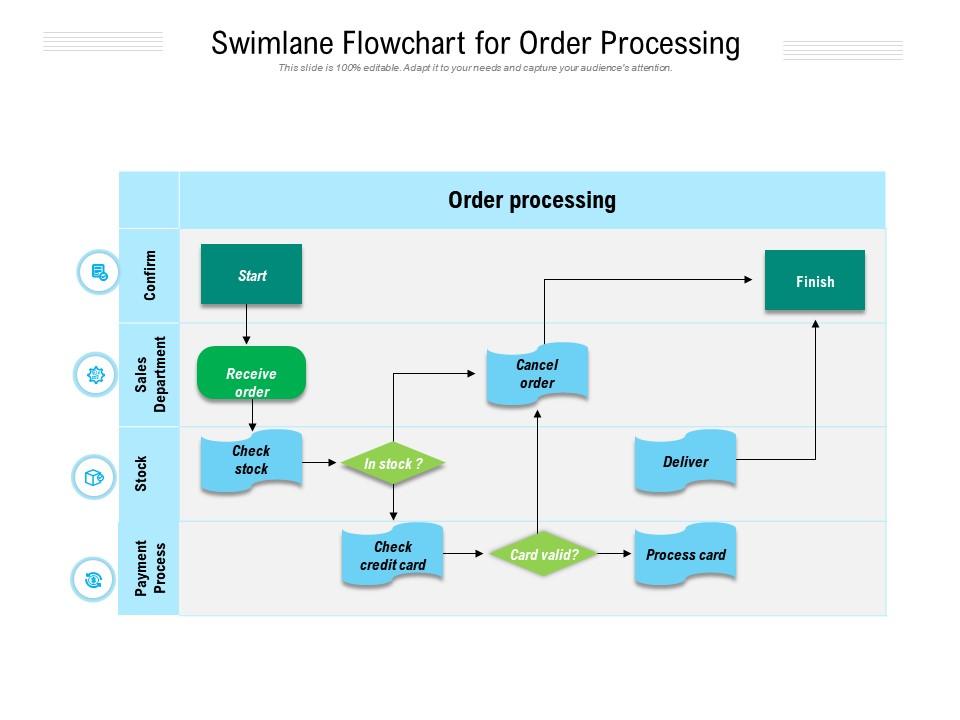
Management of Workflow and Performance Evaluation
In this example, work progress includes receiving and transporting development materials to the job site. The step begins with a request for materials from the site manager, who sends the request to the purchasing office (Russell and Taylor, 2023, p. 27). At this point, the purchasing office sends a material request to the supplier to the site.
Work progress is monitored through a combination of manual and computerized processes. Location managers typically use a paper structure to request materials, which are physically placed in the receiving frame by the purchasing office (Russell & Taylor, 2023, p. 37). The step uses the receiving system to monitor order situations and to talk to suppliers.
Identification of Constraints
The supplier’s ability to transport materials on time and in the quantity expected is fundamental to cycle progress (Batistič and Kenda, 2018, p. 690). Delays or errors on the part of suppliers can make progress difficult and ultimately delay construction projects.
TOC’s Five Focusing Steps
Step 1: Define Constraints
One condition with this flow framework is the supplier’s ability to deliver materials on time and in the expected quantities.
Step 2: Make a Choice Based on Constraints
One possible change to take advantage of this requirement is implementing the VMI framework, where suppliers are responsible for maintaining on-site stock levels and will, of course, replenish stock on a case-by-case basis (Hartel, 2022, p. 31). This allows suppliers to anticipate demand and ensure essential ingredients are generally available locally.
Implementing a just-in-time (JIT) system also allows project teams to utilize constraints and utilize the resources available at the moment. For instance, this approach ensures that materials are delivered to the project only when needed and returned or restocked upon completing their modules or tasks (Ching, 2018, p. 43). This reduces the risk of overstocking and can result in lower inventory costs.
Step 3: Subjecting Everything Else to the Selections Above
To make it all hinged on the decision to implement a VMI or JIT framework, it is important to establish clear lines of communication between the site manager, purchasing department, and suppliers. The site manager must provide accurate and ideal stock level data, and the purchasing office must ensure that orders are placed on time (Juras, 2019, p. 18). Suppliers must be able to respond quickly to frequent changes and ensure materials are followed in a timely manner.
Step 4: Elevating the Constraint
It is important to distinguish the main drivers of supplier-related delays or failures to raise the imperative. This may include conducting investigations of vendor build cycles or working with vendors to identify development areas. It is feasible to enhance a supplier’s capacity to provide materials in the anticipated quantities and on schedule by addressing the underlying causes of these limitations.
Step 5: Return to Step 1 and Repeat the Cycle
Once the limitation is resolved, it may be necessary to return to Stage 1 and repeat the cycle. This may include identifying other requirements or determining the current need for additional work in progress.
The Benefits of Proposed Changes
One main benefit of running a JIT storage framework is reducing storage costs. Requiring materials with ideal build times enables development organizations to eliminate the need for vast inventories of materials that can be expensive to store and maintain (Meredith and Samuel J. Mantel, 2018, p. 29). Additionally, JIT helps ensure development organizations have critical materials available when needed, reducing the risk of stock-outs or delays.
Another benefit of JIT is that it can work on the efficiency of the entire production network. Also, with the JIT system, it is possible to request materials when needed, implying that less waste and excess inventory are used (Rose, 2019, p. 96). This approach can result in a smoother, more productive sub-team project network with fewer delays and disruptions.
Multi-vendor integration can provide many benefits to development organizations. This can immediately reduce the risk of branch network failure. Assuming that a supplier cannot meet material requirements, the development organization can turn to other suppliers to ensure they have the essential materials (Rose, 2019, p. 96). This case can help limit delays and ensure development projects are completed on time. Working with multiple vendors can bring greater adaptability and orchestration power to a development organization. By working with various vendors, development organizations can weigh costs and select the vendor that offers the best value for money.
Conclusion
Workflow is an important part of a manager’s activity, and it is important to distinguish between processes where a large amount of work has to be completed and passes through the hands of several phases/assets, one thing/task/cluster at a time. , in constant flow. By outlining the process flow, assessing performance, identifying boundaries, and implementing the five critical steps of the table of contents, project managers can identify changes that can help move work forward, reduce cycle times, reduce process time, and improve quality. Also, continuously reviewing and developing processes enable project managers to increase efficiency, reduce costs, and improve overall performance.
Reference List
Batistič, S., & Kenda, R. (2018) ‘Toward a model of socializing project team members: An integrative approach’, International Journal of Project Management, 36(5), pp. 687-700. Web.
Bazsova, B. (2017) ‘Evaluation of the project management team members by using the MCDM’, Key Issues for Management of Innovative Projects. Web.
Ching, C. (2018). The bottleneck rules: How to get more done (When working harder isn’t working).
Hartel, D. H. (2022) Project management in logistics and supply chain management: Practical guide with examples from industry, trade and services. London: Springer Nature.
Heller, A. (2020) ‘Flow charts’, Team Workbook Your Guide to Developing An Ergonomics Process, pp. 39-48. Web.
Juras, A. (2019) ‘Competency profile of project team members – Interplay with team dynamics and project success’, Journal of Corporate Governance, Insurance, and Risk Management, 6(2), pp. 13-29. Web.
Meredith, J. R., & Samuel J. Mantel, J. (2018) Project management: A managerial approach. New Jersey: John Wiley & Sons.
Rose, K. H. (2019) ‘Book review: Learning for success: How team learning behaviors can help project teams to increase the performance of their projects’, Project Management Journal, 42(2), p. 96. Web.
Russell, R. S., & Taylor, B. W. (2023). Operations and supply chain management. New Jersey: John Wiley & Sons.