
Event Overview
An earthquake is any sudden shaking of the ground. Mainly, it is caused by the passage of seismic waves through the Earth’s rock. Its primary effect is shaking or ground failure, or even a tsunami. Magnitude is the heaviness of the earthquake and is measured using the Richter Scale. The 2004 Indian Ocean tsunami, often known as the Christmas or Boxing Day tsunami, was caused by a strong underwater earthquake that occurred off the coast of Sumatra Island in Indonesia on Sunday morning, December 26, 2004 (World Vision, 2020).
Earthquakes have irreversible effects. As the ground shakes, building gets distorted and even collapse if the magnitude is too deep; it kills people as the houses and hospitals collapse with people inside, plus their belongings, causing lots of trauma for the affected people and leading to no one left to care for the affected and also no available facilities to cater to the injured ones. Generally, the 2004 Indonesia earthquake was devastating due to the high magnitude recorded, as evidenced by the number of deaths.
National and International Response
Once an Earthquake occurs in an area, the government has to mobilize teams to assist those who have survived the earthquake. The government offers places to stay, distributes food in open areas, and provides a field hospital, clean drinking water, and any other related medical supplies that the affected population may need. In addition, the world also comes in handy to assist the affected country.
At first, Indonesia was hesitant to accept outside assistance, arguing that its military could handle the response. Still, as the extent of the destruction became more apparent, the president decided to permit foreign assistance. The United Nations has committed to the relief effort, governments from Australia to Britain are flying in supplies, and aid organizations like Save the Children and the Red Cross are also on the ground.
Demographic and Description of Population
Southeast Asia and Oceania’s Indonesia, also known as the Republic of Indonesia, is located between the Indian and Pacific oceans. Sumatra, Java, Sulawesi, and portions of Borneo and New Guinea are among the more than 17,000 islands that make up this archipelago. Indonesia, which has a population of about 270 million, is the fourth-most populous nation in the world and the largest Muslim-majority nation.
Politically, Indonesia operates as a unitary presidential republic with a multiparty system whereby the president is the head of state and government. The government is responsible for policy-making, disaster response, and coordination of relief efforts. Indonesia is known for its rich cultural heritage, which is influenced by indigenous traditions and Hindu-Buddhist and Islamic civilizations. Access to healthcare services varied across different regions, with rural areas often having limited resources and infrastructure.
Environment and Resources of Indonesia
Since the Srivijaya Kingdom established trading ties with China in the seventh century, the Indonesian archipelago has been a valuable place for trade. Indonesia has petroleum, natural gas, coal, tin, copper, and nickel resources. It is one of the world’s leading producers of palm oil and rubber.
The country is home to rainforests, coral reefs, volcanoes, and a vast array of flora and fauna. It is situated in the Pacific Ring of Fire, making it highly susceptible to earthquakes, volcanic eruptions, and tsunamis. Urban areas can easily access the local public health services, unlike rural areas, which often face resource limitations. Its government coordinated well with the health offices and delivered the emergency medical response at the local level.
Pre-Existing Factors
According to PCMSC (2018), an area with a great diversity of faulting, including subduction, extension, thrusting, and strike-slip faulting, is characterized by the seismicity of Indonesia, which offers valuable insights into the tectonics and dangers of the region. The combination of the earthquake’s epicenter being offshore and the presence of coastal communities made Indonesia particularly vulnerable to the tsunami’s devastating effects.
Eventually, the 2004 earthquake triggered a massive tsunami that devastated coastal areas across the Indian Ocean, including Indonesia. The earthquake abruptly raised the ocean floor by as much as 40 meters, which sparked a huge tsunami. Within 20 minutes of the earthquake, the first of multiple 100-foot waves slammed into Banda Aceh’s shoreline, decimating the city and killing over 100,000 people.
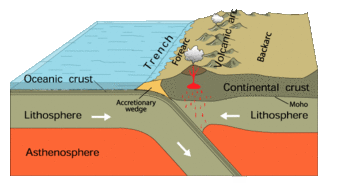
The M=9.1 Sumatra-Andaman earthquake of December 26, 2004, occurred along a tectonic subduction zone where the oceanic India Plate is being sunk beneath the smaller Burma microplate, a portion of the larger Sunda plate. An enormous fault known as an interplate thrust or megathrust occurs at the contact between the two plates. The Andaman Islands and Sumatra’s southwest region are submerged beneath this fault(Pacific Coastal and Marine Science Center, 2018). The Sunda trench, traced over an arc from Burma in the north to Java in the south, marks where the interplate thrust crosses the seafloor.
Recommendation for a Prevention Program
Some prevention programs are building earthquake-resistant buildings and launching public awareness about earthquake preparedness.
Earthquake-Resistant Infrastructure
- Develop and enforce building codes and regulations, prioritizing earthquake-resistant design and construction methods (Zhang et al., 2022).
- Assess and retrofit the existing infrastructure to enhance its resilience against seismic events.
Public Education and Awareness
- Launch comprehensive public education campaigns to increase awareness about earthquake preparedness, response strategies, and evacuation procedures.
- Collaborate with schools, community centers, and media outlets to disseminate information on earthquake safety measures, including securing furniture, identifying safe zones, and providing first aid.
Community Preparedness
- Establish community-based disaster preparedness programs that engage local residents and empower them to participate actively in disaster risk reduction initiatives.
- Conduct regular drills and exercises to practice response and evacuation procedures, ensuring communities are prepared for emergencies.
References
Hutchings, S. J., & Mooney, W. D. (2021). The seismicity of Indonesia and tectonic implications. Geochemistry, Geophysics, Geosystems, 22(9). Web.
Mercy Corps. (n.d.). Indonesia. Web.
Pacific Coastal and Marine Science Center. (2018). Tsunami generation from the 2004 M=9.1 Sumatra-andaman earthquake. USGS. Web.
World Vision. (2020). 2004 Indian Ocean earthquake and tsunami: Facts, FAQs, and how to help. Web.
Zhang, Y., Fung, J. F., Johnson, K. J., & Sattar, S. (2022). Review of seismic risk mitigation policies in earthquake-prone countries: Lessons for earthquake resilience in the United States. PubMed Central (PMC). Web.