
Introduction
The foundation of the convoluted ecosystem of financial markets is comprised of economic and financial ideas. They act as a crucial lens through which one may master the complex interactions between supply and demand, risk and return, and investor behavior. One cannot overstate the importance of these elements.
Consumption patterns serve as a gauge for the health of the market, as they reveal consumer attitudes and their tendency to spend or save. The availability of resources for investment is strongly impacted by the returns, which constitute the lifeblood of investment capital. Interest rates function as a lever, influencing borrowing costs and the appeal of various asset classes. At the same time, economic growth serves as the driving force behind financial markets, either propelling their development or halting it.
The key objective is to develop a linear model that highlights the interconnection of these factors and clarifies their influence on investment strategies and index performance. It enables investors to make informed decisions and confidently navigate the constantly evolving financial markets by providing them with a clear understanding of these dynamics. However, before making any financial decisions, it is essential to carefully analyze the current state of the market, your risk tolerance, and investment objectives. In addition, the research looks into the future to provide a view of how these variables might develop, acknowledging that the financial landscape is dynamic and that savvy businesspeople must adapt to shifting conditions.
Theoretical Framework
The two engines that power the economic machine are consumption and income. These constituents, which collectively form the foundation of both individual purchasing decisions and the broader economic environment, are the fundamental building blocks of economic theory. One can gain a deeper understanding of how individuals make decisions and the overall state of an economy by comprehending the relationship between these factors.
Changes in yields have a considerable influence on consumption, revealing distinct family and spending patterns. When someone’s income rises, they tend to spend more, indicating the positive connection between income and consumption (Bloomberg, n.d.). This phenomenon is critical in shaping savings and investing habits. Higher income may result in greater investment, which in turn will fuel economic growth.
Strong spending norms and growing earnings are frequently indicators of a healthy and developing economy. As a result, firm profits, which are a significant factor in stock market success, are affected. Investors seeking to make informed financial decisions must thus understand the dynamics of income, consumption, and economic growth. According to Shahzad et al. (2022), the pace of economic upswing, as measured by GDP, has a direct impact on the profits and earnings of corporations
Model Building
The model aims to investigate the intricate relationships between economic sustainability, income levels, consumption, and interest rates. These elements interact with one another in a complex web of economic activity; they do not exist independently of one another. Economic theory and actual observations of how these parts interact with one another and affect financial and economic consequences both support the inclusion of these units in our model.
According to economic theory, as a person’s or family’s income rises, so does their propensity to consume more (Bloomberg, n.d.). The idea that users are more likely to spend more money when they have access to more resources is the foundation of consumer income. Our concept of consumer behavior and financial stability is so deeply ingrained that it is virtually taken for granted that rising consumption levels and income growth are linked.
Furthermore, a key portion of the model that affects income and consumption is economic growth, as indicated by GDP growth. An expanding market produces more goods and gives its employees higher wages (Bloomberg, n.d.). People and families frequently spend more money as a result of the general improvement in economic situations. This highlights the significance of economic expansion in enhancing living standards and stimulating consumer spending, as well as the assumption that there is a strong correlation between economic growth and both income and consumption.
The situation is further complicated by interest rates, though. Although they can affect income and consumption, numerous factors are involved. The impacts of higher interest rates can be contradictory. They may, on the one hand, aid saving by offering higher returns on investments and savings, which can increase income through interest income. They might not, however, encourage saving.
Linear Representation
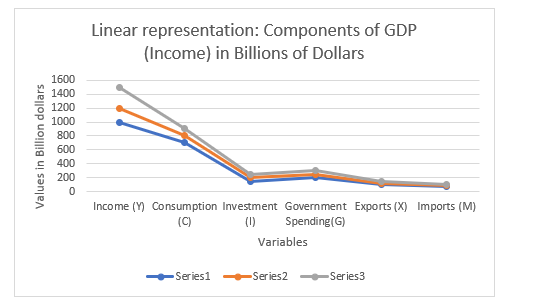
Table 1: Showing the Components of GDP (Income) in Billions of Dollars
Simple or Multiple Variable Analysis
The study employs a detailed analysis that considers the twisted relationships between essential economic elements. The four key components of the model under examination are each crucial to comprehending the effects of economic activity and the dynamics of financial markets. A comprehensive framework for understanding the complexity of economic systems is built around the variables consumption (C), income (Y), government spending (G), exports (X), and imports (M).
Consumption (C), the first variable in this model, depicts typical consumer spending patterns in a specific economy. Since it shows how families allocate their financial resources among various goods and services, it is a significant contributor to economic activity (Schnabel, 2020). Changes in income (Y), which is the total of all national profits and represents financial gains achieved by institutions within an economy, have a significant impact on consumption.
The model also takes into consideration all of the government’s expenditures for things like infrastructure development, public education, and defense, collectively referred to as G in the model. Government spending has a significant impact on the economy’s composition and functioning.
The variables imports (M) and exports (X) account for the exchange of goods and services with international markets (Schnabel, 2020). They are crucial in determining a country’s external trade balance because they affect income, consumption, and overall economic stability. There are various correlations between these factors, depending on the status of the economy and the direction of policy. Insights into how changes in one element, such as government spending or foreign trade, can impact other areas of the economy, including income and consumption, can be gained by analyzing these interrelationships.
This multifaceted style of analysis accounts for the complex web of relationships between many economic elements. The goal of the study is to illuminate how changes in one variable may affect the others, ultimately influencing the outcomes in terms of economic and financial consequences. They are attempting to elucidate the intricate relationship that this model has with this (Bloomberg, 2019). In an ever-changing global economy, the team carefully evaluates consumption, Income, Growth, and interest rates to provide informative statistics that aid investors in making informed decisions and influencing economic policy.
Data Collection and Example
The study utilized Bloomberg Markets data for a thorough analysis spanning the past decade, revealing the intricate linkages between four key economic variables: GDP growth (G), interest rates (R), income (Y), and consumption (C). The findings of this empirical study provide light on the dynamics of these factors and how they affect financial and economic growth.
One of the investigation’s major conclusions is the undeniable correlation between income (Y) and consumption (C), which is positive (Bloomberg, n.d.). Over the last decade, there has been a noticeable rise in consumption expenditure as income levels have increased. By showing that persons and families prefer to spend a larger percentage of their income on consumption when they earn more money, this empirical evidence of the link between revenue and consumption confirms well-established economic theories (Scatigna et al., 2021). This finding highlights the significant impact that income has on purchasing behavior.
The study also examined the relationship between GDP Growth (G) and Income (Y), providing insights into how the economy expands. The study found a significant link between rising income levels and periods of robust economic advancement. This research supports the underlying proposition that a healthy economy encourages increased national income. It highlights the importance of economic growth in generating income growth, which in turn influences monetary decisions and the overall performance of the market. The link between these factors and Interest Rates (R) complicates the investigation, though.
A considerable, albeit gradual, slowing in the rise of income and consumption was caused by central banks’ decision to raise interest rates (Johnston, 2022). This nuanced finding shows that higher interest rates may slow economic growth. These variables are all significantly influenced by interest rates, which also impact consumer behavior, borrowing costs, savings incentives, and investment decisions. This complex relationship requires a deeper understanding of how interest rates impact financial and economic outcomes.
Discussion on Optimal Index Areas
The research’s findings have significant implications for stockholders who wish to make informed investment decisions in an increasingly complex financial landscape. Three significant inferences can be drawn from our findings: first, the close relationship between income and consumption highlights the importance of monitoring both variables. Since changes in income and expenditure are reliable indicators of consumer confidence and economic health, capitalists should pay attention to them (De Bruijn & Antonides, 2022). In addition to indicating higher purchasing power, strong income growth also enables businesses to generate more revenue. Since income and expenditure are likely to rise, the stock market may perform well, making equities a desirable investment under such conditions.
Second, a solid understanding of interest rates is essential for business professionals. Both the stock market and the market for fixed income are significantly impacted when interest rates change. Bond yields and stock prices may move in response to changes in the policy rates implemented by central banks. Bankers regularly monitor interest rate changes and central bank announcements to make informed decisions about asset allocation.
Lastly, investors should continue to monitor GDP growth, which measures economic development. A strong economy encourages active spending and income growth, which increases business profitability (De Bruijn & Antonides, 2022). They should thus incorporate macroeconomic data, such as GDP growth predictions, into their investment strategies to align with the economic conditions that foster stock market development.
Prerequisites for Investing
The investigation’s findings suggest that while making sensible investment selections, investors would do well to deliberate on the following significant elements:
Economic Indicators
The importance of monitoring these economic indicators is highlighted by the critical relationship between income, consumption, and GDP growth. Investors greatly benefit from the valuable insights into the broader economic environment that result from regular monitoring of these factors (Johnston, 2022). Investors can assess consumer sentiment and economic health by monitoring income growth and spending trends, which in turn can inform their asset allocation strategies.
Interest Rate Trends
There is no feasible way to overstate how significantly interest rates impact the returns on investments. Due to the complex and intertwined nature of the relationship between interest rates and various financial markets, stakeholders should closely monitor the policies of central banks, as well as fluctuations in interest rates, to effectively manage their investments. Due to continuous monitoring, they can adjust their portfolios in response to changing factors, such as interest rates on borrowing, bond yields, and the value of equities.
Diversification
It is still a key part of a successful investing plan. Diversifying your holdings across multiple asset classes, such as equities, fixed-income securities, real estate, and commodities, is one way to mitigate the effects of potential adverse economic changes (Johnston, 2022). By diversifying their holdings, depositors can reduce the likelihood that adverse economic events will significantly impact the value of their portfolios. It is a prudent tactic for constructing an investment portfolio that is both diversified and long-lasting.
Future Outlook
The prospects for income and expenditure are promising due to the economic boom. The anticipated improvement in profit margins would likely lead to increased consumer spending, which could enhance firm profitability and stock market performance. The inconsistent dance between central bank policies and inflation dynamics, however, means that the direction of interest rates is still uncertain (Bloomberg, 2019).
Stockholders must maintain a flexible stance and be prepared to adjust their approach in response to shifting economic conditions. Being compliant is crucial, as it enables investors to adjust their plans to address the uncertainty ahead and capitalize on emerging opportunities. This ensures that their portfolios will remain resilient in a continually changing financial environment.
Conclusion
The study has demonstrated the importance of economic and financial theories in determining how investors choose their investments, particularly in terms of growth, income, consumption, and interest rates. By developing a linear model and arguing for the inclusion of these variables, we have provided insights into their connections and implications for financial markets. Investors should consider these factors in addition to prudent diversification when making investment selections in a constantly shifting economic environment.
References
Bloomberg. (n.d.). Bloomberg. Bloomberg – Markets/Stocks.
Bloomberg, M. R. (2019). Bloomberg by Bloomberg, revised and updated. John Wiley & Sons.
De Bruijn, E. J., & Antonides, G. (2022). Poverty and economic decision making: a review of scarcity theory. Theory and Decision, 92(1), 5-37.
Johnston, T. L. (2022). Economic expansion and structural change: a trade union manifesto (Vol. 14). Taylor & Francis.
Scatigna, M., Xia, F. D., Zabai, A., & Zulaica, O. (2021). Achievements and challenges in ESG markets. BIS Quarterly Review, December.
Schnabel, I. (2020). When markets fail–the need for collective action in tackling climate change. Speech at the European Sustainable Finance Summit, Frankfurt am Main, 28.
Shahzad, U., Jena, S. K., Tiwari, A. K., Doğan, B., & Magazzino, C. (2022). Time-frequency analysis between Bloomberg Commodity Index (BCOM) and WTI crude oil prices. Resources Policy, 78, 102823.