
Abstract
Climate change is the greatest risk to the survival of the African lion. The African lion is found in the savannah grasslands of sub-Saharan Africa. This article has evaluated the effects of climate change on the African lion population. The article’s findings indicate that climate change has deteriorated the ecological system of the African lion. It has minimized the lions’ prey, excessive rainfall and floods, which have killed the lion clubs, and drought has killed the lions.
Moreover, the reproduction pattern of the African lion has been affected. Therefore, the is a need to revive and restore the environmental status to minimize climate change. A possible solution to climate change should focus on minimizing the environmental release of greenhouse gases. Conclusively, managing domestic carbon footprint might lessen the negative effects of global warming and climate change, which threaten the future of most living organisms, including that of humans.
Introduction
Nearly every part of the world is already impacted by climate change, which is responsible for many shifts in extreme weather and climatic occurrences. In Africa, heat and droughts are a few of these extreme events that could become more common and violent. It is quite difficult to mitigate and adjust to these changes. The findings indicate that Africa’s temperature has risen above the world average.
Peterson et al. (2014) report that lions are experiencing a grave population fall. In the past 20 years, the lion population in Africa has decreased by 50%. The number of lions in Kenya’s national parks is steadily declining. This loss has several causes, but climate change is the main one. This paper will examine the impact of climate change on African lions and provide potential solutions to the problems resulting from the current weather dynamic. The provided reflection will also include the effects of climate change on all surrounding wildlife, including human species.
Discussion
Current Status of the African Lion
Central African lions, of which only a few hundred remain, are more closely related to the lions of East and South Africa. Following a pattern of diminishing population size, the African lion has been declared an endangered species (Carter et al., 2018). Despite this listing, there has been an increasing sense that African lions require stronger legal protection under international law. This is because species that traverse state lines are facing more and more dangers. International law is particularly significant for a species like the African lion, whose population dynamics extend across national boundaries, even though domestic legislation exists in some range states (Carter et al., 2018). Global commitments to conservation make it possible for local laws to be implemented, enforced, and taken more consistently.
According to Hodgetts et al. (2018), the African lions leave Africa in a series of migrations. The authors emphasize that the African lion is under acute threat of extinction due to several factors. Climate change, less prey, shrinking habitat, conflicts with humans, and resulting revenge killings, poaching, and the illegal trade in lion parts – are the main factors threatening lions in Africa. Experts fear that another 50 percent of lions in East, Central, and West Africa could disappear in the next two decades (Hodgetts et al., 2018). Lions have lost about 80 percent of their habitat in the past 50 years (Hodgetts et al., 2018). Moreover, the lions’ prey in Africa, buffalo, zebra, and antelope, are becoming rare. This is one of the reasons why lions keep getting into human settlements on their forays – conflicts with villagers are the result.
Prey availability regulates the size of a healthy African lion population within their environment. The same habitat degradation is responsible for the decline in prey. The proximity of wild ungulates to domestic livestock, which increases disease transmission to wild populations, is related to this. A rise in wild animal hunting contributes to the lack of prey (Hodgetts et al., 2018). The commercialization and illegal trading of bush meat are also impacting the populations of wild ungulates. Therefore, African lion populations suffer from a lack of prey, which causes them to starve to death and forces them to move their quest for food closer to inhabited regions with humans.
Lions Before the Climate Change
Before climate change commenced, the population of African lions was enormous. The population of the African lions was distributed across sub-Saharan Africa. The climate was controllable before climate change since there were few human populations (Hodgetts et al., 2018). Therefore, the forests were not depleted by human activities such as deforestation and settlement. This nature guarantees the African ecosystem a sustainable habitat for the African lion. The food and water for the lions’ prey were adequate to support the high population of lions and their reproduction.
However, the population of African lions is declining daily. The majority of lion species are now extinct. African lion populations and ranges have shrunk due to climate change in sub-Saharan Africa (Carter et al., 2018). Droughts, which can interfere with lions’ reproductive cycles, are another threat from extreme weather. However, researchers have been able to piece together the genetic hints that might ensure the survival of modern lions, which are currently in danger of going extinct. Less than 25,000 African lions remain in the world today, a more than 20-fold decline during the last 150 years (Carter et al., 2018). Poaching and habitat loss are the main causes of death for lions. To rescue the remaining lions in Africa and learn more about their diversity.
Trends Over Time
Lions are endangered in many African countries, including Tanzania, Kenya, and Zimbabwe. The king of animals has been on the Red List of Threatened Species of the International Union for Conservation of Nature (IUCN) for several years (IUCN, 2022). The loss of habitat conflicts with farmers, and fewer prey animals caused the population to plummet by more than 40 percent within two decades. Carter et al. (2018) explain that climate change, human-animal conflict, and poaching pose the greatest threat to African lions.
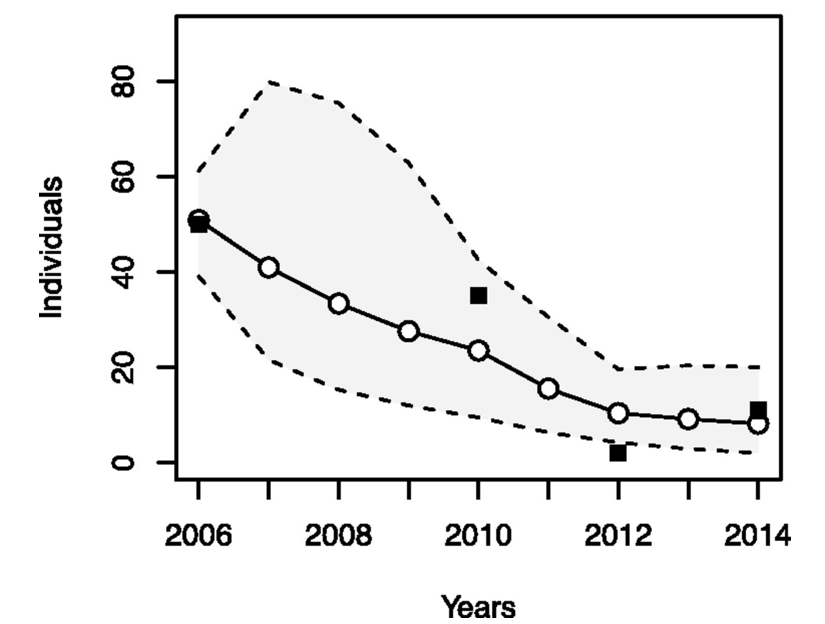
The African lions are also endangered because of the ever-expanding inhabited areas. Humans are naturally attracted to these animals since they are stronger and more admirable. Because of this fascination, African lions will get more attention as endangered. Figure 1 shows the declining population of the African Lion from 2006 to 2016 (Bauer et al., 2015). The growing human population in protected areas, where people are moving much closer to lion ranges, is also a problem because it means a loss of habitat for the lions.
Maintaining these habitats becomes harder as climate change worsens and the land becomes drier and more hostile. This will hasten the extinction of African lions and bring about their rapid decrease (Vetter et al., 2020). Although there are still plenty of African lions on the continent, their historical range is thought to have reduced by around 80%, and only ten major strongholds hold about 70% of the present population.
Possible Scenarios if Significant Intervention is Absent in the Future
If significant interventions will not be put into place to mitigate the effects of climate change, animals considered lions’ prey will reduce. If prey species are not found, the lions will look for alternatives, mostly farm animals and this is what causes conflict between humans and wildlife (Bauer et al., 2015). Lack of water or drought can cause massive death of prey species of lions, which leaves the lions without food.
Meanwhile, climate change will cause Africa to experience excessive rainfall, which will cause ecological emigration of prey animal species. This shift will make the lions short of food, and in the process, the lions may die. According to Vetter et al. (2020), every national park in Kenya loses 15 lion cubs annually. The deaths of young animals (cubs) may be related to the severe flooding that occurs annually. For example, Nairobi National Park was badly affected by floods in 2018 (Vetter et al., 2020). According to the research, the floods caused the death of 14 lion cubs, who were all very young (Vetter et al., 2020). All those lions died due to pneumonia as the main cause.
Moreover, African lions will evolve and start feeding on alternative sources of prey. African lions that inhabit the Skeleton Coast of Namibia have changed their eating habits to survive (Celesia et al., 2010). Desert lions, which are only found in this area, are the only ones in the world that have been feeding on marine animals (Bauer et al., 2015). It is the driest region in Sub-Saharan Africa, located south of the Sahara Desert.
Actions Aimed at Mitigating the Impacts
Possible Solutions to Solve Climate Change Problem
The evidence indicates that greenhouse gas emissions are the major causes of climate change. The world is already warmer than in pre-industrial times by 1.2°C; it is estimated that with a 2°C rise in global temperature (Sokona & Denton, 2001). Therefore, several there is a need to implement interventions to minimize the release of greenhouse gases. Consequently, these interventions will solve the climate change menace. Therefore, solutions to climate change include:
Planting Trees
Deforestation, combined with agriculture and other land conversions, results in the loss of roughly 12 million hectares of forest every year, which accounts for about 25% of the world’s greenhouse gas emissions (Sokona & Denton, 2001). Anyone can help reverse this trend by planting trees, whether alone or in groups. For instance, the Plant-for-the-Planet campaign enables anybody to plant a tree anywhere in the world.
Avoiding Wasting Food
A third of the food that is produced worldwide is lost or squandered. The world’s population wastes one billion tons of food yearly, which equates to 8% to 10% of greenhouse gas emissions (Sokona & Denton, 2001). Every edible component of the food that people purchase should be used. Before cooking, one should measure out servings of rice and other essentials and store food appropriately. It is required to find inventive ways to share leftovers with friends and neighbors and, in this way, contribute to a neighborhood system of food sharing. Composting with inedible leftovers can also be useful for fertilizing gardens to reduce environmental impacts.
Controlling Domestic Energy Consumption
People should switch to an electric company with zero carbon or renewable energy policies. This involves installing solar panels and becoming more efficient in increasing the air conditioning temperature to a few degrees (Sokona & Denton, 2001). Turning off appliances and lights when they are not in use will reduce ozone depletion. Therefore, global warming, a potential cause of climate change, will be controlled.
Changing the Mode of Transport
A quarter of the world’s greenhouse gas emissions are attributed to transportation, and numerous governments are enacting legislation to decarbonize global mobility. By leaving their cars at home and choosing to walk or bike instead whenever possible, people can start this transition. Choose public transportation, ideally electric or carpooling, if the distance is too great (Sokona & Denton, 2001). Offering rides will ensure that fewer cars occupy the streets. This will reduce the number of greenhouse gasses emitted to the atmosphere hence minimizing climate change.
Possible Management Plans to Solve Climate Change Problem
Disseminate Information
There are several management plans to solve the climate change problem. They involve the collaboration of individual policies and self-discipline to mitigate climate change. They include encouraging family members, coworkers, and friends to lessen their carbon impact. One can join campaigns like “Count Us In,” which aims to motivate a billion people to take concrete action and admonish politicians to handle climate change more bravely. According to Sokona & Denton (2001), up to 20% of global carbon emissions might be decreased if one billion people took action.
Apply Political Pressure
Press local politicians and companies to commit to eliminating and reducing carbon pollution. This activity involves choosing an environmental issue that interests the public, deciding on a specific demand, and arranging a meeting with the local representative (Sokona & Denton, 2001). Politicians must take action to fight climate emergencies if humanity is to succeed, yet it is up to every person to keep up with the pressure to mitigate climate change.
Making Planet-Friendly Investments
Individuals can also spur change by directing their savings and investments to financial institutions whose resources do not support industries that promote carbon pollution (Vetter et al., 2020). This sends a clear message to the market, and many of these institutions now offer more ethical ways of investing, allowing individuals to use the money to encourage causes them to support and avoid companies that they contradict.
Consume Sustainable and Locally Sourced Products
To reduce the carbon footprint of people’s custom food products, they should opt for local seasonal foods. This change will help small businesses and plantations in the local region to reduce fossil fuel emissions associated with transportation and refrigerated storage (Vetter et al., 2020). Compared to traditional agriculture, sustainable agriculture can save up to 56% on energy, produce 64% fewer emissions, and support more biodiversity (England et al., 2018). Further, growing fruits, vegetables, and herbs in home gardens can minimize the carbon footprint.
Dressing Appropriately
The fashion industry contributes around 8% to 10% of global carbon emissions. This percentage is larger than the combined amount emitted by international flights and shipping. Fast fashion has created a culture of disposal that leads to the rapidly accumulating mountains of clothes in the dumps (Vetter et al., 2020). This intervention will involve buying sustainable brands and special-occasion rentals, recycling the favorite parts, and repairing them when needed.
Climate Change and Living Organisms
Effects of climate change are already evident in a number of its components. As a result of climate change, there will be less access to clean water, more flooding, and increasing sea levels (Hodgetts et al., 2018). The existence of greenhouse gases in the atmosphere, which ensures that some of the heat that reaches the planet is retained, causes the greenhouse effect. An increase in these gases results in increased heat retention, which raises the temperature. Climate change has made the rate of extinction of species on the planet 1,000 times larger than it has ever been (Hodgetts et al., 2018). In the upcoming decades, one million species could go extinct. Invasive diseases and pests, forest fires, and extreme weather are just a few of the numerous risks brought on by climate change.
What Did I Learn
What was new to me was the shocking fact that the greatest hazard to human health and prosperity is also climate change. Air pollution, sickness, extreme weather, forced relocation, stress on mental health, and rising hunger and malnutrition in areas where people cannot grow or get enough food are just a few of the health effects of climate change. About 13 million individuals die as a result of environmental conditions every year (Hodgetts et al., 2018). Extreme weather events cause more mortality and make it difficult for health systems to function, while changing weather patterns are increasing the number of diseases. This means that carbon pollution and its effects is possibly the most urgent of the world’s problems.
Conclusions and Recommendations
Climate change is a potential cause of the death and extinction of living organisms in the world. The African lion is an example of a living thing that is facing extinction for several reasons, climate change being the major reason. Therefore, there is a need to combat the effects of climate change before they eradicate the African lion species.
To minimize the effects of climate change on living things, it is recommended that humanity control its carbon footprint. People should adopt eco-friendly means of transport, plant trees, recycle clothes, and plant and use locally available food products to minimize their carbon footprint. Moreover, people should engage in education and awareness campaigns to minimize the use of fossil fuels rather than enroll in the use of renewable sources of energy.
References
Bauer, H., Chapron, G., Nowell, K., Henschel, P., Funston, P., Hunter, L. T., Macdonald, D. W. & Packer, C. (2015). Lion (Panthera leo) populations are declining rapidly across Africa, except in intensively managed areas. Proceedings of the National Academy of Sciences, 112(48), 14894-14899. Web.
Carter, N. H., Bouley, P., Moore, S., Poulos, M., Bouyer, J., & Pimm, S. L. (2018). Climate change, disease range shifts, and the future of the Africa Lion. Conservation Biology, 32(5), 1207–1210. Web.
Celesia, G. G., Townsend Peterson, A., Kerbis Peterhans, J. C., & Gnoske, T. P. (2010). Climate and landscape correlates of African lion (panthera leo) demography. African Journal of Ecology, 48(1), 58–71. Web.
Conservation successes overshadowed by more species declines – IUCN red list update. IUCN. (2022). Web.
Hodgetts, T., Lewis, M., Bauer, H., Burnham, D., Dickman, A., Macdonald, E.,… & Trouwborst, A. (2018). Improving the role of global conservation treaties in addressing contemporary threats to lions. Biodiversity and Conservation, 27(10), 2747-2765. Web.
Peterson, A. T., Radocy, T., Hall, E., Kerbis Peterhans, J. C., & Celesia, G. G. (2014). The potential distribution of the vulnerable African lion panthera leo in the face of changing global climate. Oryx, 48(4), 555–564. Web.
Sokona, Y., & Denton, F. (2001). Climate change impacts: Can Africa cope with the challenges? Climate Policy, 1(1), 117–123. Web.
Vetter, S. G., Puskas, Z., Bieber, C., & Ruf, T. (2020). How climate change and wildlife management affect population structure in wild boars. Scientific Reports, 10(1), 1-10. Web.