
In Ansel Adams’ timeless photograph of Jackson Lake, which is depicted in Figure 1, the viewer is immediately captivated by the weathered driftwood scattered along the tranquil shoreline. Each piece of driftwood stands like a sentinel, silently guarding the lake’s ancient secrets, its gnarled forms weathered by time and the relentless forces of nature. The texture of the wood, etched with the stories of countless seasons, evokes a profound sense of enduring resilience amidst the serene beauty of the landscape.
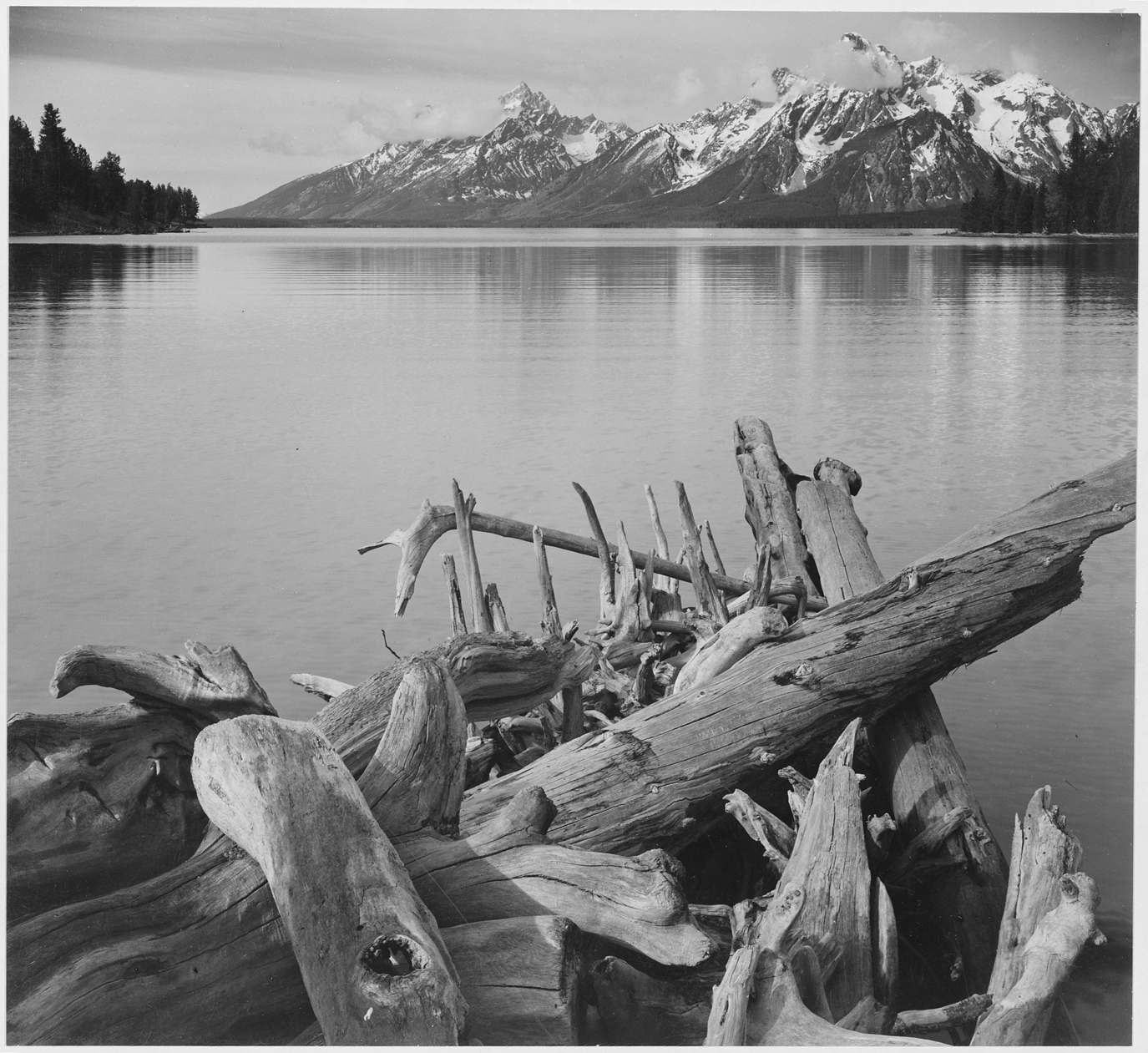
Beyond the textured foreground, the viewer’s gaze is irresistibly drawn toward the majestic Tetons, their towering peaks rising with an almost ethereal presence in the distance. Cloaked in snow-capped splendor, these rugged mountains command the horizon, their summits piercing the cerulean sky like cathedral spires reaching toward the heavens. Adams’ masterful use of light and shadow further accentuates the rugged contours of the landscape, infusing the scene with a quality that transcends mere photography.
The interplay of light and shadow dances across the water’s surface, creating a mesmerizing tapestry of reflections that mirror the timeless grandeur of the mountains above. Delicate wisps of clouds drift lazily overhead, casting fleeting shadows upon the landscape below and adding depth to the composition. In this fleeting moment captured by Adams’ lens, the viewer is invited to immerse themselves in the serenity of the landscape and contemplate the interconnectedness of all things and the enduring spirit of the land.
Overall, Adams’ photograph of Jackson Lake conveys a profound sense of reverence for the natural world, capturing the sublime beauty and timeless allure of the American wilderness. Through a particular attention to detail and expert composition, Adams invites the viewer to embark on a journey of introspection and discovery. Thus, one can admire the wonder of creation and glimpse the eternal rhythms of the earth.
Work Cited
Adams, Ansel. Jackson Lake. 1941, National Archives.