
Introduction
Support Vector Machines (SVMs) are among the most powerful tools in machine learning, especially for classification. Kernel functions are the heart of SVMs because they can transform data into higher dimensions. This essay aims to explain two common types of kernels used for SVM classifiers: the Polynomial Kernel and the Radial Basis Function (RBF) Kernel. By understanding these kernel functions, one can appreciate how SVMs can classify sophisticated datasets.
Polynomial Kernel
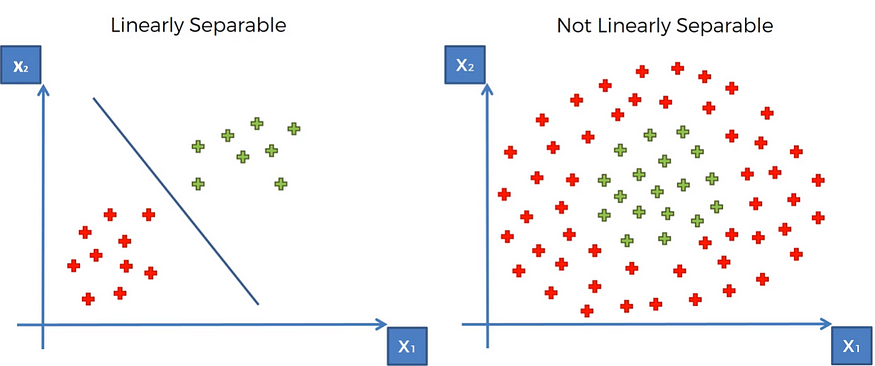
The Polynomial Kernel is a mathematical function used by SVM classifiers to model non-linear relationships in data. It does so by taking dot products between feature vectors at some power. For example, if the input is two-dimensional (x and y), this kernel would map these values to higher dimensions, where linear decision boundaries can be found around them (Ahle et al., 2020). The complexity of decision boundaries is determined by the polynomial degree, with higher degrees allowing more complex boundaries. Even though it cannot capture very complicated relationships, it works well on moderately non-linear datasets.
Unlike the polynomial kernel, which maps things into infinite-dimensional space using the Gaussian function, the RBF kernel depends on an exponential term instead. However, both still measure the similarity between feature vectors based on their distance. In other words, closer points get assigned greater weight than further ones do during calculations involving this particular kernel. Thus, such kernels can capture complex nonlinear relationships within a given dataset (Saxena, 2020). The decision boundary’s smoothness is controlled by the parameter γ, with smaller values yielding smoother boundaries and larger ones producing more intricate ones.
Conclusion
In conclusion, SVMs require kernel functions such as the Polynomial Kernel and the RBF Kernel to effectively classify complex datasets. The Polynomial Kernel is suitable for moderately non-linear data and offers better interpretability, while RBF works better with highly non-linear relationships. Therefore, it is crucial to understand the strengths and weaknesses of each kernel to determine when to use it and select the appropriate SVM model for a given dataset. Mastering kernel functions enhances the ability to fully utilize SVMs across various machine learning applications.
References
Ahle, T. D., Kapralov, M., Knudsen, J. B., Pagh, R., Velingker, A., Woodruff, D. P., & Zandieh, A. (2020). Oblivious sketching of high-degree polynomial kernels. Proceedings of the Fourteenth Annual ACM-SIAM Symposium on Discrete Algorithms, 141-160.
Saxena. S. (2020). The Gaussian RBF kernel in non-linear SVM. Medium.