Summary
With the deep integration of globalization processes, the world agenda is changing rapidly. Among the most significant changes qualitatively stands out in the sphere of tourism, which, it is possible to say with complete confidence, significantly catalyzes the unification of countries. Historically, tourism evolves through a cyclic form, which is realized to periodic returns to the starting points, but in a new paradigm. Thus, in today’s world, people from different countries can travel around the world almost without hindrance, which was characteristic of the era of primitive human communities. Nevertheless, by now, people have much more opportunities and conveniences to travel, which helps to integrate the cultural, social, and political values of different nations.
It should be particularly emphasized that tourism is an essential component of human activity, covering several needs at once. Tourism activity may be based on the desire to relax and reduce work stress or to realize professional and business goals in order to make new working acquaintances or to plan strategic collaborations. These statements are entirely true for the Saudi Arabian agenda, which has been gaining serious popularity in recent years. From a conservative country with strictly Muslim values, Saudi Arabia is becoming an open and welcoming region that attracts millions of foreign tourists every year. People from neighboring countries as well as Europeans and Americans, visit Saudi territories for leisure, religious reasons, or to work as expatriates.
In this regard, it is worth noting that the increased tourist attraction of the region can be accompanied by serious socio-economic consequences. The critical thesis of this study, which is the leitmotif of all the sections below, is the recognition of the absolute impossibility of an unambiguous manifestation of tourism for society. To put it differently, it is impossible to say unambiguously about only positive or only negative manifestations of tourism because both sides are characteristic of any community at once. In order to assess the essence of these manifestations for Saudi Arabia, a virtual interview format was used in which 525 respondents participated. They were asked to rate their agreement or disagreement with the proposed thesis. As a consequence, the results were an overview of the beliefs, perceptions, and opinions that are characteristic of official residents of Saudi Arabia, with more than 94% of the participants.
Central to the findings of this study was the confirmation of the hypothesis of ambiguity in the manifestation of tourist activity. In fact, the majority of respondents stated the most tangible effects of tourism in the economic sector, with the social and cultural sectors being less affected. The study evaluated effects such as crime rates, infrastructure development, improved economic well-being, and the preservation of the cultural sovereignty of the region. In addition, cohort analysis was of high interest in order to determine demographic trends in responses to the questions. Such cohorts were created for the gender and age distributions of respondents. Finally, a test of the statistical significance of this differentiation was conducted using analysis of variance, which showed that not all of the questions had a difference in the gender or age of the participants. Based on the results, a set of recommendations was created to improve the agenda of the Saudi tourism industry.
Introduction
The individual’s desire to discover new horizons and to develop personal insights into the diversity of the world’s cultures empirically is a natural need for everyone. An individual deprived of the desire to travel can hardly achieve any harmonious personal self-development since it is evident that the expansion of knowledge, including through personal exposure to new cultures and territories, is the driving force of personal growth (Lim, 2018). In this regard, stimulating tourism activities is fundamentally valuable for the individual as well as for larger socio-economic units of society, including governments. While only those with enough money and knowledge were critical figures in travel a few centuries ago, in today’s world, tourism is available to almost everyone. In fact, it is not necessary to have a valid visa or entry permit to be a tourist: any citizen can travel internally within his or her own country, which also has significant benefits for the individual and the state. On the other hand, if an individual turns out to be capable of being an international tourist, the great cultural difference between regions perfectly covers all travel needs, including the desire to know the world.
The dynamic development of the state in the context of profound globalization is nowadays not possible without the stimulation of international tourism. In fact, tourism is critically important for the entire region because it covers several key needs at once. The extent to which the government of a country increases the region’s openness to tourist flows depends on the degree of its participation in geopolitical relations on the world stage (Kyrylov et al., 2020). At the same time, the promotion of tourism contributes to the socio-cultural unification of communities, as a result of which the already launched processes of globalization integration are further intensified. One cannot ignore the significant influence of the domestic tourism policy of the state on the stimulation of the country’s economy. More specifically, many sectors of the economy, including, in a narrow sense, the industry of travel agencies, hotels, restaurants, and cultural heritage sites, are supported by the development of tourism. In a broader sense, tourist inflows to the country have a positive impact on the overall level of employment, GDP growth, and increased investment attractiveness through the increased circulation of tourist spending in the country. Considering the above aspects in general terms, it is important to emphasize the critical importance of government promotion of tourist programs.
In recent decades, the increase in the international attractiveness of the regions of West Asia, and the Kingdom of Saudi Arabia in particular, has been particularly noticeable. In fact, with regard to Saudi Arabia, there has been a rapid disappearance of entrenched stereotypes about the compulsory polygamy of local men or the suppressed role of Arab woman. Although traditionalism and deeply rooted family values are iconic to Saudi Arabians, the state is undergoing rapid scientific and technological, and socio-economic development. The economic progress of modern Saudi Arabia is characterized by a high share of the oil industry, with a gradual expansion of production in related industries and a number of manufacturing industries. However, it is fair to acknowledge that oil production is not the only important branch of the local economy. According to Knoema (2019), by 2019, the contribution of the tourism sector to Saudi GDP was second only to the private, public, and oil-processing sectors, at 9.3% (GAS, 2020). It is notable that this parameter has increased by 1% in the last ten years: since 2008 (Knoema, 2019). Moreover, Saudi Arabia’s current business climate attracts foreign workers who later become local expatriates (Mukherjee et al., 2018). Large multinational companies are also seeking to open their own subsidiaries here to increase their commercial presence in foreign markets and create new jobs in the region.
To put it another way, in recent years, Saudi Arabia has become very popular among foreign tourists. The purposes of such people’s travels are either business trips — including as part of the MICE industry — or personal vacations in an attempt to experience the cultural features previously unknown to the Arab community. Regardless of the reason, one can postulate an increased interest in outside tourism to the Kingdom of Saudi Arabia. Moreover, a considerable part of the tourist flow to the country is a Muslim pilgrimage because Saudi Arabia is home to at least two binding sites for the whole of Islam: Mecca and Medina. Adherents of the Arab religion from around the world have an obligation to Allah to visit Mecca at the beginning of the month of Dhu al-Hijjah, which forms a particular fifth pillar of Islam after Shahada, namely the Hajj. At this time, vast crowds of pilgrims fill the region’s hotels to perform one of the most important sacred acts of their lives: as a result, the actual population of Saudi Arabia increases dramatically at such times.
Considering the particular demands and expectations — including such aspects as comfort, safety, and diversity — the Saudi government, represented by the Council of Ministers headed by the King — the Prime Minister — must make efforts to create a favorable tourism environment in the country. It is in the interest of the authorities to ensure not only the one-time visit of foreign tourists to the country but also to keep them coming back, not only for religious but also for cultural and value reasons. Consequently, it is crucial to ensure the smoothness and high viability of the country’s transportation, restaurant, and hotel systems in order to create the best experience of visiting Saudi Arabia. Deeply aware of the need for all these needs, the region’s government has developed an entire program of state transformation aimed at reducing the country’s dependence on oil production in order to encourage areas such as health care, infrastructure, and, most notably in this research project, tourism. The national Vision 2030 program was designed and launched in 2016, although it is clear that the full structuring and visioning of the project required several years, and therefore the project was initiated at the governmental level much earlier. Thus, Saudi Arabia had at least fourteen years to diversify its economy and significantly raise the attractiveness of the region, including by attracting foreign capital. The discussion of this strategy formed an important part of this study because, as already noted, one of the most important goals of Vision 2030 was the promotion of tourism. This paper discussed selected areas of the national program and how these areas can change the country’s tourism agenda.
Research Purpose
Recognition of the critical importance of government incentives for international tourism underpinned the choice of topics for this research paper. In addition, Saudi Arabia’s desire to qualitatively enhance its own attractiveness on the global stage has also sparked interest not only in exploring ways to do so but also in the perception of Vision 2030 in the eyes of ordinary Saudis. The effective symbiosis of the two stated themes – tourism and Vision 2030 – led to the formation of the holistic problem of this paper. More specifically, the research paper seeks to assess the socio-economic and cultural effects of increased tourism in Saudi Arabia, including Vision 2030, both in terms of theoretical justification and practical terms.
Research Questions and Objectives
Since this study emphasizes a combination of qualitative and quantitative research methods, important research questions were not only quantitative survey results (how much) but also qualitative, including answers to how and why questions. Moreover, the current study is very extensive and multifactorial, so in order to conduct it competently, it was decided to construct systems of sequential questions and tasks to be covered in the study. The most appropriate form of presenting the objectives of the current study is a list format.
- to examine the current literature, and conduct a critical review.
- form and distribute a virtual questionnaire to participants.
- collect and interpret the results of the questionnaire.
- carry out a statistical significance test of the results, ANOVA.
- evaluate the consistency of the results with the available information, including the literature review.
- based on the study, identify a list of crucial limitations and develop a system of recommendations that will improve the agenda.
Literary Review
Relevance of Tourism
It is necessary to recognize that tourism is a complex and multifaceted term, representing a complex system of interconnected branches, being simultaneously a type of activity, a form of recreation, a branch of the national economy, and a way of spending leisure time. According to the UNWTO (2020), tourism should be defined as a social, cultural, and economic phenomenon whereby people move between countries or within a country for personal or business purposes. Go2HR (2020) supplements this definition by adding that the length of stay in an area as part of a tourist activity should not exceed one year. The Oxford Dictionary emphasizes the ultimate purpose of tourism by showing that all activities are done for the purpose of enjoyment (OLD, 2020). Either interpretation, however, recognizes the essence of tourism for the various spheres of individual and community life.
Determining the significance of tourism as a human activity occupies an important position in sociological research. On the one hand, at the current moment, it is intuitively apparent that international tourism is a positive feature of the globalizing world rather than a negative one. Numerous independent studies have repeatedly shown that the promotion of tourism has high relevance for, according to Lim (2018), personal development, according to Sokhanvar et al. (2018), the economic prosperity of the region and, according to Lee and Jan (2019), the cultural diversity of communities. On the other hand, alternative views are relevant and show that tourism can have acute adverse effects on the world. For example, Shahateet (2017) argued that the cultural sovereignty of unique communities might be threatened by the intensification of tourist flows, especially in an era of increasing globalization. Moreover, external tourism — without sufficient management — can be seen as multiple acts of invasion, whereby organisms alien to the area damage the ecological security of the region. In turn, this duality poses a severe challenge to regional governments, which must ensure the impeccable management of states, including the effective implementation of external and internal tourism policies. Thus, if the government in a country does not pay enough attention to tourism, it can lead, according to Hyland (2021), to the economic oppression of the state and deliberate isolation of the country from the outside world. In the context of the deep integration of globalization processes of the current agenda, such strategies do not seem successful and are rather characteristic of strongly conservative, closed countries. On the contrary, studies have repeatedly recognized that if the state is able to provide a competent strategy for tourism management, effectively creating a balance between preserving sovereign independence and attracting foreign capital, it contributes to prosperity. Thus, the question of the socio-economic impact of tourism creates a pressing issue, primarily related to the definition of the force that maintains this balance. This literature review has attempted to explore this issue through the specific example of Saudi Arabia, especially in light of Vision 2030 as one manifestation of the strategic management of the Arab state in an attempt to find a balance.
A Brief History of Tourism
It would be true to conclude that the retrospective development of tourism has a cyclical nature. Initially, the first people had a nomadic way of life, moving between geographical locations in order to find better conditions for survival. The needs for adequate protection from enemies, and excellent resources of food and water were the fundamental driving forces that forced primitive people to migrate. Remarkably, an additional factor of such tourism, according to Lumen (2019), can be noted as the natural biological need for movement. However, soon in the stages of agrarian society, people began to lead sedentary lifestyles and thus travel a way for them to exchange goods with the inhabitants of other settlements (Morgach and Kinzhagulova, 2018). Other purposes for travel were military campaigns. In this sense, it is easy to see the apparent cause-and-effect relationship: the exchange of ideas, resources, and values of life took place as a result of constant movement. Ultimately, this was one of the leading causes of civilizational evolution. With the rise of feudalism, tourism was no longer a necessity, and only the rich could afford to travel. Finally, the modern agenda has returned to the initial states, but the essence, the need, and, most importantly, the goals of tourism have changed significantly.
The Essence of Tourism
In the discussion of the central problem of this study — namely, the identification of the socio-economic effectors of tourism in Saudi Arabia — the definition of the significance of tourism as one of the human activities is extremely important. If one considers the life of an individual through the prism of social institutions, in which family, education, and work are commonly considered to be the basic units, then travel clearly cannot be called an obligatory criterion of life. This is indeed true if one takes into account the reporting statistics on this issue. Thus, according to Roser (2017), only 17% of all people living on the planet were international travelers by 2018. To put it another way, most of the world’s population either did not travel at all or only visited neighboring cities and regions of their own country. As a consequence, it is possible to conclude that travel is not a strict necessity for a stable life, and people can reasonably live without investing money, time, and effort to visit new countries and territories.
Nevertheless, these statistics do not guarantee that a person’s life without travel will be sufficiently varied and happy. According to some authors, travel cravings are positively correlated with increased life satisfaction, which means that the more an individual travels, the happier he or she is (Radojevic et al., 2018; Yu et al., 2021). This is a surprising fact, which nevertheless finds experimental confirmation. This was especially evident during the COVID-19 coronavirus pandemic when virtually all countries in the world imposed strict restrictive measures on social distancing and dramatically closed international borders (Opiłowska, 2021). This policy was justified by the high contagiousness of SARS-CoV-2, a virus that seriously suppresses the human respiratory system. However, the biggest problem with the whole pandemic was not that the virus was extremely dangerous: on the contrary, many authoritative sources stated that the virus was low risk (UCI, 2020; Ducharme and Wolfson, 2020), but that health care systems worldwide were not prepared for such a severe blow. As a result, hospitals were overcrowded, and the number of deaths increased dramatically by the day (Nikhra, 2020). In the face of such threats, governments imposed legitimate policies of restriction, the purpose of which was to control the spread of the pandemic. Obviously, under such conditions, travel proved to be a challenging activity for two reasons at once. On the one hand, the closed borders of countries unambiguously closed the access of international tourism lovers to visit new regions (Opiłowska, 2021). It is quite natural that a citizen of one country cannot enter the territory of another country at such a time of crisis. On the other hand, however, the desire for personal safety and the preservation of health should have been sufficient driving forces to suspend the need to travel. However, as will be shown later, theoretical expectations were not met by midnight.
Despite the imposition of restrictive measures and government advocacy of social exclusion, many people around the world chose to take risks in order to travel. To critically evaluate such actions (as supported by the academic standards of this study), it is necessary to eliminate any emotional context for this decision and to consider in-depth the potential reason behind the choice. Hence, according to a sociological survey from Stieg (2021), an average of 45% of respondents had one or more trips during the year of restrictions from March 2020 to February 2021. Such results in isolation could be interpreted as a threatening trend for global health since approximately one in two individuals traveled in circumvention of restrictions and safety requirements. Of course, such travel may have been accompanied by the wearing of personal protective equipment, including respirators, masks, and gloves, but in this sense, it should be referred to as another statistic. For example, Key (2021) pointed out that about half of all adults do not wear a mask even during contact with strangers. This includes going to shopping malls, train stations, parks, and other public places. To put it another way, there is a serious agenda for not only refusing to wear personal respiratory protection but also for world travel to circumvent government restrictions.
However, it is appropriate to consider the problem from a different perspective. The personal attachment of individuals to international travel is so great that it wins over the requirements of personal safety. This thesis can be interpreted somewhat differently: people are willing to sacrifice their personal health and perhaps even their lives if they get the chance to travel. This is a rather radical statement, which, however, has its place. What is most interesting, however, is the attempt to determine the reason that makes people travel. Establishing the same motivating forces will make it possible to understand more deeply the nature of tourism and then apply this knowledge to the context of Saudi Arabia.
Objectives of Tourism
A primary emphasis on the multiplicity of practical and moral tasks that are solved by making tourist trips should precede the discussion of specific goals. The whole sum of objectives should be conventionally differentiated into two categories, concerning personal, individual needs, as well as objectives aimed at solving commercial and professional issues. At the same time, it should be noted that often people who travel do not distinguish the goals of their tourism categorically: thus, recreation and recreational travel can be combined with a business trip, and vice versa (Olson, 2018). Nevertheless, a detailed examination of the critical goals of tourism activities will allow for better parsing of the Saudi Arabian scenario and determine which of the described needs have the most significant socio-economic implications.
Personal Tourism
The first point to pay attention to is the personal needs that people realize during their travels. Thus, one of the most prominent purposes of tourism is to provide recreation so that the individual can free himself or herself from work tasks and reduce the level of work stress during the vacation period (Trickett, 2018). Such recreation tends to be most common among individuals of a streaming age who work enough to provide themselves (and their family members) with the opportunity to visit foreign regions. The high effectiveness of leisure tourism in eliminating occupational pressure and work stress is noteworthy: studies show that the level of harmful effects of work is significantly reduced, and the state of career burnout is delayed (Zhu and Fan, 2018; Radojevic et al. 2018). Among others, it should be noted that such tourism can be realized through recreation in the natural areas of the region (beaches, mountains, camping) or through an urban format when tourists visit objects of cultural significance. The latter include museums, monuments, and public parks, which means that such tourism goals are closely related to increasing tourists’ intellectual awareness and erudition (Trickett, 2018). Within the personal category, especially in relation to the Kingdom of Saudi Arabia, the religious focus of personal tourism should be particularly emphasized.
Preliminarily, it should be clarified that Saudi Arabia is a valid Muslim country with Islam as the state religion. Along with Christianity and Judaism, Islam forms the three key world religions, which together have a grandiose number of adherents. Thus, according to Lipka (2017), there are more than 1.8 billion Muslims worldwide living all over the planet. Although the highest density of Muslims is in the Asia-Pacific region, vast numbers of adherents of the Islamic faith visit the Middle Eastern states, and Saudi Arabia in particular, every year. This fact has a profoundly religious justification: it is known that Saudi Arabia has at least two points of attraction for millions of pilgrims from all over the world. One is Mecca, a connected city in western Saudi Arabia, whose visit is the religious duty of every true Muslim (Karadsheh and Qiblawi, 2020). Visiting Mecca with pilgrimage intentions is strictly regulated during the month of Hajj, which each year attracts Islamists of very different, sometimes even opposing nationalities. Notably, another type of holy pilgrimage is the Umrah, which, although not considered an obligation for a Muslim, is recommended in the Qur’an (2:158; 2:196). The second point of attraction for Muslims in Medina, a city 500 kilometers from Mecca. Like Mecca, Medina has important cultural significance for Islam, as the city is home to several important mosques, including the Mosque of the Prophet. Visiting this mosque is recommended for all Islamists and forbidden for followers of other religions and atheists.
Based on the above, it is necessary to conclude that the particular territories of Saudi Arabia are highly popular throughout the year. In the context of the discussion of this research paper, it can be interpreted as the increased popularity of Saudi Arabia in terms of tourism. A study of statistics only confirms this thesis. According to The National (2019), more than 2.5 million pilgrims visited Mecca in 2019. In this sense, it is essential to emphasize that the statistics for 2020 are significantly lower, as coronavirus restrictions have drastically reduced the number of opportunities for Islamic pilgrimage in Saudi Arabia (Karadsheh and Qiblawi, 2020). Without considering this year as part of the statistics, it is correct to generalize that religious tourism in Saudi Arabia is fundamentally essential and, therefore, should not be ignored in the context of this study.
Finally, one should also take into account the guest and kinship functions that tourism is capable of fulfilling. The current stage of society’s development is characterized by highly integrated globalization processes. Domestic markets are increasingly joined to the single world market, which itself generates the phenomenon of the unification of cultures (Islam, 2021). This includes the creation of a new category of working class, as authors have often written about (Mukherjee et al., 2018). More specifically, it is talking about the foreign labor force. When working conditions, wages, and cultural characteristics of a region prove favorable, it can stimulate an influx of workers from abroad. Since statistics on this issue are difficult to calculate, it is possible to refer to Nasrallah (2021), who indicated that more than 129,000 expatriates left Saudi Arabia territories in 2020. Expatriates should be defined as foreign nationals who came to Saudi Arabia for professional and career reasons and stayed to live here in a work capacity. While the statistics on departures by such expatriates correlate little with the subtopic of the specific paragraph, these figures reveal an essential fact. For one point, Saudi Arabia is open to the entry of foreign labor, which means that locals may leave with such intentions. Finally, when they leave Saudi Arabia, locals leave their relatives and friends behind. This generates another essential function of tourism activities, namely visiting relatives and friends left behind.
Professional-Business Tourism
In fact, the guest function of tourism is associated with a whole category of purposes, which within the framework of this work it was accepted to group into professional. This category of tourism purposes includes the types of travel that cover card-end and work needs, including business travel, strategic partnerships, and business expansion. This is particularly relevant in the context of Saudi Arabia, which has shown a steady trend of increasing investment and foreign labor attraction (Mukherjee et al., 2018). It is enough to turn to statistics to support this statement. According to the UN’s international division, by now, there are more than 13 million expatriates in Saudi Arabia, a little more than a third of the country’s total population (OCHA, 2020; Worldbank, 2020). To put it another way, Saudi Arabia is good at attracting foreign intellectual capital, which helps stimulate tourism for professional purposes. This includes support for the MICE industry, in which tourists from around the world take business trips to Saudi Arabia for international collaborations, professional events, and career training.
It should also be understood that professional tourism purposes may include trips taken by young students as part of exchange programs or for full-time education. Based on the above, it is essential to conclude that Saudi Arabia is an academically open country that thousands of students from around the world are willing to visit each year to gain new professional experiences, experience local cultures and communities, and improve their own portfolios. Arab News (2021) confirms this thesis by pointing to the number of international students in Saudi Arabia in the 2018-2019 academic years: that number was 7,773.
Therefore, to summarize the above, tourism is an important component of social and cultural activities of communities, allowing to address the personal and business needs of the individual. In the context of Saudi Arabia, it has been investigated that tourism can be regarded as an integral agenda of the modern state. This is realized both through the religious significance of the regions of Saudi Arabia and through increasing investment attractiveness, including the attraction of foreign working capital. However, it is essential to clarify that tourism as one of the human activities does not have a strictly unified meaning for the individual but instead has a number of fundamental advantages for the state as a whole as well. An overview of the critical aspects of the social and economic impact of tourism on the state in the light of Saudi Arabia is the subject of the next section.
The Economic Validity of Tourism
The general view of the academic community on the essence of tourism is that it should be seen as an essential component of the national and global economy. In fact, tourism’s contribution to the world economy is so significant that before the pandemic, one in four new jobs was created through the industry (WTTC, 2021). The WTTC, a global non-governmental public association of travel and tourism industry participants, also postulated that the total contribution of tourism to world GDP before the pandemic was 10.6%. However, as a consequence of COVID-19, this figure was almost halved but still remained comparably high. The above data can be considered sufficient to justify the high importance of studying the essence of tourism through the prism of economic sciences. Moreover, it is due to economic forces that tourism is subjected to development as a socio-economic manifestation of strengthening of integration ties between states.
It is recognized that under the conditions of the modern market — without considering the period of the COVID-19 pandemic — tourism has enormous economic importance for individual states and is becoming increasingly important as a catalyst for economic growth. This thesis is confirmed from several sides at once, which was revealed in the study of a number of sources. First, for many states, tourism is the most profitable and leading sector of national economic policy (Sokhanvar et al., 2018). For example, by 2019, the total contribution of tourism to Saudi Arabia’s GDP exceeded 9.3%, as noted earlier (GAS, 2020). In this context, such a figure means a very high share of this industry in the national economy of the country. Secondly, tourism is an essential source of income at both macro and micro levels. Retrospective data from SESRIC (2019) over the past eighteen years show an average increase of 580% in total government revenue from tourism, excluding currency fluctuations and inflation. This trend will continue to build momentum, with total tourism profits expected to increase to $16029 million by the end of 2022 (SESRIC, 2019) in the post-COVID-19 recovery period. Accounting for such data is necessary to assess the importance of this sector to Saudi Arabia’s state economic system, but equally important is tourism’s contribution to Arab micro-incomes.
It is relevant to note that the phenomenon of tourism itself is associated with increased spending by tourists. More specifically, coming to new areas is always associated with the need to pay for hotel reservations, meals in restaurants, expenses for public or private transportation, and the cost of visiting iconic cultural sites. Travel sites and blogs do not view Saudi Arabia as a budget destination and, on the contrary, write about expensive lodging and high entertainment costs (Reynolds, 2021). The lack of public transportation also puts much pressure on the tourist’s budget, which, on the one hand, is a negative factor for the frugal tourist, but on the other hand, allows bringing more money into the municipal budget. Thus, the average daily cost in Saudi Arabia for a foreign tourist, according to Reynolds (2021), was $55. These amounts are not only for municipal budgets but also to cover services from medium and small businesses. Hotel accommodations, meals, and entertainment services are profitable for local businesses.
In fact, the benefits of supporting tourism for the economic system of the state are much more profound. The multiplicative process of expenditures related to tourism activities can be characterized as a multistage system. Thus, the expenditures of foreign and domestic guests, first of all, go to the tourist enterprises that directly serve tourists. The following expenditure link is the firms that spend the budget on providing professional activities. As is usually the case, some of the accumulated funds are spent to pay for the imports of products and services that tourists receive when they visit Saudi Arabia: to put it differently, the amount of money circulating from the local economy should not account for these amounts, since they do not take part in the generation of new economic activity. Each of the acts of spending tourists’ money results in some of this spending being accumulated by locals, increasing the financial capacity of Saudis (Sokhanvar et al., 2018). This money can later be accumulated (not actively participating in the turnover of funds) or go to improve the quality of services provided, which will stimulate the local economy. Thus, the stimulation of tourism has a real benefit for the local population in terms of economic well-being as well.
When analyzing the generalization of the critical benefits of stimulation of tourist activity (especially international) in terms of economic benefits, it is essential to postulate four important forces. First of all, tourism creates additional jobs. In the context of Saudi Arabia, there are reports that the number of such jobs will reach 260,000 marks by 2023, according to the report of the Minister of Tourism (Abueish, 2020). Secondly, tourism contributes to attracting foreign investment. According to the Vision 2030 strategic development program, the government plans to attract more than $810 billion over the next decade (Chudy, 2020). The third and one of the most important factors is that tourism generates revenues for the state or municipal budget, revenues for the tourism industry and related sectors of the economy, and personal income for citizens employed in tourist services. No data is given for the private sector, but for Saudi Arabia’s state budget, it was shown that tourism brought more than $5 billion to the country in 2020 and $28 billion in 2019 (CEIC, 2020). Finally, tourism contributes to the construction of infrastructure and facilities, which is beneficial to the development of the tourist host community, increasing the welfare, standard, and quality of life of the citizens. For Saudi Arabia, this is also true as, through the joint efforts of the Ministry of Tourism and MENALAC, new significant infrastructure facilities are planned to be built in the region, which together will occupy more than 64,000 square kilometers (Chudy, 2020). Taken together, this clearly substantiates the profound economic benefits that the national economy derives from supporting tourist destinations.
The Social Validity of Tourism
Not only the economic but also the social component of tourism is important to local communities. This assertion is based primarily on an understanding of the mechanisms of influence of tourism as a phenomenon. More specifically, the authors have repeatedly confirmed that as a field of activity, tourism is designed to meet the social needs of members and units of society (Alkier et al., 2017). Consequently, in order to understand the essence of the realization of these needs, it is necessary to discuss the specific implications that tourism can have for a community in the social sphere.
First and foremost, it should be recognized that social needs can hardly be reduced to a single definition because, along with quite abstract and measurable effects — such as work and communication — this type of need also operates with abstract, difficult-to-measure categories. In particular, the need for a sense of belonging to social groups, feelings of emotional satisfaction, and the need for support has also been identified as important components of social needs (Baser and Levin, 2017). In turn, this generates high demands for tourism as a human activity because if tourism satisfied only one type of need (only economic needs), the activity would not be as viable and sustainable. As a result, it is appropriate to evaluate social tourism from several perspectives at once.
In general, it should be emphasized that the level of development of the tourism industry is a relatively strong indicator of the social well-being of society. Examples of countries where tourism is underdeveloped or not developed in general are characterized by a low level of social policy (Kichae and Hyejin, 2018). On the contrary, those of the countries that demonstrate openness to international tourism and support the active development of this activity tend to be on the list of countries of the developed states of the planet. A consequence of this conclusion may be the statement that when studying the social sphere of a community, it is necessary to assess its tourism policy.
One of the leading social consequences of tourism policy is the support of cultural diversity and the exchange of information and resources between communities. In this context, the natural inclination of communities — also stemming from the historical agenda of humanity — to share information should be recognized (Harkai, 2019). Tourism covers this need, as an act of interaction between a foreign tourist and a local community boils down to a valuable experience. The experience may indeed be negative or positive, but it is still an experience: the individual has gained valuable knowledge about the foreigner’s culture, behavior, and habits as a result of this interaction. If such acts are multiple over time, this can lead to a stable stereotype. For example, Western American culture usually seems ambiguous to Saudi Arabians: on the one hand, it is attractive because it is liberating and individualistic, but on the other hand, it is repulsive because it does not correspond to the Islamic values of Saudi Arabia (Grainger, 2016). However, there are other social effects of tourism, including the preservation of the culture of local communities. It is especially worth emphasizing that, recognizing the tourist attractiveness of particular sites in their area (the so-called tourist potential of the state), governments often invest in the preservation of these areas. This is how nature reserves, sites of cultural significance, and familiar monuments appear, the preservation of which is a federal responsibility. Considering this from the context of the question under discussion, such a policy leads to the strengthening of the sovereign cultural independence of places, and hence it is an essential social consequence of tourism. Another important consequence follows from this: through urban tourism, the identity of the folkloric manifestations of the people, including historical dances, costumes, cuisine, traditions, and customs of indigenous settlements, is strengthened (Zhuang et al., 2019). The preservation and multiplication of such forms give the local community a sense of patriotism and belonging to an important community. For example, Saudi Arabia’s famous male Ardha dance is a culminating manifestation of the country’s poetic, dance, and military arts (Urkevich, 2020). Consequently, it is appropriate to postulate that one of the critical effects of social tourism is the preservation of local cultures because, through the development of tourism activities, the residents of a particular region deeply understand their historical and cultural heritage.
Summarizing this section, it should be emphasized that tourism is an effective means of personal development, and education of social tolerance as one of the foundations of international dialogue. Through the promotion of tourism activities, the state essentially invests in the development of the cultural affiliation of the population and creates conditions for the preservation of iconic cultural sites. A link has also been found between social tourism and increased life satisfaction (Radojevic et al., 2018). As a general conclusion, the Saudi government should invest in tourism development because it is fundamentally social for the country.
Negative Socio-Economic Manifestations of Tourism
It is erroneous to assume that the tourism industry has only positive effects on the socio-economic agenda of communities. On the contrary, there are many works devoted to the study of the negative aspects of the tourism industry. Apparently, the author’s interest in inhibiting the side effects of tourism determines the diversity of opinions and views relevant to the academic environment. In attempting to discover the world and explore new cultures, tourists often cross a sensitive line that brings harm to local communities (Koens et al., 2018; Soroker et al., 2021). If state policies are not highly inclined to effectively manage tourism activities and specific local sites have heightened interest among travelers, it becomes a cause of socio-economic and cultural oppression for the state. There are several manifestations of the adverse effects of tourism, an overview of which forms the core of this section.
As shown earlier, tourism has a significant effect on job creation in the region. However, this effect can have a negative consequence since the perception that an individual can make good money in the tourism industry can significantly suppress the development of other forms of economic activity. Agriculture, manufacturing, the chemical industry, and science, which are only indirectly related to tourism, may suffer under the oppression of increased tourism policy (Koens et al., 2018). This problem is also reflected in the congestion of tourist agglomerations. The desire to earn as much as possible from tourists leads to the emptying of small towns and rural settlements, which in itself strains the infrastructure systems of municipalities (Koens et al., 2018). At the same time, it has been shown that tourism activity is typically seasonal, which means that the rest of the time, thousands of industry employees find themselves either underemployed or unemployed, which is critical to reducing aggregate demand in the country. Consequently, active investment in tourism, while ignoring other areas of economic activity of the state, can, in the long term, become a problem for the national economy.
Another problem of tourist activity is the adverse cultural effects: several manifestations can confirm this. According to Koens et al. (2018), tourists can create a generally false perception of their nation’s culture, leading to the disruption of smooth communication between different cultures. On the other hand, the very fact of attracting foreign cultural capital is often seen as an invasion of alien species. The systematic impact of tourism can suppress the cultural diversity of an area and catalyze globalization processes. As a consequence, local cultural communities may be oppressed and even destroyed. This finds expression also in the so-called social cost that locals have to pay to ensure a good experience for foreign tourists. Thus, greater taxation due to improved infrastructure systems, overcrowding, noise and light pollution, as well as increased land values are directly or indirectly the results of increased tourist activity. On the other hand, one should be fully aware of the downside of supporting the cultural uniqueness of the region visited. The encouragement of folkloric expressions by the population may have the effect of devaluing the cultural and historical value of such forms (Koens et al., 2018; Soroker et al., 2021). The consequence of such devaluation can be a sense of disillusionment with domestic artifacts and a conscious desire to suppress them.
One of the most significant issues on which the academic community has unequivocal views is the potential for environmental contamination of the area, which has direct socio-economic and natural negative manifestations. Although by now an increasing number of informed governments are striving for the concept of sustainable tourism, in practice, according to Gazta (2017), this state of affairs is still a long way off. Thus, the most apparent consequence of mass tourism is the littering of areas as a result of the unethical activities of guests. At deeper levels, one should consider the negative impact on the soil, where hiking tramples valuable soils and plants. Although Saudi Arabia is not a region rich in fertile soil heritage, asphalt roads and paving stones (especially in areas of high tourist concentration) are subject to increased wear and tear, which cannot but affect the increased budgetary expenditures of municipalities. In addition, Gazta (2017) conducted studies showing increased carbon dioxide emissions in places of tourist importance, which is a negative factor for atmospheric well-being. Ultimately, it is acceptable to postulate that tourism does not have strictly positive manifestations for an area but instead often becomes a severe challenge to communities.
Finding a Balance
To date, there are not many valuable sources in the literature that correlate the advantages and disadvantages of tourism. It should be evident that only through proper national government policies is it possible to achieve a sustainable balance between the negative and positive aspects of tourism (Lee et al., 2020). One form of the such policy can be educational outreach to instill in guests the values of conscious resource consumption and the concepts of sustainable tourism (Lee et al., 2020). In addition, it is in the power of governments to create and develop national projects that will aim to change the agenda substantially. In this context, it is important to emphasize that such projects are always based on a critical assessment of the socio-economic relationships that are stimulated when supporting external and domestic tourism while taking into account risks. To put it another way, effective tourism management programs are multi-factor and comprehensive strategic projects that must have a long-term vision for the state.
Moreover, in an attempt to achieve concrete results on one spectrum, governments often ignore other areas of public policy. As a result of these practices, Saudi Arabia may be experiencing tremendous economic growth but completely disregarding social policy. In this regard, it is pertinent to note the link between the economic and social well-being of a nation. Measuring economic well-being is a major theoretical and practical challenge because of its particular relevance and multifactoriality. In fact, by now, at least two stable approaches have emerged in the academic community to encapsulate economic well-being in a methodological framework. In more detail, one is the objective approach, according to which income in absolute terms has been viewed as the main parameter of individual or family well-being, and national income, often called GDP, as an indicator of a country’s economic well-being (Voukelatou et al., 2021). It is easy to see that this concept operates only in economic terms and does not at all take into account the potential for social differentiation in the population. Even GDP alone cannot be seen as the only tool since too many assumptions are required to use it (Kapoor and Debroy, 2019). It is for this reason that most developed countries are gradually moving away from the idea of using GDP as a metric for economic growth, as practice shows. Thus, the objective approach cannot be regarded as a reliable and self-sufficient method.
The measurement of financial well-being must necessarily take into account the level of family consumption and property, which are impossible without estimates of the individual himself. To put it another way, it is a mistake to ignore the individual as a valuable economic resource when assessing the economic well-being of a region. Categories such as “happiness,” “life satisfaction,” and “level of perceived stress” have gradually become an integral part of regional economic measurement, although they are quite sensitive metrics to measure (Voukelatou et al., 2021). As a result, with the evolution of economic systems, there has been a reorientation of values. Henceforth, the economic well-being of Saudi Arabia cannot be considered in isolation from social well-being. It is for this reason that the study of the economic effects of tourism must be paired with the social implications in order for the research to be the most competent in terms of the current agenda.
Vision 2030
It is fair to say that the Saudi Arabia government is demonstrating a commitment to the concept of sustainable tourism. To confirm this very bold statement, it is enough to refer to the national strategy to abandon oil dependence, which the country has been actively developing over the past decade. More specifically, it is talking about the Vision 2030 program, which guides the national economy and socio-cultural public spheres towards increasing their sustainability in an environment in which the country’s oil reserves will be depleted or devalued (Vision 2030, 2021). Vision 2030 is a global best practice that has outstanding goals for not only Saudi Arabia but also for the world due to the attractiveness of the region for international tourism and the importance of Saudi Arabia to the world market.
Vision 2030 is a rather broad strategy, which has goals of high practical value for citizens and goals whose orientation is more abstract. It is not theoretically relevant to summarize all of the goals of Vision 2030, but it is essential to describe only those that are relevant to the framework under discussion. For example, the first of these is the elimination of excessive oil dependence and the creation of a viable system of oil expenditure even when demand is low (Vision 2030, 2021). As a consequence, powerful energy-generating facilities based on solar energy must be established in the north. A related goal is to ensure that freshwater shortages are preventable. For international tourism (especially those committed to the model of sustainable eco-tourism), this strategy may seem like an excellent solution, corresponding to the interests of this tourist community. Moreover, it may be interesting to trace, from personal experience, how such an oil-dependent state can arrive at green energy production.
The Saudi government is actively improving the investment attractiveness of the region, so this goal is also reflected in Vision 2030. Thus, a green card system was to be introduced within five years of the start of the project — hence, by the period 2021-2022 — which could improve the desired indicator internationally (Vision 2030, 2021). The green card was expected to enable tourists from all over the world to visit Saudi Arabia regardless of their religious views. The practice was successfully launched in 2019, and its implementation was broadly similar to what green cards are like in the United States (SAL, 2020). Thus, in the initial stages of the launch, two options were envisioned for foreign nationals to stay in Saudi Arabia. This could be a permanent stay in the country or a one-year renewable stay. The cost of the first option is SAR 800,000, while for an annual visit, the cost is eight times less (SAL, 2020). Residents with a green card will be able to move around the country on their own, own real estate, and run a business. In other words, it encourages not tourism in the classic sense of recreation but tourism as part of professional and business activities. Tourists who receive a green card acquire the status of an expat.
Another significant milestone of Vision 2030 is to achieve the goal of developed infrastructure driven by increased tourist demand. More specifically, the government predicts that by 2030 the number of religious tourists coming to Mecca or Medina should increase tenfold, to 80 million per year (Vision 2030, 2021). Another good goal is to increase the number of Umrah pilgrims to 30 million by 2030. Such demand requires a clear development of infrastructure, and therefore the Saudi authorities plan to open new airports in Taif and Jeddah. In addition, a significant opening of the Al Haramain high-speed railroad connecting Mecca and Medina is planned: in fact, already launched in 2018 (Renfe, 2019). Additional goals include the opening of the Museum of the Islamic World in the capital.
Social policy reforms could have an indirect effect on attracting foreign tourists: especially those who are supporters of the Western individualist value system. In particular, one of the vectors of Vision 2030 is to increase the share of employed women, reduce youth unemployment and increase the share of the private sector in GDP. In addition, Saudi Arabia must modernize its defense system and completely restructure its housing sector. As a generalization, it is appropriate to emphasize that such strategies are aimed at increasing the attractiveness of Saudi Arabia, among others, which means it is reasonable to expect that more tourists from neighboring and distant countries will decide to move to an advanced country with strong economic growth.
It is helpful to discuss the real agenda of the Vision 2030 program in terms of the political reforms already accomplished. In particular, of most significant interest is an overview of the governmental and international programs and organizations that Saudi Arabia has created or joined as part of its pursuit of the goals of Vision 2030. Understandably, the essence of such organizations is different, and each was created to address practical tasks of a responsible spectrum, but Saudi Arabia’s participation in them has a very specific purpose. For example, the Saudi government seeks to increase the visibility and influence of Saudi culture in the international arena. By achieving this goal, Saudi Arabia will, in fact, become one of the centers of modern civilizational development, to which other countries will look up to.
Therefore, among the stakeholders of Saudi Arabia’s tourism industry of high practical value for this study, the Saudi Tourism Authority (STA) should be singled out. This governmental organization was established in response to the need to attract foreign tourists by increasing Saudi Arabia’s attractiveness to visitors (Saudi Tourism Authority, 2021). STA has very measurable goals and aims to improve the performance of the tourism industry in the country. For example, by 2022, the STA plans to increase the contribution of tourism to GDP to 5.3%, as well as create 836,000 new jobs (Saudi Tourism Authority, 2021). Notably, STA also wants to increase the number of international visits to 29.5 million by 2022, although it is essential to take into account the complexities associated with COVID-19. Thus, the STA is a good reference point for all tourism activities, but the organization does not operate in isolation from the rest. On the contrary, STA is part of an expanded ecosystem that also includes the Saudi Ministry of Tourism and the Saudi Tourism Authority (2021). The mutual cooperation of the three agencies allows for the effective implementation of goals and addresses issues in a comprehensive and unbiased manner.
However, for the Saudi Arabian agenda, there are different agencies that implement Vision 2030 in their own way. Among them is the General Entertainment Authority, which is responsible for developing the country’s entertainment industry (General Entertainment Authority, 2021). It is easy to accept the critical importance of this direction because tourists love entertainment and exciting leisure activities, and the state profits from it. At the same time, the General Culture Authority (2021) has the responsibility to guide the development and support of domestic culture, including local music, theater, film, and literature. The attachment to tourism in this context is also transparent: one of the purposes of tourism, as it was found out earlier, is to realize an entertainment-intellectual function. This agency works in collaboration with the Saudi Ministry of Culture, which has the power to implement reforms related to culture.
There are other agencies responsible for the preservation and development of specific monuments of cultural heritage. For example, The Royal Commission for AlUla was created to manage the natural area of the same name in northwestern Saudi Arabia. The Diriyah Gate Development Authority manages the historic Diriyah Monument located in the western suburbs of Riyadh. Another but no less critical agency is The Red Sea Development Company, which, as its name implies, has the responsibility to preserve and ensure the environmental sustainability of the Red Sea. All of this together makes it possible to create in Saudi Arabia an environment in which specialized bodies and organizations work together and in an integrated way to provide a better experience.
Relevance of the Study
Summarizing the above literature review, it is essential to postulate its central conclusion. Thus, it is crucial for the government to ensure that an adequate balance is found between the negative and positive factors of tourism since, as has been shown, the tourism industry does not have an unambiguous impact on communities. It is also essential to understand that tourism is not an activity that can be radically suppressed by the state while maintaining its investment attractiveness in the geopolitical arena. Consequently, if the government seeks to support tourism (which, in addition, brings enormous profits to the states), it must take care to fully provide a framework for the development of sustainable, stable, and positively oriented tourism.
It is for this reason that this research paper is of high academic value because it provides a critical, independent assessment of the effectiveness of such a state program. In the case of Saudi Arabia, it is proper to note that the authorities of the country are making great efforts to implement the national Vision 2030 project, one of the central aspects of which is the support of sustainable tourism. The critical expectation at work is the assumption that Vision 2030 as a whole is an excellent strategy, but, as is often the case, it is entirely in line with the current agenda and its intended goals. In other words, the Arab authorities had more of a prognostic function and focused on the long term than on the immediate issues in developing the project. Other research hypotheses, which were formed as a product of the literature review, can be summarized as a list:
- The majority of respondents perceive tourism well and accept its socio-economic implications in a positive light.
- respondents are familiar with Vision 2030 and perceive its benefits for the country in light of the stimulation of tourism activities.
- It is the economic aspect of tourism (due to the physical possibility of touching money and seeing infrastructure change/improvement) that has the most perceived benefit for people. The following spheres are social and cultural in terms of the quality of perceived transformation.
Research Methodology
It is paramount to emphasize the qualitative-quantitative nature of this study, which seeks to answer questions of identification of the socio-economic effects of tourism in the context of Saudi Arabia’s market. Recognizing the impossibility of separating the topics of this study from the real agenda of the residents of the region, it was critical to turning to a structured interview format in order to ensure a framed, full-sized data collection. At the same time, it must be recognized that in light of the COVID-19 pandemic, the collection of responses realized through the physical presence of respondents or a face-to-face interview format was understandably difficult. In this case, it was necessary to choose an interviewing format that would fully meet not only the interests of the present study but also the high standards of medical and mental safety of the participants during the completion of the questionnaire form. In other words, the academic goals of the study had to correlate with the philosophy of social responsibility of the authors. As a consequence, virtual interviewing of volunteers was chosen as the optimal data collection strategy.
Secondary Research
In developing an appropriate research methodology, information from the earlier literature review was taken into consideration. In particular, it has been shown from sources that Saudi Arabia is gradually gaining increased popularity among international tourists. In conjunction with this, it was impossible to ignore religious tourism, which constitutes a substantial part of all visitor arrivals. As a result, it has been shown that the Saudi authorities have developed a Vision 2030 program, among the goals of which sustainable tourism stands out. The prospective program of state transformation is multifactorial and extensive, so some of the goals have already been achieved, and the rest are part of strategic planning. To put it another way, the residents of Saudi Arabia have already been able to feel the essence of the socio-economic changes that are taking place in the country right now. Consequently, the public opinion survey format is the best strategy to cover the interests of this research paper.
Qualitative Research
The social experiment conducted in this paper qualitatively reflects the real agenda of the Saudi tourism industry. Although the essence of tourism and its development in terms of foreign tourism is hardly considered, the work is highly reliable and relevant. Few studies have qualitatively assessed the socio-economic impact of tourism in Saudi Arabia in light of Vision 2030. Those academic papers that have made such measurements are mostly more than two years old and may have lost relevance. Thus, this study had significant theoretical and practical relevance.
First of all, the theoretical significance of this study is to update the current scientific base on the issue of the effects of the tourism industry on Saudi Arabia. The work did not use a qualitatively new survey approach but assessed a set of variables (social, economic, and cultural), which was also comparably new to the scientific community. In addition, the study proposed new hypotheses that had not previously been presented in the literature.
Secondly, the practical significance of this master’s thesis consisted in obtaining unique experimental data in an industry relevant to the world. The work presented a type of synthesis of the concepts of sustainable tourism and effective government, which means that based on the results of the study, it was partly possible to draw conclusions about how effective the Ministry of Tourism in Saudi Arabia is. Finally, the practical relevance of the study was significant for the author of this paper in order to demonstrate the skills and competencies acquired during her academic studies.
The qualitative-quantitative nature of this study is justified by attempting to answer not only questions about the numbers and proportions of participants who responded to specific questions but also to determine the potential nature of such trends. To put it another way, the general questions of this post-analysis can be reduced to the following set: “how many?”, “how?” and “why?”. At the same time, the data collected were categorical variables, which means that in order to process them in the context of a quantitative study, it was necessary to turn to the additional functionality of MS Excel.
Experimentation
An advanced study designed to update current data on the issue at hand was based on the use of a questionnaire system. The virtual nature of this structured interview was fully justified by the data collection format. More specifically, all results were collected using SurveyMonkey’s online platform, which allowed for real-time creation, editing, and processing of the interview data. It should be emphasized that the final set of questions (no. = 34) underwent critical filtering from the instructor assisting throughout the preparation of this study. The filtering included deleting, adding, and sorting questions to ensure that the experience of respondents completing the questionnaire was smoother and had a positive effect on the expected results.
Since the data were fully collected and the 500 respondent mark was crossed (in fact, the closing of the response collection function occurred somewhat later), the next step in the overall methodology was the statistical processing and interpretation of the collected data. In this context, it is interesting to note that the desired number of participants was not chosen at random but was based both on the classical rules of extensive sampling and on the author’s personal convictions. Specifically, an unspoken rule considers the optimal sample size to be 10% of the entire general population, but this number should not exceed 1,000 (Bullen, 2017). In the case of Saudi Arabia, the population is much larger than 5 million — in fact, the number is 34.27 million inhabitants — but reaching the 500-response value was important in order to meet the criteria of a good sample, on the one hand, and to meet the requirement of the relative simplicity of the post-analysis on the other hand (Worldbank, 2020). To put it another way, stopping at 500 (more specifically, 525) respondents was desirable in order to cover the statistical and individual interests of the study.
As with the collection of responses, the processing of the collected results was done remotely through the personal computer of the author of this research paper. This decision was justified not only by the need to respect social security in light of COVID-19 but also by the desire to process data more efficiently in a comfortable manner. In addition, the author maintained scholarly communication with the instructor throughout the study, and feedback was essential for a better and more reliable statistical analysis. The data processing and interpretation procedure, which was preceded by data collection, was implemented immediately after the completion of the questionnaire, and therefore no delays or delays were typical of this study.
Quantitative Research
A detailed discussion of the design of this survey is necessary to understand better the critical vectors of interest relevant to the study. Thus, the structure of the central instrument of this study, the online questionnaire, contained a total of 34 questions divided into different sections based on the variable being studied. Conventionally, the entire virtual survey can be divided into five sections, each based on the examination of a particular variable within the topic under study. The first seven questions should be viewed as a demographic block, which collected data on ethnicity, gender, age, family income, and place of residence. This section was critical for academic research purposes because it not only collected information about the average portrait of the participant but also tracked individual trends within the question under study, depending on demographic variables. The second section, containing questions eight through thirteen (inclusive), aimed to assess the social effects that might be relevant to the Saudi tourism agenda. The questions (no. = 6) in this section involved multiple-choice based on a subjective scale of agreement or disagreement with the proposed thesis.
The following questions — from the fourteenth to the twenty-third (inclusive) — constituted the third research block of the survey, which evaluated aspects of the economic impact of tourism on the lives of the Saudi Arabians who took part in the study. All ten questions were also based on the selection of an appropriate categorical assessment in light of the participants’ subjective perception of the proposed statement or thesis. The fourth section of the questionnaire explored the cultural effects of tourism development in the regions of Saudi Arabia and also represented subjective scales required to be completed by the respondent according to personal beliefs and experiences. Finally, the last three research questions were aimed at obtaining general information about the effects of tourism through the prism of the previously discussed aspects, namely social, economic, and cultural. Thus, the entire virtual material was a 34-question questionnaire, differentially exploring the different beliefs of the respondents within the analyzed research topic. In addition, there were no strict limitations placed on the answers, so participants could skip the question if it did not satisfy their interests or they did not know how to answer it. This was an extremely important strategic decision that allowed the questions that were skipped the most times to be scored. Subsequently, it was helpful in gauging the significance of certain concepts studied in the questionnaire.
The generated virtual survey was sent out by the author of the study through social media platforms to acquaintances, classmates, and colleagues, asking them to fill out the form. In addition, each respondent interviewed was asked to suggest that his or her acquaintances fill out the questionnaire, resulting in a tree-like structure for the general audience. In turn, this avoided sampling error and generated less biased and more balanced results that are expected to be consistent with the general population for the entire Saudi population. The collection of all data took time and, to be more precise, took place over six days, beginning on June 22, 2021, and ending on June 28, 2021. The total number of participants at the end of the test was 525: these are those respondents who completed all of the questions from start to finish but may have missed some of them. At the same time, questionnaires from participants who completed only part of the questions and did not continue for a number of reasons were not counted.
Recognizing the multi-complexity of this study in terms of the quantity and quality of the data collected, it is appropriate to devote a separate section to a discussion of the statistical tools that were used for reliable processing. To be more specific, several mechanisms were used for evaluation at once. First and foremost, these were cross-tabulation and generalized estimation, which allowed for both individual and overall summary data regarding trends in participant responses. For ease of reference, it was chosen to visualize the results using Tables and Charts, best demonstrating the statistical findings found. In addition, it was essential to examine the significance of the trends found, so an ANOVA test was used for this sample. To do this, according to the logic of statistical hypothesis testing, the null hypothesis and the alternative hypothesis were put forward. It is reasonable to depict them in the form of a list:
- The null hypothesis: there was no statistically significant difference between the detected results and demographic traits of the respondent in the groups under consideration.
- Alternative hypothesis: there was a statistically significant difference between the results and demographic characteristics of the respondent in the considered groups.
Data Analysis
ANOVA is one of the methods of statistical analysis, which is used most often in various fields: it is medicine, biology, and also economics, and sociology. In ANOVA, there is no comparison of variance, despite the name itself. On the contrary, this method compares the mean values of the groups to be analyzed. Thus, analysis of variance is ideal for situations where there are a large number of different groups (Singh, 2018). It allows for a single answer about the statistical dependence of the distributions under study. This method also minimizes the risk of error of the first type: a situation in which the correct null hypothesis will be rejected. In turn, the null hypothesis is a statement that there are no differences between the groups. Then all the groups belong to the same general population, and therefore their mean values are equal. Then the alternative hypothesis will point to differences in the groups and different averages. To test the theories in the case of analysis of variance, the F-distribution was used. Fisher’s criterion is a criterion whose statistics, when the null hypothesis is fulfilled, has a distribution of the form of the F-distribution.
Hence, the ANOVA technique consists of determining the ratio of systematic variance to the random variance (ratio of group variance to intra-group variance) of the measured data. To do this, the sum of squares of deviation of parameter values from the mean is calculated, and then the Fisher criterion is calculated. The obtained value of Fisher’s criterion is compared with the critical value determined from the table. If the F value >F Critical, the null hypothesis is rejected, which means that there are differences in the distributions of the studied groups. To be able to apply the analysis of variance, the observations in each of the samples should be independent, which in the conducted study is due to the principles of online questionnaires.
Results
The present research work, carried out as part of the master’s thesis, was aimed at identifying the socio-economic effects that intensification of tourism policies and practices have in the Saudi Arabian context. Since it was already recognized that tourism activities have a significant economic and social importance for the regions as a whole, special attention was explicitly required to the scale of the state, which was said to have high popularity among tourists from all over the world. Since foreigners come there for personal and professional-business reasons, it is reasonable to conclude that Saudi Arabia is experiencing multiple manifestations of tourism. Therefore, the government’s Vision 2030 program was aimed at qualitatively transforming the current agenda of the Arab region in order to qualitatively improve the experience of visitors and residents of the state.
The survey data was collected using SurveyMonkey’s built-in functionality, which allows us to view the output of individuals’ responses. This is generalized, ordinal data, which allows for an initial assessment of the situation under study in isolation from everything else. For this reason, it is logical to divide the results obtained in this study into two conventional categories: primary and secondary. The preliminary results should include those obtained as a result of an external evaluation of the questionnaire results: these are the hello ratios and histograms of the distribution of response frequencies. On the other hand, the Tuesday results required a severe in-depth analysis of the primary data, taking into account the statistical differentials of the demographic cohorts. More specifically, the Tuesday results allowed us to assess individual response trends ranked by age, gender, and even place of birth of respondents.
Cohort Demographics Analysis
Some notes must be said regarding the portrait of the average participant collected in completing the demographic sector questions. It was critical to ensure the relevance of this one to the real agenda of Saudi Arabia. For this reason, one of the needs of the trial was to ensure that the majority of respondents were official residents of the country. This result was achieved because, at the completion of the questionnaires, 94.10% of all participants (there were no abstentions) were Saudi-Arabians. For this research work, this meant that the conclusions subsequently obtained should reliably reflect the essence of the socio-economic effects of tourism on local communities rather than on migrants or foreign visitors.
It should be said first of all that 37.86% (198) of the 525 surveyed respondents were men, 62.14% (325) were women, and two participants refrained from identifying their gender. In terms of age characteristics, 68.19% of respondents were over 30 years of age, while the smallest age group was also the youngest: 5.90% of participants were under 20 years of age. In addition, 39.43% of respondents surveyed had no children, while 27.62% of participants had more than three. The sample is mainly obtained for the residents of Riyadh, Makkah, and Jeddah. The number of people interviewed from the other cities is a total of 12%. Distribution histograms for gender, age, and geographic characteristics of the sample are shown in Figures 1, 2, 3, and 4, respectively.
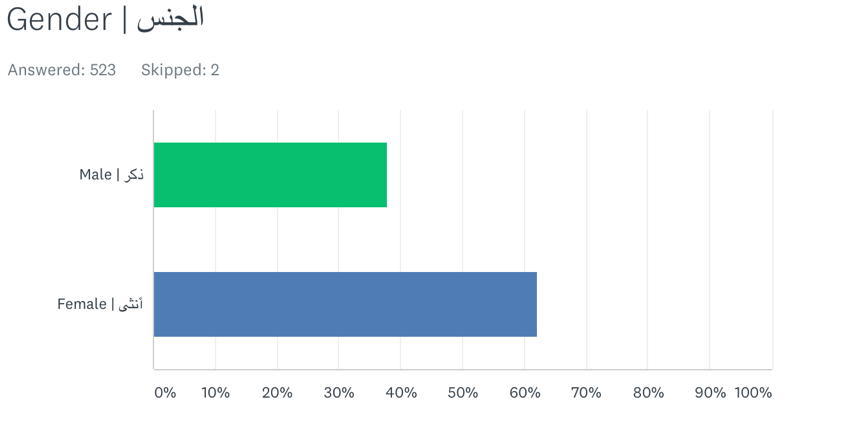
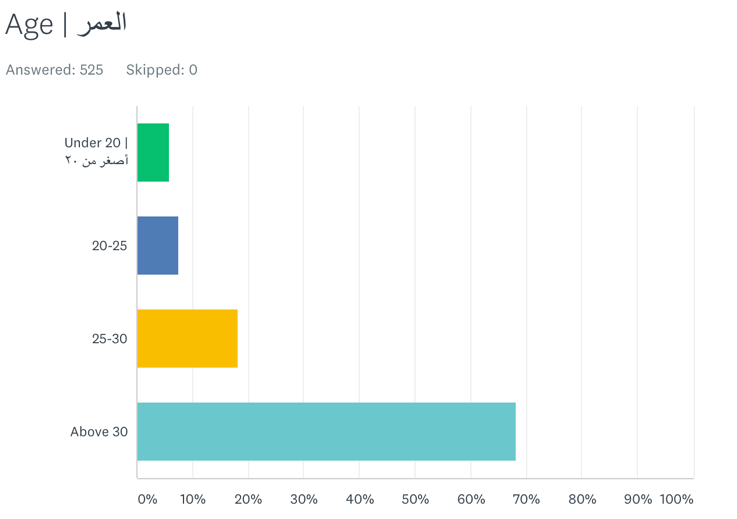
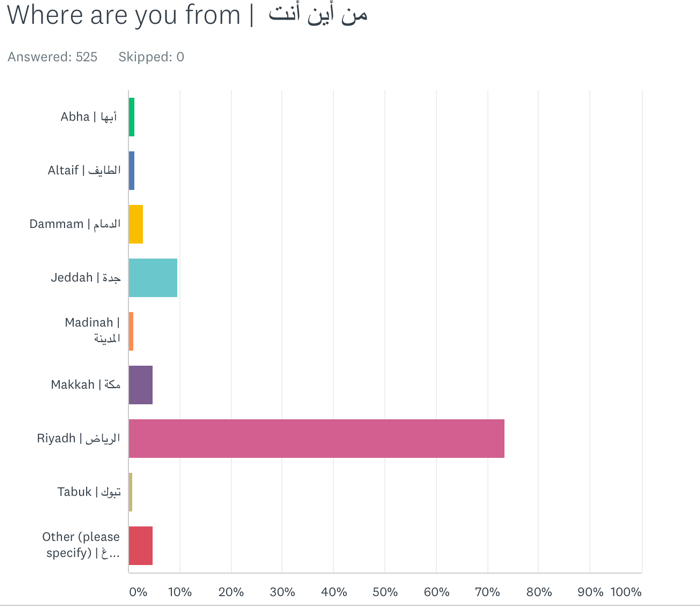
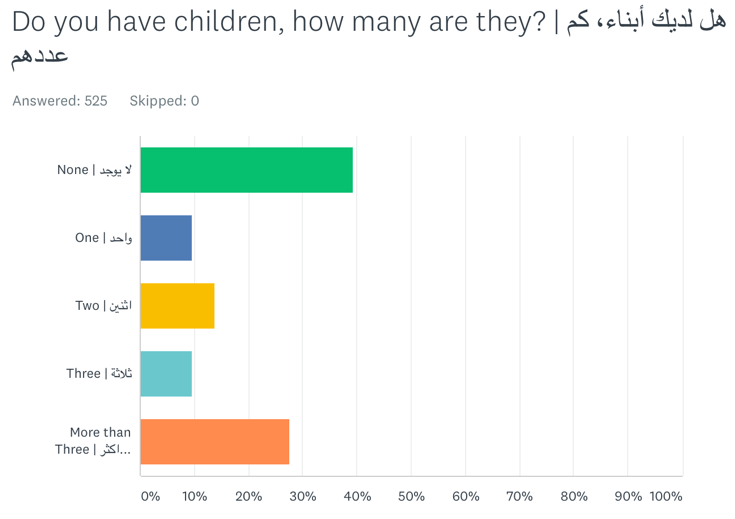
Of greater interest, however, was the cohort data, which would provide insights into typical distributions of demographic responses among trial participants. The results of the cohort study gave the idea that most of the men surveyed were married (71.7%) when the number of those women who were married (56.6%) was not much different from those who were not yet married (43.4%). At the same time, the average annual income of the men participating in the survey exceeded the SAR 200,000 mark, while for women, this parameter was lower. The findings regarding the gender wage gap perfectly support the current agenda in Saudi Arabia, where men have been shown to earn, on average, 149.59% more than women (Salama, 2021). The age pattern for the gender distribution (Figure 5) clearly shows that the majority of women (83.10%) and men (92.40%) were over 25 years old. In contrast, in terms of age distribution, most of the young people interviewed were female, while by older age, the numbers of women and men had relatively evened out, as shown in Figure 6. As a consequence, this meant that, in general, most respondents had a firmly established system of values and worldviews, although on the other hand, the older the audience, the more distinctly conservative Saudi Arabia’s image was in their minds.
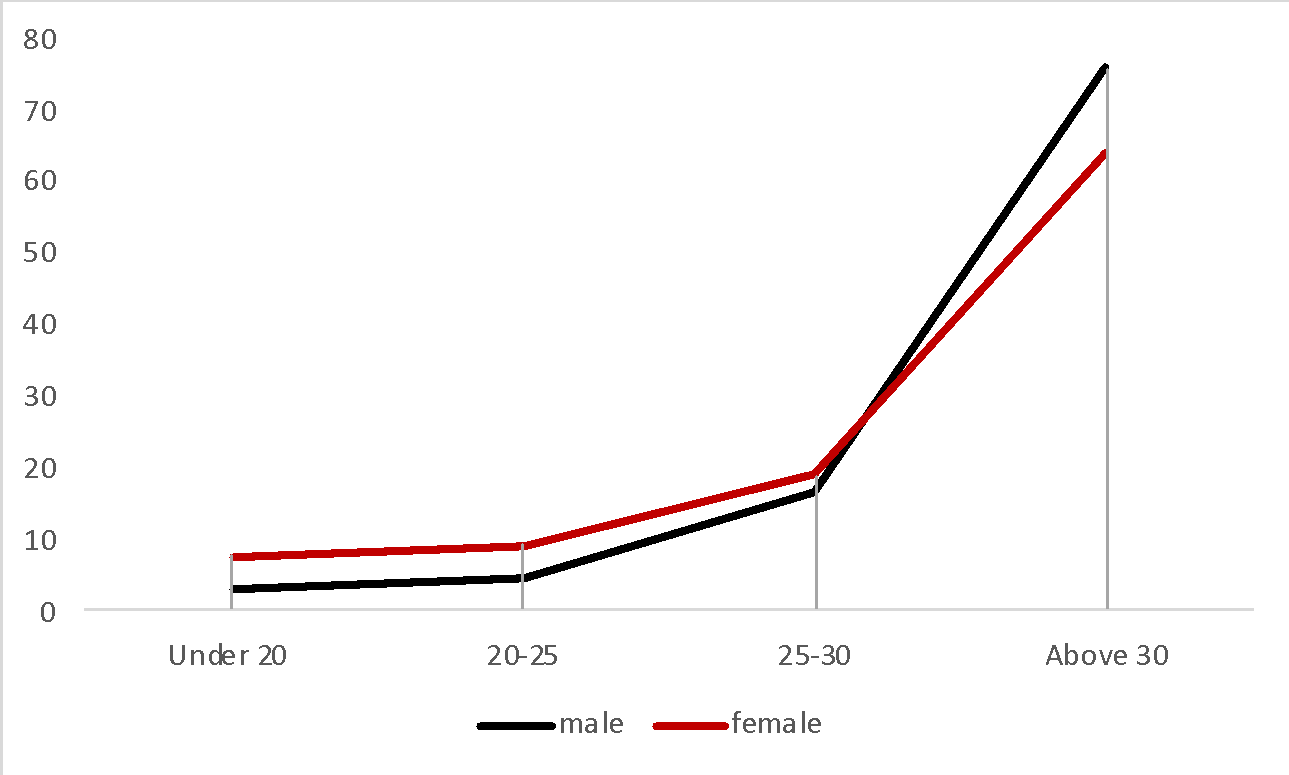
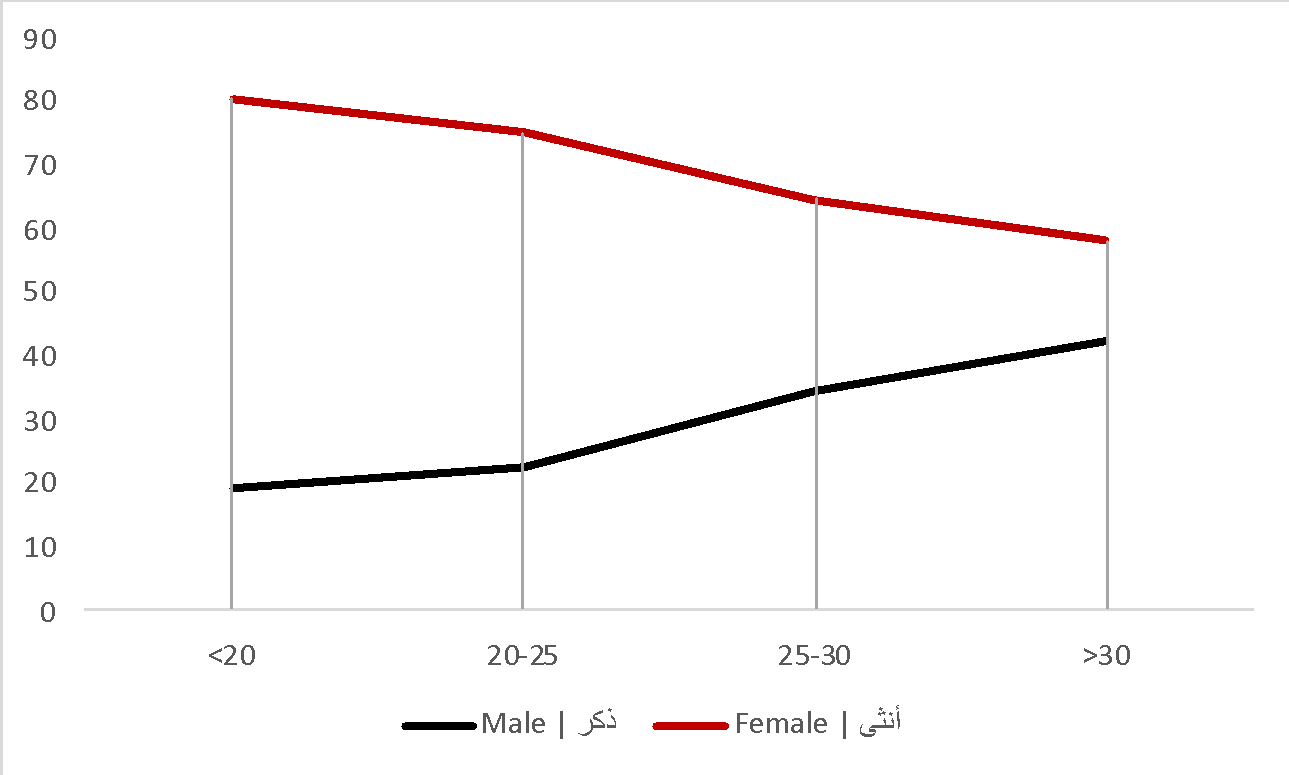
Thus, summarizing the results of the demographic cohort analysis, it is appropriate to summarize the findings. Thus, the average male test taker was over 25 years old, married, and had at least one child, and his annual family income exceeded SAR 200,000. In turn, the average woman who took the virtual questionnaire was also over 25 and had an annual family income of less than SAR 200,000. For both men and women, it would be fair to say that they were Saudi nationals and mainly lived in Riyadh, Makkah, and Jeddah.
Analysis of Social Effects
A critical analysis of the resulting trends in the cross-section of social effects research questions has led to extremely important conclusions. Of primary importance is the recognition of the result that the vast majority of people (66.09%) rate the overall favorable impact of tourism on all areas of activity in the context of Saudi Arabia. In contrast, only 8.43% of respondents had the opposite opinion, and about 25.48% of individuals found it difficult to answer. This highlights a highly intriguing trend that can be seen in almost all other test questions. A certain proportion of people — usually no more than 30% of the sample — could not give an unambiguous answer to the proposed question and/or found it difficult to determine whether tourism had a positive or negative effect on the aspect of activity under study. This trend perfectly satisfies the earlier findings that tourism as a phenomenon does not have a strictly unambiguous meaning for Saudi Arabian communities. As has been shown as far back as the literature review, the tourism industry is capable of having both favorable and unfavorable effects on social, cultural, and economic spheres (Sokhanvar et al., 2018; Gazta, 2017; Alkier et al., 2017). In other words, the trends obtained in the trial fit within the previously refined framework.
The first sections of the survey assessed the impact of tourism on the social sphere of respondents’ lives. Collectively, 85.33% (no. = 448) of the participants stated a positive effect of tourism, with 51.43% indicating strong agreement with this statement. Only 4.58% (no. = 24) of the sample expressed the opposite, stating disagreement with the statement about the positive effect of the tourism industry on the social sphere of Saudi Arabia. Similar data were given for questions concerning the improvement of the quality of life of Saudis while stimulating tourism activity, social well-being, improved infrastructure, and reduced crime. Detailed data on the distribution of responses in the context of social impacts are shown in Table 1.
Two of the findings are of the most significant interest within the discussed question. First, the vast majority of participants — the highest number in a cross-section of all sector questions — recognized the favorable impact of tourism on local infrastructure development and improved transportation accessibility. This is consistent with reality, as a positive relationship has already been found between these variables (Lee et al., 2020). In addition, the launch of the Haramain train in 2018 is further evidence of this relationship. Second, most participants responded in disagreement when asked about the relationship between increased tourism and increased crime in the country. This data cannot be unequivocally corroborated by available sources, as statistics identify Saudi Arabia’s crime rate as increasing by an average of 120% in the last decade (Macrotrends, 2021). Moreover, the total number of men who believe that the development of tourism in Saudi Arabia leads to an increase in crime is greater than the number of women who tend to believe that there is no such correlation. Notably, about 25 percent of women could find no correlation between the increase in crime and the number of tourists.
Consequently, it is reasonable to assume that many more factors than tourism alone influence these dynamics. Finally, some inconsistency was noticeable in the cyclical question assessing negative factors. Recall that 85.33% of respondents had previously expressed a positive impact of tourism, but when the question was reformulated, it was found that only 46.26% of participants did not believe that tourism was capable of having a negative impact. Thus, it is likely to assume that people tend to see specific, clear manifestations of tourism in the social environment — infrastructure, reduction of crime, well-being — but find it difficult to assess its negative factors.
Analysis of Economic Effects
The economic manifestations of tourism are no less attractive to study than the social ones. In many respects, it is the economic well-being that determines the social effects of the society; therefore, it is necessary to pay attention to the economic effects of tourism. The vast majority of participants (81.49%) responded that the development of tourism and increased flow of tourists would lead to enrichment of regions. It is noteworthy that men, who could not answer unambiguously, outnumbered women by 7%, whose percentage was one-tenth of all respondents. In other words, women were more confident in answering this question than men. In addition, it was found that for 73.28% of the respondents, the increase in the budget of the regions of Saudi Arabia is related to the intensification of tourism. Such data support empirical studies that have examined this relationship (Sokhanvar et al., 2018). It is also important to note that in two semantically close questions related to interstate relations, generally similar response trends were evident. More specifically, 86.28% of respondents answered persuasively when asked about the positive impact of tourism on improving international relations, with 80.19% of participants responding that state competition to attract tourists have a favorable impact on Saudi Arabia. In turn, good international relations will allow Saudi Arabia to promote its policies and values more strongly in the global community. On the contrary, good international relations also have great potential for further development of tourism.
It is noteworthy that the most significant number of affirmative answers were given to the question about the creation of new jobs in this sector: 90.47% of the respondents approved of this thesis. Of those, 92.10% of women and 88.13% of men were in favor, with nearly half in complete agreement at 49.50% and 46.51%, respectively. This is also supported by research that describes this positive macroeconomic effect of the tourism industry. This high percentage of approving responses was probably based on the subjective experiences and observations of the participants. Nevertheless, most of them could not answer unequivocally how tourism affected their level of income. Thus, more than a third of the women and about half of the men claimed that an increase in tourism had no effect on their income.
Only 7.44% of those surveyed were against the construction of the Haramain train, which will connect Mecca and Medina, believing that such a high cost of the country’s budget for the construction of this project is not justified. In turn, 41.40% of men and 28.90% of women believed that the construction of the train is worthy of implementation, and the money will not be wasted. When asked about the positive economic effect of the train on the region, about 82.14% expressed confidence in the prospects of the project. When asked about the construction of Haramain, the number of women who chose “Strongly agree” is on average 10% less than men. Based on this, it is possible to assume that the female gender is either less informed about the project itself and its perspectives or, on the contrary, there is some factor that considerably decreases the confidence in the results of the project.
It is interesting to note that almost the same proportions were obtained for men and women in the questions about the economic impact of tourism on the region in which they live. Figure 7 shows that the percentage of people who cannot determine the exact impact of tourism on the economic condition of the region varies from 22 to 35. A positive impact, however, is noted by more people surveyed than a negative one. Therefore, it is appropriate to conclude that, despite the ambiguity of the economic effects of tourism, a more significant number of people notice its positive aspects, as it was with social effects.
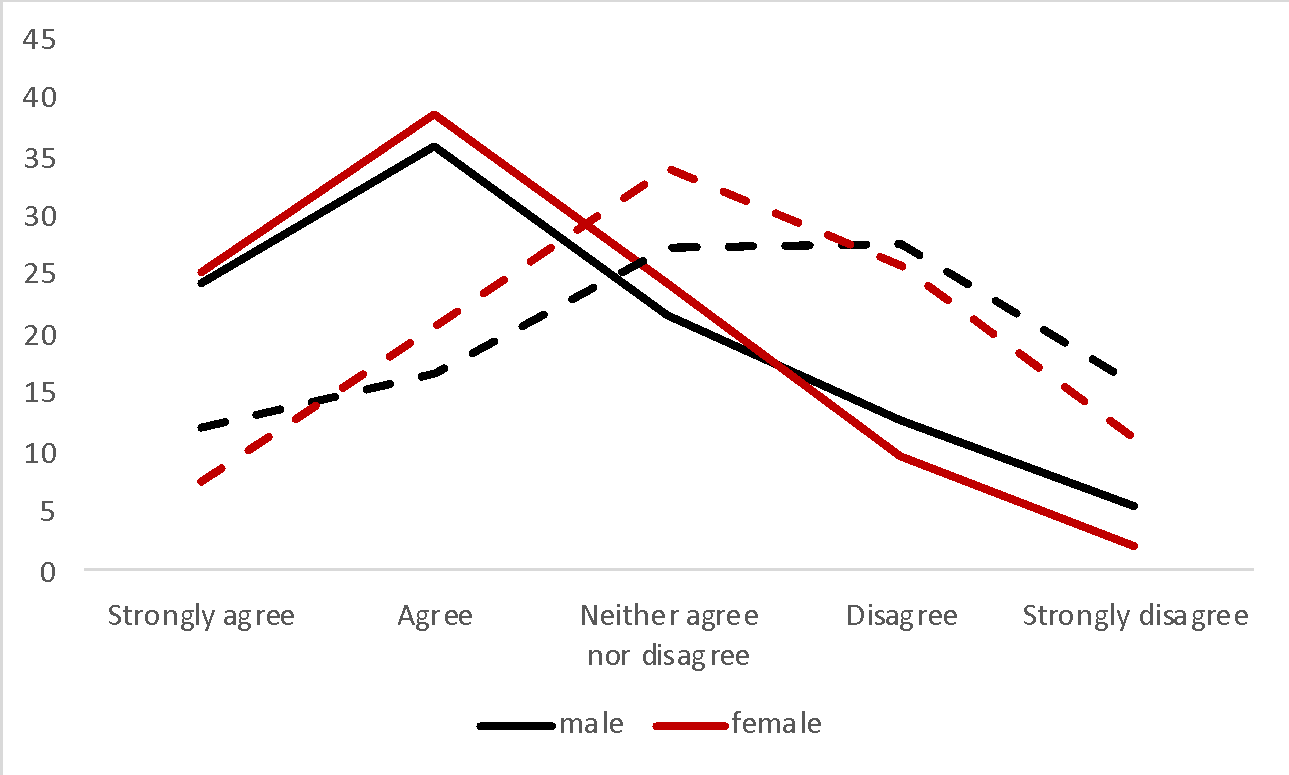
Analysis of Cultural Effects
In the context of the cultural effects of the tourism industry, the intensification of ambiguity of beliefs that was prominent among the responses should be particularly emphasized. In contrast to the social and economic aspects, an increased number of respondents could not give a definite answer to the questions exploring cultural effects. That tourism development will support the quality of maintenance and service of recreation facilities, including monuments and natural complexes, is believed by 92.70% of the people interviewed. Also, the majority of respondents (78.69%) are convinced that the intellectual resources in the region will improve due to the intensification of tourism programs. Similar opinions were held about the improvement of the cultural well-being of the population: 78.54% of the participants approved of the thesis about the positive impact of tourism. It is noteworthy that there is no significant difference in the answers of men and women.
Most people (78.74%) were also optimistic about the creation of 277 new entertainment venues as part of Vision 2030 (Vision 2030, 2021). Such individuals seem to believe that this is not only a goal that is possible to implement but one that will result in positive effects for Saudi Arabia and the regions in particular. Once again, there are no significant differences in the responses of men and women on this issue. In addition, more than a quarter of the participants could not unequivocally decide what the effects on Saudi cultural independence and sovereignty would be from the increased flow of tourists. Of those who were able to decide, the number of men who strongly agree that it will lead to a decrease in cultural independence is greater than the number of women who think the same way. Consequently, it should be said that men are more concerned about the negative cultural manifestation of tourism than women.
Finally, most people are confident that there is a positive effect on culture from visiting tourists. At the same time, many respondents cannot clearly say that there is a negative effect. The number of people who notice that it exists is about the same as those who say that there is no adverse effect, as shown in Figure 8. Because of this, it is difficult to judge the presence of any adverse effect correctly.
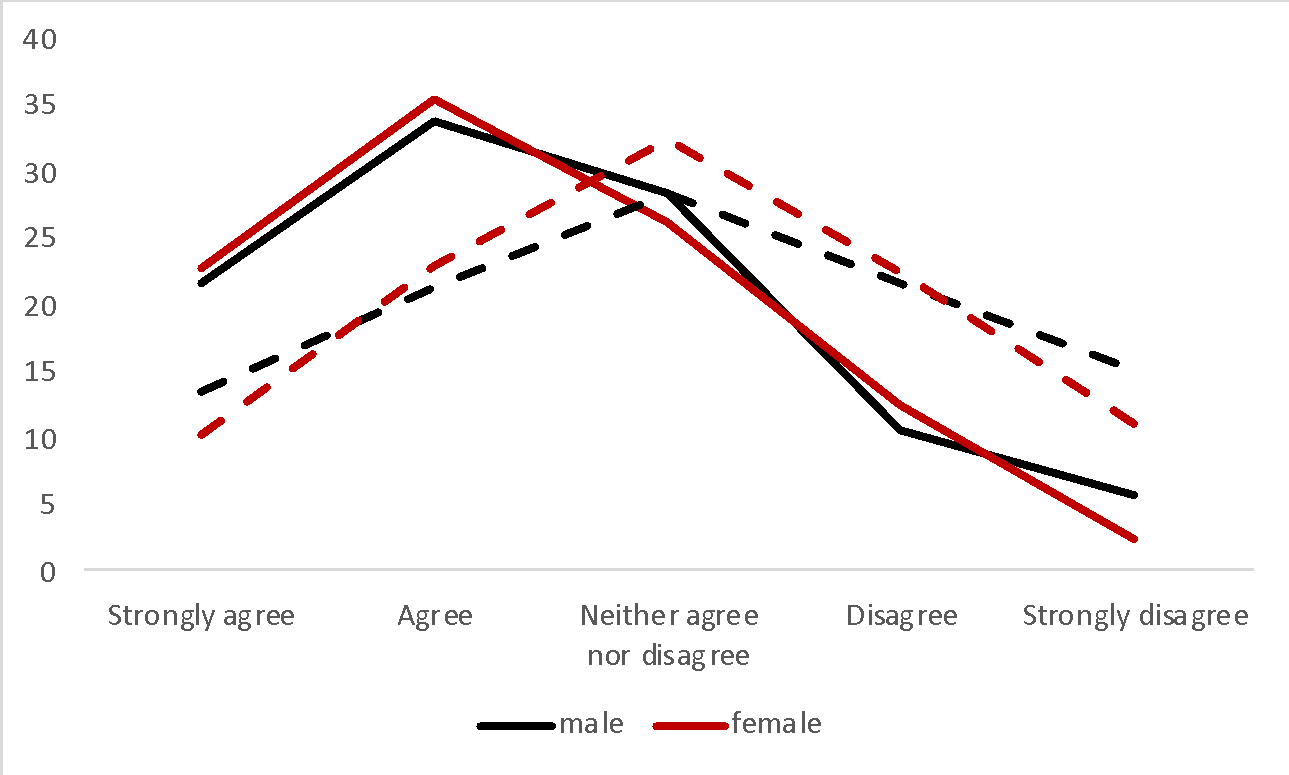
Analysis of General Effects
Overall, 68.70% of men and 64.00% of women say that tourism is beneficial to the regions of Saudi Arabia. Those who are confident that the effect, on the contrary, is unfavorable are 10.61% and 7.12%, respectively, when the rest could not make up their minds. When determining the domain to which tourism development is most beneficial, both men and women point to the economic domain: 78.32% and 75.41%. In turn, the social and cultural areas were chosen by 8.05% and 14.95% of respondents.
However, when the area most affected by tourism is determined, a tremendous difference in the answers can be seen: men choose the social area in 40.40% of cases when for women it is only 24.64%. In turn, the economic field is chosen by women more often: 15.72% compared to 5.63% for men. Nevertheless, even in the presence of such discrepancies, the cultural area as the most affected was chosen by almost the same proportion. Thus, it was cited by 19.22% of men and 18.80% of women. Moreover, overall, 38.22% of people said there was no suffering area.
Test of Statistical Significance
The results of the statistical processing of the responses were often evaluated in terms of gender and age differentials. This strategy was not chosen by chance, but rather its deliberate use allowed for a qualitative assessment of differences in responses between men and women, as well as between different age groups. Understanding such differences is fundamentally essential for the academic community, as it allows us to identify the causes of gender and age gaps. In addition, this information is critically helpful to stakeholders who have decision-making power over the tourism industry. For example, the fact that women were generally more likely than men to give unambiguous answers may indicate that more work needs to be done among the selected groups in order to better inform them about the practices being implemented. However, the essence of such differentiations must be statistically significant, and for this purpose, the analysis of variance with Fisher’s criterion was used. For the analysis of variance (F = 0.05) of gender distributions, the null hypothesis was rejected only for the following questions:
- Do you think tourism has a favorable social impact on the KSA? (Figure 9)
- In your opinion, how does increased tourism affect the social well-being of citizens? (Figure 10)
- Does the development of the population’s cultural well-being benefit from tourism? (Figure 11)
The rejection of the null hypothesis (and thus the automatic belief in the existence of differences between the groups under consideration) took place when the calculated F value was more significant than the critical criterion. As can be seen in Figures 9, 10, and 11, this value is higher for all cases, and therefore the presence of gender differences in the above questions is postulated.



The p-value, which does not exceed 0.045 for these questions, allows speaking about the statistical significance of the results. For the other questions, the opinions of men and women were the same, except for statistical errors. For the analysis of variance of age-group distributions, the null hypothesis was rejected for the questions:
- Do you think tourism has a favorable social impact on the KSA?
- Tourism can lead to an increase in tax revenues for all items in the state budget?
- The development of tourism helps strengthen international relations?
- Can interstate competition realized through the development of tourism destinations favorably affect Saudi Arabia?
- Regarding the Al-Haramain train, do you believe the project has great potential for the local economy?
- Have you noticed positive economic impacts from tourism in your region?
- Do you think tourism can improve the intellectual resources of the region’s population?
- Does tourism have a positive impact on the development of cultural well-being for the population?
- One of the goals of Vision 2030 is to create more than 277 new entertainment vector facilities. Do you think this goal is achievable?
- Do you see a positive effect of creating so many entertainment venues?
- Do you believe that increased tourist flows could lead to a reduction in the cultural independence and sovereignty of the region?
- Have you noticed any positive cultural impacts from tourism in your region?
- Have you noticed any negative cultural impacts from tourism in your region?
The more significant number of questions — more than half — for which the null hypothesis was rejected, can be explained by the fact that four groups were submitted to the analysis. The P-value for the listed questions averaged 0.03, with the highest value of 0.047. ANOVA tables for each of the questions are provided in Appendix B.
Limitations of the Study
As with any meaningful study, this work had several limitations that placed prohibitions on the scalability of the results. More specifically, the entire set of limitations can be roughly divided into two categories: minor and major. Discussion of the results of this work through the prism of limitations and assumptions separately allowed us to identify relevant areas of expansion of research questions for future works.
The insignificant limitations should include assumptions that have hardly any potential to disrupt the scaling of the results. In particular, the virtual questionnaire format chosen was insufficient to identify the number of participants who declined to complete the questionnaire. Although a skip function was added to the questions, in order for the questionnaire to be counted, the participant had to click on the Submit button after the last question. It is likely that not all of the potential participants were able to complete the test, and thus their questionnaires were not counted. This possibility may slightly skew the data since involuntary refusal to answer questions may have had a definite reason that was not determined when interpreting the results. In addition, there was no verification of the validity of the answers made by the participants. Thus, it cannot be said with 100% certainty that 94.10% of participants found were actually official residents of Saudi Arabia. The likelihood of an incorrect answer or deliberate lying was not built into the test mechanism, although several cyclical questions formulated alternatively were used to test tendencies.
Among the more severe limitations of the experiment was subject-matter emphasis. More specifically, the rigidly worded framework of social, cultural, and economic diversities may have confused the participant since individuals generally do not engage in this type of reflective analysis in everyday life. At the same time, the sample was not representative of the provincial regions of Saudi Arabia since nearly three-quarters of all participants were residents of the capital city. Finally, an important limitation of the experiment was the age of the participants. On the one hand, the virtual survey format has the peculiarity of low involvement of the older generation, which has little digital literacy. On the other hand, 68.19% of all subjects were over 30 years old, which means that the results were skewed in their direction. As a result, it is not possible to extrapolate the results with sufficient reliability to the older and younger generations.
Conclusion
The study of the socio-economic and cultural effects of the tourism industry is fundamentally essential for sociology and politics. It allows us to identify the strengths and weaknesses of such effects and, as a consequence, to take timely and competent steps to regulate the vector of tourist activity. The studied context of Saudi Arabia has shown that the authorities of the region have taken such action by forming a Vision 2030 program by 2016, which is strategic planning for the transformation of the country. The aim of such a Vision 2030 is to increase the region’s investment appeal and improve the quality of life for residents and visitors. As a consequence, supporting the development of tourism activities in a way that meets the interests of local communities while attracting more foreign nationals is important to the Vision 2030 program.
A qualitative-quantitative study assessed the implications of increasing tourism in the country, especially in light of Vision 2030. The key results of the virtual survey confirmed the hypothesis about the ambiguity of the manifestation of tourism activities: it is challenging to declare only positive or only negative impacts strictly. Moreover, it was shown that the economic effects of tourism activities were perceived by the test participants as the most susceptible to change, while the social and cultural effects lagged behind. To put it another way, it was the economic effects of tourism that seemed most significant and tangible to Saudi Arabians. Trends in such manifestations as crime rates, the number of jobs, improvements in infrastructure, and the preservation of cultural sovereignty were examined in detail, and it was shown that the results were generally consistent with the available sources. However, the qualitative difference between this study and other works is the comprehensive, extensive examination of several critical variables in Saudi public life relevant to the year 2021.
The implications of this study have short- and long-term perspectives. On the one hand, the results suggest a lack of awareness in the implementation of the Vision 2030 project. The use of the results of this work will further create a reliable observation base to assess the risks in decision-making related to tourism activities accurately. On the other hand, the long-term perspective of the work allows zeroing in and fixing the current agenda relevant to local residents. Since the Vision 2030 program has a long implementation period, it is very likely that people’s opinions will change as new reforms are introduced. Consequently, the research was of high theoretical relevance to make a qualitative contribution to the study of the implications of the national tourism policy of the Saudi authorities.
Some recommendations are appropriate based on the findings. First, for future research, it is recommended that the sample be expanded and that trends of different age groups be examined more specifically, preventing a rigid bias toward one of the categories. Second, it was shown that many of the respondents could not give unambiguous answers to the questions posed, which means that low political awareness can be indicated. As a result, it is recommended that the authorities adequately promote the values and programs of Vision 2030 in order to improve the knowledge of the local community about the changes being implemented in the country.
Reference List
Opiłowska, E. (2021) ‘The Covid-19 crisis: the end of a borderless Europe,’ European Societies, 23(sup1), pp. 589-600.
Qur’an 2:158 (2010) Translated by Maulawi Sher Ali, Islamabad: Islam International Publications Limited.
Radojevic, T., Stanisic, N., Stanic, N. and Davidson, R. (2018) ‘The effects of traveling for business on customer satisfaction with hotel services,’ Tourism Management, 67, pp. 326-341.
Renfe (2019) Haramain, the high speed rail from Mecca to Medina. Web.
Reynolds, A. (2021) How much it costs to travel in Saudi Arabia. Web.
Roser, M. (2017) Tourism. Web.
Saudi Tourism Authority (2021) Web.
General Entertainment Authority (2021) Web.
SAL (2020) Saudi Arabia green card residence permit application. Web.
Salama, S. (2021) Saudi Arabia: gender pay gap widens in 2020. Web.
SESRIC (2019) Saudi Arabia tourism revenues. Web.
Shahateet, M. (2017) Finding balance: cultural preservation and tourism. Web.
Singh, G. (2018) A simple introduction to ANOVA (with applications in Excel). Web.
Sokhanvar, A., Çiftçioğlu, S. and Javid, E. (2018) ‘Another look at tourism-economic development nexus,’ Tourism Management Perspectives, 26, pp. 97-106.
Soroker, S., Berger, R., Levy, S. and Nebenzahl, I.D. (2021) ‘Understanding consumer sophistication and the moderating role of culture in the tourism context,’ International Journal of Hospitality & Tourism Administration, pp.1-36.
Stieg, C. (2021) Travel ups Covid risk — here’s how many people have been traveling during the pandemic anyway. Web.
Trickett, C. (2018) 10 reasons to love travel. Web.
UCI (2020) Why is COVID-19 so dangerous? Web.
UNWTO (2020) Glossary of tourism terms. Web.
Urkevich, L. (2020) ‘Ardha dance,’ Modern Saudi Arabia, p. 264.
Vision 2030 (2021) Web.
Voukelatou, V., Gabrielli, L., Miliou, I., Cresci, S., Sharma, R., Tesconi, M. and Pappalardo, L. (2021) ‘Measuring objective and subjective well-being: dimensions and data sources,’ International Journal of Data Science and Analytics, 11(4), pp. 279-309.
Worldbank (2020) Saudi Arabia. Web.
WTTC (2021) Economic impact reports. Web.
Yu, Y., Lang, M., Zhao, Y., Liu, W. and Hu, B. (2021) ‘Tourist perceived value, tourist satisfaction, and life satisfaction: evidence from Chinese buddhist temple tours,’ Journal of Hospitality & Tourism Research, 1(2), pp 1-20.
Zhuang, X., Yao, Y. and Li, J.J. (2019) ‘Socio Cultural impacts of tourism on residents of world cultural heritage sites in China,’ Sustainability, 11(3), pp. 840-851.
Zhu, J. and Fan, Y. (2018) ‘Daily travel behavior and emotional well-being: Effects of trip mode, duration, purpose, and companionship,’ Transportation Research Part A: Policy and Practice, 118, pp. 360-373.
Appendix A
The results of the virtual questionnaire, as well as a representation of its structure.
Appendix B