Introduction
This essay discusses a virtual exhibition called “Dialogues Across Time and Form,” which features the creations of four notable photographers: Hiroshi Sugimoto, Nobuyoshi Araki, Rinko Kawauchi, and Yasumasa Morimura. The exhibition highlights the range and depth of modern Japanese photography. As seen in the chosen photographic pieces, this show seeks to offer an investigative voyage into the relationship between the transient and the timeless, the individualized and the universal. By grouping these photographers, the exhibition explores more general cultural and thematic currents in modern Japanese photography while showcasing each photographer’s distinct contributions to the field.
Hiroshi Sugimoto’s “TIME EXPOSED”
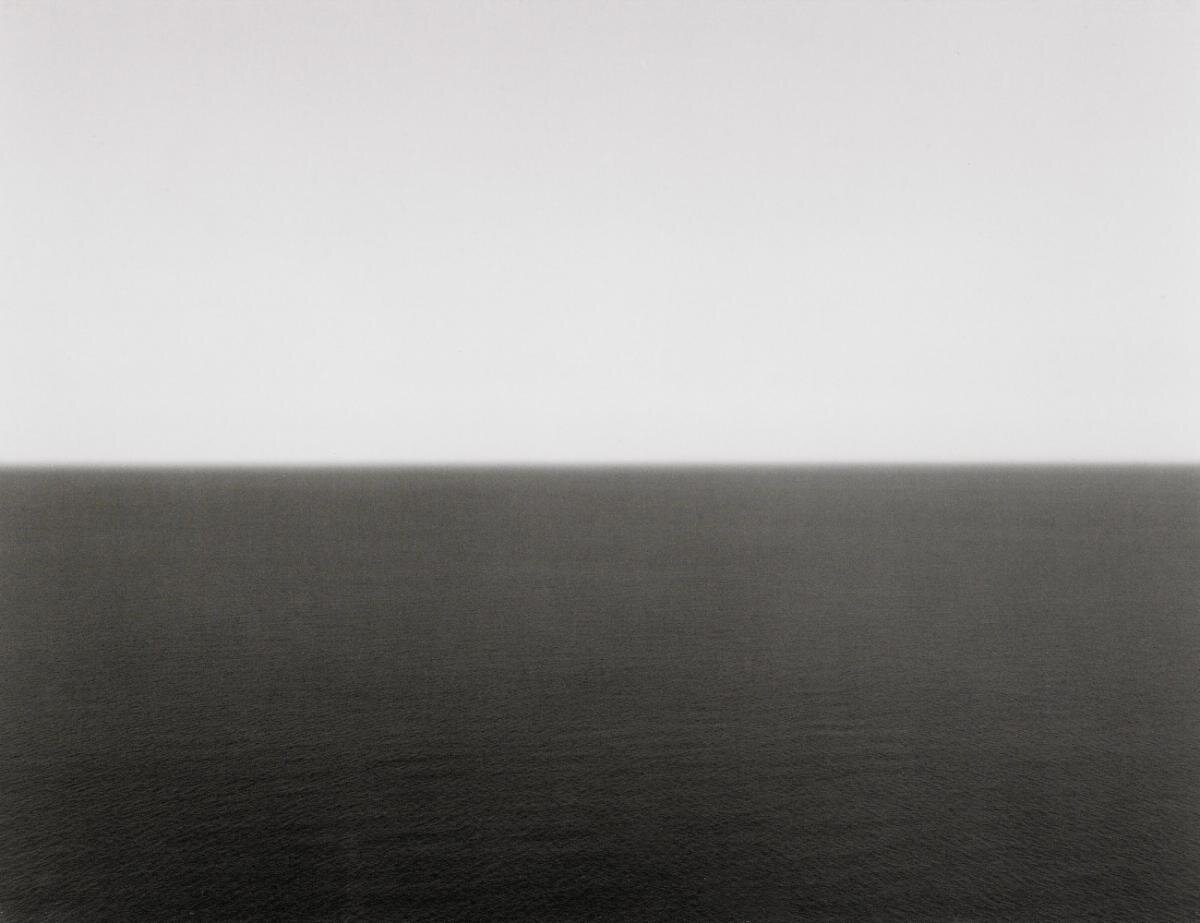
The deep, reflective quality of Hiroshi Sugimoto’s photography is well recognized, especially in the way he handles time and space. In “TIME EXPOSED: #342” (Appendix, Figure 1), Sugimoto demonstrates his skill in exploring and expressing philosophical ideas that have a profound resonance within Japanese aesthetic traditions through the medium of photography. A well-known image from Sugimoto’s vast “Seascape” collection is this one.
He uses long-exposure techniques in these pieces to produce strikingly simple visuals. The sky and water combine to form a smooth, unmistakable horizon line, producing a simple yet potent image that is not limited by space or time. This technique successfully eliminates the transient qualities of the sky and the sea, giving viewers a sense of the boundless and the everlasting.
The Zen Buddhist concepts of mu (emptiness) and ma (spaciousness), which are fundamental to Japanese culture, are strongly aligned with the practice of long exposure photography. This technique may turn hours into a single, peaceful moment caught on film. These ideas stress the significance of emptiness and the spaces between objects as sources of meaning and possibility. Sugimoto’s seascapes entice the observer to interact with these more profound, long-lasting realities by seeing past the obvious visual simplicity.
Japanese art is replete with references to impermanence (mujo) and the infinite, which are aptly embodied in traditional ink-wash painting and garden design. Sugimoto’s image bridges the gap between the traditional and the modern by conversing with these traditions while echoing them. Sugimoto invites viewers to engage in contemplative contemplation by portraying the ageless interaction between the sea and the sky, prompting them to consider the fleeting but everlasting nature of life.
The choice of this photograph for the exhibition aims to highlight how current Japanese photographers, such as Sugimoto, continue to interact with and reinterpret old aesthetic ideals through new forms. This image not only captures a deeply ingrained appreciation of time and the natural world characteristic of Japanese culture, but also serves as an example of how traditional themes can be addressed in modern media.
Nobuyoshi Araki’s “Sentimental Journey”
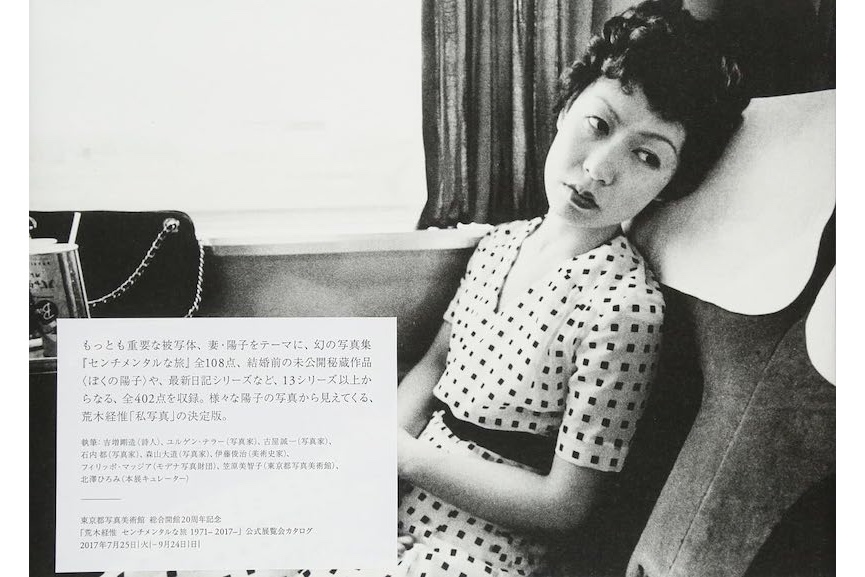
“Sentimental Journey” by Nobuyoshi Araki (Appendix, Figure 2) stands in sharp contrast to his sometimes provocative and sexually suggestive images, for which he is well-known. This compilation of images offers a window into the artist’s personal life and the breadth of his emotional and creative spectrum. It depicts the quiet and sentimental moments of his honeymoon with his late wife, Yoko. “Sentimental Journey” is included in the show for several reasons.
First of all, it dispels the myth that Araki’s art is just sensual or spectacular by showcasing his diversity. Here, the photographer explores emotional and intimate landscapes rather than merely physical ones, drawing on his acute observational abilities. Capture ordinary yet deeply emotional moments, such as Yoko getting dressed casually or their private quarters falling silent and contemplative. In addition to capturing a personal journey, these photos also perfectly convey the spirit of human connection, vulnerability, and love.
Araki’s “Sentimental Journey” serves as a moving reminder of photography’s ability to seize and hold onto ephemeral moments. This series highlights the themes of love and loss with a rawness and honesty that are sometimes lacking in more commercially driven or polished photography, allowing viewers to observe the fleeting essence of life and relationships. The artist referred to this piece as a “symbol of my love,” highlighting the intimate stakes and offering a story that is both unique and inclusive.
In a broader sense, the show emphasizes the range of emotional and thematic explorations in Japanese photography by placing “Sentimental Journey” alongside other modern Japanese photographs. It represents the ability of a culture to contain and communicate a variety of, sometimes contradicting, truths: from the intensely personal to the blatantly public, from the calm to the turbulent. Because Araki can depict intimacy so authentically, viewers are drawn into a private realm and can empathize with the shared sensations of love and grief.
By adding a layer of emotional depth and complexity, this work enhances the exhibition. It challenges visitors to consider the broader range of human experience that modern photography may capture. It highlights the contradictions that Araki grapples with in his larger body of work and offers viewers a vital point for contemplation on the impact and poignancy of photography.
Rinko Kawauchi’s “Illuminance”
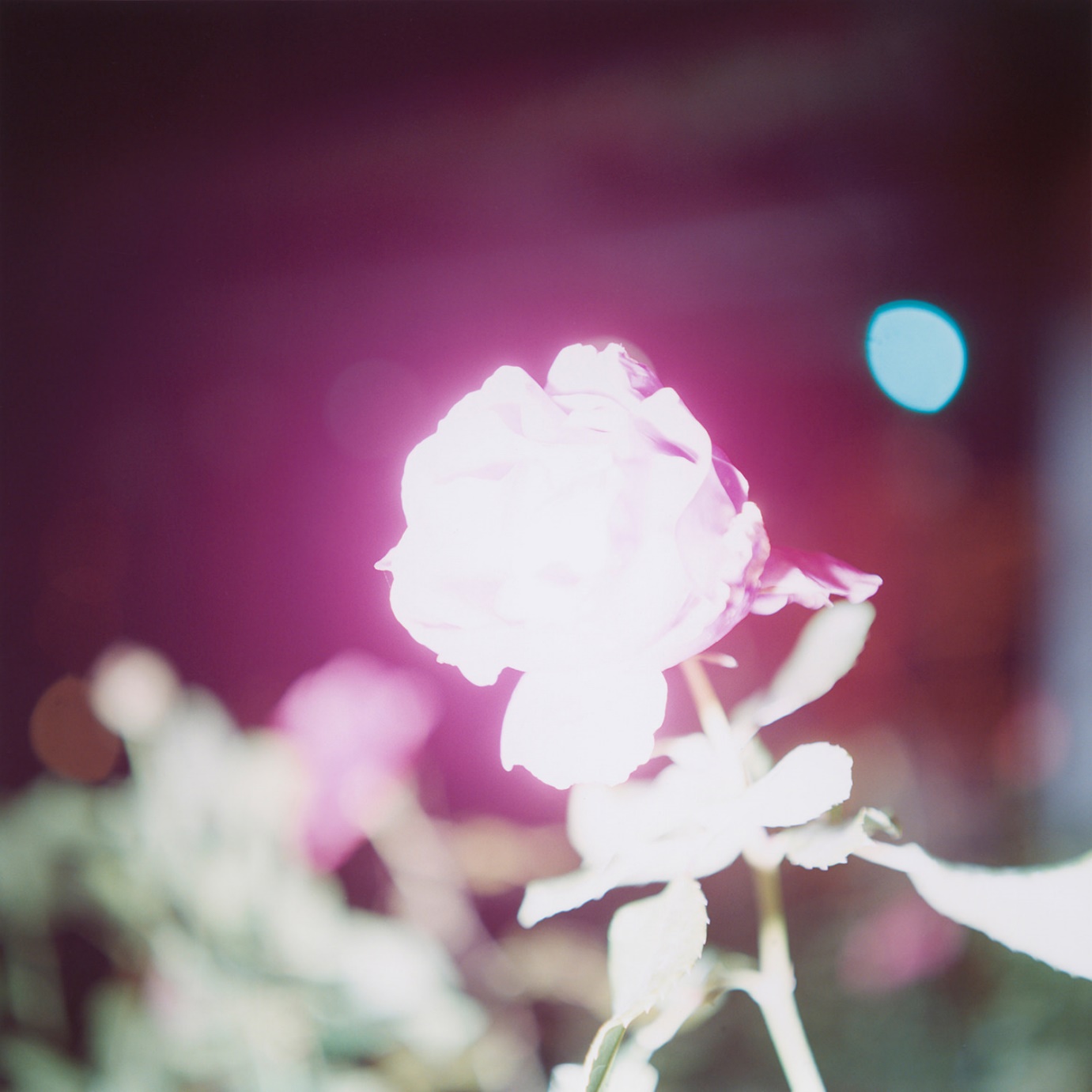
The image from Rinko Kawauchi’s “Illuminance” series (Appendix, Figure 3) perfectly captures her unique aesthetic, defined by her ability to elevate commonplace objects to incredible heights. A plain rose is transformed into a stunning item in this picture by the ethereal light surrounding it. Through his work, Kawauchi invites viewers to reevaluate the ordinary parts of life and discover transcendent moments therein.
The image by Kawauchi is included in the show to emphasize the concept of investigating the border between truth and fiction, which has its roots in Japanese aesthetics. This legacy is carried on by Kawauchi, who elevates common topics with her distinct vision. Japanese literature and art have a long tradition of fusing the everyday and the spectacular, the physical and the intangible.
The image asks us to look more closely and recognize the beauty that is all around us in the mundane things we take for granted. Kawauchi asks us to reflect on the fleeting nature of beauty and the innate poetry of the natural world by capturing the rose in a moment of brightness. Kawauchi’s photographic oeuvre demonstrates photography’s ability to evoke feelings and stimulate contemplation. Her capacity to imbue the commonplace with an aura of the sublime bears witness to the shared human experience of discovering beauty in the most unlikely locations.
Even in the most ordinary of environments, viewers are urged to experience moments of wonder and enchantment via her lens. Because it contrasts with the more reflective and introspective pieces, Kawauchi’s shot enhances the exhibition’s overall narrative. It serves as a reminder to viewers that the line separating the real from the fantastical is arbitrary and up to interpretation. That beauty may be seen in the most unlikely locations. Kawauchi’s art encourages viewers to engage in a deeper exploration and enjoyment of the world around them by questioning their preconceived notions.
Yasumasa Morimura’s “Self-Portraits Through Art History”
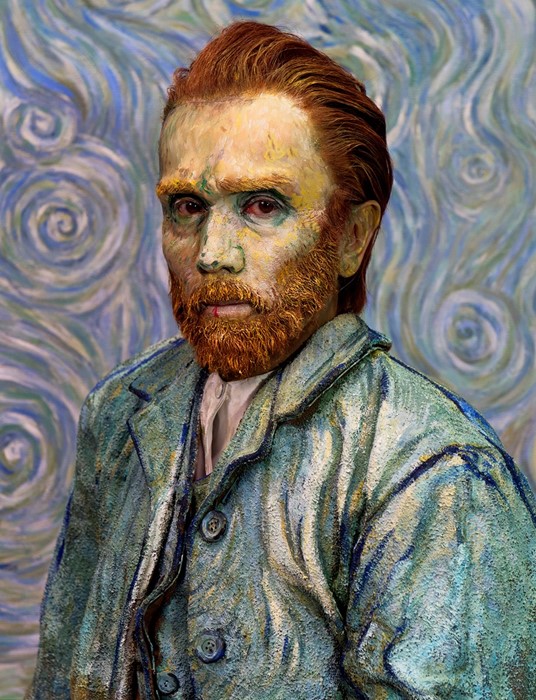
“Van Gogh / Blue” from the series “Self-Portraits Through Art History” by Yasumasa Morimura (Appendix, Figure 4) is a powerful illustration of the artist’s ongoing exploration of identity, cultural appropriation, and the intricate relationship between Eastern and Western artistic traditions. By reinterpreting the famous self-portrait by Van Gogh, Morimura challenges notions of nationality, authenticity, and identity fluidity while simultaneously making an artistic statement within the canon of Western art history.
The story is expanded by including Morimura’s work in the show beyond conventional ideas of Japanese photography and into the field of international creative discourse. Rethinking conventional ideas of authorship and originality, Morimura asks spectators to reevaluate Van Gogh’s self-portrait inside his own image. The image’s dreamy and surreal aspect is emphasized by the use of blue tones, which encourages viewers to consider where truth ends and delusion begins.
By examining the concepts of identity and representation through his self-portraits, Morimura draws attention to how history and culture influence individual and collective identities. By incorporating himself into well-known Western paintings, he challenges prevailing accounts of art history. He establishes his own place in the canon. Through its act of appropriation, this work of art critiques culture and forces viewers to face their own assumptions about authenticity, ethnicity, and creative impact.
Viewers are prompted by Morimura’s work to contemplate the global influences that have shaped modern Japanese artists, as well as how they navigate their position in the larger art world, within the show’s framework. Morimura encourages spectators to consider the interdependence of civilizations and the diverse influences that shape modern art practices by contrasting Eastern and Western creative traditions. This insightful addition to the show provokes discussion of the fluidity of identity, the power dynamics in cross-cultural interactions, and the artist’s dual role as provocateur and creator.
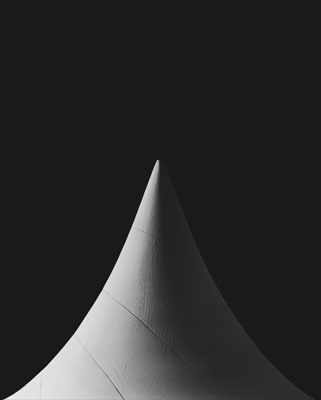
Hiroshi Sugimoto’s “Conceptual Forms”
The “Conceptual Forms” series by Hiroshi Sugimoto (Appendix, Figure 5), which reflects the artist’s multidisciplinary approach and his continual investigation of the boundaries between many domains of knowledge, exhibits an intriguing junction of art, science, and technology. Sugimoto focuses his eye on scientific instruments and mathematical equations in this series, painstakingly portraying the complexities of their shapes and textures. The exhibition’s inclusion of Sugimoto’s “Conceptual Forms” highlights the photographer’s status as a visionary inventor who pushes the frontiers of photography beyond conventional bounds. Sugimoto crosses the boundaries between art and science by fusing mathematics and scientific ideas with photography, challenging viewers to reevaluate how we see and comprehend the world around us.
Sugimoto turns scientific equipment and mathematical models into objects of contemplation and adoration by highlighting their aesthetic appeal via his images. The show explores the modernist pursuit of order and perfection while showcasing the creative and technological innovations that define modern Japanese society. Through his art, Sugimoto encourages people to look past the obvious and recognize the innate complexity and beauty. Through his photographic depictions of scientific apparatuses and mathematical calculations, Sugimoto encourages viewers to reflect on the wonders of the universe and the interdependence of all things.
Sugimoto’s “Conceptual Forms” and other pieces by modern Japanese photographers are arranged in this exhibition to create a rich tapestry of creative expression and critical thinking.
When taken as a whole, these pieces provide a complex picture of Japanese photography in the twenty-first century, showcasing the wide variety of subjects, styles, and methods used by creators in this vibrant and ever-changing industry. The exhibition invites visitors to investigate the connections among art, science, and technology and to see how these fields influence and benefit from one another through Sugimoto’s multidisciplinary approach to photography. Sugimoto invites us to embark on a voyage of exploration and discovery by posing questions about the world and our role in it through his “Conceptual Forms”.
Analysis
A compelling narrative highlighting the diversity and complexity of contemporary Japanese photography is provided by the combination of Nobuyoshi Araki’s, Hiroshi Sugimoto’s, Rinko Kawauchi’s, and Yasumasa Morimura’s artworks. Every piece of art adds a distinct viewpoint to the show and advances a complex exploration of subjects such as identity, memory, time, and the nexus between the arts and sciences.
These pieces were chosen for the exhibition to emphasize the inventive subjects, techniques, and approaches used by artists in this field, and to demonstrate the range and depth of modern Japanese photography. By grouping these pieces, the show hopes to stimulate discussion among diverse creative perspectives and foster a greater understanding of Japan’s diverse cultural milieu. The show raises significant issues regarding the nature of perception, representation, and cultural identity, even if it does not give a clear political or social message. The exhibition’s pieces encourage visitors to consider their own experiences and assumptions about the world around them by delving into themes such as memory, intimacy, and the passage of time.
In terms of coherence, the exhibition’s pieces are tied together by their dedication to expanding the possibilities of photographic expression and their exploration of universal subjects that resonate across diverse settings and civilizations. Even though each piece presents a different viewpoint, they all contribute to a broader discussion of the nature of photography, art, and the human condition. The exhibition invites visitors to engage critically with the photographs on display and to challenge their preconceived notions about photography and Japanese culture.
Through its provocative approach to identity, representation, and authenticity, the exhibition helps visitors get a more nuanced understanding of the subtleties and complexity of modern Japanese photography (Kai, The Predicament and the Reflexive Turn, 2019). The exhibition’s ultimate objective is to stimulate spectators’ interest, introspection, and conversation while encouraging them to learn more about Japan’s rich cultural past and to recognize the variety and inventiveness of current Japanese photography. The goal is for spectators to engage deeply with the artworks, feel moved by them, and discover connections and significance as they explore a range of topics and concepts. It is hoped that visitors would leave the show with a greater understanding of the power of pho, regardless of whether they find the pieces personally meaningful in the end.
Bibliography
Araki, Nobuyoshi. Sentimental Journey. Digital image. HeHe.
Chalfen, Richard. Snapping and Wrapping: Personal Photography in Japan. Curating and Interpreting Culture. Wilmington, Delaware: Vernon Press, 2021.
“Documenting Mountains in Interwar Japan: The Landscape Photography of Murai Yoneko and a New History of the Lady’s Camera Club,” Windows on Comparative Literature 16 (2023): 40-49.
Fukuoka, Maki. The premise of fidelity: Science, visuality, and representing the real in nineteenth-century Japan. Stanford University Press, 2020.
Hiroshi Sugimoto, time exposed: #342, Adriatic Sea, Gargano, 1990. Digital image. Form.
Hiroshi. Sugimoto. Conceptual Forms. Digital image. ArtForum.
Kai, Yoshiaki. “The Predicament and the Reflexive Turn.” Review of Japanese Culture and Society 31 (2019): 99-117.
Rinko, Kawauchi. Illuminance. Digital image. ArtNet.
Smith, Kathryn. “Street Photography in Postwar Japan: The Work of Daidō Moriyama.” Scholarly Horizons: University of Minnesota, Morris Undergraduate Journal, 10. no. 1 (2023): 9.
Stojkovic, Jelena. Surrealism and Photography In 1930s Japan: The Impossible Avant-Garde. Oxford: Routledge, 2020.
Yasumasa Morimura, Self-Portraits through Art History (Van Gogh / Blue). Digital image. Dazed.
Appendix