Background
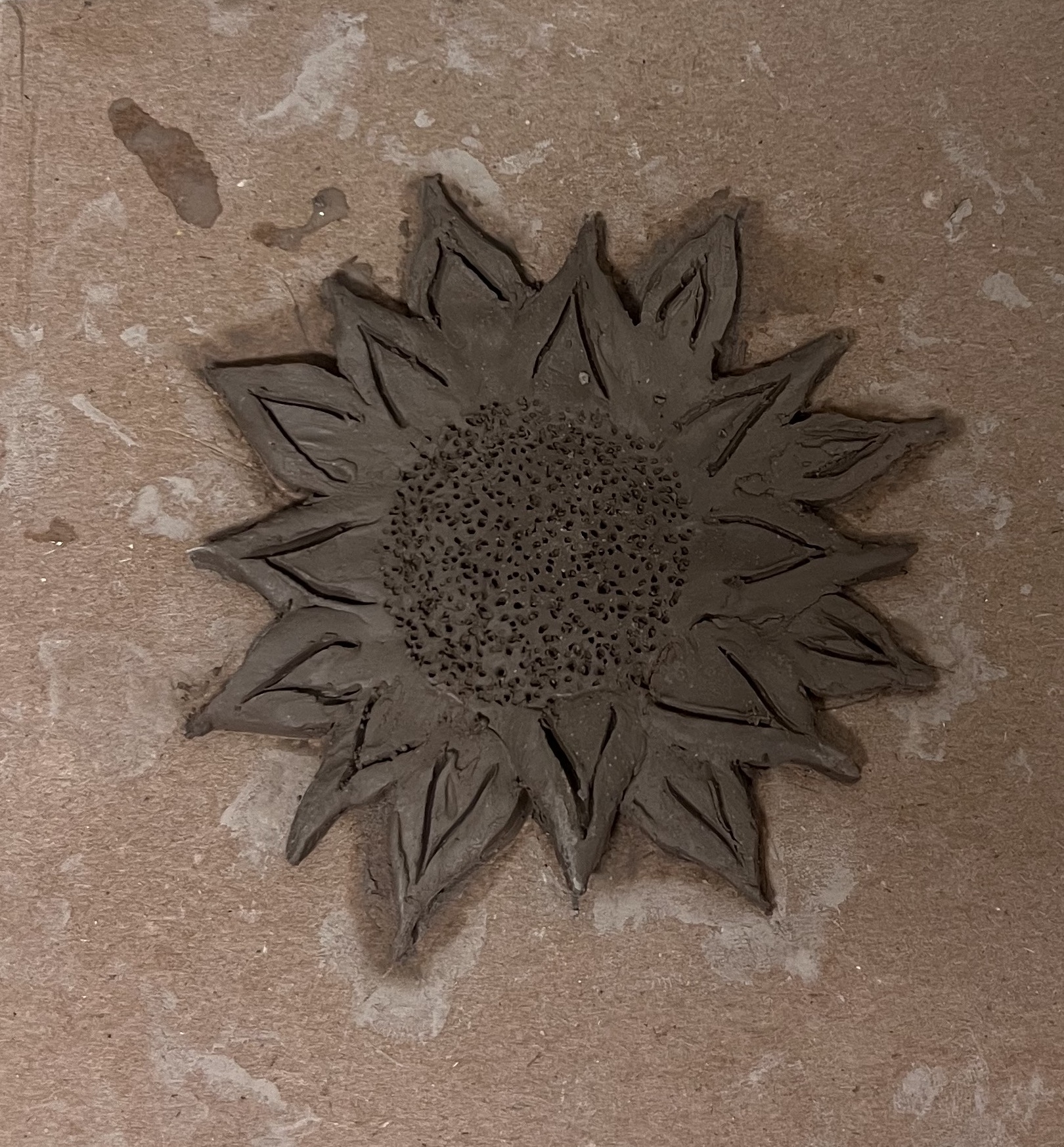
For my relief sculpture, I selected radial symmetry as the foundational balance, with the sunflower serving as the central theme. The sunflower, symbolizing happiness, vitality, and energy, presented an ideal subject to explore the principles and elements of design, such as form, volume, mass, texture, unity, variety, and rhythm. This concept was intricately woven into my design, employing radial symmetry to mimic the natural arrangement of a sunflower’s petals and seeds, thereby achieving a harmonious visual appeal.
Artistic Choices
The choice of radial symmetry was intentional, as it naturally complements the structure and aesthetics of a sunflower. This symmetry not only captures the essence of the sunflower’s form but also reinforces the theme of growth and vitality. In sketching the design, I emphasized a dynamic interplay of form and volume, using the arrangement of petals and seeds to guide the viewer’s eye to the center, creating a focal point. The texture was a critical element in bringing the sculpture to life; I utilized a toothpick to create the delicate dots representing the seeds, and a clay carving tool to add depth and dimension to the petals, enhancing their realism.
Analysis
The completed relief sculpture effectively embodies the principles and elements of design, with radial symmetry serving as the backbone of the composition. The form and volume of the petals and seeds create a sense of movement, leading the viewer’s gaze inward, while the texture adds depth and a tactile quality that invites closer inspection. The interplay of light and shadow across the sculpture’s varied surfaces accentuates its volume and form, enhancing its visual impact and emotional resonance. The careful arrangement and detailing of each element work in concert to evoke the essence of a sunflower, radiating happiness and energy.
Personal Reflection
This project was both challenging and enlightening, pushing me to think critically about how to translate a concept into a tangible form using the principles and elements of design. One of the main challenges was achieving the desired level of detail and texture to bring the sculpture to life. Working with tools like a toothpick and a clay carving tool required patience and precision. Through this process, I learned the importance of each design element in contributing to the overall composition and the powerful role of symmetry in creating balance and focus. This assignment has deepened my appreciation for the intricate relationship between form, texture, and symmetry in sculptural art.
Appendix