
Introduction
Helping a relationship is a key duty when it comes to counseling, where psychiatrists must assist their clients in combating loneliness, depression, and other psychological drawbacks. In Love’s Executioner and Other Tales of Psychotherapy, Yalom (1989) gives his encounter with therapeutic duties as he uncovers complex perspectives such as frustrations, mysteries, and incompleteness. Yalom gives a glimpse of his patients’ dilemmas and desires that motivate them to seek help in decision-making concerning their fallen ties with people. This essay covers various specific excerpts that enlighten when a patient visits a psychotherapist.
Description of the Chosen Excerpt
The excerpt gives an account of an older woman who comes to seek help in a relationship with a person she loves. Her name is Thelma, and she was engaged to Matthew, but they had not been together for eight years. The author gives his honest view that Thelma needed his help. She was in trouble over the issues that had made her try to commit suicide.
Thelma’s request, which appears to be complicated but straightforward, astonishes the author. Thelma says, “I do not expect Matthew to love me again, I just want him to care about my being on this planet…If he would call me once a year, talk to me for even five minutes…I could live happily” (Yalom, 1989, p. 15). That encounter prompts the reader to follow the excerpt and see what the psychiatrist does next.
The author understands that Thelma has an obsession with Matthew, which helps him understand his concerns. While helping this client, the author expresses his disappointment because of the obsession where the client does not seem ready to cover other parts apart from her love for Matthew. After the sixth session, Thelma agreed that the obsession with the enemy was to be extirpated. After several sessions together, they were able to inspect the problem. They discovered other problems, such as false beliefs, vindictive feelings, and influence from the lovers’ history, which were the dragging factors that had prevented her from healing.
The excerpt shows Matthew’s story as different from Thelma’s perspective. Due to the differences that ensue, the psychologist has a tough time leveraging the possible ways to handle the two individuals. Matthew claimed that Thelma was asking a lot. As a result, he felt disturbed every time, leading to many hospitalizations and catastrophic events that made Thelma attempt to kill herself. Matthew narrates many events that seem to have been concealed by Thelma, which makes the author feel torn about whose side of the story is true. One of the rational decisions that the author makes towards the two is that they may not help each other with all these incompatibilities.
Yalom (1989) says, “Can you see how impossible it would be for each of you to re-create the particular mental state you were in? The two of you cannot help one another with this because it was a shared state” (p. 47). The interviews between Matthew and Thelma had given the author a difficult time, as he says his twenty years of experience in psychiatry had not prepared him for this exposure, and perhaps the two were poor candidates for his psychiatrist events.
Application of the Course Readings to the Excerpt
The course readings have specific theories and important takeaways regarding counseling. For instance, in a chapter titled Conducting an Intake Interview, Mears (n.d) discusses skillful interviewing, cultural considerations, and goal setting. The chapter opens readers’ minds to the fact that counselors may disconnect the client from them when they rely primarily on questions.
Thus, it means it is required for a psychiatrist to apply empathic engagement and open-ended questions that make a client not feel violated, exposed, or discouraged during the sessions. In the excerpt, the author asks, “Yes, thinking that you have still protected him all these years, why?” (Yalom, 1989, p. 13). That is skillful since the client will give their assertions based on what they think is right, rather than limiting them to what a counselor may want to hear.
A counsellor’s awareness of the client’s worldview is essential. It means a psychiatrist should possess specific knowledge and details about particular people they deal with (AMCD Multicultural Counseling Competencies, n.d). For instance, Matthew, being a fellow counselor to the author, was handled differently from Thelma because of his competency in understanding psychological perspectives. The author says, “I did not doubt that things were as he described them: his words had the unmistakable ring of truth” (Yalom, 1989, p. 43). This attitude towards Matthew was developed since he could give specific hospitals and patients he treated in case the author needed to confirm.
Various helpful questions apply to a couple. Madden (2005) enlightens the readers about five questions that can assist in approaching the couple to get to the nerve of the narration in search of answers and solutions. One of the questions related to the excerpt is whether the problems in a relationship are linked to internal or external matters. The excerpt uses this theoretical approach because the author asks what caused the split between the two, only to find that they had internal incompetence that prevented them from understanding each other. The approach in the question digs deep to expose personal and public life, and most couples may seek explanations based on their living experience.
Some basic principles and practices are essential in counseling. Calkins et al. (2016) discuss cognitive behavioral therapy (CBT), which builds skills to increase awareness of thoughts and behaviors influencing patients’ emotions. A counselor who understands a client’s behaviors may know the cause of distress regarding problem-solving.
Matthew’s life highly influenced Thelma’s behavior, and she behaved in ways that aligned with his modified life to her. For example, Yalom (1989) notes that Thelma had an obsession due to Matthew’s calm, professional, and moral nature. Thus, while helping her, she must consider how her behavior has been influenced, leading to specific lapses that affect her happiness.
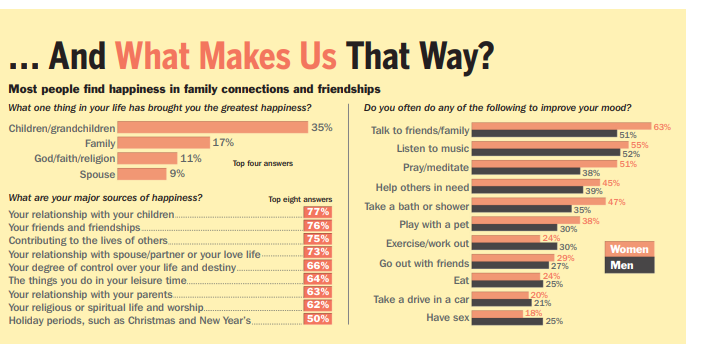
There is the science of happiness that makes the human heart settled. Wallis (2004) says most people find happiness in family connections and relationships. As seen in Figure 1, there are significant sources of happiness, such as relationships with spouses or partners in life, among others. As seen from the excerpt, Matthew and Thelma were happy about each other based on their lifestyle, where they had caring hearts and recommendable adventures that kept them together. Thelma says a call from Matthew would make her happy, meaning connections to partners are key to happiness.
Conclusion
Reading the excerpt helps in several ways when it comes to dealing with people who have relationship issues. First, it enables an aspiring psychiatrist to make rational decisions based on the two stories’ perspectives. The author decides to confront Thelma after he notices some problems stemming from self-deception, obsession, and vindictive feelings.
Additionally, the excerpt is helpful since it shows methods of dealing with counseling pressure when a client needs help. Thelma, as depicted in the excerpt, needed help to live happily. Lastly, the excerpt builds courage in psychological interventions, enabling the audience to learn how to make decisions when the task is complex.
References
“AMCD Multicultural Counseling Competencies” (n.d). Web.
Calkins, A. W., Park, J. M., Wilhelm, S., & E. Sprich, S. (2016). Basic principles and practice of cognitive behavioural therapy. The Massachusetts General Hospital Handbook of cognitive behavioral therapy, 5-14. Web.
Madden, M. (2005). Five useful questions in couple’s therapy. Australian and New Zealand Journal of Family Therapy, 26(2), 61-64. Web.
Mears, G. (2009). Conducting an intake interview: in The professional counselor’s desk reference, 127-134. Springer Publishing Company Ltd.
Wallis, C. (2004). The new science of happiness. Mind and Body Happiness. 1-4. Web.
Yalom, I. D. (1989). Love’s Executioner: And other tales of Psychotherapy. Basic Books.