
Introduction
Monetary policy is a crucial tool for managing a nation’s social and economic development. Monetary policy decisions have traditionally been developed and implemented by the Federal Reserve (FED). The stabilization of interest rates and promotion of employment are the primary objectives of US monetary policy (Zhang 2063). Since the Full Employment Act was implemented in 1946, the United States has been focused on maintaining a strict equilibrium between inflation and employment (Zhang 2063).
The Federal Reserve faced unprecedented challenges during the COVID-19 pandemic, necessitating far-reaching policy measures to address inflation and support economic growth. The policies have since been altered in the aftermath of the pandemic to address new realities in the 2022–23 economic window. The Federal Reserve’s measures, though often perceived as aggressive, have been integral in safeguarding economic growth and regulating inflation in the United States.
The Federal Reserve’s Goals in the 2020–2022–23 Economic Period
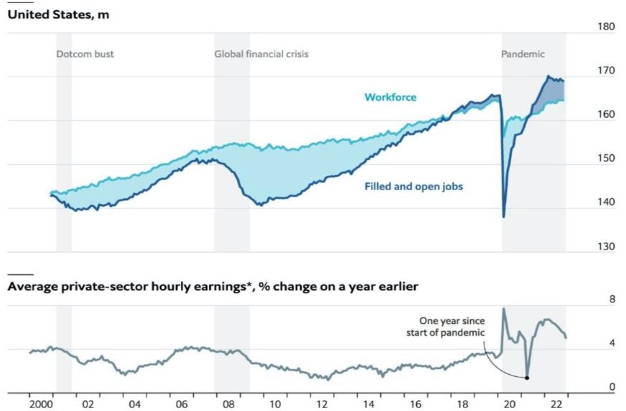
The effects of the COVID-19 pandemic were evident in US economic metrics. For instance, the unemployment rate reached a record high of 14.8% in April 2020, the highest since 1948, as shown in Figure 1 below (Zhang 2063). In addition, 2020 witnessed a notable decrease in the country’s gross domestic product (Zhang 2063).
The highlighted conditions prompted the FED to implement a raft of measures to save the American economy from distress. FED Chairman Jerome Powell stated that stabilizing prices and domestic employment, along with lowering the rate of inflation to 2% by July 26, were the main goals (Zhang 2064). It is worth noting that the labor market serves as the bank’s main focal point and point of entry when trying to manage inflation. Throughout the pandemic, the Federal Reserve maintained low interest rates to mitigate the virus’s negative effects on the US economy.
The FED altered its policies during the 2022/23 economic window to address changes in the American economy. The FED’s goals for this period included ensuring that inflation is maintained at 2%, addressing banking stresses in the financial sector, and narrowing employment disparities in the economy (Board of Governors of the Federal Reserve System 1). The FED also intends to achieve stable inflation-adjusted wage growth. Each of the above-mentioned goals is intended to ensure that the economy stabilizes in the post-pandemic era and adapts to fluctuations occasioned by international events.
The Federal Reserve’s Tools
The FED deployed a specific set of tools to address each highlighted goal. During the 2020 COVID-19 pandemic, the FED leveraged tools such as the Primary Dealer Credit Arrangement program, dollar supply to foreign central banks, debt securities, and the Municipal Liquidity Fund. In addition, the FED adjusted interest rates and updated its forward guidance to address the challenges plaguing the economy (Zhang 2064). Each of the aforementioned instruments played a critical role in stabilizing inflation and economic growth.
The measures implemented in the 2022/23 economic window were aided by a variety of tools at the FED’s disposal. For instance, the institution used interest rates, Treasury and agency securities, as well as banking-sector controls, to moderate the economy (Board of Governors of the Federal Reserve System 3). These tools allow the FED to control specific aspects of the economy to lower inflation, increase employment, and promote economic growth.
Analysis of FED Activities
The COVID-19 pandemic resulted in a series of shocks that almost brought the global economy to a complete standstill. The FED’s enlarged balance sheet and lowered policy rate allowed for massive budget deficits and a predicted increase in public debt on the eve of the pandemic (Bordo and Levy 77). The pandemic and the resulting government shutdown measures caused a severe economic downturn. In the second quarter of 2020, real GDP fell by 9%, which was the fastest rate in history (Bordo and Levy 77).
Risk premiums and market volatility surged in March when the stock market experienced a sharp decline, corporate bond yield spreads, and other debt instruments skyrocketed. The US Treasury market was temporarily rendered redundant (Bordo and Levy 77). The FED responded using numerous tools and policy interventions to manage inflation and stimulate economic growth in the United States.
The economy recovered significantly following the substantial economic upheaval brought on by an unparalleled global health crisis. The second half of 2022 saw positive economic developments, which prompted the FED to pause and reevaluate how best to achieve its dual objectives of price stability and high employment (Stone 1). While job growth remained robust, it decelerated during the second half of the year, as did inflation and wage growth (Stone 1). Inflation expectations demonstrate that the public and financial markets are of the view that inflation will decline, which is essential for lessening the upward pressure on nominal wages that could lead to more inflation (Stone 1). The FED has since implemented a series of measures to address current economic conditions.
The contextualization of the FED’s activities during the pandemic and the period after COVID-19 is best achieved by analyzing specific economic theories and models. The quantity theory of money provides the foundation for FED policies. The AS/AD model explains the backdrop against which fiscal interventions are created to address specific changes in the macroenvironment. Examining both concepts is necessary to assess the FED’s responses to crises.
Quantity Theory of Money
The quantity theory of money has a significant impact on the development of monetary policy in the United States. The theory asserts that assuming a constant money demand function that establishes the income velocity of money, changes in the money supply produce changes in nominal income (Bordo and Levy 61). Extended price rises, as with inflation, are sustained by persistent money growth. Higher nominal interest rates reduce the demand for money when anticipated inflation increases, thereby accelerating the money supply’s impact on prices (Bordo and Levy 61). The early monetarists also contended that nominal income and price movements would not be affected by fiscal policy unless the money was financed, as in the case of wars, when central banks were under the control of fiscal authorities (Bordo and Levy 61). The quantity theory has had a profound impact on the FED’s approach to economic regulation.
It is worth noting that in contemporary strategies that build on previous Keynesian and monetarist approaches, forward-looking behavior and inflation projections are crucial to fiscal policy development. The Great Inflation of 1965–1980 set in motion and strengthened the role of inflationary expectations (Bordo and Levy 61). Inflation, which is mostly driven by financial expectations, is reflected in financial markets and has an impact on actual economic activity (Bordo and Levy 62). Modifications to inflation forecasts serve as barriers to the effectiveness of countercyclical fiscal programs and monetary policies in specific contexts (Bordo and Levy 61). Against this backdrop, an assessment of the FED’s responses to the pandemic and current financial conditions must be conducted.
AS/AD Model
The application of the macroeconomic model of aggregate supply and aggregate demand (AS/AD) is an effective strategy for analyzing short- and long-term trends in macroeconomic variables such as price levels, real output, and employment. The aggregate supply (AS) is the amount of real product that businesses can generate and are willing to sell at a specific price, according to conventional economic theories (Nový and Jarý 1). The quantity of real product that would be bought at a specific price point is expressed by aggregate demand (AD) (Nový and Jarý 2). The point of macroeconomic equilibrium is determined by the intersection of the aggregate supply and demand curves, as shown in Figure 2 below.
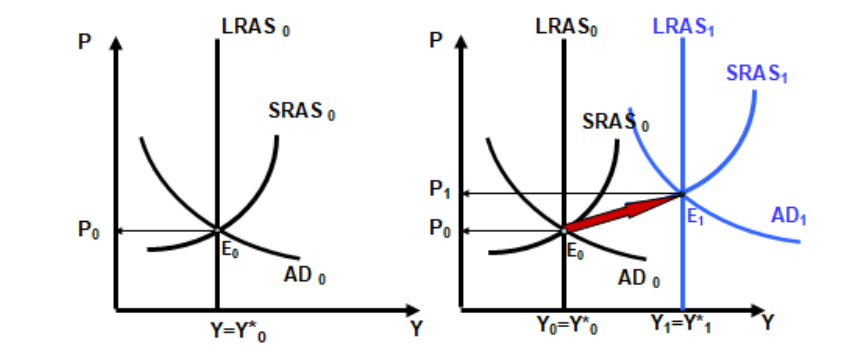
The COVID-19 pandemic had a deleterious impact on the world’s aggregate supply and demand. Increased transport costs, a decline in the workforce, and delays at border crossings significantly hampered aggregate supply (Nový and Jarý 7). There was a need for interventions to address the highlighted challenges. The decline in aggregate supply and demand necessitated the application of fiscal policies intended to protect the economy from external shocks. It should be noted that several interventions have been modified to address economic changes following the pandemic.
Specific FED Responses
Loanable funds played a critical role in addressing the issues the US economy faced during the pandemic. The Federal Reserve launched the Primary Dealer Credit Arrangement (PDCA) program on March 16, 2020, to offer low-interest loans with a maximum term of 90 days to 24 major financial institutions (Zhang 2064). The program was intended to ensure that the institutions continued to extend credit in order to maintain the integrity of the credit markets during periods of economic hardship. The program was a critical element in the FED’s larger initiative to stabilize the financial system and assist individuals and companies amidst the COVID-19 pandemic (Zhang 2063). The FED sought to keep the financial system stable and avoid upsetting the credit market, which was already under stress.
The FED has responded to changes in the current economic dispensation by continually raising interest rates. The Federal Reserve raised the federal funds rate target range to 5-5¼ percent (Board of Governors of the Federal Reserve System 3). The unfortunate result of high-interest rates is that money becomes more expensive for businesses and individuals. In addition, the measure has made it particularly difficult for organizations or individuals to get loan approvals.
The resultant decline in loanable funds complicates economic recovery as various forces interact to create a hostile business environment. Consequently, the FED reduced the rate of policy tightening compared with 2022 due to the cumulative effects of monetary policy tightening and the lags between monetary policy and inflation (Board of Governors of the Federal Reserve System 3). The aim was to balance inflationary regulation with economic growth.
Bond regulations are often necessary in the quest to stabilize an ailing economy. The Federal Reserve announced on March 23, 2020, that it would no longer impose limits on the amount of debt securities it would buy (Zhang 2065). It added that it would purchase the securities needed to maintain the stable operation of financial markets and to help transmit monetary policy (Zhang 2065). The FED also expanded the scope of its bond purchases to aid the economy’s recovery. Consequently, the institution began buying corporate bonds, including exchange-traded funds (ETFs), to support and provide liquidity to companies experiencing difficulties during the COVID-19 pandemic (Zhang 2065). Such an extraordinary move not only offered suffering businesses quick respite but also made it clear to investors that the central bank was prepared to go to any lengths to sustain the economy.
The FED’s regulatory measures aimed at regulating bonds have been adapted to address prevalent economic conditions. Since January 2023, the financial situation in the US has become increasingly precarious, according to the FED (Board of Governors of the Federal Reserve System 4). Since January, the FED has increased the federal funds rate target range by an additional 75 basis points, and the market-implied projected path of the federal funds rate for the ensuing year has also increased (Board of Governors of the Federal Reserve System 4). As a result, investment-grade corporate bond issuance resumed rapidly in May after declining in March and April (Board of Governors of the Federal Reserve System 4). The FED hopes that the measures will stimulate economic growth in the United States.
Money Market Funds (MMFs) are a vital investment instrument in the economy. The onset of the COVID-19 pandemic posed several challenges to the functioning and liquidity of such funds. For instance, MMFs often had limited liquid assets to cover a flurry of redemption requests resulting from pandemic-related stresses, thereby risking the viability of such economic tools (Apergis 1). In addition, investor confidence in the viability of MMFs was declining due to stifled economic activity. In a bid to avert the highlighted challenges, the Fed created the Money Market Mutual Fund Liquidity Facility in March 2020 (Apergis 1). This facility offers banks low-cost loans to purchase high-quality but illiquid securities from MMFs (Apergis 1). The resulting sustainability allowed MMFs to thrive amid harsh economic realities.
The FED’s MMF response was slightly different after the COVID-19 pandemic. The size of the Federal Reserve System’s Open Market Account (SOMA) portfolio was significantly reduced during the 2022/23 economic window. However, amidst events in the banking industry, borrowing from the discount window rose, and the FED introduced the Bank Term Funding Program (BTFP) (Board of Governors of the Federal Reserve System 4). The new instrument is designed to provide qualifying depository institutions with more funding (Board of Governors of the Federal Reserve System 4). The move bolstered MMFs and facilitated continued growth in the financial sector.
Conclusion
The Federal Reserve’s policies facilitated economic recovery during the COVID-19 pandemic. Continued fiscal management has allowed the United States to effectively address external shocks and protect the public from the deleterious effects of high inflation and economic instability. The Federal Reserve’s policy measures have been instrumental in safeguarding American jobs and promoting the country’s dominance in the global sphere. The implementation of sound fiscal policy measures is essential for economic growth.
Works Cited
Apergis, Nicholas. “Money Market Funds (MMFs) and the Covid-19 Pandemic: Has the MMLF Benefited Money Markets?” Finance Research Letters, vol. 46, 2022, pp. 1–6.
Board of Governors of the Federal Reserve System. Monetary Policy Report. 2023.
Bordo, Michael D., and Mickey D. Levy. “Do Enlarged Fiscal Deficits Cause Inflation? The Historical Record.” Economic Affairs, vol. 41, no. 1, 2021, pp. 59–83.
Nový, Miloš, and Čestmír Jarý. “Economic and Social Impacts of COVID-19 on National Economies from the Point of View of Economic Theory.” SHS Web of Conferences, vol. 92, 2021, pp. 1–10.
Stone, Chad. Amid Signs of Economic Improvement, an Overly Aggressive Fed Could Trigger a Recession. Center on Budget and Policy Priorities. 2023.
Zhang, Haokun. “Significant Policies Have the Federal Reserve Enacted to Control Inflation from the Pandemic.” Highlights in Business, Economics, and Management, vol. 24, 2024, pp. 2063–68.