
Importance and Environmental Impact of Hydrocarbons
Organic particles, which include a diverse range of both natural and artificial chemicals, are essential to life on Earth. These carbon-based molecules are crucial in daily products such as plastics, meals, pharmaceuticals, and fuels. Hydrocarbons, which are molecules composed entirely of carbon and hydrogen, are notable for their widespread applications in industry and energy production, as well as for serving as starting materials for other compounds (Golfmann and Walker, 2023). The production and use of hydrocarbons are strongly linked to serious environmental challenges, particularly the emissions of methane (CH4) and carbon dioxide (CO2) into the atmosphere.
The burning of fossil fuels significantly disrupts the carbon cycle, the normal flow of carbon between Earth’s atmosphere, seas, soil, and living beings. This disturbance amplifies the greenhouse effect from rising atmospheric CO2 levels, leading to global warming. Climate change has far-reaching implications, affecting weather patterns, increasing the frequency and intensity of natural disasters, melting polar ice, raising sea levels, and significantly influencing ecosystems and biodiversity.
Mitigation measures include lowering dependency on hydrocarbons, increasing energy efficiency, and transitioning to renewable energy sources such as hydro, solar, and wind power (Strielkowski et al., 2021). These initiatives are intended to reduce greenhouse gas emissions, slow climate change, and establish the framework for a more ecologically friendly, sustainable energy system. The urgent need to address climate change has sparked global efforts to reduce reliance on fossil fuels and embrace renewable energy technology. Understanding the significance and consequences of hydrocarbon use enables society to make educated decisions that protect the environment and provide a sustainable future for future generations.
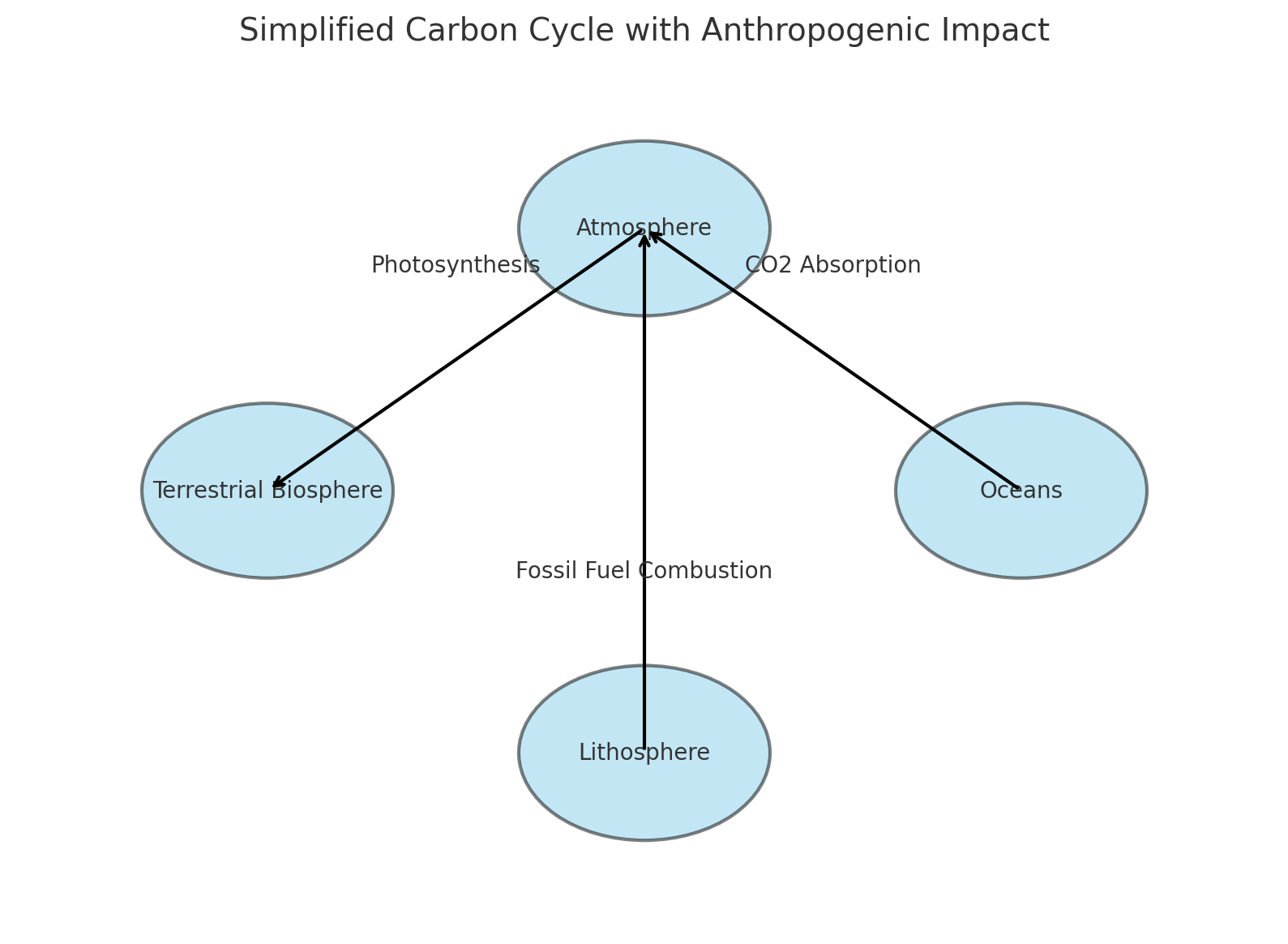
Table 1. Comparing CO2 and CH4 Emissions
Homologous Series and Alkanes
A homologous series is a collection of organic compounds with a shared general formula, physical property gradation (such as melting and boiling points), and predictable chemical property variation. Members of a homologous series differ by a constant unit, typically a -CH₂- group. Alkanes are saturated hydrocarbons with only one bond between carbon atoms (Terhemen, 2020). They are among the most fundamental homologous series in organic chemistry. Their general formula is CₙH₂ₙ₊₂, where n is the number of carbon atoms. For example, butane (C₄H₁₀) is an alkane with four carbon atoms. Its structural formula can be represented as follows:
CH₃-CH₂-CH₂-CH₃
This formula illustrates that all carbon atoms, except those at the ends, are connected to two hydrogen atoms and two other carbons to complete the four bonds that carbon can form.
Chain Isomerism
Compounds with the same chemical formula may exhibit structural differences due to variations in the arrangement of the carbon chain, a phenomenon known as chain isomerism. When an alkane has four or more carbon atoms, it often exhibits this kind of isomerism. For example, butane (C₄H₁₀) has two isomers:
- n-Butane: a straight-chain alkane.

- Isobutane (2-methylpropane): a branched-chain alkane.
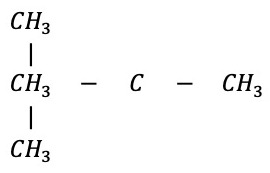
These isomers differ in their physical properties and exhibit only minor differences in their chemical behavior, even though they have the same molecular formula.
Reactivity and Reactions of Alkanes
Alkanes are relatively unreactive compared to other organic compounds. This is due to the strong C-C and C-H single bonds and the lack of a functional group. However, alkanes do undergo several types of reactions:
- Combustion: Heat, water, and carbon dioxide are the products of an alkane-oxygen reaction. For example, the combustion of methane:
CH₄ + 2O₂ → CO₂ + 2H₂O + Heat - Chlorination: Chlorinated hydrocarbons are created when alkanes and chlorine combine in the presence of light, a process known as photochlorination. For instance, the chlorination of methane:
CH₄ + Cl₂ → CH₃Cl + HCl - Cracking: Using a catalyst or heat and pressure, larger alkanes may be broken down (cracked) into smaller molecules (alkanes and alkenes). To create more value products, the petroleum sector needs this technique.
These reactions illustrate the limited but industrially significant chemical activity of alkanes.
Chemical Reactions and Bonding in Hydrocarbons
Alkenes and Their Reactivity
Alkenes are unsaturated hydrocarbons that are different from saturated alkanes in that they have at least one carbon-carbon double bond. Alkenes are more reactive than their alkane counterparts due to the presence of a double bond, which significantly affects their chemical behavior. Alkenes contain two fewer hydrogen atoms than an alkane with the same number of carbon atoms, according to their general formula, CnH2n.
Example of an Alkene: Butene
Butene (C4H8) is an alkene and can exist in several isomers. Here, we focus on 1-butene and the geometric isomers of 2-butene:
- 1-Butene has a structural formula of CH2 =CH−CH2 −CH3, with a double bond between the first and second carbon atoms.
- 2-Butene has two geometric isomers, cis-2-butene and trans-2-butene, differing in the spatial arrangement of the substituents around the double bond.
Comparative Reactivity of Alkanes and Alkenes
Compared to the comparatively inert alkanes, alkenes are more chemically active because of their electron-rich double bond, which is vulnerable to electrophile attack and promotes addition reactions.
Addition Reactions and Polymerization
Addition Reactions
Alkenes are easily subjected to addition reactions in which the double bond breaks, enabling the attachment of two additional atoms or groups, one to each carbon atom. A typical example is the addition of bromine (Br2 ), which serves as a qualitative test for alkenes:
Bromine Addition to Ethene
CH2 =CH2 +Br2 →CH2 Br−CH2 Br
The reaction with bromine water (a solution of Br2 in water), which turns colorless upon reaction with an alkene, is used to detect carbon-carbon double bonds.
Polymerization
Polymerization is a process where small alkene molecules (monomers) join to form long chains (polymers). This transformation is pivotal to the manufacture of various synthetic materials, including plastics. Polymerization of Ethene (Ethylene) to Polyethylene (Polyethylene):
nCH2 =CH2 →(−CH2 −CH2 −)n
Conclusions
The study of hydrocarbons—more significantly, alkanes and alkenes—reveals the environmental effects of these molecules as well as their vital functions in contemporary civilization. Hydrocarbons are essential because they are fundamental to the industrial, energy generation, and chemical industries. Fuels include many alkanes, known for their low reactivity and stable, saturated structures. Alkenes are essential for synthesizing polymers and many other compounds due to their unsaturated structure, which has at least one double bond and increased reactivity. Knowledge of organic chemistry can be gained by examining their structures, reactions, and the unique characteristics of their homologous series.
Nonetheless, it is impossible to ignore the effects of using hydrocarbons on the ecosystem. Fossil fuel burning, a primary energy source produced from hydrocarbons, substantially contributes to the emissions of greenhouse gases, namely CO2 and CH4. These emissions are a primary cause of climate change, adversely affecting the environment, raising global temperatures, and changing weather patterns. These human activities have disturbed the carbon cycle, a natural process of carbon exchange, underscoring the need for a deliberate reassessment of energy sources and consumption habits.
Recommendations
One of the main recommendations is to switch to renewable energy immediately. In addition to providing a sustainable means of generating energy, the use of solar, wind, and hydroelectric power also delivers a notable decrease in environmental effects compared to traditional hydrocarbon-based systems. This change is essential to reducing our carbon footprint and heading toward a future with more ecological balance.
Improving energy efficiency across sectors such as transportation, industry, and housing is crucial to reducing the use of hydrocarbons and associated greenhouse gas emissions (Fetisov et al., 2023). Adopting cutting-edge techniques and technologies that reduce energy consumption may positively impact the environment and the economy, supporting sustainable development as a whole.
Investing in carbon capture and sequestration technologies is a crucial approach to mitigating current carbon emissions. It is essential to prioritize research and development in this area to find practical ways to reduce atmospheric CO2 levels. This strategy may lessen the effects of continuous carbon emissions by serving as a bridge to cleaner energy sources.
Improving sustainable practices across industry, agriculture, and urban planning is essential to reduce the harmful effects of human activity on the environment (Obaideen et al., 2022). This covers many tactics, such as improved recycling programs, waste reduction techniques, and cleaner industrial processes. In addition to protecting natural resources, these actions promote a more enduring bond between people and the environment.
Reducing environmental pollution and lowering reliance on fossil fuels requires investigating and developing biodegradable substitutes and advanced recycling technologies. These developments might transform how materials are used across industries, aligning product lifecycles with ecological sustainability. Governments and academic institutions working together to create policies that encourage green technology, conservation, and renewable energy sources are essential (Lu et al., 2020). Public awareness campaigns and educational initiatives are also critical for fostering a mindset of environmental stewardship and sustainability. Developing a society that values and actively contributes to a sustainable future depends on this twin strategy of policy support and educational outreach.
Reference List
Fetisov, V. et al. (2023) ‘Regulation and impact of VOC and CO 2 emissions on low‐carbon energy systems resilient to climate change: A case study on an environmental issue in the oil and gas industry,’ Energy Science & Engineering, 11(4), pp. 1516–1535.
Golfmann, M. and Walker, J.C.L. (2023) ‘Bicyclobutanes as unusual building blocks for complexity generation in organic synthesis,’ Communications Chemistry, 6(1).
Lu, Y. et al. (2020) ‘A Critical review of sustainable energy Policies for the promotion of renewable energy sources,’ Sustainability, 12(12).
Obaideen, K. et al. (2022) ‘The role of wastewater treatment in achieving sustainable development goals (SDGs) and sustainability guideline,’ Energy Nexus, 7.
Strielkowski, W. et al. (2021) ‘Renewable energy in the sustainable development of electrical power sector: A review,’ Energies, 14(24).
Terhemen, A.E. (2020) ‘Absolute prediction of the melting and freezing points of saturated hydrocarbons using their molar masses and atume’s series,’ Advanced Journal of Chemistry. Section A, 3(2), pp. 122–130.