Introduction
Red palm oil (RPO) is a less refined alternative to regular palm oil and is considered healthier and more beneficial to consume compared to its counterpart. Its composition reflects high levels of unsaturated fatty acids (oleic and linoleic), squalene, Vitamin E, and carotene (Nainggolan & Sinaga, 2021). It is often used as a cooking oil, and its potential benefits have made the compound relatively popular in the natural health products segment. The aim is to determine whether it can be classified as such based on Health Canada’s criteria.
According to the agency, the product has to be safe to use and sold without a prescription to obtain the title (Health Canada, 2023). This paper will review the literature on the health benefits of RPO, its potential adverse effects, and the doses considered most efficacious. Literature does, indeed, support RPO supplementation as a positive solution to increasing vitamin A levels as well as its status as a natural health product.
Health Benefits
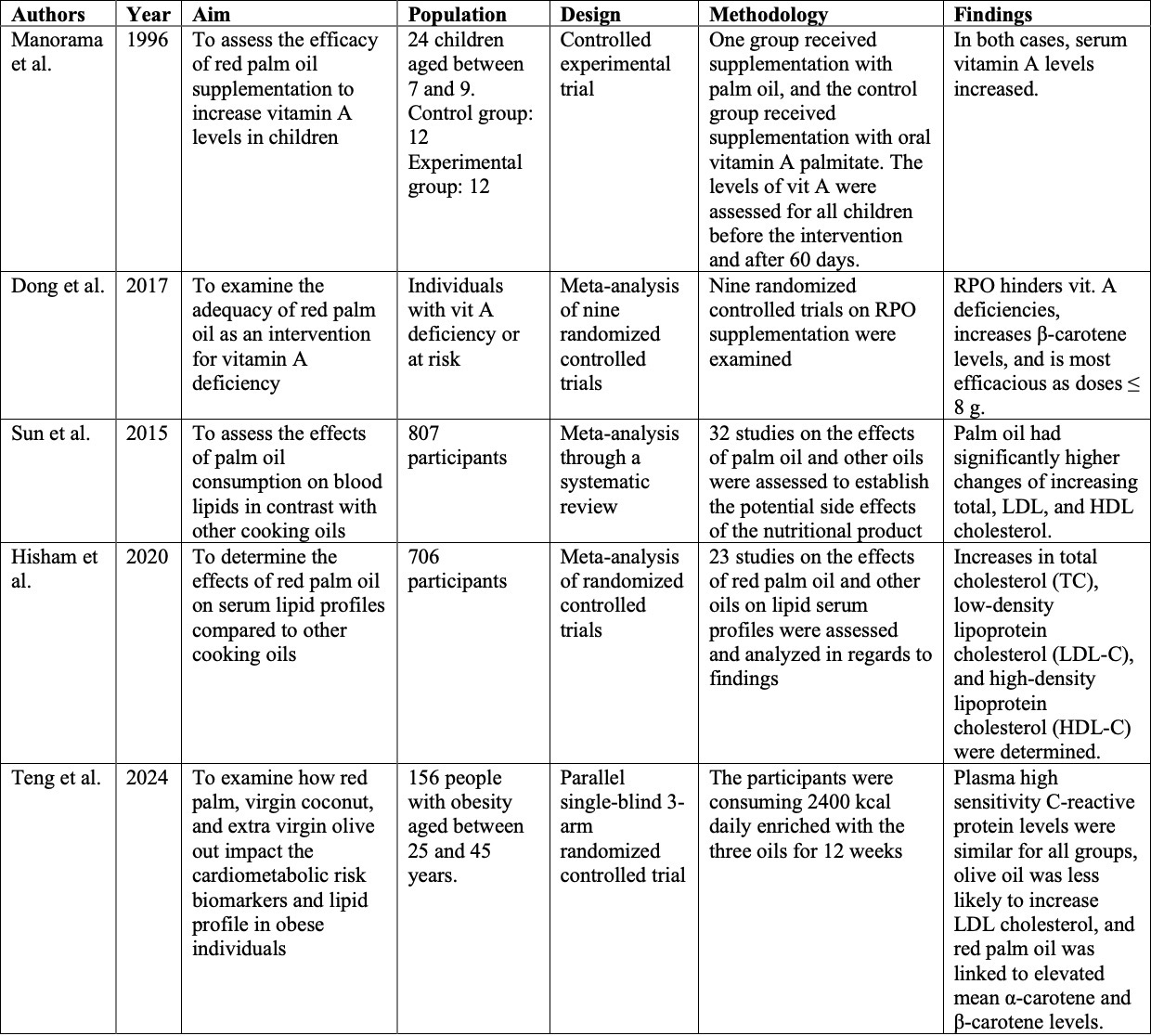
Most of the literature included, regardless of the publication date, supports the idea that red palm oil is beneficial for several conditions. First and foremost, it is vital to highlight the positive effects identified on the cardiovascular system. Namely, one of the outcomes reported after RPO consumption is increased high-density lipoprotein cholesterol (HDL) levels (Sun et al., 2015). The meta-analysis consisted of a review of 32 studies that assessed the effects of palm oil and other oils to establish the potential side effects of the nutritional product.
A similar finding was reported in the meta-analysis published by Hisham et al. (2020). The authors reported increases in total cholesterol (TC), low-density lipoprotein cholesterol (LDL-C), and high-density lipoprotein cholesterol (HDL-C). The compound, also known as “good” cholesterol, has been shown to have protective properties, including removing excess cholesterol and reducing inflammation in blood vessels.
Advantages for cardiovascular health have also been linked to adequate levels of vitamin A. Manorama et al. (1996) concluded that RPO is an effective product for reducing the risk of deficiency. In the study, one group received palm oil supplementation, and the control group received oral vitamin A palmitate supplementation.
Vitamin A levels were assessed in all children before the intervention and after 60 days. Dong et al. (2017) reached a similar conclusion in a meta-analysis based on several randomized trials. It was found that RPO hinders vitamin A deficiencies, increases β-carotene levels, and is most efficacious at doses ≤ 8 g.
Vitamin A has antioxidant properties that help reduce damage to cells caused by free radicals, thereby reducing the risk of conditions such as atherosclerosis. Additional studies found further positive benefits for health. For example, Teng et al. (2024) reported elevated levels of α-carotene and β-carotene, which correlate with enhanced antioxidant activity and cancer prevention. The authors suggest that plasma high-sensitivity C-reactive protein levels were similar across the oils; olive oil was less likely to increase LDL cholesterol, and red palm oil was associated with elevated mean α-carotene and β-carotene levels.
Adverse Effects
Although RPO consumption correlates with a range of positive attributes, it is critical to address potential negative effects. Teng et al. (2024) conducted research on various oils regarding their effects. They found that virgin olive oil is less likely to raise low-density lipoprotein cholesterol than red palm oil. The results do not necessarily imply that RPO directly maximizes cholesterol levels; however, the fact that alternatives may be more efficacious in this area must be highlighted.
No studies have been conducted on the subject, yet Sun et al. (2015) reported that regular palm oil is high in saturated fats, which can elevate cholesterol levels. It can be expected that similar effects will be observed from its unrefined alternative. Simultaneously, research does not support the claim, potentially because RPO contains phytonutrients that facilitate the metabolism of the substance.
Natural Health Product
By examining the literature, a conclusion can be drawn on whether red palm oil can be classified as a natural health product. As mentioned, Health Canada determines the status based on whether the goods are safe to consume or use without prescriptions (2023). Researchers typically used the product as cooking oil, as exemplified by the study by Sun et al. (2015).
Hence, a prescription is not needed to incorporate the substance into one’s diet safely. Regarding safety risks, there is no evidence that the selected compound directly harms health. On the contrary, it yields positive results, such as increased vitamin A levels (Manorama et al., 1996). It can be stated that RPO can, indeed, be classified as a natural health product.
Table 1 – Doses and Uses
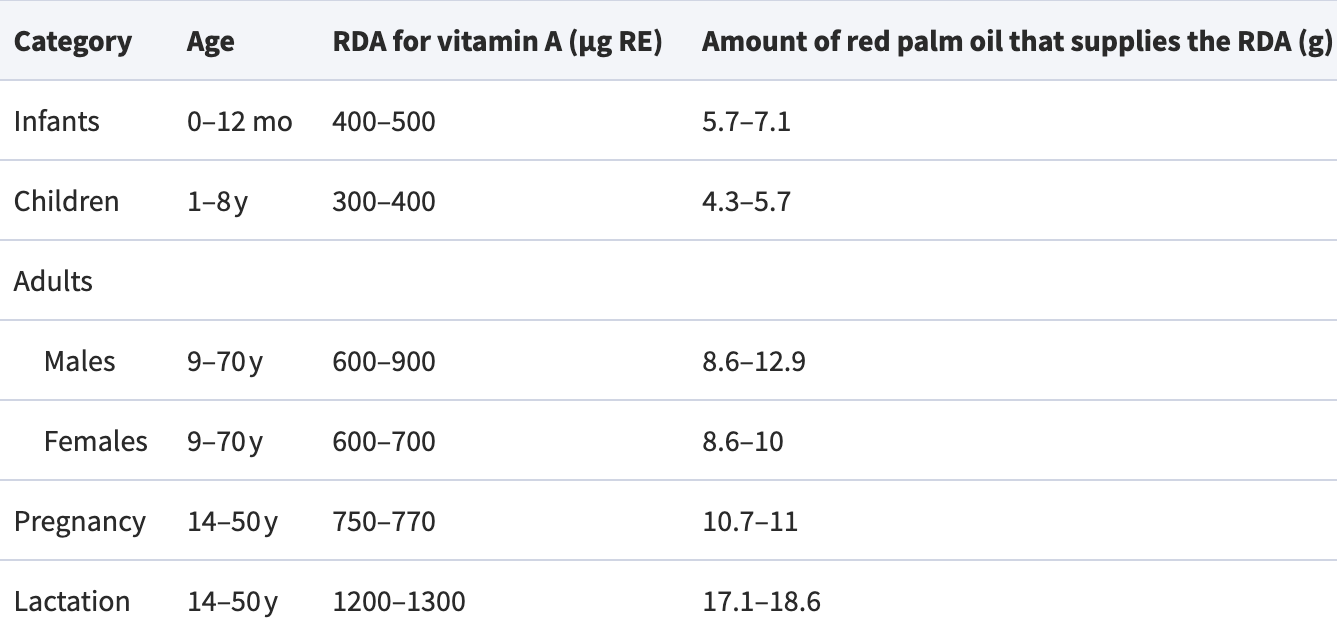
The recommended daily allowance varies by the demographic that consumes the product. The table above highlights the daily recommended allowance for vit (Loganathan et al., 2017). Needless to say, as a natural compound, there will be differences in the potency of the oil with respect to its beneficial nutrients. Furthermore, depending on how it is processed, its qualities can change. For people diagnosed with deficiencies, the dose may also differ, which is why it is vital to research the topic further and assess the applicability of RPO to dietary patterns.
Conclusion
Red palm oil is a safe product for individuals with vitamin A deficiency and similar conditions. It can be classified as a natural health product, as evidence shows its safety and the lack of prescription requirements for efficacious supplementation with the compound. The current consensus is that the adverse effects are minimal and most likely reflect the refined alternative of the selected oil. The beneficial outcomes, on the other hand, are well documented in studies published from the 1990s to the present.
References
Dong, S., Xia, H., Wang, F., & Sun, G. (2017). The effect of red palm oil on vitamin A deficiency: A meta-analysis of randomized controlled trials. Nutrients, 9(12).
Health Canada. (2023). Government of Canada. Canada.ca.
Hisham, M. D. B. (2020). The effects of palm oil on serum lipid profiles: A systematic review and meta-analysis. Asia Pacific Journal of Clinical Nutrition, 29(3), 523–536.
Manorama, R., Brahmam, G. N., & Rukmini, C. (1996). Red Palm Oil as a source of β-carotene for combating vitamin A deficiency. Plant Foods for Human Nutrition, 49(1), 75–82.
Nainggolan, M., & Sinaga, A. S. (2021). Characteristics of fatty acid composition and minor constituents of Red Palm Olein and palm kernel oil combination. Journal of Advanced Pharmaceutical Technology & Research, 12(1), 22.
Sun, Y., Neelakantan, N., Wu, Y., Lote-Oke, R., Pan, A., & van Dam, R. M. (2015). Palm oil consumption increases LDL cholesterol compared with vegetable oils low in saturated fat in a meta-analysis of clinical trials. The Journal of Nutrition, 145(7), 1549–1558.
Teng, K.-T., Loganathan, R., Chew, B. H., & Khang, T. F. (2024). Diverse impacts of Red Palm Olein, extra virgin coconut oil and extra virgin olive oil on cardiometabolic risk markers in individuals with Central Obesity: A randomised trial. European Journal of Nutrition.
Appendix: Literature Review Table