
Introduction
The City of Stirling is renowned for its cultural diversity and significant refugee population. Over the last two decades, the city has accepted thousands of migrants from India, the United Kingdom, and Ireland, as well as refugees from the Middle East, Africa, and Asia (City of Stirling, n.d.a). Mental health issues have been identified as a critical concern because the city hosts multiple individuals who need to learn to live in new conditions. Currently, local authorities provide people with counselling and mental health services (for example, ReachOut.com and Act Belong Commit), but these initiatives are insufficient to address the growing demand. Thus, it is imperative to address these challenges promptly to ensure the well-being and successful integration of refugees into the community.
Statement of Need and Rationale for the Project
The resettlement of refugees in the City of Stirling is a matter of local importance and a worldwide undertaking that necessitates cultivating empathy and advocating for global citizenship. Empathy, the ability to understand and share others’ feelings and perspectives, is crucial to establishing an inclusive and hospitable environment for refugees (Fetterman, 2015).
For this project, three organizations have been chosen since the selected problem is relevant to them. First, the Multicultural Services Centre (n.d.) provides migrants with humanitarian and other forms of assistance to help them address various challenges associated with their new place of residence. Second, Ishar Multicultural Women’s Health Services (n.d.) offers empowering mental health services to women from refugee and migrant groups.
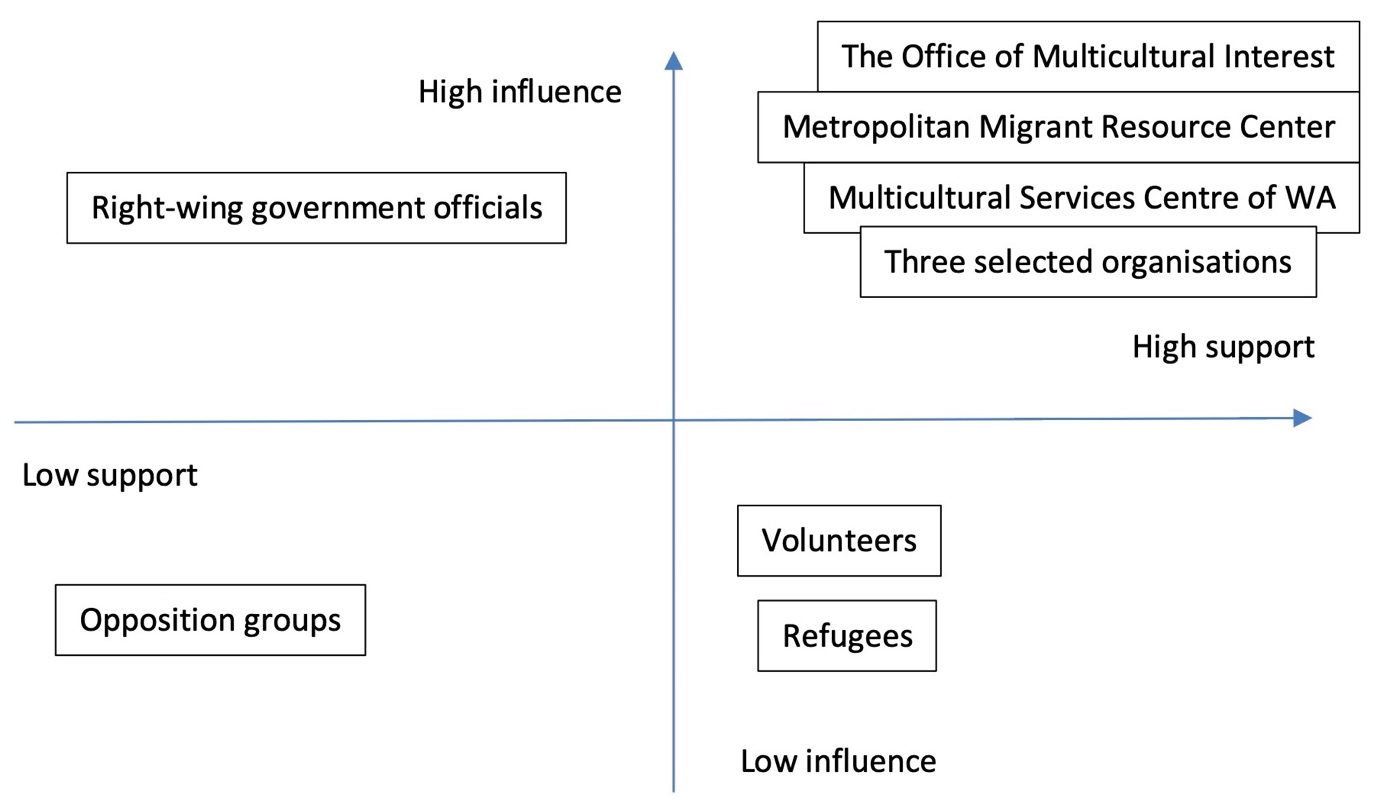
Third, the Association to Torture and Trauma Survivors (n.d.) provides refugees and asylum seekers with access to counselling if they have suffered from different kinds of violence and abuse. The City of Stirling (n.d.b) states that these agencies are available for local refugees. These organizations were additionally selected for their expertise, extensive experience in refugee assistance, and steadfast dedication to human rights and advocacy for marginalized populations (Miller-Dawkins, 2014). Appendix A specifies the impact of these and other organizations.
Empowerment embodies the aspiration for a more equitable and just society where individuals have equal opportunities to develop their capabilities and fulfil their potential (Park et al., 2024). It is intricately linked to human rights principles, including education, health, employment, and political participation (Park et al., 2024). The Universal Declaration of Human Rights serves as the foundational framework for advocating for empowerment. It underscores the importance of fostering conditions that enable individuals to lead dignified lives and participate in social life (Government of Western Australia, n.d.). Consequently, the proposed project promotes social justice, contributes to empowerment, and respects human rights and dignity.
Brief Description of the Project
The objective of this year-long initiative is to provide comprehensive assistance to newly arrived refugees resettling in the City of Stirling in Western Australia. The project’s objective is to establish an inclusive environment that fosters a sense of value and support for refugees by implementing empathy-building operations, global citizenship education, and promoting cross-cultural understanding.
Social Contribution of the Project to a Just Society
This project promotes social justice by tackling the complex obstacles newly arrived refugees encounter in the City of Stirling. The project empowers refugees by providing comprehensive services that address their mental health needs and support their successful assimilation (North Metropolitan Health Service, 2023). This enables them to reconstruct their lives, access critical resources, and actively participate in the community (Horine, 2017).
Location, Target Group, Key Stakeholders, and Methods of Communication
Under the direction of a cooperative group of volunteers, scholars, and interested parties, the project targets recently arrived refugees in the City of Stirling. A project advisory board comprising community leaders, refugee advocates, and organizations would be established throughout the implementation phase. This committee aims to provide guidance and oversight to ensure that the project effectively addresses the evolving needs of the refugee community (Spolander & Martin, 2012). Key stakeholders involved in the project include members of the refugee community, researchers, and evaluation professionals.
Regular channels of communication will be established to encourage discussion and cooperation among all parties involved. To ensure diverse perspectives are considered in decision-making, these channels may include focus groups, community forums, and online platforms. Targeted outreach initiatives will engage vulnerable members of the refugee community to overcome barriers to participation (Sari et al., 2020). Effective communication is vital to the successful integration and well-being of refugee populations, as evidenced by statistics from the Australian Bureau of Statistics (2021).
Refugees are the project’s target group, and they are directly involved in the implementation process. In particular, these individuals will be interviewed to identify their needs and expectations of the intervention. Some refugees will be additionally invited to participate in a project advisory council, while all members are encouraged to provide their feedback on online platforms. This approach will enable the collection of first-hand information, making the implementation process more specific and effective.
Project Organization
A dedicated project management approach will be established, comprising professionals from three diverse groups: social workers and mental health experts, community engagement specialists, and seasoned project managers. Social workers and mental health experts will utilize their specialized knowledge to deliver culturally sensitive mental health support services (Shaukat et al., 2021). The community engagement professionals will be vital in promoting and facilitating active involvement and cooperation with the refugee population.
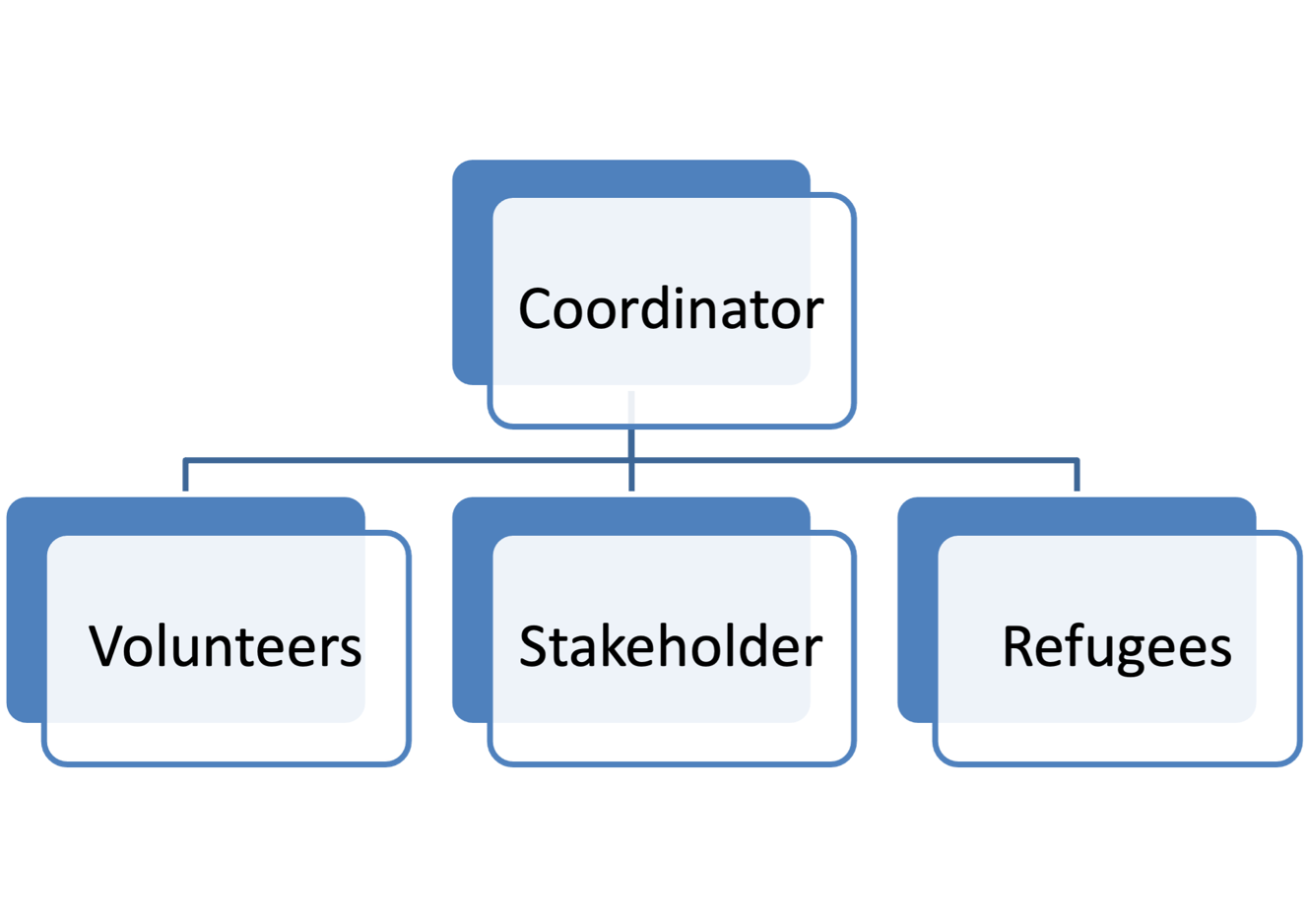
The proficient stakeholders will supervise the implementation process, monitor progress, manage resources, and facilitate communication among stakeholders. The committee’s primary role is to provide crucial insights, guidance, and feedback to ensure the project effectively adapts to the evolving needs and perspectives of the target audience (Rosa et al., 2021). A more logical representation of our organizational structure is depicted in Appendix A.
Involvement of the Members of the Project Target Group
The initiative, led by a collaborative team consisting of volunteers, researchers, and stakeholders, centers on newly arrived refugees in the City of Stirling. Throughout the implementation phase, the project advisory council will be established, consisting of refugee advocates, community leaders, and representatives from pertinent government agencies and service providers, such as the Forth Valley. The purpose of this committee is to offer guidance and supervision to ensure that the project continues to meet the changing needs of the refugee community (Spolander & Martin, 2012).
Project Aim(s)
The objective of this effort is to provide comprehensive assistance and resources to recently arrived refugees in the City of Stirling, Western Australia, to address their mental health needs and promote their seamless integration into local society.
Objective(s)
- S – Improve the mental health of newly arrived refugees and reduce signs of trauma, displacement, and grief by at least 50% over the 12-month project period.
- M – Measure reduction in mental health symptoms and track progress toward a 50% decrease in trauma-related signs among newly arrived refugees.
- A – Achievable through partnerships with local mental health services, culturally sensitive counselling, and access to specialized resources for trauma and grief
- R – Relevant because it directly addresses the mental health needs of newly arrived refugees.
- T – Time-limited to the 12-month project period.
Deliverables
The project’s objective is to offer comprehensive mental health care to newly arrived refugees in the City of Stirling. Individualized counselling, psychological therapies, and tailored coping strategies will be offered to address each client’s specific needs (Im et al., 2023). Refugee-specific mental health support services will assist with post-traumatic stress disorder, anxiety, depression, and other psychological distresses (Mahieu & Van Caudenberg, 2020). Refugees can evaluate their experiences, acquire coping strategies, and establish community support through both individual and group counselling sessions.
Theory of Change and Monitoring, Evaluation, and Learning Plan
The project’s Theory of Change is grounded in prioritizing empathy and global citizenship as essential elements in assisting refugees (Miller-Dawkins, 2014; Australian Government Department of Foreign Affairs and Trade, 2021). This approach is underpinned by the touch hypothesis and transformative learning theory, emphasizing the importance of fostering understanding and empathy towards refugees within the local community (Miller-Dawkins, 2014). To operationalize this theory, the initiative provides opportunities for refugees to engage with local society through educational and storytelling activities, aiming to foster a sense of global citizenship, social mobilization, interconnectedness, and behavior change (Settlement Council of Australia, n.d.). This theory was chosen because it can address the selected problem.
In terms of Monitoring, Evaluation, and Learning (MEL), as outlined in Appendix F, the project employs empowerment theory and participatory methodologies (Fetterman, 2015). The empowerment theory is appropriate for the Monitoring stage because it encourages patients to take direct, voluntary control over their lives (Joseph, 2020). Simultaneously, the participatory model is suitable for the Evaluation stage, as it encourages patients to express their views on the intervention, contributing to a more comprehensive evaluation (Hickmann et al., 2022). These methodologies involve active participation of refugees and stakeholders in the evaluation process, ensuring that their perspectives are central to assessing the project’s effectiveness (Smith et al., 2020).
Project Plan
New refugees in the City of Stirling will receive significant mental health treatment under the project proposal. The strategy includes counselling, psychological therapies, and culturally sensitive coping mechanisms tailored to refugee needs. Refugees will undergo individual and group therapy sessions to reflect on their experiences, learn problem-solving skills, and make friends (Sari et al., 2020). To leverage resources and knowledge, the program will work with local healthcare providers, community organizations, and government entities.
Work Breakdown Structure (WBS)
- Project Management
- Project Commencement
- Planning Phase
- Project Conclusion
- Stakeholder Engagement
- Stakeholder Identification and Analysis
- Engagement Planning
- Psychological Support
- Counselling Services
- Counseilling Sessions
- Mental Health Workshops
- Collaboration Efforts
- Community Partnerships
- Health Care Collaborations
- Public Sector Engagement
- International Networks
- Monitoring and Evaluation
- Surveillance Strategy
- Evaluation Plan
- Participatory Assessment
- Management Support
- Online Discussion Platforms
- Best Practices Sharing
- Inter-Project Collaboration
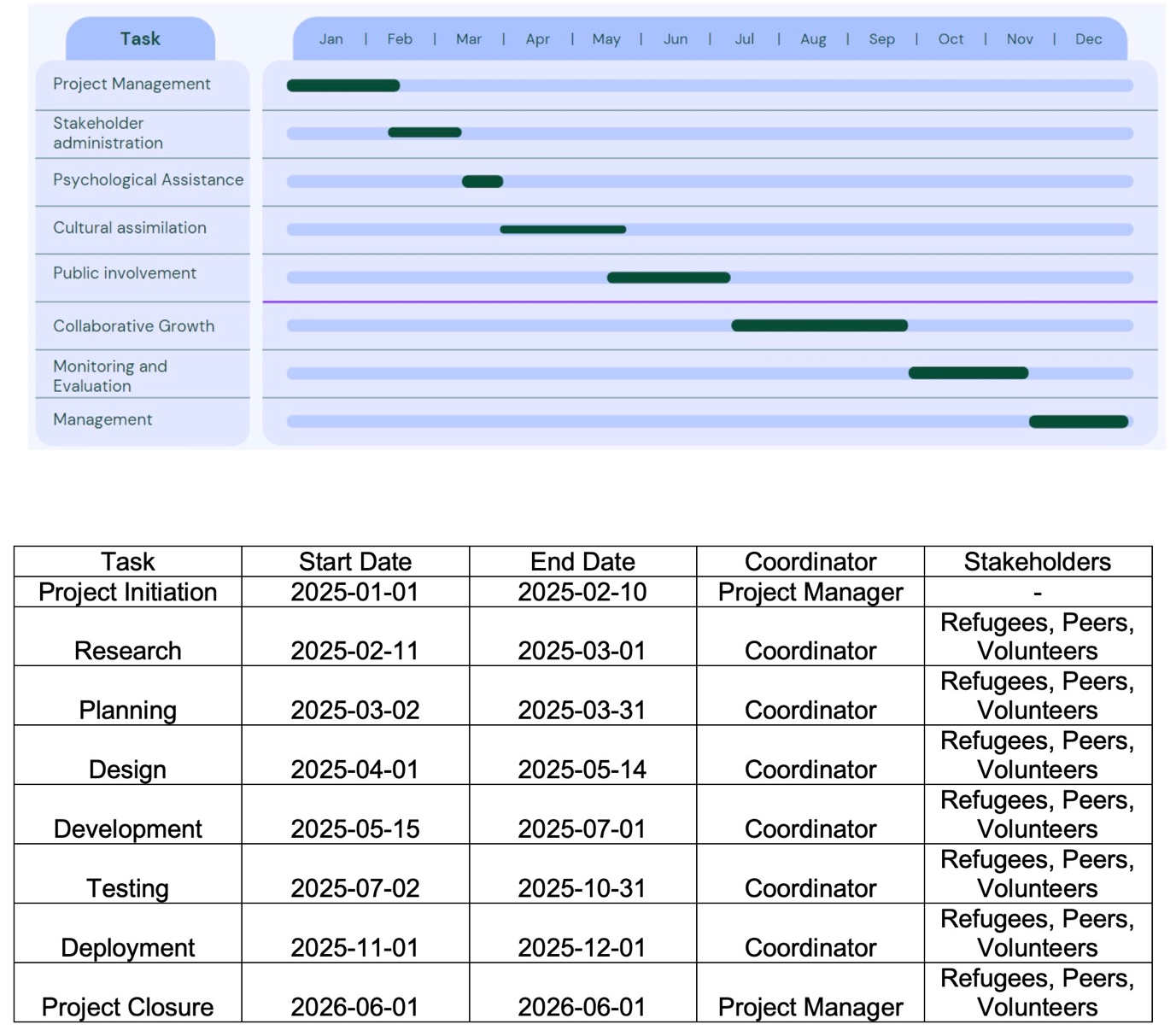
A more detailed visualization of this plan is shown in Appendix C.
Timelines
The project will be implemented over a period of 12 months, commencing on January 1, 2025, and concluding on December 31, 2025. This timeline is specified in Appendix C, while the milestones are structured as follows:
- Months 1-2 (January-February): Conduct project commencement, planning, and conclusion.
- Months 2-3 (February-March): Identify and analyze stakeholders and plan stakeholder engagement.
- Month 3 (March): Conduct counselling services, sessions, and mental health workshops for refugees.
- Months 4-5 (April-May): Organize community partnerships.
- Months 5-6 (May-June): Establish healthcare collaborations among the stakeholders and create public engagement activities.
- Months 7-9 (July-September): Conduct counselling services, sessions, and mental health workshops involving all the selected stakeholders.
- Months 10-11 (October-November): Develop and implement a feasible evaluation plan.
- Month 12 (December): Present the results of the project and close it.
Limits and Exclusions
The study will focus mostly on refugees who have recently moved to the City of Stirling within the 12 months before the experiment begins. The main emphasis of the assistance and guidance offered will be on tackling mental health concerns and promoting the integration of this specific group into the culture. The project will be conducted with the allocated grant of $40,000 and will adhere to the defined 12-month term.
Budget
The project’s total budget, detailed in the table in Appendix D, is $40,000. This sum was received as a grant dedicated to addressing a significant issue affecting Australian society. Even though this money is not large considering the prevalence of multiple social problems, it is sufficient to help refugees address their mental health issues. The following section will specify the budget allocation to meet all the project’s objectives.
Resources Required for the Project
The project requires specific resources, which are selected based on established priorities. Staffing costs remain significant, with $9,000 allocated to project managers and $11,000 to mental health specialists, ensuring effective project coordination and core service delivery. Operating expenses, covering office rent, equipment, and telecommunications, are essential for establishing a functional workspace and sustaining communication channels, with a total allocation of $9,500. Program costs allocated to mental health support services and community outreach initiatives, totaling $9,000, directly contribute to refugee well-being and community engagement. Consultant fees for project performance oversight are maintained at $1,500 to uphold quality control and adherence to project objectives.
Ethical Considerations
Ethical Concerns and Ways to Mitigate Them
Ethical considerations are paramount to protecting the dignity, privacy, and well-being of vulnerable groups, such as newly arrived refugees, within the project framework. In the project, no refugee should be coerced into participating (Larsson & Larsson, 2020). Project managers will not disseminate or disclose any sensitive private information of the project’s stakeholders. Finally, it is reasonable to be aware of the potential violence; that is why project managers should have effective conflict management skills (Sullivan et al., 2023).
Managing Project Risks
Given the small number of parties directly involved, risk management is essential to the project’s success. The current project entails two notable risks, summarized in Appendix E. First, stakeholder turnover is a significant risk because some refuges may decide to leave the program, which can affect its effectiveness. Second, there can be conflicts among participants because they come from different cultural backgrounds. To properly handle unforeseen situations, contingencies will be put in place (Larsson & Larsson, 2020). With this strategy, we will be able to fix problems quickly and minimize their impact on the project.
Conclusion
Overall, this year-long initiative to resettle refugees in the City of Stirling exemplifies a thorough, well-planned effort to address the many obstacles recently arrived refugees face. Its goal is to help refugees overcome the psychological effects of their experiences and flourish in their new surroundings. By receiving a committed grant of $40,000 and actively seeking additional funding, the initiative has the capacity to create a lasting impact on the lives of refugees.
References
Association to Torture and Trauma Survivors. (n.d.). Counselling.
Australian Bureau of Statistics. (2021). Community and economic profile. City of Stirling.
Australian Government Department of Foreign Affairs and Trade. (2021). Multilateral aid effectiveness.
Bassoli, M., & Campomori, F. (2022). A policy-oriented approach to co-production. The case of homestay accommodation for refugees and asylum seekers. Public Management Review, 26(3), 770–792.
Bock, J. G., Haque, Z., & McMahon, K. A. (2020). Displaced and dismayed: How ICTS are helping refugees and migrants, and how we can do better. Information Technology for Development, 26(4), 670–691.
City of Stirling. (n.d.a). Multicultural framework: Reaping the rewards of our cultural diversity.
City of Stirling. (n.d.b). New migrant information.
Dwyer, J., Stanton, P., & Thiessen, V. (2019). Project management in health and community services: Getting good ideas to work (3rd ed.). Taylor & Francis.
Fetterman, D. M. (2015). Empowerment evaluation: Theories, principles, concepts, and steps. In D. M. Fetterman, S. J. Kaftarian, & A. Wandersman (Eds.), Empowerment evaluation: Knowledge and Tools for self-assessment, Evaluation Capacity building, and Accountability. Sage.
Government of Western Australia. (n.d.). About OMI.
Hickmann, E., Richter, P., & Schlieter, H. (2022). All together now–patient engagement, patient empowerment, and associated terms in personal healthcare. BMC Health Services Research, 22(1).
Horine, G. (2017). Project management absolute beginner’s guide (4th ed.). Que Publishing.
Im, H., Verbillis-Kolp, S., Atiyeh, S., Bonz, A., Eadeh, S., George, N., & Ann Malluwa Wadu, A. M. (2023). Implementation evaluation of community-based mental health and psychosocial support intervention for refugee newcomers in the united states. Health & Social Care in the Community, 2023, 1–20.
Ishar Multicultural Women’s Health Services. (n.d.). Mental health support.
Joseph, R. (2020). The theory of empowerment: A critical analysis with the theory evaluation scale. Journal of Human Behavior in the Social Environment, 30(2), 138-157.
Larsson, J., & Larsson, L. (2020). Integration, application and importance of collaboration in sustainable project management. Sustainability, 12(2), 1–17. mdpi.
Mahieu, R., & Van Caudenberg, R. (2020). Young refugees and locals living under the same roof: Intercultural communal living as a catalyst for refugees’ integration in european urban communities? Comparative Migration Studies, 8(1), 1–17.
Miller-Dawkins, M. (2014). Theories of change for engaging people on global issues (pp. 1–37). Core Lab.
Multicultural Services Centre. (n.d.). Settlement services (SETS).
North Metropolitan Health Service. (2023). Annual report 2022-2023. Nmhs.health.
Park, J., Zou, S., & Soulard, J. (2024). Transforming rural communities through tourism development: an examination of empowerment and disempowerment processes. Journal of Sustainable Tourism, 32(4), 835-855.
Rosa, A. B., Kimpeler, S., Schirrmeister, E., & Warnke, P. (2021). Participatory foresight and reflexive innovation: Setting policy goals and developing strategies in a bottom-up, mission-oriented, sustainable way. European Journal of Futures Research, 9(1), 1–15.
Sari, Y., Hidayatno, A., Suzianti, A., Hartono, M., & Susanto, H. (2020). A corporate sustainability maturity model for readiness assessment: A three-step development strategy. International Journal of Productivity and Performance Management, 70(5), 1162–1186.
Settlement Council of Australia. (n.d.). Who we are. Settlement Council of Australia.
Shaukat, M. B., Latif, K. F., Sajjad, A., & Eweje, G. (2021). Revisiting the relationship between sustainable project management and project success: The moderating role of stakeholder engagement and team building. Sustainable Development, 30(1), 58–75.
Smith, J. D., Li, D. H., & Rafferty, M. R. (2020). The implementation research logic model: A method for planning, executing, reporting, and synthesizing implementation projects. Implementation Science, 15(1), 1–12.
Spolander, G., & Martin, L. (2012). Successful project management in social work and social care: Managing resources, assessing risks and measuring outcomes. Jessica Kingsley.
Sullivan, C., Block, K., Murray, L., Warr, D., Chen, J., Davis, E. & Vaughan, C. (2023). Working with interpreters in the family violence sector in Australia:“It’s very hard to be in between”. International journal of intercultural relations, 96.
Appendices
Appendix A
Appendix B
Appendix C
Appendix D
Table 1 – Budget
Appendix E
Table 2 – Risk Management
Appendix F
Table 3 – Monitoring, Evaluation and Learning