
Abstract
Childhood obesity is a mounting crisis in the public health realm, with the number of diagnosed cases increasing by the day. This study investigates the causes, with a keen interest in dietary patterns, particularly the overconsumption of junk food, which is facilitated by exposure to digital advertisements. The research examines the profound impacts of exposure to digital advertisements on children’s food choices in New Zealand.
The dynamic was comprehensively explored through interviews with parents of children aged 4-14, with a central emphasis on the nexus between children’s dietary decisions and exposure to digital advertisements. The inquiries focused on the exposure, perception, government regulation, and the role of parents in protecting their children, and the responses were thematically analysed using NVIVO software. The findings depict a direct correlation between unhealthy food choices and exposure to digital advertisements, which prompts the need for immediate intervention and more regulatory measures to reverse the obesity trajectory.
The methods employed for the research were qualitative, which provided insights into policy based on the lived experience of the parents. Other than regulations, the research study underscores the importance of educational and collaborative efforts to ensure that the healthcare menace is reduced. Although the research yields positive impacts in reducing obesity, there are notable limitations, such as the smaller sample size and parental bias, which may compromise generalizability. The future direction in research is to investigate regulatory policies and their impact on reducing unethical digital advertisements.
Introduction
Background of the Study
Childhood obesity is a severe health condition that affects children and adolescents as a result of being overweight due to poor food choices. It has increased for decades because of the choice of foods and lifestyle (World Health Organization, 2022). It is an emerging health concern in the contemporary world, and its global prevalence has increased exponentially over the past ten years (Liu et al., 2021).
In New Zealand, the rate of childhood obesity has been increasing at an alarming rate. A health survey conducted by Smirk et al. (2021) revealed that one in every eight children suffers from childhood obesity, translating to a prevalence rate of 12.7%. Another study by Daniels et al. (2022) suggested that children aged 14 years in New Zealand are at a higher risk due to their high exposure to unethical digital marketing that promotes unhealthy foods.
Previously, the rate had been stable, but as technology emerged and more children gained access to unhealthy foods, the rate has been on the rise and is likely to continue increasing. New Zealand children between 2 and 14 are prone to many promotional messages about unhealthy foods, which are the primary cause of the alarming statistics of childhood obesity. Technological advancements expose children to various platforms that advertise unhealthy foods, clouding their judgment on food choices, especially in schools without parental guidance.
In the current digital age, children in New Zealand have access to the internet, social media sites, and online games that portray unhealthy foods as trendy. This dissertation delves into the impact of digital marketing on children’s food choices in the country. Although the marketers may be operating within the dictates of the law, the marketing may impact the general health and well-being of the children and their future.
Since dietary habits are influenced by marketing, previous research on the topic will be analyzed, and the gaps will be determined to ensure that the children are safe and lead healthier lifestyles. Once the children see the adverts in the digital spaces, they run to the supermarkets where the food is plentiful. Research by Vandevijvere et al. (2018) showed that if supermarkets could store healthier foods, the children in New Zealand would be safer. Stricter frameworks are likely to eliminate unhealthy foods and assist children in New Zealand to lead healthier lifestyles.
Statement of the Problem
Technological advancements have made online advertising easy, and business people reach millions of customers worldwide through the internet platforms. Research by Tatlow-Golden & Garde (2020) inferred that junk food has gained global prominence due to the active advertisements in the online domain. The obesity risk factors have been increasing since 2014 as more businesses around the world enhance their targeting and use customized social media to reach many people, especially vulnerable populations such as children (Tantengco, 2022). Unhealthy foods are being produced, marketed, sold, and actively consumed by people globally.
The advancement of advertising media and digital marketing has made it easier for companies to reach potential customers by sending appealing messages that drive higher sales rates. Indeed, digital marketing tools comprise social media platforms, such as Facebook, Instagram, YouTube, Twitter, and many others, where brands can reach their customers to promote their products (Matos et al., 2023).
While adult consumers are more likely to exhibit rational choice and critical thinking in response to stimuli produced by advertising, minors have fewer opportunities to apply critical thinking due to their stage of psychological development. Thus, they become a sensitive audience of unhealthy food and beverage marketing, which predominantly encourages consumers to buy fast food and soft drinks, which are proven to harm human health, causing obesity and an array of concurrent diseases (Boyland & Halford, 2013; Hastings et al., 2007). It is essential to conduct comprehensive research to collect evidence and explain how the digital marketing of unhealthy food and beverages negatively impacts children, informing practical solutions to this problem.
Technological advancements in New Zealand have exposed children to digital marketing. Research by Gerritsen et al. (2021) indicates that an increasing number of children in New Zealand are exposed to social media, which contains more content promoting unhealthy foods. As children get more exposed to information on the internet glorifying unhealthy foods, childhood obesity prevalence increases.
The central problem of this research is to determine the relationship between exposure to digital advertisements and children’s food choices. As food choices evolve and companies adopt technology, adequate regulatory frameworks must be established to ensure the safety of children in New Zealand (Hobbs et al., 2021). The regulations will ensure that companies do not exploit vulnerable groups, such as children.
Minors are persuaded to become loyal customers of such brands, which exposes them to the risks of obesity, ultimately jeopardizing their health and well-being (Signal et al., 2017). Research shows that individuals under 18 years old residing in New Zealand are disproportionately targeted by fast food and soft drink brands via internet-based platforms, which shape their consumption behavior and preferences, characterized by consistent unhealthy choices (Boelsen-Robinson et al., 2015; Smith et al., 2019). The prevalence of harmful food item advertising in the marketing campaigns of food and drinks companies can be exemplified by the findings of Garton et al.’s (2022) study.
As demonstrated in Figure 1, the researchers investigated 64 company websites, of which only 12 did not contain unhealthy product advertisements targeting child audiences (Garton et al., 2022). Moreover, the health disparities experienced by indigenous populations of New Zealand are exacerbated by this issue due to their already existing status as a vulnerable population with higher rates of obesity (Gage & Signal, 2021; McKerchar et al., 2021; Vandevijvere et al., 2018). Figure 1 below illustrates the proportion and classification of food and beverages, along with their corresponding health outcomes.
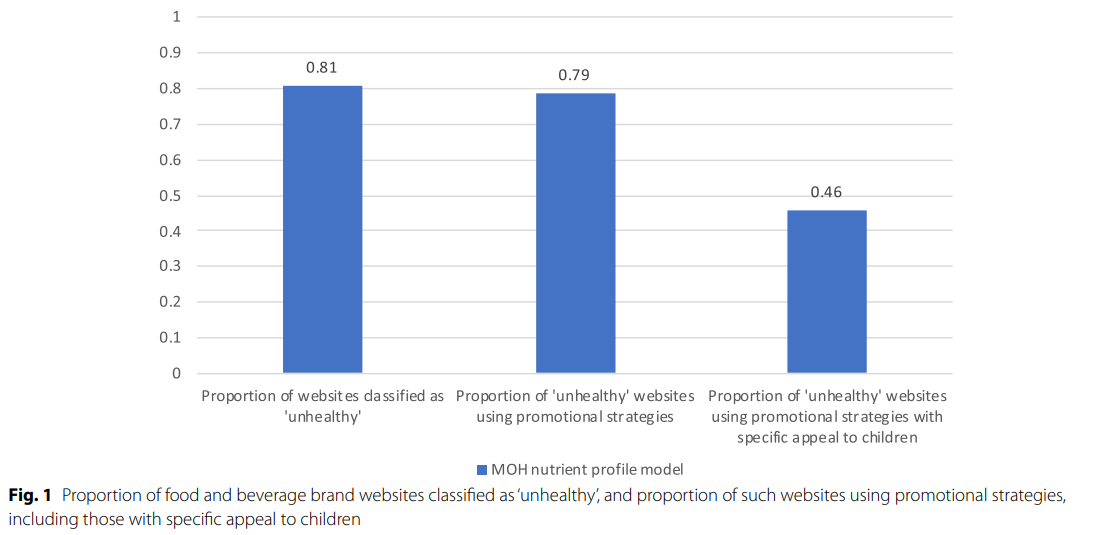
Figure 1 above illustrates the proportion of food and beverage brand websites classified as ‘unhealthy’ and those employing promotional strategies, including those explicitly targeting children (Garton et al., 2022). Once digital marketing tactics are regulated, children will likely lead healthier lifestyles. New Zealand is likely to reduce the cases of childhood obesity, thereby achieving better outcomes and ensuring children grow up healthy and have a bright future. Another study by Tawfiq et al. (2021) demonstrated that promoting healthier diets and physical activity is the most effective way to reduce the prevalence of childhood obesity in New Zealand. This paper will recommend strategies that can be employed by both the general public and healthcare professionals to promote the consumption of healthy foods in the country.
The lack of proper regulating tools and practical rules that protect children from the harmful influence of unhealthy advertising products is a sign of neglect and a gap in solution-finding. Indeed, according to Castles (2021), the governmental body responsible for advertising regulation in New Zealand is the Advertising Standards Authority, which has recently launched the Children and Young People’s Advertising Code. Despite being designed to protect children from harmful food marketing exposure, it has not led to change due to ineffective solutions (Castles, 2021). Another regulating tool is the voluntary industry guidelines, which need to demonstrate more attention to childhood exposure to harmful marketing techniques (Shen et al., 2021). Consequently, children in New Zealand are at risk of making poor food decisions because advertisements glorify unhealthy foods.
Thus, due to the need for more practical solutions and proper research on regulating means to mitigate the impact of digital marketing on children’s consumption behavior, there is a significant need to investigate possible ways to address the issue. As various advertising agencies are investigated for their impact on influencing children’s decisions about healthy food choices and lifestyle, proposals will be made to improve the quality of life. Consequently, children in New Zealand will be protected from negative digital advertising that may lead them to make unhealthy food choices in the long run.
Justification and Significance of the Study
The study is significant and timely because childhood obesity is a multifaceted and complex public health issue that requires adequate numerical evidence for effective decision-making. As the childhood obesity trends rise exponentially in New Zealand, it mirrors the global prevalence and sets the pace for generating evidence-based solutions. The rising concern about obesity trends affects the general public, healthcare providers, policymakers, and the government (Bu et al., 2019). One of the primary reasons the study is relevant is that childhood obesity is on the rise and is the precursor to other diseases, such as type two diabetes, being overweight, and cardiovascular conditions. To improve general public health outcomes, public and healthcare workers must understand the impact of digital marketing in order to create effective policies that address these challenges.
The digital revolution is a wave that has swept through society, and children in New Zealand are not left behind. As more children access the internet and other digital marketing platforms, they are at a higher risk. Although digital platforms provide unprecedented opportunities, they should be regulated to ensure that they do not jeopardize public health concerns in the long run.
This study aims to strike a balance between ethical advertising and the presentation of information, particularly to children. The study raises significant ethical concerns when analyzing how digital advertisements affect vulnerable populations, such as children. When toys and Disney logos are used to advertise unhealthy foods, children who wish to be associated with Disney will fall into the trap and buy and consume unhealthy foods.
Besides the ethical and moral considerations, this study is justified due to the public health concerns arising from unhealthy eating habits. Eliminating unhealthy advertisements, especially for vulnerable populations, is critical to formulating policies that ease the health burden and reduce the costs of managing lifestyle diseases caused by unhealthy eating among children in New Zealand. Childhood obesity is not a cosmetic health concern and is related to profound well-being implications, like the psychological issues caused by body shaming due to being overweight. The study is relevant in the academic sphere. It poses significant gaps in digital advertisement, as it will offer empirical evidence on the impact of marketing on the prevalence of the disease. Consequently, this will lead to the development of policies and industrial practices that promote the health and well-being of children in New Zealand.
Purpose of the Study
The principal purpose of the study is to investigate the influence of digital marketing on children’s choices of unhealthy food in New Zealand.
Research Questions
This dissertation addresses one central concern: the influence of digital marketing on unhealthy food choices among children in New Zealand. While more researchers have delved deeper into the prevalence of childhood obesity and its prevention mechanisms, limited empirical evidence exists on the impact of digital marketing on the increasing unhealthy food choices. To be more specific on the children’s food choices and their impact on health and well-being, this research study proposes a general research question and sub-research questions to enable researchers to tailor solutions to the prevailing public health concern among children in New Zealand.
- RQ1 How does the digital marketing of unhealthy food and beverages affect children’s consumption behaviour in New Zealand?
Sub Research Questions
- RQ1a How does food image content on social media affect children’s consumption behaviour?
- RQ1b How would children be better protected from harmful marketing under comprehensive and obligatory regulations?
- RQ1c How are the New Zealand children exposed to the promotional messages, and how may they be reduced?
- RQ1d What are the country’s standard policy and regulatory frameworks that encourage or discourage the promotion of unhealthy foods among children?
Aims and Objectives
The research aims to determine how the digital advertisement of unhealthy food choices in New Zealand impacts children’s quality of life. The aim will be divided into smaller objectives, setting the research’s pace. The objectives include:
- To investigate the exposure of children in New Zealand to all the content that promotes unhealthy food choices.
- To examine the cognitive and behavioural changes in children’s dietary behaviour after being exposed to promotional messages for unhealthy food that put the children at risk of childhood obesity and other diseases related to it.
- To scrutinize New Zealand’s regulations and policies about promoting unhealthy foods to children and propose policy changes likely to cause more harm.
Generally, understanding the impact of digital marketing on children is the prerequisite for proposing tailored policies to regulate digital platforms to save children from public health risks posed by unhealthy advertisements. The study structure is set by using research questions, which guide the researcher and set the pace for the study.
Study Setting
The boundaries set in research are essential to narrow the research to a particular group or population under study. This study will take place in New Zealand, and the inclusion criteria will target parents of children between the ages of 4 and 14 who are more prone to being influenced by digital marketing to make unhealthy food choices. Only the parents and guardians will be interviewed based on their observations about their children’s behavioural patterns and food choices after being exposed to digital marketing content on unhealthy foods in the country.
Limitations of the Study
Analysing the potential limitations likely to be encountered in the study is important because it ensures that all forms of bias are eliminated for more effective research. The sample bias will likely affect the study as the selected population of fewer participants under investigation may have different levels of exposure to digital marketing and technology. The sample bias will be reduced in the research by employing the random sampling technique to ensure that the choice of participants is not predetermined. Consequently, the outcome may not represent the diverse population of parents with children aged 4-14, vulnerable to unethical digital practices in the country.
The limitation could be overcome by ensuring that the participants are selected from diverse regions in the country to represent the larger population. Further, the selected population under study may offer inaccurate information since parents may need to be aware of their children’s food choices in school. More accurate results may be obtained when the parents and guardians are given more time to probe their children before the interview. Briefing the parents and guardians before the actual date and giving them an overview of the study will make it seamless, as the parents will have all the required data.
There is a rapid evolution of digital marketing platforms, which change with time, and children may need help distinguishing between a marketing platform and an area for fun. Therefore, the children and their parents must be trained on the best ways of answering the questions before being allowed to participate in the interviews. The data collection may involve travelling from one location to another and logistical and financial implications, such as a lack of transport and other required resources to make the study successful. Food choices among children are influenced by numerous factors, including but not limited to digital marketing, peer pressure, family preferences, and cultural influences that may impact the research outcomes (Chen & Antonelli, 2020). Therefore, the researcher must be more specific about the leading causes of unhealthy food choices.
Organization of the Study
The research will be organized into five chapters, each into specific sub-sections. Chapter One introduces the problem under research and shares the background and the objectives. Further, it shares the limitations and how they can be overcome. Chapter two will offer comprehensive coverage of research that has previously been done on the influence of digital marketing on children’s unhealthy food choices and determine the gaps that need to be addressed to ensure that the conceptual framework is covered and that the literature is understood.
The methodology and research design are presented in Chapter Three alongside the sample size, analysis technique, and the data collection procedure employed for the research. The chapter also represents ethical considerations to show how the research variables will be operationalized. The fourth chapter will cover the interview findings’ results, discussion, and presentation. The final chapter will cover the conclusion, summary of the findings, discussion, and recommendations for further research.
Literature Review
Introduction
This chapter offers an overview of all the previous research developed over the years. The content analysed is related to the influence of digital marketing on the food choices made by children in New Zealand. Through this chapter, a foundation is laid on the theoretical framework, and the rationale for the study is presented. The chapter will be organized according to the research objectives to ensure that the investigations are understood and that the pace of the research is set.
Evolution and Historical Perspectives of Digitized Marketing Targeting Children
The dynamic contemporary corporate domain has leveraged technology to increase awareness of its products for enhanced sales. As companies embrace technology in advertising, the internet has become an essential avenue for marketing (Vlačić et al., 2021). Digital marketing targeting children has evolved over the years and has changed, and has started targeting vulnerable populations.
Initially, digital marketing focused on posting general ads on social media platforms. Children worldwide have the right to be protected from unhealthy foods that jeopardize their health (World Health Organization, 2022). However, over the years, there have been changes in the approach as digital marketing has become more segmented to attract different customers.
Research by Haynes et al. (2021) predicted that by 2023, companies selling junk and other unhealthy foods would leverage different platforms to increase their customer base, notwithstanding the vulnerable populations using technological devices. Similarly, the companies targeting children explored content and personalities that were more appealing to the target customers. For example, cartoon networks and other famous Disney characters that are more appealing to children are used to attract more customers in the field (De Jans et al., 2019). The evolution has increased digital advertising targeting children, jeopardizing the quality of life.
Digital Marketing Influences on Food Consumption Behaviour
Multiple research efforts have investigated the influence of digital marketing on food consumption behaviour. For example, Abell and Biswas (2022) focused their study on the characteristics of the visual content of social media food and beverage promotion. The investigation results demonstrated that the presence and visual appeal of images on social media were significant motivating factors for consumers of all ages to adhere to unhealthy food purchasing choices (Abell & Biswas, 2022). These findings suggest that such a powerful impact of digital marketing on consumer decision-making might have significant negative implications for the nation’s health in New Zealand due to the likelihood of people perceiving positively advertised products as non-harmful.
The consumption of fast food in New Zealand has been increasing because of the advertising and online presence of fast food. Generally, fast food and soft drinks advertisements on social media aim to normalize and popularize such products among consumers to encourage more frequent purchases and consumption (Boelsen-Robinson et al., 2015). Another research by Matos et al. (2023) inferred that as the advertisement and presentation of junk foods increased in New Zealand, more people were convinced to purchase unhealthy foods. The finding proves a direct relationship between improved marketing and the country’s food decision-making.
Pauuvale et al. (2022) had an inference similar to the one developed by Matos et al. (2023) that as marketing increases, people’s behaviour changes and aligns with the objectives of the marketing campaigns, influencing the decisions made. Similarly, as children in New Zealand are exposed to digital marketing, their choices will likely be affected, and their consumption behaviour will be aligned with unhealthy food choices. Consequently, childhood obesity is likely to increase.
Several studies have investigated how digital advertisement impacts the preferences and consumption behaviours developed among children in the discourse. Research by Adam et al. (2020) inferred that the continuous exposure of marketing content on unhealthy foods leads to higher preferences among food choices, likely affecting consumption behaviour. As children are exposed to the content, they develop higher preferences for the advertised junk food compared to healthy meals, which is likely to jeopardize their health outcomes. Another research by Ali and Anwar (2021) reinforced the claims that the content shown in digital media determines food choices and consumption behaviours. Since advertisements in the digital domain inform and shape consumption behaviours, children exposed to digital marketing content promoting unhealthy foods are likely to make unhealthy choices.
Digital Marketing Influences on Children’s Unhealthy Food Consumption Behaviour
Exposure to Information on Social Media Platforms
While such a powerful impact of digital advertising is observed across all age groups of consumers, it is even more relevant to emphasize children’s susceptibility to persuasive marketing techniques that encourage harmful product intake. In this regard, numerous studies have explored the mechanisms and outcomes of food marketing targeted at minors. Indeed, Boelsen-Robinson et al. (2015) conducted a survey during which they established that most advertisements placed on social media, search engines, and gaming websites predominantly used by children and teenagers are those promoting unhealthy foods. It was revealed that the content of advertising messages was explicitly targeted at Australian adolescents, which prompted them to choose the marketed products as their preferred food despite their harmful effects. The outcomes of the research proved that minors are more susceptible to such advertising and that it had a significant impact on their decision-making. As the advertisement of unhealthy foods increases, poor food choices increase, and health is jeopardized Garton et al., 2022). The obesity prevalence among children is on the rise because of exposure.
More explorations were made on how social media and search engine optimization affected minors as they became overly exposed to promotional content. Other than the inference by Boelsen-Robinson et al. (2015, similar results were obtained by Garton et al. (2022), who identified that digital marketing tools prioritized the audience of minors using social media to encourage their loyal consumption of harmful beverages and fast food, which jeopardized their health outcomes. Consistent with these findings, McCarthy et al. (2022) provided evidence from their systematic literature review that unhealthy food is predominantly placed on social media websites popular with children, such as Disney and their cartoon networks, altering their food intake habits, product choices, and ultimate health outcomes.
The studies portrayed a similar behavioural pattern among minors exposed to the advertising. Following the findings of such purposeful research targeting young consumers with unhealthy food and drink advertising, the study by Vandevijvere et al. (2017) detected specific techniques that make the audience of minors particularly susceptible to the impact of marketing. Indeed, the scholars indicate that persuasive marketing techniques used by advertisers, such as “gifts, toys, coupons, celebrity endorsements, discounts, and competitions,” lead to children’s engagement and consequent likelihood to consume such products (Vandevijvere et al., 2017, p. 32). Since digital marketers understand the children’s weaknesses, they use persuasive techniques that appeal to them and cloud their judgment, making them more susceptible to poor results in the long run. Another research by Cammock et al. (2021) inferred that individual behaviours determine the obesity rate due to exposure, and the only antidote is to develop counter strategies to make healthier foods available. When there is a behavioural change to promote healthy foods, general health and well-being will be improved.
Healthcare Outcomes of the Increased Exposure to Content and Persuasion
Apart from the identification of the general exposure of minors to the digital marketing of unhealthy foods, multiple research studies have revealed the relationship between children’s exposure to unhealthy food advertising and their adverse health outcomes. More specifically, Smith et al. (2019) investigated the impact of children’s experience watching harmful food advertising and their food choices; it was revealed that children frequently exposed to such marketing content were more inclined to crave unhealthy products (Smith et al., 2019). Similarly, Tatlow-Golden and Parker (2020) conducted an analogous study in the United Kingdom, investigating the probability of marketing strategies influencing children’s food-related behaviour. From the research findings, it was clear that the minor’s cognitive and product recall was adversely affected by the digital marketing content.
Consistent with the previously cited studies, this research found that the representatives of the population under 18 years old were disproportionately targeted by unhealthy food promotion. Furthermore, the accessibility of such foods due to relatively cheap costs leads to impoverished people being more significantly involved in practising unhealthy diets due to the exposure to such appealing marketing messages (McKerchar et al., 2021). Another research by Ueda et al. (2012) inferred a direct relationship between digital marketing and unhealthy food choices among the population. Such findings suggest the pathways for developing long-term harmful eating habits in youth, leading to obesity and related complications (Smith et al., 2019). For example, school children wanting to make maximum use of their pocket money may purchase cheap snacks readily available after being vigorously advertised online.
The school feeding programs in New Zealand have developed strategies to ensure that children eat healthier diets (D’Souza et al., 2022). While school meals are improved, children buy junk food around the school canteens because of increased digital marketing. Based on the research outcomes, digital marketing directly influences children’s unhealthy food choices in New Zealand. It may be linked to the increasing rates of childhood obesity and other lifestyle-related ailments.
In addition, multiple research studies have focused on investigating the prerequisites of change and the manifestations of the problem, as witnessed by parents, educators, and healthcare workers. For example, Gage and Signal (2021) found that Children in New Zealand will likely have approximately five snacks daily, consuming unhealthy foods made famous via digital marketing. Such findings indicate that advertising normalizes the inclusion of harmful products into minors’ diets, which results in poor health outcomes as people believe that, since it is being advertised, it has been accepted by the government (McKelvie-Sebileau et al., 2022). The advertisements impact the minors and make them delusional that their diets still need the junk foods portrayed as trendy by the marketers.
Research-Based Solutions to the Problem
Policies and Regulations Surrounding Digital Marketing of Unhealthy Foods
A distinctive part of the literature sources has aimed at identifying possible solutions to childhood health deterioration due to unhealthy food consumption under the impact of digital marketing. Literature findings demonstrate that not only professionals but also the communities of parents demand policy change to save children from unhealthy food choices because of the promotional messages they are exposed to, such as on Facebook. In particular, Kiwis ask for limitations and restrictions on marketing to young children to protect them from being exposed to unhealthy food options (Castles, 2022).
Similarly, a study conducted by Morley et al. (2008) found that the community of parents in New Zealand considers the marketing of unhealthy products targeting children unethical and harmful. According to the study results, “parents supported a change from self-regulation, a ban on unhealthy food advertising to children and, to a lesser extent, a ban on all food advertising” (Morley et al., 2008, p. 341). The continuous call for ethical review from healthcare professionals and parents confirms the direct relationship between digital marketing and the deteriorating health outcomes among children in New Zealand, as they are exposed to information justifying junk foods (O’Donohoe et al., 2021). The study’s results portray the importance of regulating digital marketing techniques to save children from unhealthy food choices.
Effective policies and regulations are vital in protecting citizens from harmful advertisements. Research by Shen et al. (2021) shows that the growing rates of childhood obesity in New Zealand result from ineffective policies to regulate digital marketing targeting minors. Similarly, healthcare professionals and other public health stakeholders called upon the New Zealand government to implement policies that will save children from the unethical behaviour of digital marketers (Morley et al., 2008).
Since the scholarly and professional circles agree that current policies are ineffective, researchers suggest specific solutions to this problem to overcome the negative implications of unhealthy food marketing to children. In particular, legislative action is proposed to ban harmful product marketing targeting minors, which should restrict brands from generating advertising content targeting individuals under 18 (Castles, 2021). Implementing policies that eliminate unhealthy advertisements for children is a special milestone in improving healthcare outcomes among children in New Zealand. Another study by McKelvie-Sebileau et al. (2022) posited that lifestyle choices among children may only be improved if they are exposed to healthier foods. The findings prove that exposure to unhealthy foods must be regulated.
Public Participation in Policy Making
Public endorsement is an essential aspect of determining the authenticity of a policy. Research by Castles (2021) and Morley et al. (2008) shows that the majority of the population in New Zealand supports such a solution as the antidote to protect their minors from unhealthy food choices. Furthermore, it has been found that a voluntary industry code for advertising harmful products to children on TV needs to be more effective. It requires additional regulations and improvements to meet society’s demands and protect children’s rights (Shen et al., 2021).
Similarly, Potvin Kent et al. (2019) found that, given the health risks children are exposed to under the influence of unhealthy product marketing and the ongoing obesity pandemic, current policies regulating this problem are ineffective. Since there are calls to regulate digital marketing content to save children in New Zealand, digital advertisements must affect children and jeopardize their health outcomes and well-being (Pillay et al., 2022). The studies prove that the digital marketing of unhealthy foods causes adverse health outcomes affecting children in New Zealand.
Nonetheless, there must be unity in the political and research settings to validate banning unhealthy food advertising. For example, Russell et al. (2019) note that there is a significant controversy between the supporters and opponents of the junk-food ban in legislation in such countries as Canada and Australia, where laws for restricting the advertising of unhealthy food and drinks to minors are debated. In particular, the opponents of such regulations state that the issue is “individualistic, emphasizing minimal government regulation, personal responsibility, and the freedom of the food industry to advertise” (Russell et al., 2019, p. 2049).
However, the proponents of banning claim significant public health concerns that the government must address to protect children from the harm caused by businesses. Indeed, Tan et al. (2018) found that since YouTube contains large amounts of video content advertising harmful products to children, governments must regulate children’s exposure to such content. However, research shows that the political environment plays a significant role in the regulation, especially the proponents of digital adverts, who insist that parents and guardians are responsible for ensuring their children are not exposed to such unhealthy content (Kant & Yadete, 2023). The research findings consolidate the gap in the political environment and require an exclusive debate and affirmative action to ensure that children are protected from unhealthy advertisers on competitive market platforms.
Counteraction-Based Approach
Nevertheless, there are potentially successful solutions suggested by researchers. In particular, Pancer et al. (2022) propose counteraction-based solutions that might be manifested via promoting healthy foods using digital marketing tools. Indeed, the researchers claim that the engagement of young audiences in healthy food consumption on social media might shift their attention to healthy options and motivate their refusal of junk food. Both Pancer et al. (2022) and MacKay (2011) suggest that legislative approval of such initiatives might be a boost toward protecting children from the harmful effects of fast-food advertising.
More specifically, since indigenous people are more exposed to health disparities than other populations, one suggested solution is enacting a law that would prioritize promoting a healthy diet for Mori children (McKerchar et al., 2021). In addition, increases in taxes on sugar use and providing healthy food selling locations, as well as the involvement of celebrities in healthy diet promotion on social media, are viewed as effective solutions (Pancer et al., 2022). Once the counteraction approach is embraced, the advertisement of healthier foods will be fast-paced, and the unanimous support is likely to make healthier foods more prevalent among children in New Zealand. Mackay et al. (2021) further posited that counteraction must be introduced by indicating the ingredients of the foods during the advertisement. When unethical digital marketing is counteracted with healthier foods, children’s healthcare outcomes will likely be improved.
Theoretical Frameworks in the Study
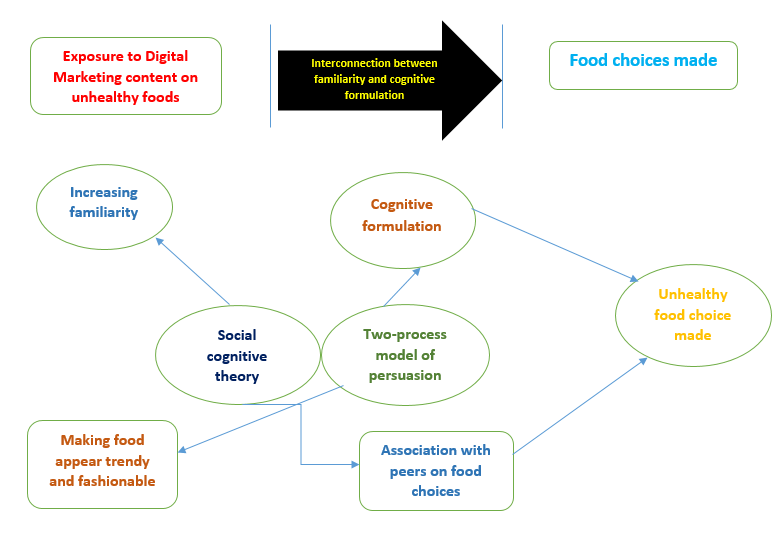
This study is formed by two essential theories that link children’s behaviours and digital marketing content. Understanding the theories behind children’s behaviour is crucial in determining the proposed solutions that work for the people. The significant theories dissecting the issue of the influence of digital marketing on food choices by minors include the social cognitive theory and the two-process model of persuasion. Figure 2 above shows a visualization of how the two theories explain how children are influenced to make unhealthy food decisions based on cognitive formulation, peer influence, familiarity, and making the unhealthy food appear fashionable.
Social Cognitive Theory
Social cognitive theory (SCT) explains how external events influence a person’s behaviour and decisions. Albert Bandura developed the SCT in 1986 as a learning theory to explain how effective learning techniques could make learning effective (Abdullah, 2019). The theory emphasizes that children shape their behaviour based on what they observe happening in their daily lives. It offers insights into how digital marketing may influence children’s food choices in New Zealand.
The theory posits that children learn quickly from observation, forming the basis of their mindset. As the children observe foods endorsed by the digital marketing sites they can access, they observe and form a concept in their subconscious mind that the foods are part of any average person’s diet. Consequently, the content of digital marketing impacts the choices that are made by children (Abdullah, 2019). The theory further insists that digital marketing helps model children’s behaviours based on a predetermined outcome. Modelling is emulating the behaviours as others and peers portray them. Children, therefore, model their behaviours based on what they see in digital adverts.
The social cognitive theory further posits that reinforcement is an essential process in solidifying the knowledge that people have learned. As children are exposed to food choices by their peers and family members because of their prevalence, digital advertising reinforces the behavior, making them prone to continue unhealthy eating, jeopardizing their health outcomes. Societal reinforcements, such as a product having many likes and comments on social media pages, may justify unhealthy food choices and jeopardize children’s health (Beauchamp et al., 2019).
The theory introduces the concepts of self-efficacy and self-regulation, indicating that people develop such skills to avoid products that are harmful to their health. Since the concepts form an individual’s behavior, impacting it using digital marketing may make the children thrive on false information, clouding their judgment and making them make poor food choices. Generally, this theory shows how children learn through observation, modelling their food behaviour, and reinforcing them through digital marketing. Consequently, it may be used to explain how digital marketing influences the food choices among children in New Zealand.
Two-Process Model Persuasion
The theory proposed by John Cacioppo and Richard Petty postulates that persuasion to decide for individuals is achieved through two routes. Exploring the routes helps us understand how digital marketing may influence children in New Zealand to make unhealthy food choices. The central route to persuasion offers an opportunity for the content to enter a person’s mind and alter the behavioural implication. In the context of New Zealand children and their exposure to unhealthy food advertising, the content, cognitive processing, and behavioural impact may be altered as the audience will view the information as helpful (Petty et al., 2023). As the children get influenced by the central route, they are likely to formulate food choices motivated by the information gathered through central processing. As the behaviours are impacted by the content of the digital marketing platforms, they may make decisions aligned with the information processed. Such exposure to the central route leads to poor food choices.
The theory offers an alternative route through which children may form their habits based on exposure. The peripheral path to inducement uses source attractiveness, such as famous cartoon celebrities, that influence kids to be used as the source of attraction. Unlike the previous central route, where the content affects the behaviour, the peripheral path uses celebrities in the children’s network to make unhealthy foods more appealing. The alternative path leverages social influence, emotional appeal, and familiarity to draw children to foods that are not only unhealthy but also a threat to their health and well-being (Teeny et al., 2021). The theories underscore that as children are exposed to more content on unhealthy foods with emotional appeal, they might believe that the foods are more appealing to them.
Research Gaps
The gaps found in the literature inform the critical decisions regarding the action to be taken. Although there is vast literature explaining the influence of digital marketing on children’s unhealthy food choices in New Zealand, the critical gaps identified in the research include the political influence and the need for localized context. This dissertation, therefore, aims to provide insights into the impact of digital marketing on unhealthy food choices.
Political Influence on the Policy-Making Process
Although there has been limited literature on cases specific to New Zealand, it can be extrapolated from the research studies in Canada and Australia that there is a heated debate on digital marketing. The proponents argue that parents and guardians must take responsibility for guiding their children to healthy food choices. On the contrary, others suggest a mechanism where a control framework should be agreed upon to ensure that exposure to unhealthy food adverts is not shown to vulnerable audiences, such as children. This research gap will be covered by analysing the role of politics in developing healthy policies and regulations to enhance the safety of children in New Zealand.
The Need for Localized Perceptions
The research studies involved diverse populations that could not reflect the New Zealand target population’s desired outcomes. The existing research provides a broader approach from a global viewpoint, and this research covers the gap by offering research in local insights and perspectives (Sing et al., 2020). There is a great need to understand the cultural variations and the ethical principles practised in New Zealand and integrate them to form a more inclusive understanding of the unique regulations of the country. This gap will be covered by providing insights from the country to allow for the creation of policies tailored to the population’s specific needs because every country has unique challenges surrounding the advertisement of unhealthy foods Watson et al., 2021). Research by Huang et al. (2020) showed that the trend where buses and advertising trucks park outside schools to target children, the students fall prey to junk food, and their healthcare outcome is jeopardized. When a localized approach is embraced, all the unhealthy and unethical advertising will be eliminated from the schools.
Localized approaches are likely to make children safer from unhealthy advertising. Research by Vandevijvere et al. (2020) posited that a healthy food environment can be made in New Zealand by ensuring no junk food exposure. Despite international rules to free marketing and advertising, New Zealand has gone against them to protect its children (Egli et al., 2023). More localized approaches must be encouraged to ensure children are exposed to helpful information. In 2019, the country’s prime minister asked children for their views about the prevalence of junk food marketing and used the views to propose policy changes (Signal et al., 2019). Public participation is, therefore, fundamental in ensuring that children in the country are safe.
Conclusion
This chapter has offered a comprehensive overview of the body of knowledge on the influence of digital marketing on food choices. The impact was understood using the theoretical frameworks that explored how children shape their behaviours based on the advertisements they view on social media and other digital platforms where marketing is perpetuated. Nonetheless, the review delved into the different ways the children are affected not only by the frequency of the exposure but also by the content, which significantly impacted modelling and reinforcing behaviours that jeopardized the health choices of the foods to be consumed.
It is imperative to note that the existing literature has portrayed digital marketing as a multifaceted and dynamic landscape through which children’s decisions are swayed and reinforced to practice unhealthy behaviours. All the research studies reviewed showed a consistent impact of digital marketing on food choices, most of which proved that it negatively affected children, and a comprehensive policy approach must be utilized to promote healthier food choices among children. The literature review exposed notable research gaps, such as the political influence and a localized approach needed to formulate better policies to influence decisions in the long run.
Methodology Design
Introduction
This chapter offered a detailed explanation of the method used to collect primary data for analysis. The selected approach was the qualitative research design because it helps determine the intricate relationship between food choices among children in New Zealand and the prevalence of digital marketing. This chapter explained the research paradigm and its rationale, and an analysis of the research design, data collection, and analysis was conducted. The chapter finally illustrates the ethical concerns maintained to ensure that the data collected was of high quality and that the investigation was authentic.
Research Philosophy and Paradigm
The selected research philosophy and paradigm determine the quality of the research. A research philosophy is the belief system that guides the researcher to collect data and make inferences (Saunders et al., 2019). This research was based on interpretivism to create a reality based on what the participants offered in the interviews.
According to Nickerson (2022), reality is subjective and depends on the context in which it is created. Interpretivism philosophy focuses on creating a new context using the participant’s experience. The selected philosophy required qualitative research because it offered an opportunity to probe the people, understanding their contexts and interpretations of their findings. The different interpretations by individuals were integrated using themes to generalise a relationship between the specified variables.
The qualitative approach was aligned with interpretivism because it allowed the researcher to investigate complex human relationships and help deduce inferences. The researchers used non-numerical data, such as observation and interviews, to capture human experience and context, and then used inductive reasoning to obtain meaning. For example, when the parents in this study shared their experience that digital marketing affects their children’s food choices, inductive reasoning was used to conclude that digital advertising harms children and must be regulated to protect children’s health.
Research Design
This study leveraged a qualitative design to understand the relationship between the main variables, food choices, and exposure to digital marketing content. A semi-structured interview was used in this study since it was appropriate for the breadth and specificity of the research issue under investigation. Firstly, inductive thinking allows one to study and comprehend thoroughly and objectively the intricate links within the research issues (Saunders et al., 2019). It supported the main research question (RQ1), which attempted to determine how unhealthy food was marketed online and how it affected children’s eating patterns and obesity rates. This method provided a thorough knowledge of these complex occurrences by allowing patterns and themes to emerge via data gathering and analysis (Kumar, 2018). Qualitative semi-structured interviews generated new insights into improving health outcomes despite the digital marketing of unhealthy foods in New Zealand.
The choice of a research design was consistent with the aims and objectives of the study. Using a qualitative approach was consistent with the study’s goals since it aimed at comprehending and analysing social processes using non-numerical data (Creswell, 2018). This method made examining youngsters’ individualised perceptions and experiences (RQ1a) impacted by social media material with food images more accessible. It enabled the researcher to deeply understand these pictures’ psychological and behavioural effects (Thomas, 2006).
Finally, the semi-structured interview approach enabled a thorough comprehension of the phenomena in its actual setting (Crowe et al., 2011), especially when investigating the potential for regulatory protection for children (RQ1b). The semi-structured interview approach was suitable for evaluating the efficacy of present legislation and possible upgrades since it strongly emphasised practical knowledge (Flyvbjerg, 2006). As the children, through their parents, explained the impact of digital marketing, their consumption behaviours were determined.
Other than examining the individual young stars and their guardians’ perceptions, this also explored the various platforms commonly used to expose children to unhealthy food choice adverts. (RQ1c) showed the key channels where children get exposed to digital marketing content, so that ways of mitigating the exposure may be charted. Further, since the country operates within the dictates of the law, policy strategies must be set aside to protect children from unethical advertisements (RQ1d). The research design further offered a comprehensive analysis of the policies and regulations that may be utilised to overcome the challenges caused by the other research methods (Grant & Kara, 2021). Once the policy framework was understood, the policymakers got a guide on formulating policies prioritising children’s health and well-being more than the business growth strategies.
Justification of Research Design
The need to fully comprehend the complex effects of internet marketing on kids’ consumption of unhealthy foods justified the use of a qualitative research approach for this study. The study questions sought to understand how children’s actions and perceptions are subtly impacted by digital marketing, which may best be addressed through qualitative methodologies (Creswell, 2018). When examining how food picture material on social media influences children’s consumption behaviour, qualitative research allows for examining subjective experiences and interpretations (RQ1a).
It strongly emphasised deciphering metaphors and comprehending human behaviour in its social setting. It gave the depth necessary to understand the complex psychological and behavioural components of kids’ reactions to digital food marketing (Thomas, 2006). The research design was more appropriate because it allowed for probing and getting more information, solidifying the relationship between the variables.
People’s opinions form an essential part of the data collected and help connect with the realities of the relationship between the variables. A semi-structured interview technique was most appropriate since it allowed for a thorough, comprehensive description and examination of a particular unit or system (Flyvbjerg, 2006). Using various data sources could “bring out” the specifics from the participant’s point of view (Yin, 2009). The semi-structured interview technique permitted the examination of current regulatory measures in the unique context of Aotearoa, New Zealand, concerning the research question (RQ1b) vis-à-vis how children may be better safeguarded from potentially harmful marketing.
Sampling and Data Collection
The non-probability selection strategy known as “snowball sampling,” which was chosen for this study, involved the researcher selecting a small number of participants (in this case, parents of children aged between 4 and 14) who subsequently referred further potential participants (Willig, 2017). The recommended number of interviews for a qualitative investigation was 5 to 25 (Bekele & Ago, 2022). This approach was constructive, especially for populations directly affected or whose definition could be more straightforward, such as parents worried about how digital marketing may have significantly affected their kids’ eating habits (Hadi & Closs, 2016). The questions were intended to gather information about parents’ perceptions of how their kids respond to digital food marketing, how social media food image content affects kids’ food preferences, and how they felt about current and potential laws that would shield kids from potentially harmful marketing (Hickson, 2016). Snowball sampling was selected because it is cheaper, easier to understand, and easier to plan for the data collection techniques.
The semi-structured questions allowed the researcher to explore particular topics and offered more subtle insights. For instance, the researcher examined parents’ perceptions of the digital influence on kids’ eating habits by asking them, “How do you see the impact of food picture material on social media on your child’s eating habits?” (Alase, 2017). What laws or other actions would be most helpful in preventing children from being exposed to possibly harmful marketing? Such open-ended inquiries allowed parents to openly express their views and provide insightful qualitative data for the study (Siggelkow, 2007).
This research also leveraged openly accessible data such as publications, reports, and web pages as secondary data to compare with the provided information (Gray et al., 2020). The interviews were conducted in a Teams meeting, especially in a conducive environment that was age-appropriate. When the participants were interviewed in comfortable environments and at their convenience, the data provided was more accurate and served the purpose of the study.
Target Population and Sample Size
The population targeted by the study included parents or guardians of children aged between 4 and 14 years. The number of participants selected for the study was ten to allow for the collection of diverse views on the impact of digital marketing on the food choices made by the children (Husband, 2020). The selected sample was relevant because of its criticality in offering a detailed understanding of the impact of digital advertising on food choices, as people will share their personal experiences.
Data Collection Tools
The primary data collection tool leveraged for the study was the semi-structured interviews, where the participants were allowed to share their experiences and opinions to be recorded for further analysis. The tool was relevant and in tandem with the research objectives since it offered a flexible approach through all topics related to the impacts of digital marketing and food choices (Adeoye‐Olatunde & Olenik, 2021). The semi-structured interview is a tool that combines pre-set and open-ended questions that allow the interviewees to express their opinions on the impact of digital marketing on their food choices.
Data Collection Procedure
The researcher followed a predetermined procedure to collect data from the participants. The first step was collecting a letter of introduction from the business school, a guide to approaching the parents or guardians. Once the target population was approached, consent was sought first, and then interview meetings were planned to ensure adequate privacy and the respondents’ convenience for the data collected to be of high quality (Alamri, 2019). Once the date and time for the interview were set, the researcher arrived at the venue on time and ensured that the participants were psychologically ready to be interviewed. In the cases where online meetings were proposed, the technological tools and equipment were prepared one hour before the set interview to ensure that the session was not interrupted by technical hitches.
Data Analysis
Thematic analysis was employed as the significant data analysis technique, which sorted information based on the themes derived from the responses. The Braun and Clarke framework was leveraged to ensure the data was grouped into its relevant category for inferences. According to the framework developed by Braun and Clarke, thematic analysis was made possible by following a sequence of events such as familiarisation with the data, generating codes, searching and reviewing themes, defining and narrating them, and finally reporting (Clarke & Braun, 2021).
Transcribing the answers in the semi-structured interviews into written text for analysis was the first step in the data analysis process. The replies were read several times to guarantee comprehension of the material and pinpoint the initial emergent themes. Inductive coding was used in this study, allowing pieces to emerge organically from the data rather than using preconceived categories (Thomas, 2006). Each piece reflected a typical pattern or notion across the data collection (Navalta et al., 2019). As responses were categorised into themes, it became easier to understand and formulate inferences based on the research outcomes.
Through “member verification,” a sample of participants was asked to confirm the veracity of the generated themes and their interpretations, and the analysis’s objectivity was guaranteed (Creswell, 2018). This technique was essential because it could make the results more credible. The process of “triangulation,” which entailed correlating the findings from the comprehensive literature analysis with the data from the interviews, increased the study’s validity. Triangulation strengthened the validity of the data and its interpretation, as well as the resilience of the research (Kumar, 2018). The validity and reliability of semi-structured interviews were proven by how the participants’ opinions were comparable to the existing statistics. As the researcher subdivides the data into themes, it will likely develop inferences.
Additionally, “thick descriptions” improved transferability, giving readers enough background to assess how effectively the results could be applied to different situations or populations (Creswell, 2018). Finally, the dependability problem was addressed by ensuring the data collection and analysis procedure was well-documented and repeatable. To increase the reliability of the study, the researcher kept a reflective notebook outlining each stage of the research procedure (Saunders et al., 2019). The analysis process was efficiently conducted when all the occurrences and observations were recorded in the notebook.
Ethical Considerations
Any research involving human participants must take ethical issues seriously. First and foremost, informed consent was crucial, so participants were provided with an information sheet (see Appendix 1) and a consent form (see Appendix 2). Participants were thoroughly informed of the study’s goals, requirements, potential advantages, and dangers, as well as that participation was entirely voluntary and they had the right to discontinue at any time (Creswell, 2018). The study’s design made parental approval necessary as well.
Secondly, the importance of secrecy and privacy cannot be overstated. The researcher assured participants that their names would not be revealed at any stage during or after the study (Lampard & Pole, 2015). All data gathered for the study was securely saved, and was only available to the researcher and supervisor. Informed consent was an essential ethical consideration that made the participants aware of the exercise and offered to give accurate data for the analysis.
Thirdly, the researcher must know that power dynamics might influence participant responses. This was lessened by developing a relationship and ensuring the setting for gathering data was relaxed and judgment-free (Lampard & Pole, 2015). When discussing their children’s eating habits, some individuals would feel uncomfortable or distressed due to the subject. The researcher ensured that these talks were conducted delicately and respectfully (Saunders et al., 2019).
Since the research involved young children, the approach selected for the interviews contained child-friendly questions, which made them feel safe and free to share their experiences while maintaining their children’s confidentiality. The principle of beneficence was an essential ethical consideration that determined the viability of research (Char et al., 2020). When dealing with children, deception was eliminated because it could have led to biased information.
Data security and privacy were important when interviewing parents on issues affecting their kids. The researcher ensured that the data collected was safe and could only be accessed by authorised people. When the information could have been leaked or fallen into the wrong hands, it could cause damage to the people.
Further, respect for autonomy was also assured to ensure that the participants had the right to exit the study at will without making any payments whatsoever (Husband, 2020). Once the ethical issues were well understood, the data collection was flawless, and high-quality data was achieved. When reporting the research findings, transparency was critical to ascertain that the data was well-represented and reported without jeopardising the children’s privacy.
Conclusion
Chapter three offered a comprehensive overview of how data was collected and analysed. It helped set the pace by selecting the interpretivism research philosophy, which formed the basis of creating a context by collecting non-numerical data. The research philosophy and paradigm were justified because of the need to understand the phenomenon through real-time experience by interviewing parents of kids aged 4-14.
The collected data from the interviews were analysed using thematic analysis through the Braun and Clarke framework. The ethical considerations ensured that the participants in the study were comfortable with ensuring high-quality data. The findings from the thematic analysis informed the inference on the relationship between digital marketing and food choices among children in New Zealand.
Findings
This section provides the key findings from the analysis of the primary data generated by the study participants. Generally, all participants expressed concerns about the impact of digital marketing on their children’s food choices. They were aware of the dangers of excessive consumption of junk foods. They expressed concerns that they could not control their kids’ views on the digital platform and called for a multifaceted approach to tackling the problem.
Specific findings are detailed below and arranged within the specified research questions. It is imperative to note that although there were numerous probing questions under the six themes of inquiry, only one question from each section was included in this section to understand the impact. The respondents were coded to enhance privacy and anonymity.
Theme 1: Usage of Digital Devices Among the New Zealand Children
The usage of digital devices is a central theme in the research because it determines how New Zealand children are exposed to digital advertisements. The probing questions not only investigated the exposure but also the frequency with which the devices were used to influence consumption decisions. All participants in this category responded that their children had at least one source of digital communication tools. While some stated that it was a school requirement to have digital devices for classwork, others indicated that their children used their tablets at home. Some responses are as shown. Table 1 below shows the most commonly used digital devices and the sites that perpetuate the unhealthy advertisements.
Table 1 – Nvivo Summary on the Most Used Digital Devices
“My younger one uses digital devices for about two to three hours daily, primarily on a tablet. They do watch a bit of TV, but it is the iPads that keep them occupied.” (Participant 3)
“Digital devices like phones, computers, and tablets are an integral part of their daily routines. They rely on these devices for schoolwork, leisure activities, and everything in their lives.” (Participant 6)
The responses show that the children in New Zealand are highly exposed and have at least one avenue through which they are exposed to digital advertisements. Since most digital advertisements are run on the internet, the exposed children are at high risk.
Theme 2: Awareness of the Impact of Digital Marketing on Children’s Food Choices
Awareness is a state of knowledge of how particular phenomena are caused. The second question investigated whether parents were aware of the impact of exposure to digital advertisements on their food choices. The responses to the question of whether digital advertisements had an impact on children’s food choices showed a positive correlation.
All participants agreed that digital marketing had a significant impact on the food choices their children made. Based on their response, it could be concluded that the marketing methods directly impacted the food choices, as children wanted to try what they had seen in the advertisement. The excerpts below show responses from two participants on the impact of digital advertisements on food choices.
“They find the ads very appealing and are tempted to try unhealthy foods. It can be challenging to counteract the influence of these advertisements.” (Participant 8)
“Children frequently follow vloggers on platforms such as YouTube who sell different toys and items, particularly those associated with popular superheroes such as Spider-Man and Batman, and this advertising may make youngsters want these products” (Participant 7)
The strategies used by marketers, such as employing vloggers and cartoon superheroes, convince children to try new foods. Consequently, as the ads become appealing, the children’s food choices are impacted. Parents and guardians are aware of the negative impacts of digital advertisements on unhealthy food choices.
Theme 3: Nature of the Advertisements and their Influence on Consumption Behaviour
Digital advertisements utilize various images and pop-ups to influence young stars. The third section also provided insights into how the digital media advertisements impacted the children’s food choices. This section provided a contradiction to the generalization that all advertisements had a positive impact on food choices. One of the participants stated that their child was motivated by the promotion of unhealthy foods to make healthy food choices. The findings from the eighth participant indicate that it is possible to raise health-conscious children and help them make informed decisions about healthy food despite the pressure to opt for unhealthy options. The excerpts below show the responses on how the image and video techniques used by the advertising agencies impact children’s food choices.
“If they have watched an advertisement of McDonald’s promoting their Happy Meal, and they want to eat a Happy Meal just because of the toy.” (Participant 1)
“These marketing techniques affect children’s food and beverage preferences and choices.” (Participant 4)
“My son is health-conscious and actively searches for healthy food choices on YouTube and Google.” (Participant 8)
Theme 4: Parental Strategies and Challenges
The fourth theme was the strategies employed by the parents to protect their children from the unhealthy advertisements. This section was crucial as it generated insights into what could be done to reverse the unhealthy trend. While the majority of the parents stated that the buck stops with them in training their children, they regretted that they could not entirely control what their children viewed on the digital platforms. They claimed that while the digital transformation has made it easier for children to access unhealthy food advertisements, they cannot do away with digital devices, as they help them learn and advance academic outcomes.
The majority of the parents stated that they have limited control over whether their children are viewed, especially when they are studying using the digital devices at their disposal. However, one parent stated that they had utilized applications that helped restrict their children’s access to unhealthy food advertisements. However, the main challenges affecting them were that the children had the freedom to interact with others at school and could be exposed to junk food advertisements by their friends.
“In all honesty, there aren’t many precautions to consider.” (Participant 7)
“I’ve implemented some strategies to safeguard my child from online marketing by restricting certain websites and apps.” (Participant 5)
Theme 5: Knowledge and Support for Comprehensive Regulations
This section focused on whether New Zealand had appropriate laws to restrict unhealthy advertisements that jeopardized children’s consumption behavior. This section aimed to determine whether New Zealand was proactive in establishing regulatory standards to protect minors from unethical advertisements. The research findings contradicted the study inferences by Abdullah (2019), which stated that New Zealand had strict laws governing the management of advertisements.
Most parents stated that there were little to no restrictions and that they had to take full responsibility for protecting their children’s consumption behaviors. New Zealand has inadequate laws protecting children from unhealthy food advertisements. Table 2 below summarizes the NVivo findings on the effectiveness of the regulatory standards. It further proposes the most effective ways to protect children from unhealthy digital advertisements that influence their junk food choices. The finding that there are no restrictions suggests that New Zealand is moving in the wrong direction, and digital advertisements must be regulated to reverse the childhood obesity trend.
Table 2 – Nvivo Summary on the Effectiveness of Regulatory Strategies
“I’m not aware of any specific legislation or limits that would successfully safeguard youngsters from harmful food marketing.” (Participant 5)
“There are no restrictions.” (Participant 2)
“I believe education is more key than relying solely on restrictions” (Participant 6)
Theme 6: Proposed Solutions to the Advertisement Challenge
The limited regulation prompted a new question on the most effective strategies to protect children from unethical advertisements. This section aims to provide a collective response on what can be done to ensure children are safe from all unhealthy and unethical advice. All parents agreed that a multidisciplinary approach was needed to overcome the challenges. Both the parents, advertising agencies, and the government should come together to ensure that children are protected. However, the most frequently recommended approach was that education and awareness were vital in saving the children. The participants believed that once the children were educated and made aware of the dire consequences of unhealthy advertisements, it would be possible to influence their choices and encourage them to make healthy choices. The three excerpts from the digital advertisement highlight the importance of a collaborative approach in overcoming the challenge of unethical digital advertisements targeting children.
“Addressing the detrimental impacts of internet marketing on children’s food choices and health, in my opinion, should include education and awareness.” (Participant 5)
“If individuals possess the necessary knowledge, they can enhance their ability to distinguish and make more informed choices.” (Participant 7)
“Education is key, and it is a coordinated effort involving various parties that can help address this problem effectively.” (Participant 2)
According to the research findings, a more inclusive approach should be adopted to protect the children. While the government puts forth restrictions, parents must ensure their children are protected from unhealthy advertisements. The advantage of the collaborative approach is that the interests of the children will be protected.
Discussion
Introduction
This fifth chapter is the juncture at which the research findings are compared with the literature that has been reviewed. The analysis of the interviews is presented and compared to the literature to address the gaps and contradictions in the studies. The chapter is organised based on the research objectives and the questions.
The study’s overarching aim was to investigate the influence of digital marketing on children’s choices of unhealthy food in New Zealand. It was, however, broken down into research questions to guide the research and ensure that it follows a logical trajectory. Before delving into the main research aim of the impact of digital marketing on food choices, it was essential to establish the background, including whether children were aware of and exposed to digital marketing platforms that conveyed unhealthy messages. The platforms’ availability, which informed New Zealand children about the unethical advertisements and promotion of unhealthy foods, was the first part to be addressed.
Awareness of Digital Marketing in New Zealand
The influx of technological advancements in New Zealand and the global sphere has increased children’s exposure to unhealthy food choices. All the parents interviewed agreed that their children had access to technology devices where they were exposed to unhealthy food choices through images and videos to lure children. The findings align with the research conducted by Tatlow-Golden et al. (2021) and Shen et al. (2022), which suggests that almost all children have access to at least one avenue through which they can encounter unhealthy food advertisements. The study concluded that all children in New Zealand have at least one avenue through which they receive unhealthy food adverts, such as phones, tablets, television, and their peers in school (Vandevijvere et al., 2020). Further, all the parents also agreed that shielding their children from unhealthy food models is practically impossible.
The study’s selected population consisted of students in primary and secondary schools, as outlined in the New Zealand educational curriculum. The country’s digital transformation provides children with access to at least one digital device to support their studies, such as accessing school libraries and online resources. The children’s exposure to the Internet aligns with the findings by Vandevijvere et al. (2020) that the education system has exposed children to the Internet. Consequently, digital market marketers take advantage of this to expose children to unhealthy foods and encourage them to choose these over healthy options. Parents in the interviews emphasized that digital marketing is increasing rapidly as fast food joints strive to gain a competitive advantage and consider children their primary target.
The Influence of Marketing on Food Choices Among Children
The central aim of this study is addressed in the research question. It aims to investigate the connection between exposure to advertisements and unhealthy food choices in the country. Although previous research by Kelly et al. (2021), Meléndez-Illanes et al. (2022), Théodore et al. (2021), and Driessen et al. (2022) asserted that all children are influenced by digital marketing, the findings of this research showed a different trajectory.
The results show that although most children are affected by imagery, food images, and videos, a rare kind of child is motivated by unethical advertisements to search for alternative, healthy foods. One parent responded that the ad encourages her child to search for healthy foods and prepare some in the kitchen. However, the majority of parents agreed that their children’s unhealthy food choices were attributed to exposure.
The parents in the interviews were clear that the children are exposed to unhealthy food choices and must be protected from unethical advertisements. The findings from research by Lavriša & Pravst (2019), Vandevijvere et al. (2019), and Norman et al. (2020) indicate that the presence of digital advertisements in the country poses a risk to children, thereby exposing them to health threats. This research, therefore, aligns with others in asserting that unhealthy and unethical advertisements pose a significant public health threat in New Zealand.
Although the interviews offered a different trajectory by stating that one child was motivated by the unhealthy food adverts to search for and locate healthy alternatives, a dangerous course was observed. There is a direct proportionality between exposure to advertisements and children’s food choices. Since all children are exposed to unhealthy advertisements due to the digital transformation in schools, they are all at risk from the availability of educational materials connected to the Internet.
The study findings by Meléndez-Illanes et al. (2022), stating that the threats associated with unhealthy foods are on the rise, were confirmed by this study. Generally, the children’s food choices are formed based on the information they receive from the Internet. It was the primary reason why KFC and other food outlets are more popular among children in New Zealand compared to healthier alternatives.
Parenting Strategies and Their Challenges
This section aimed to determine whether parents had effective strategies to mitigate the threat posed to their children. The parents believed that a one-size-fits-all strategy was needed to address unhealthy food choices. 100% of the participants in the interview agreed that the bucks stop with the parents, as it is their sole responsibility to ensure that their children are safe.
The parents’ responses aligned with Albert Bandura’s social cognitive theory, which posits that a child’s surrounding environment determines their learning, and whatever they observe becomes part of their knowledge base (Abdullah, 2019). However, the children’s learning environment for school-going kids has other players, such as teachers, peers, and the Internet, which decentralizes learning and allows children to gain knowledge from numerous avenues. Parents in the interviews, therefore, used the diversified learning environment as one of the challenges affecting their strategy to control their children’s feeding behaviours and food choices.
The different levels of exposure facing New Zealand kids require a multifaceted approach. The parents participating in the interviews agreed with the research by Lavriša & Pravst (2019) that a multidisciplinary approach is necessary to protect children from various levels of exposure. For example, 70% of parents agreed that being strict with their children is not effective, as it will lead them to consume junk food in secret.
Furthermore, denying them money to buy junk food was not the solution, as they could obtain it from their peers. On the other hand, they also stated that educating their children on healthy food choices may be ineffective since the kids’ level of cognitive reasoning may not be sufficient to grasp the knowledge. Therefore, they proposed a mixed strategy of being strict and offering education to ensure that the children are always safe from unhealthy foods.
The parents believed that once the children are educated on the dangers of consuming junk food and there is strictness on the part of parents and teachers, the threats posed by unethical advertisements would be eliminated. Children in New Zealand will be healthy. The parents also faced a challenge in the lack of control to stop advertising companies from promoting their businesses, as this was not considered illegal. The participants unanimously agreed that the regulatory authorities must help them protect their children from unhealthy advertisements.
The parents further expressed their understanding of the importance of healthy meals in the kids’ growth and development. Despite their exposure to junk foods, the parents seemed aware of the healthy food choices available for the children, underscoring the importance of the options. The findings aligned with the research conducted by Mackay et al. (2022), which posited that although parents are aware of the healthy diets that should be consumed, they are often exposed to unhealthy meals. One of the proposals by the parents was to ensure that children in boarding schools are restricted to eating a balanced diet, which both the parents and nutrition experts have approved. However, parents’ challenges in ensuring that their children eat healthy meals include peer pressure and exposure to different people who may offer junk foods, such as KFC fries and Pepsi, to the children.
Strategies and Regulations in New Zealand
The presence of unhealthy food advertisements in the country raises questions about whether adequate regulatory measures are in place. The research question on strategies to protect children from unhealthy food advertisements was informed by the findings of Coleman et al. (2022), who stated that there is a need for laws to regulate advertisements, ensuring that unhealthy foods are not promoted. Parents in the interviews unanimously agreed that there exist advertisement restrictions on alcohol and tobacco, but none exist on the control of junk food. They lamented that while smoking has a warning that excessive consumption leads to lung cancer, alcohol states that it should not be sold to children under 18 years, and also includes a disclaimer that it causes liver cirrhosis.
The absence of a warning from junk food stores such as KFC and McDonald’s that it causes obesity and other lifestyle diseases constitutes unethical advertising. The parents believe that fast food restaurants should provide children with healthy warnings to shield them from the conditions that may affect them. The parents’ assertions in the interviews align with the findings by Mackay et al. (2022), which state that although junk food is not prohibited in New Zealand, marketers must recognize the danger it causes to public health, particularly as childhood obesity is skyrocketing. Since unhealthy food choices are one of the risk factors for obesity, they should have warnings like consumption of junk food must be avoided, or followed by rigorous exercise to burn the excess calories. However, failure by the companies to restrict and warn the children makes them unethical and poses a significant danger to their health.
The parents are not satisfied with the New Zealand government’s current restrictions to protect children from unhealthy food choices. The findings are further aligned with the arguments provided by Nanchahal et al. (2022), who state that New Zealand has inadequate policies on junk food compared to its control over alcoholic drinks. Consequently, the country has experienced an exponential growth of the industries and firms trading junk food.
Parents lament that whenever there is a party at home, the first thing that comes to their kids’ minds is fast food stores, such as KFC, for fries and chicken. The level of interest among children in junk food advertisements indicates an increased momentum in marketing. The unhealthy adverts and the lack of adequate policies to regulate junk food make children more vulnerable to obesity and other lifestyle diseases, hence jeopardising their quality of life in the long run.
The parents desire that the government set restrictions on the advertisers to ensure that they always adopt ethical means and avoid targeting children because they lack the mental capacity to reject junk foods based on health concerns. The parents’ dissatisfaction aligns with the findings by Chung et al. (2022), which posited that the increase in junk food availability and advertising is a result of poor regulatory measures in the country. The country must always ensure that corporations that market junk food adopt ethical practices in their advertising.
Proposed Solutions to Overcome the Challenge
The parents proposed an array of measures that could be utilised to overcome the sale of junk food in the country. The recommendations offered by the parents shed more light on policymaking and the formation of regulations to protect children. The suggestions align with findings by Lavriša et al. (2020), Sing et al. (2022), da Silva et al. (2022), and Ertz & Le Bouhart (2022), who argue that addressing the problem of junk food in the country requires a multifaceted and multidisciplinary approach. Different stakeholders, including parents, guardians, nutritionists, and regulatory agencies, must protect children from unhealthy food advertisements. Since social media is one of the most utilised avenues for advertising unhealthy foods to children, parents must also initiate a social media movement to counteract the posts promoting unhealthy foods that have negative health implications for children.
The parents further proposed a more inclusive approach to ensure children are safe from unhealthy advertisements. Their proposals aligned with the study by Saha (2020), which underscored the need for a multifaceted approach to improving healthy food choices. 50% of the respondents proposed that there should be more education and awareness programs to help children make healthier choices.
However, 20% of the parents suggested that there should be stricter regulations stopping the children from accessing junk food. The argument was based on the fact that, although parents cannot control their children’s views on social media platforms, they often provide them with the money to purchase junk food. The presentation by the section of parents proposing stricter regulations aligns with the findings by Vergeer et al. (2019), who posited that strict regulations are a necessary measure to ensure children are safe from unhealthy food choices.
The authorities and regulatory agencies were also mentioned as part of the strategy to protect children from exposure to unhealthy foods. Although there is no law prohibiting the consumption of junk food in the country, it should be regulated to ensure that children remain healthy (Granheim et al., 2022). It is imperative to note that when there is a collaboration between parents and the industry producing junk food, parents must work together to ensure their children’s safety.
The parents proposed a mutual agreement on what could be shared in the advertisements before they are aired. Whenever the industry players offer to advertise junk food targeting children, they should be liable to punishments such as having their licenses cancelled. The proposals from the parents are aligned with a study by Sacks and Looi (2020), which revealed that regulations and restrictions help advertising companies advertise responsibly. Whenever the regulations restrict unethical advertisements, children will be saved from the pressure to make unhealthy food choices.
Conclusion
This fifth chapter connected the qualitative research findings and the existing literature. The results may be extrapolated and generalised for parents and policymakers to protect children from unethical advertisers. Generally, the findings aligned with the research expectations, and all the research questions were effectively answered.
The fifth chapter summarised the problem of unhealthy food choices in the country into three distinct parts. The first part is massive exposure to digital platforms through the use of televisions, school devices such as tablets and laptops, and physical advertisements. The second part is that exposure directly impacts the choices made by children, and as they are more exposed, their food choices worsen. Finally, fewer regulations and laws put children at more risk. The parents called for a multidisciplinary approach to address the challenge of their children’s unhealthy food choices, as there is no one-size-fits-all solution to the complex problem.
Conclusion, Limitations, and Future Recommendations
Theoretical Contribution and Managerial Implications, and Recommendations to Policy Makers
The research aim was to investigate the impact of digital marketing on children’s food choices in New Zealand. The findings can inform policies that, in turn, help ensure children’s safety and protection from digital advertisements. The study found through interviews that the children in New Zealand were all aware of one or more avenues where unhealthy foods were marketed. For example, school-going children of the selected age are exposed to tablets, mobile phones, and social media platforms, which increase their risk.
Generally, children in New Zealand are exposed to multiple sources of content that promote unhealthy food choices. The findings by Granheim et al. (2022) align with research that indicates all school-going children are exposed and therefore require protection to ensure their safety from lifestyle diseases. The level of exposure is high among the children, and they are therefore prone to getting more messages, images, and videos that promote junk food.
Furthermore, New Zealand children are exposed to advertisements both consciously and unconsciously. Research by Ozkara & Bagozzi (2021) characterizes conscious advertising as the ability to understand the customer’s interests and capitalize on them to sell products. Examples of conscious advertisements are those shown on television, promoting junk food, such as the standard advertisement from KFC, which encourages children to enjoy the ‘finger-licking good’ package. The unintentional viewing of unhealthy food advertisements is prevalent on the Internet when children access educational materials. This study, therefore, concludes that New Zealand children are facing a significant danger of exposure to unethical advertisements that may cloud their judgment when selecting healthy meals in their food choices.
The research further revealed that marketing professionals exploit children’s attraction to colourful foods to package their products and win their attention. Digital marketers, therefore, capitalize on children’s interests, such as cartoons, to design posters, images, and advertisements that are appealing to them, thereby making them more susceptible to unhealthy foods (Sacks and Looi, 2020). The marketing strategies employed by junk food marketers have a lasting impact on children’s food choices, making them prioritize unhealthy options over healthy ones, such as cereals, whole grains, and vegetables.
Children are easily convinced that junk food is the best option for enjoying meals. The response revealed that unethical advertisements hurt the majority of children, leading to unhealthy food choices due to constant exposure to digital advertisements. The research, therefore, posits that there is a direct relationship between the advertisement and the unhealthy food choices children make.
Exposing children to unethical junk food advertisements increases their susceptibility to childhood obesity (Mohammadi-Nasrabadi et al., 2020). Since children in New Zealand are exposed to numerous avenues through which unhealthy foods are advertised, and this has a direct impact on their food choices, it is considered a public health concern, as children will likely suffer from lifestyle diseases such as obesity when the advertisements continue.
The research findings suggest a direct relationship between the advertisement and unhealthy food choices among children. The strategies employed by digital marketers have the potential to persuade children to choose junk food over healthier options. Further, since all the children in New Zealand have direct exposure to digital marketing, it means that the children are under threat, and childhood obesity is likely to increase unless the trajectory is reversed. The children are vulnerable to obesity and other diseases that set in due to junk food, such as being overweight and having cancer.
Unfortunately, there are no precise government regulations in the country that regulate the advertisement and consumption of unhealthy foods. The parents have limited authority over their children’s consumption of healthy meals, as they spend a significant amount of time at school. Taking advantage of children’s likes to jeopardize their health through unhealthy food advertisements is considered unethical (Tatlow‐Golden et al., 2021). The vulnerability is higher because junk foods are not declared illegal in New Zealand, and age restrictions have not been developed to protect minors.
The parents further underscored the need to include laws to protect children from unethical advertisements. The parents emphasized that although junk food is not prohibited by law, there is a need to ensure that children are protected from exposure to unhealthy food advertisements. The participants’ responses were aligned with the findings by Mohammadi‐Nasrabadi et al. (2020).
There is a need for collaboration among stakeholders to protect children from unethical advertisements. Generally, the study posits that various approaches can be effective in combating the unhealthy food choices made by children in New Zealand. Generally, the scrutiny of national regulations has stated that the country has yet to adopt inclusive regulations to protect children from unhealthy advertisements.
Limitations
Recognising any research’s possible limitations was critical, as it provided a framework for comprehending and interpreting the findings after all the limitations had been addressed. The sample size and sampling method were to blame for the first restriction, which was the inability to generalize the study to other populations. Small sample sizes and snowball sampling may limit the applicability of the results (Hadi & Closs, 2016). The study’s findings may partially reflect the opinions or experiences of the larger population, as they were based on the particular experiences and viewpoints of the selected parents from New Zealand.
Second, the researcher’s subjectivity and potential biases could influence the interpretation of the results (Lampard & Pole, 2015). Self-reported experiences from participants were primarily relied upon in this research, which created bias and could not fully portray the scenario because of the parents’ emotional attachment to their children (Queirós et al., 2017). Once the limitations were acknowledged, it became easier to overcome all the challenges and achieve the benefits of the research.
Finally, a semi-structured interview as a research design has its own set of constraints. The semi-structured interview helped the researcher develop hypotheses, but needed to be more successful in their verification, as Flyvbjerg (2006) stated. The findings from this study thus became very context-specific and less generalisable. While admitting and resolving these constraints showed the rigour and integrity of the research process, it further impacted the study findings (Adlakha et al., 2021).
The results provided a basis for directing future studies in this field by highlighting possible areas for improvement. It was also challenging to develop semi-structured interview questions as it required a high level of professionalism (Suri, 2020). It was also important to note that the selected method was prone to bias, as the people under investigation could have intermittent inclination, which needed to be understood before the inferences were made.
Interviewee comfort was an essential factor that could have limited the effectiveness of the research. For example, there were some topics that the interviewees needed more time to prepare to answer due to cultural factors, such as body shaming. In that case, it could have led to hiding some crucial information.
The limitation was avoided by ensuring that the interviewees were comfortable. The need for quantification of data was a significant limitation, as the provided data was highly qualitative and could not be quantified for detailed analysis (Char et al., 2020). Unlike quantitative research, which often involves a large number of participants, the logistical requirements for qualitative research typically result in a smaller sample size, making it difficult to generalize the findings.
Recommendations for Further Research
The challenges cited by this research, such as increased exposure and ineffective, unethical food advertisements targeting children, pose a significant threat to their health and well-being. Since a contradiction exists in the regulatory practices posited by Tatlow-Golden et al. (2021), who claimed that New Zealand has effective regulations, further research should be conducted on the effectiveness of the existing policies. Furthermore, the findings by Shen et al. (2022), which are supported by the study’s results, underscore the need for a more tailored approach to addressing the challenges.
The specific areas where research needs to be conducted include the role of parents in protecting their children from unhealthy advertisements despite exposure. Furthermore, the role of government in regulating unethical advertisements for unhealthy foods is necessary to ensure a clear statement on who has the mandate to protect children, as proposed by Lavriša et al. (2020). Finally, the collaboration between marketers, regulators, and customers should be examined to ensure a clear understanding of the multidisciplinary approach to addressing unhealthy food advertisements.
This research is an essential resource for both public health practitioners and forms the prerequisite for furthering research on methods of protecting children from unethical advertisements. Since New Zealand children are vulnerable to childhood obesity because of advertisement-influenced food choices, a multidisciplinary approach is proposed to shield them. The recommendation to adopt a multidisciplinary approach is supported by Mohammadi-Nasrabadi et al. (2020), who posited that holding each stakeholder accountable is likely to improve outcomes. The recommended research on shielding will be developed in three prongs: the role of government in controlling advertisement content, the formation of the advertisement standards, and offering healthy eating as a sub-unit of the health education taught in New Zealand schools.
The first prong will shed light on how the government may impose advertisement restrictions without jeopardizing the rights to trade, as the food industry is one of the major contributors to the economy. The second point will be instrumental in evaluating how the advertisement can be standardized to ensure that all food advertisements are formulated to protect children. Finally, promoting school educational programs that encourage healthy diets will complement parents’ efforts to educate their children on the importance of eating healthy meals.
A collaboration between parents, government agencies, and marketers is key to ensuring that businesses thrive without jeopardizing the children’s lives. According to da Silva et al. (2022), collaboration will advance the interests of all the parties, and the parents will therefore propose ways that protect children. Marketers may, for example, adopt strict strategies when promoting high-calorie foods with a higher sugar content. Limiting advertisements to children will allow them to explore healthier alternatives. Furthermore, food marketers can replace advertisements for junk food with narratives promoting healthier foods, such as fruits, vegetables, and whole grains, which are known to support children’s growth and learning.
Furthermore, advertisements for junk food should also include disclaimers stating that they increase the risk factors for obesity and, therefore, require regulation. If every stakeholder plays their role in auditing the advertisements to make them age-friendly, children will be further safe at all times (Ertz & Le Bouhart, 2022). Parental controls may be included in the advertisement to ensure that the ads continue to be streamed while protecting children from the content. When there is parental guidance for children under the age of 14, for example, they will not be able to access the advertisement, and their health will not be jeopardized in the long run. When key players in the food network are involved in control measures, children are more likely to make healthier food choices, thereby increasing their safety.
References
Abdullah, S. M. (2019). Similiarity artikel: Social cognitive theory: A Bandura thought review published in 1982-2012. Journal Psikodimensia, 18(1), 85-100.
Abell, A., & Biswas, D. (2022). Digital engagement on social media: How food image content influences social media and influencer marketing outcomes. Journal of Interactive Marketing, 58(1), 1–15.
Adam, M., Ibrahim, M., Ikramuddin, I., & Syahputra, H. (2020). The role of digital marketing platforms on supply chain management for customer satisfaction and loyalty in small and medium enterprises (SMEs) at Indonesia. International Journal of Supply Chain Management, 9(3), 1210-1220.
Adeoye‐Olatunde, O. A., & Olenik, N. L. (2021). Research and scholarly methods: Semi‐structured interviews. Journal of the American college of clinical pharmacy, 4(10), 1358-1367.
Adlakha, D., Chandra, M., Krishna, M., Smith, L., & Tully, M. A. (2021). Designing age-friendly communities: exploring qualitative perspectives on urban green spaces and ageing in two Indian megacities. International journal of environmental research and public health, 18(4), 1491.
Alamri, W. A. (2019). Effectiveness of qualitative research methods: Interviews and diaries. International Journal of English and Cultural Studies, 2(1), 65-70.
Alase, A. (2017). The interpretative phenomenological analysis (IPA): A guide to a good qualitative research approach. International Journal of Education and Literacy Studies, 5(2), 9–19.
Ali, BJ, & Anwar, G. (2021). Marketing Strategy: Pricing strategies and its influence on consumer purchasing decision. International journal of Rural Development, Environment and Health Research, 5(2), 26-39.
Beauchamp, M. R., Crawford, K. L., & Jackson, B. (2019). Social cognitive theory and physical activity: Mechanisms of behavior change, critique, and legacy. Psychology of Sport and Exercise, 42, 110-117.
Bekele, W. B., & Ago, F. Y. (2022). Sample size for interview in qualitative research in social sciences: A guide to novice researchers. Research in Educational Policy and Management, 4(1), 42–50.
Boelsen-Robinson, T., Backholer, K., & Peeters, A. (2015). Digital marketing of unhealthy foods to Australian children and adolescents. Health Promotion International, 31(3), 523–533.
Boyland, E. J., & Halford, J. C. G. (2013). Television advertising and branding. Effects on eating behavior and food preferences in children. Appetite, 62, 236–241.
Bu, Y., Parkinson, J., & Thaichon, P. (2021). Digital content marketing as a catalyst for e-WOM in food tourism. Australasian Marketing Journal, 29(2), 142-154.
Cammock, R., Tonumaipe’a, D., Conn, C., Sa’uLilo, L., Tautolo, E. S., & Nayar, S. (2021). From individual behaviour strategies to sustainable food systems: Countering the obesity and non communicable diseases epidemic in New Zealand. Health policy, 125(2), 229-238.
Castles, B. (2021). The majority of Kiwis want unhealthy food marketing to kids regulated. Consumer NZ.
Char, D. S., Abràmoff, M. D., & Feudtner, C. (2020). Identifying ethical considerations for machine learning healthcare applications. The American Journal of Bioethics, 20(11), 7-17.
Chen, P. J., & Antonelli, M. (2020). Conceptual models of food choice: Influential factors related to foods, individual differences, and society. Foods, 9(12), 1898.
Chung, A., Zorbas, C., Riesenberg, D., Sartori, A., Kennington, K., Ananthapavan, J., & Backholer, K. (2022). Policies to restrict unhealthy food and beverage advertising in outdoor spaces and on publicly owned assets: A scoping review of the literature. Obesity Reviews, 23(2).
Clarke, V., & Braun, V. (2021). Thematic analysis: A practical guide. Thematic Analysis, 1-100.
Coleman, P. C., Hanson, P., Van Rens, T., & Oyebode, O. (2022). A rapid review of the evidence for children’s TV and online advertisement restrictions to fight obesity. Preventive medicine reports, 26.
Creswell, J. W., & Creswell, J. D. (2018). Research design (5th ed). SAGE Publications.
Crowe, S., Cresswell, K., Robertson, A., Huby, G., Avery, A., & Sheikh, A. (2011). The case study approach. BMC Medical Research Methodology, 11.
da Silva, J. M., de Paula Matos, J., Rodrigues, M. B., Mais, L. A., Claro, R. M., & Horta, P. M. (2022). Advertising patterns of a fast-food chain on social media in Brazil. Public Health Nutrition, 25(8), 2246-2253.
Daniels, L., Taylor, B. J., Taylor, R. W., Milne, B. J., Camp, J., Richards, R., & Shackleton, N. (2022). Further reductions in the prevalence of obesity in 4-year-old New Zealand children from 2017 to 2019. International Journal of Obesity, 46(6), 1176-1187.
De Jans, S., Van de Sompel, D., Hudders, L., & Cauberghe, V. (2019). Advertising targeting young children: an overview of 10 years of research (2006–2016). International Journal of Advertising, 38(2), 173-206.
Driessen, C., Kelly, B., Sing, F., & Backholer, K. (2022). Parents’ perceptions of children’s exposure to unhealthy food marketing: a narrative review of the literature. Current Nutrition Reports, 11(1), 9-18.
D’Souza, E., Vandevijvere, S., & Swinburn, B. (2022). The healthiness of New Zealand school food environments: A national survey. Australian and New Zealand Journal of Public Health, 46(3), 325-331.
Egli, V., Sing, F., Mackay, S., & Te Morenga, L. (2023). NZ falling behind on international rules to protect kids from food marketing. Journal of Healthcare Sciences in New Zealand, 1(2), 22-54.
Ertz, M., & Le Bouhart, G. (2022). The other pandemic: A conceptual framework and future research directions of junk food marketing to children and childhood obesity. Journal of Macromarketing, 42(1), 30-50.
Gage, R., & Signal, L. (2021). February 11, 2021, Kiwi kids consume five unhealthy snacks a day. The University of Otago.
Garton, K., Gerritsen, S., Sing, F., Lin, K., & Mackay, S. (2022). Unhealthy food and beverage marketing to children on digital platforms in Aotearoa, New Zealand. BMC Public Health, 22(1), 1-18.
Gerritsen, S., Sing, F., Lin, K., Martino, F., Backholer, K., Culpin, A., & Mackay, S. (2021). The timing, nature and extent of social media marketing by unhealthy food and drinks brands during the COVID-19 pandemic in New Zealand. Frontiers in Nutrition, 8, 645349.
Granheim, S. I., Løvhaug, A. L., Terragni, L., Torheim, L. E., & Thurston, M. (2022). Mapping the digital food environment: A systematic scoping review. Obesity reviews, 23(1), 133-156.
Grant, A., & Kara, H. (2021). Considering the Autistic advantage in qualitative research: the strengths of Autistic researchers. Contemporary Social Science, 16(5), 589-603.
Gray, L. M., Wong-Wylie, G., Rempel, G. R., & Cook, K. (2020). Expanding qualitative research interviewing strategies: Zoom video communications. The qualitative report, 25(5), 1292-1301.
Hadi, M. A., & José Closs, S. J. (2016). Ensuring rigour and trustworthiness of qualitative research in clinical pharmacy. International Journal of Clinical Pharmacy, 38(3), 641–646.
Hastings, G., McDermott, L., Angus, K., Stead, M., Thomson, S., & Organization, W. H. (2007). The extent, nature and effects of food promotion to children [electronic resource]: A review of the evidence: Technical paper.
Haynes, A., Bayly, M., Dixon, H., McAleese, A., Martin, J., Chen, Y. J. M., & Wakefield, M. (2021). Sugary drink advertising expenditure across Australian media channels 2016–2018. Australian and New Zealand Journal of Public Health, 45(3), 270-276.
Hickson, H. (2016). Becoming a critical narrativist: Using critical reflection and narrative inquiry as research methodology. Qualitative Social Work, 15(3), 380–391.
Hobbs, M., Mackenbach, J. D., Wiki, J., Marek, L., McLeod, G. F., & Boden, J. M. (2021). Investigating change in the food environment over 10 years in urban New Zealand: a longitudinal and nationwide geospatial study. Social Science & Medicine, 269.
Huang, D., Brien, A., Omari, L., Culpin, A., Smith, M., & Egli, V. (2020). Bus stops near schools advertising junk food and sugary drinks. Nutrients, 12(4), 1192.
Husband, G. (2020). Ethical data collection and recognizing the impact of semi-structured interviews on research respondents. Education Sciences, 10(8), 206.
Kant, S., & Yadete, F. D. (2023). Neuro-marketing in understanding consumer behavior: systematic literature review. Radinka Journal Of Science And Systematic Literature Review, 1(1), 1-13.
Kelly, B., Bosward, R., & Freeman, B. (2021). Australian children’s exposure to, and engagement with, web-based marketing of food and drink brands: cross-sectional observational study. Journal of Medical Internet Research, 23(7), 128-144.
Kumar, R. (2018). Research methodology: A step-by-step guide for beginners. SAGE.
Lampard, R., & Pole, C. (2015). Practical social investigation: Qualitative and quantitative methods in social research. Routledge.
Lavriša, Ž., & Pravst, I. (2019). Marketing of foods to children through food packaging is almost exclusively linked to unhealthy foods. Nutrients, 11(5), 1128.
Lavriša, Ž., Hristov, H., Kelly, B., & Pravst, I. (2020). Regulating children’s exposure to food marketing on television: are the restrictions during children’s programmes enough?. Appetite, 154.
Liu, J., Mu, C., Li, K., Luo, H., Liu, Y., & Li, Z. (2021). Estimating global prevalence of metabolic dysfunction-associated fatty liver disease in overweight or obese children and adolescents: systematic review and meta-analysis. International journal of public health, 66, 160-171.
MacKay, S. (2011). Legislative solutions to unhealthy eating and obesity in Australia. Public Health, 125(12), 896-904.
Mackay, S., Gerritsen, S., Sing, F., Vandevijvere, S., & Swinburn, B. (2022). Implementing healthy food environment policies in New Zealand: nine years of inaction. Health Research Policy and Systems, 20(1), 1-13.
Mackay, S., Gontijo de Castro, T., Young, L., Shaw, G., Ni Mhurchu, C., & Eyles, H. (2021). Energy, Sodium, Sugar and Saturated Fat Content of New Zealand Fast-Food Products and Meal Combos in 2020. Nutrients, 13(11).
Matos, J. de P., Rodrigues, M. B., Duarte, C. K., & Horta, P. M. (2023). A scoping review of observational studies on food and beverage advertising on social media: A public health perspective. International Journal of Environmental Research and Public Health, 20(4).
McCarthy, C. M., Vries, R., & Mackenbach, J. D. (2022). The influence of unhealthy food and beverage marketing through social media and advergaming on diet‐related outcomes in children—A systematic review. Obesity Reviews, 23(6).
McKelvie-Sebileau, P., D’Souza, E., Tipene-Leach, D., Swinburn, B., & Gerritsen, S. (2022). Healthy food environments in early learning services: An analysis of manager survey responses, menus and policies in regional New Zealand early childhood education and care centres. International Journal of Environmental Research and Public Health, 19(8), 4709.
McKelvie-Sebileau, P., Gerritsen, S., Swinburn, B., D’Souza, E., & Tipene-Leach, D. (2022). Nourishing Hawke’s Bay: He wairua tō te kai–food security, health behaviours and wellbeing in children in regional New Zealand. Journal of the Royal Society of New Zealand, 52(4), 357-375.
McKerchar, C., Lacey, C., Abel, G., & Signal, L. (2021). Ensuring the right to food for indigenous children: A case study of stakeholder perspectives on policy options to ensure the rights of tamariki Māori to healthy food. International Journal for Equity in Health, 20(1).
Meléndez-Illanes, L., González-Díaz, C., & Álvarez-Dardet, C. (2022). Advertising of foods and beverages in social media aimed at children: high exposure and low control. BMC Public Health, 22(1), 1-17.
Mohammadi‐Nasrabadi, F., Salmani, Y., Banihashemi, S. M., Haghighian Roudsari, A., Zargaraan, A., & Esfarjani, F. (2020). Policy challenges of food advertisements from the viewpoints of Stakeholders: a qualitative study. Food Science & Nutrition, 8(4), 1949-1956.
Morley, B., Chapman, K., Mehta, K., King, L., Swinburn, B., & Wakefield, M. (2008). Parental awareness and attitudes about food advertising to children on Australian television. Australian and New Zealand Journal of Public Health, 32(4), 341-347.
Nanchahal, K., Vasiljevic, M., & Petticrew, M. (2022). A content analysis of the aims, strategies, and effects of food and nonalcoholic drink advertising based on advertising industry case studies. Obesity Science & Practice, 8(2), 208-218.
Navalta, J. W., Stone, W. J., & Lyons, T. S. (2019). Ethical issues relating to scientific discovery in exercise science. International journal of exercise science, 12(1), 1.
Nickerson, C. (2022). Interpretivism paradigm & research philosophy. Simply Sociology, 5.
Norman, J., Kelly, B., McMahon, A. T., Boyland, E., Chapman, K., & King, L. (2020). Remember Me? Exposure to unfamiliar food brands in television advertising and online advergames drives children’s brand recognition, attitudes, and desire to eat foods: A secondary analysis from a crossover experimental-control study with randomization at the group level. Journal of the Academy of Nutrition and Dietetics, 120(1), 120-129.
O’Donohoe, S., Gram, M., Marchant, C., Schänzel, H., & Kastarinen, A. (2021). Healthy and indulgent food consumption practices within grandparent–grandchild identity bundles: a qualitative study of New Zealand and Danish families. Journal of Family Issues, 42(12), 2835-2860.
Ozkara, B. Y., & Bagozzi, R. (2021). The use of event related potentials brain methods in the study of conscious and unconscious consumer decision making processes. Journal of Retailing and Consumer Services, 58(2), 102-104.
Pancer, E., Philp, M., & Noseworthy, T. J. (2022). Boosting engagement with healthy food on social media. European Journal of Marketing, 56(11), 3007–3031.
Pauuvale, A. F., Vickers, M. H., Pamaka, S., Apelu, D., Fehoko, A., Ofanoa, M., & Bay, J. L. (2022). Exploring the retail food environment surrounding two secondary schools with predominantly Pacific populations in Tonga and New Zealand to enable the development of mapping methods appropriate for testing in a classroom. International Journal of Environmental Research and Public Health, 19(23).
Petty, R. E., Wegener, D. T., & Briñol, P. (2023). How research on persuasion can inform dual-process models of judgment. Behavioral and Brain Sciences, 46, 138-148.
Pillay, D., Ali, A., & Wham, C. A. (2022). Examining the New Zealand school food environment: what needs to change? Nutrition Research Reviews, 1-36.
Potvin Kent, M., Pauzé, E., Roy, E. A., de Billy, N., & Czoli, C. (2019). Children and adolescents’ exposure to food and beverage marketing in social media apps. Pediatric Obesity, 14(6), 1-9.
Queirós, A., Faria, D., & Almeida, F. (2017). Strengths and limitations of Qualitative and Quantitative Research methods. European Journal of Education Studies, 3, 369–387.
Russell, C., Lawrence, M., Cullerton, K., & Baker, P. (2020). The political construction of public health nutrition problems: A framing analysis of parliamentary debates on junk-food marketing to children in Australia. Public Health Nutrition, 23(11), 2041-2052.
Sacks, G., & Looi, E. S. Y. (2020). The advertising policies of major social media platforms overlook the imperative to restrict the exposure of children and adolescents to the promotion of unhealthy foods and beverages. International Journal of Environmental Research and Public Health, 17(11).
Saha, N. (2020). Advertising food to Australian children: Has self-regulation worked? Journal of Historical Research in Marketing, 12(4), 525-550.
Saunders, M., Lewis, P., & Thornhill, A. (2019). Research methods for business students. Eighth edition. Pearson.
Shen, S., Mackay, S., Lee, A., Ni Mhur, C., Sherif, A., & Eyles, H. (2021). Impact of a voluntary industry code for advertising food to children and young people: An analysis of New Zealand television data. Public Health Nutrition, 25(5), 1–11.
Siggelkow, N. (2007). Persuasion with case studies. Academy of Management Journal, 50(1), 20–24.
Signal, L. N., Jenkin, G. L., Barr, M. B., Smith, M., Chambers, T. J., Hoek, J., & Mhurchu, C. N. (2019). Prime minister for a day: Children’s views on junk food marketing and what to do about it. The New Zealand Medical Journal (Online), 132(1492), 36-45.
Signal, L. N., Stanley, J., Smith, M., Barr, M. B., Chambers, T. J., Zhou, J., Duane, A., Gurrin, C., Smeaton, A. F., McKerchar, C., Pearson, A. L., Hoek, J., Jenkin, G. L. S., & Ni Mhurchu, C. (2017). Children’s everyday exposure to food marketing: An objective analysis using wearable cameras. International Journal of Behavioral Nutrition and Physical Activity, 14(1).
Sing, F., Mackay, S., Culpin, A., Hughes, S., & Swinburn, B. (2020). Food advertising to children in New Zealand: a critical review of the performance of a self-regulatory complaints system using a public health law framework. Nutrients, 12(5).
Sing, F., Reeve, B., Backholer, K., Mackay, S., & Swinburn, B. (2022). Designing legislative responses to restrict children’s exposure to unhealthy food and non-alcoholic beverage marketing: a case study analysis of Chile, Canada and the United Kingdom. Globalization and Health, 18(1), 72.
Smirk, E., Mazahery, H., Conlon, C. A., Beck, K. L., Gammon, C., Mugridge, O., & von Hurst, P. R. (2021). Sugar-sweetened beverages consumption among New Zealand children aged 8-12 years: a cross sectional study of sources and associates/correlates of consumption. BMC Public Health, 21(1), 1-13.
Smith, R., Kelly, B., Yeatman, H., & Boyland, E. (2019). Food marketing influences children’s attitudes, preferences and consumption: A systematic critical review. Nutrients, 11(4), 875.
Suri, H. (2020). Ethical considerations of conducting systematic reviews in educational research. Systematic reviews in educational research: Methodology, perspectives and application, 41-54.
Tan, L., Ng, S. H., Omar, A., & Karupaiah, T. (2018). What is on YouTube? A case study on food and beverage advertising in videos targeted at children on social media. Childhood Obesity, 14(5), 280-290.
Tantengco, O. A. G. (2022). Decreased global online interest in obesity from 2004 to 2021: An infodemiology study. Obesity Medicine, 30.
Tatlow-Golden, M., & Garde, A. (2020). Digital food marketing to children: Exploitation, surveillance and rights violations. Global Food Security, 27, 100423.
Tatlow-Golden, M., & Parker, D. (2020). The devil is in the detail: Challenging the UK government’s 2019 impact assessment of the extent of online marketing of unhealthy foods to children. International Journal of Environmental Research and Public Health, 17(19).
Tatlow‐Golden, M., Jewell, J., Zhiteneva, O., Wickramasinghe, K., Breda, J., & Boyland, E. (2021). Rising to the challenge: Introducing protocols to monitor food marketing to children from the World Health Organization Regional Office for Europe. Obesity Reviews, 22, 132-142.
Tawfiq, E., Bradbury, K. E., & Mhurchu, C. N. (2021). Healthiness of foods and non-alcoholic beverages according to store type: A population-based study of household food and drink purchases in New Zealand. SSM-Population Health, 14.
Teeny, J. D., Siev, J. J., Briñol, P., & Petty, R. E. (2021). A review and conceptual framework for understanding personalized matching effects in persuasion. Journal of Consumer Psychology, 31(2), 382-414.
Théodore, F. L., López-Santiago, M., Cruz-Casarrubias, C., Mendoza-Pablo, P. A., Barquera, S., & Tolentino-Mayo, L. (2021). Digital marketing of products with poor nutritional quality: A major threat for children and adolescents. Public Health, 198, 263-269.
Thomas, D. R. (2006). A general inductive approach for analyzing qualitative evaluation data. American Journal of Evaluation, 27(2), 237–246.
Ueda, P., Tong, L., Viedma, C., Chandy, S. J., Marrone, G., Simon, A., & Stålsby Lundborg, C. (2012). Food marketing towards children: Brand logo recognition, food-related behavior, and BMI among 3–13-year-olds in a South Indian town. PLoS ONE, 7(10).
Vandevijvere, S., Mackay, S., D’Souza, E., & Swinburn, B. (2019). The first INFORMAS national food environments and policies survey in New Zealand: A blueprint country profile for measuring progress on creating healthy food environments. Obesity Reviews, 20, 141-160.
Vandevijvere, S., Mackay, S., D’Souza, E., & Swinburn, B. (2020). How healthy are New Zealand food environments? A comprehensive assessment 2014-2017. University of Auckland.
Vandevijvere, S., Molloy, J., Hassen de Medeiros, N., & Swinburn, B. (2018). Unhealthy food marketing around New Zealand schools: A national study. International Journal of Public Health, 63(9), 1099–1107.
Vandevijvere, S., Sagar, K., Kelly, B., & Swinburn, B. A. (2017). Unhealthy food marketing to New Zealand children and adolescents through the Internet. New Zealand Medical Association Journal, 130(1450), 32-43.
Vandevijvere, S., Waterlander, W., Molloy, J., Nattrass, H., & Swinburn, B. (2018). Towards healthier supermarkets: a national study of in-store food availability, prominence and promotions in New Zealand. European journal of clinical nutrition, 72(7), 971-978.
Vergeer, L., Vanderlee, L., Potvin Kent, M., Mulligan, C., & L’Abbé, M. R. (2019). The effectiveness of voluntary policies and commitments in restricting unhealthy food marketing to Canadian children on food company websites. Applied Physiology, Nutrition, and Metabolism, 44(1), 74-82.
Vlačić, B., Corbo, L., e Silva, S. C., & Dabić, M. (2021). The evolving role of artificial intelligence in marketing: A review and research agenda. Journal of Business Research, 128, 187-203.
Watson, W. L., Khor, P. Y., & Hughes, C. (2021). Defining unhealthy food for regulating marketing to children—What are Australia’s options?. Nutrition & Dietetics, 78(4), 406-414.
Willig, C. (2017). Interpretation in qualitative research. The SAGE handbook of qualitative research in psychology. SAGE Publications Ltd.
World Health Organization. (2022). Food marketing exposure and power and their associations with food-related attitudes, beliefs and behaviours: A narrative review.
World Health Organization. (2022). Protecting children from the harmful impact of food marketing: Policy brief.