
Introduction
One of the most prosperous electronics firms in the world is The Apple Company. The business creates cutting-edge goods of such high quality that buyers continue to purchase them. The success of the electronics giant’s distinctive software and hardware frameworks has been ascribed to its concentration on several distinctive and cutting-edge internet-based services, including personal computers and mobile phones. Its phones, for instance, run iOS, but other smartphones run alternative operating systems, such as the Tizen OS from the Samsung Company (Horák and Dominik 6). This paper discusses the Apple Company’s history, business ethics and social responsibility, and marketing and business strategy, among other main points.
History of the Corporation
Apple Inc. produces, develops, and sells consumer devices, computer software, and internet services. Steve Jobs, Steve Wozniak, and Ronald Wayne established the business in Cupertino, California, in 1976. As a result of its cutting-edge goods, sophisticated designs, and devoted customer base, Apple has grown to become one of the most valuable corporations in the world. The Apple II, released in 1977, was the company’s first significant commercial success after starting by developing a single-board computer dubbed the Apple I (Hern).
With devices like the Lisa and Macintosh, Apple achieved significant success in the computer business after going public in 1980 (Hern). Jobs left the firm in 1985 due to internal problems at Apple and dwindling sales in the late 1980s and early 1990s (Hern). Apple had many problems with leadership changes until Jobs returned in 1997 as a temporary CEO (Hern). Apple became the most valuable firm in the world due to its revamping of the product line and the introduction of new items, including the iMac, iPod, iPhone, and iPad.
After Steve Jobs passed away, Tim Cook was named CEO. Since then, he has continued introducing new devices like the Apple Watch and AirPods while concentrating on such services as Apple Music and Apple Pay. Apple had a market value of $3 trillion in 2018, making it the first publicly listed corporation in the United States to do so (Leswing). With a market valuation of more than $2 trillion, the Company is now among the most valuable businesses in the world (Leswing).
Innovation, ups and downs, and the direction of inspirational people like Steve Jobs characterize the corporate history of Apple. The company’s merchandise has significantly altered how people live, work, and communicate. Therefore, it will be intriguing to watch what the company’s products look like in the future.
Business Ethics and Social Responsibility
Any business, including Apple Inc., must consider business ethics and social responsibility. The Code of Conduct, which specifies standards for staff members, partners, and vendors, is the foundation for Apple’s approach to business ethics (Razak et al. 309). The code addresses issues such as conflict minerals, environmental responsibility, labor and human rights, and anti-corruption. Forced and child labor are forbidden at Apple, and the company demands that its suppliers offer secure workplaces and competitive pay (Razak et al. 320). The company also does routine audits to ensure these standards are being followed. As a result, the company is dedicated to ensuring that its supply chain workers receive fair treatment.
The labor practices in Apple’s supply chain, particularly those of its Chinese manufacturing partners, have come under fire in recent years. Despite the criticism, the company has improved labor conditions and supply chain transparency (Razak et al. 312). Apple also collaborates with groups like the Fair Labor Association for impartial audits of its suppliers.
Apple has made significant efforts to lessen its carbon footprint as part of its commitment to environmental responsibility. The carbon footprint’s objective is the transition to 100% renewable energy (Harjanne and Janne 332). The business makes investments in wind and solar energy and creates recyclable items. Organizations like Greenpeace and the Carbon Disclosure Project have given Apple excellent marks for their efforts (Harjanne and Janne 333). Additionally, the business has a zero-tolerance attitude against corruption and mandates that all personnel abide by anti-corruption laws and rules.
Additionally, the business requires compliance from its partners and suppliers, and audits are done to ensure this. The company has also stopped using conflict minerals in its products (Harjanne and Janne 335). For instance, the corporation performs audits to ensure compliance and asks suppliers to guarantee that their products do not include conflict minerals.
Over the years, Apple and its CEO, Tim Cook, have encountered numerous ethical dilemmas. For instance, the company has run into ethical issues, including subpar working conditions in the supply chain, especially regarding its Chinese manufacturing partners (Harjanne and Janne 332). Reports have highlighted problems like long hours, low pay, and hazardous working conditions.
Critics claim that although Apple mandates compliance with its Code of Conduct, which covers safety and labor rights measures, the corporation has not gone far enough to ensure these standards are successfully implemented (Harjanne and Janne 333). Apple has raised the amount of supplier audits it does in response to these worries, and it has also launched programs to educate staff members on their rights and obligations.
Apple as a Public Company
The NASDAQ Stock Exchange lists Apple as a publicly traded business with the ticker AAPL. One of the world’s most valuable publicly traded firms, Apple’s stock price had been rising consistently, and the business had a market valuation of over $2.7 trillion (Pisani). Apple Inc.’s stock price was $173.75 per share as of Friday, May 12, 2023. However, before making any investment decisions, it is crucial to know how the stock price changes.
The Formation of the Business
As a corporation, Apple exists independently of its shareholders and is governed by its laws. To represent its diversification beyond computers into other consumer electronics items, the business later changed its name to “Apple Inc.” Apple is a corporation owned by its shareholders, who choose a board of directors to guide the operation of the business and make significant decisions on its behalf (Leadership and Governance). The board of directors appoints a team of executives to manage the company’s daily operations. One of the significant benefits of setting up a corporation is that it offers its owners limited liability protection. This means that the shareholders’ assets are shielded from the obligations and debts of the firm.
Marketing and Business Strategy
High-quality, creative goods that engender consumer loyalty and enthusiasm are the cornerstone of Apple’s marketing and commercial strategies. They have a history of developing goods consumers did not realize they wanted until they saw them. Apple’s marketing approach frequently focuses on the aesthetics and usability of its products and the perception of its brand (Leadership and Governance).
For instance, product placement in popular media is one of Apple’s primary marketing strategies. In the James Bond movie “Skyfall,” for instance, the character Q presents James Bond with a new rifle and a “smart” radio that is an iPhone 5 (Lucas). Product placement can significantly increase the enthusiasm and buzz surrounding new product debuts.
Apple frequently uses visually appealing imagery in its advertising campaigns to promote the features and design of its products. Over the years, they have employed various advertising strategies, such as television ads, billboards, and web advertising. For instance, Apple brands its stores as a marketing tactic. The company’s stores are designed to provide customers with an immersive and interactive shopping experience (see Fig. 1). The stores are modern, with simple, elegant displays that showcase Apple’s products.
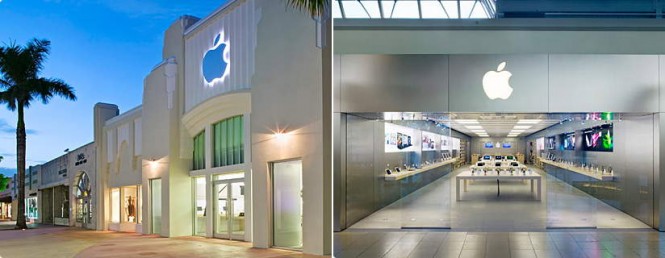
Customer service is another area in which Apple pays a lot of attention, both in its physical stores and online. Apple can increase customer loyalty and trust by offering customer service and support first-rate. Due to this, the company designs are frequently inventive and aesthetically pleasing, and as a result, the business has developed a strong brand identity through advertising and customer service. By doing this, Apple has been able to build a devoted following of customers and maintain its position as the technology industry leader.
Organization Structure
Apple’s organizational structure is hierarchical, with a distinct command line extending from senior executives to lower-level managers and workers. The board of directors, which oversees the company’s management and makes crucial decisions on the company’s behalf, sits at the top of the organization. The CEO, COO, and CFO are among the executives hired by the board of directors to oversee the company’s daily operations.
Apple has functional departments under the leadership team, including engineering, design, marketing, and sales. Senior vice presidents oversee each department’s day-to-day operations and ensure that it contributes to the company’s broader objectives. Apple has successfully innovated and introduced new merchandise to the market owing to its organizational structure (Leadership and Governance). The company’s emphasis on design and user experience has helped it stand out from rivals and develop a following of devoted customers. As such, Apple’s organizational setup has been successful in helping the business uphold its position as a market leader in the technology sector.
Management & Decision-Making Style of the Company
Apple’s management and decision-making approach is frequently characterized as centralized and hierarchical, featuring a well-defined chain of authority and a pronounced focus on design and innovation. The company’s decision-making process is significantly influenced by the top executives, comprising the CEO and senior vice presidents of each functional department, who bear the responsibility of establishing the company’s strategic direction.
A cardinal tenet of Apple’s managerial approach is simplicity and minimalism (Benfield). The manifestation of this phenomenon can be observed in the corporation’s merchandise, along with its hierarchical arrangement and cognitive mechanisms for arriving at resolutions. The enterprise is renowned for its pristine and unadorned aesthetics, while its leadership philosophy prioritizes the significance of uncomplicatedness in arriving at resolutions.
As a customary practice, top-level management personnel convene design evaluations to scrutinize novel merchandise and ascertain their adherence to the organization’s elevated visual appeal and functionality benchmarks. Moreover, Apple is renowned for its penchant for discretion and privacy, particularly regarding novel product unveilings (Naim 13). The company’s decision-making process is typified by a marked propensity for internal deliberation and discourse before concluding. While this methodology may prove efficacious in guaranteeing that determinations are thoroughly informed and meticulously contemplated, it may also be perceived as tardy and unwieldy.
Employees Motivation
Apple incentivizes its workforce through attractive remuneration packages, a robust organizational ethos, and career advancement and enhancement avenues. The organization is renowned for providing competitive remuneration packages and comprehensive perks, enabling it to draw exceptional personnel and foster their commitment and involvement. Furthermore, Apple places significant importance on its corporate culture, which fosters innovation, creativity, and collaboration among its workforce (Joseph). The organization offers various avenues for employees to enhance their skills and career progress, such as mentorship programs, training and development initiatives, and internal growth opportunities. By implementing various strategies, Apple can cultivate a highly motivated and engaged workforce with a solid commitment to driving the company’s ongoing success.
Diversity
Apple has tried to diversify its workforce in recent years and publicly expressed its commitment to diversity and inclusion. Apple’s U.S. workforce is made up of 43.8% White, 27.9% Asian, 14.8% Hispanic or Latino, 9.4% Black, 3.2% people of two or more races, and 0.7% native Hawaiian or other pacific islanders, according to the company’s most recent diversity report, which includes data from 2021 (How We Come Together).
In addition, women comprise 34.8% of Apple’s worldwide workforce, while men comprise 65.2% of workers (How We Come Together). Although these data indicate some diversity advancement, the corporation has admitted that more work must be done. In addition to setting objectives to increase the presence of women and people of color in its workforce, Apple has committed to expanding the participation of underrepresented groups in its leadership ranks.
Technology and Social Media in the Business
Technology and social media are integral components of Apple’s business strategy, and the company has long been at the forefront of innovation in these areas. Apple is known for its hardware products, including the iPhone, iPad, and Mac computers, which are designed to integrate seamlessly with its software and services (Kocienda 18). The company’s focus on design and user experience has helped it establish a loyal customer base that values its products’ functionality and aesthetic appeal. In addition to its hardware products, Apple is heavily invested in developing software and services, including the App Store, iCloud, and Apple Music (Kocienda 12). These offerings allow the company to provide a comprehensive user experience with seamless integration between its hardware and software products.
Social media also plays a vital role in Apple’s business strategy, as the company uses platforms like Twitter, Facebook, and Instagram to engage with customers and promote its products. Apple’s social media presence is carefully curated and designed to align with the company’s brand image, focusing on highlighting its products’ design and functionality (Apple’s Social Media). As such, Apple’s focus on social media has helped the company maintain its position as a leader in the technology industry. It has enabled it to reach new audiences and engage with customers in new and innovative ways.
Apple’s Global Presence
Apple is a global company that operates in various countries around the world. The company has a significant presence in North America, Europe, Asia-Pacific, and Japan. Apple’s products and eeservices are sold in more than 100 countries, and the company has a supply chain spanning multiple continents (Apple Inc: Overview). Apple’s global reach is a testament to its success as a company, as it has established a strong brand and reputation in various markets. The company’s ability to adapt its products and services to different cultural and linguistic settings has been a critical factor in its global success. Moreover, Apple’s strong international presence has enabled it to tap into new markets and drive growth, making it one of the world’s most valuable companies.
Net Worth of the Company
Globally, Apple is one of the wealthiest and most successful companies. As of May 12, 2023, the net worth of Apple Inc. is approximately $2.7 trillion (Apple Inc). This makes Apple one of the world’s most valuable companies, with a market capitalization based on various factors such as economic conditions, product releases, and investor sentiment. Apple’s success as a company can be attributed to its ability to innovate and produce high-quality products with widespread appeal, as well as its strong brand and reputation in various markets worldwide.
Charity and Social Justice
Apple is known for its charitable contributions and involvement in social justice causes. The company has a history of donating to various causes, including disaster relief efforts, education initiatives, and health-related causes. In addition to financial contributions, Apple has encouraged its employees to volunteer and engage in community service. For instance, one current example of Apple’s involvement in social justice is the company’s partnership with the Equal Justice Initiative (EJI). This non-profit organization works to address racial inequality and injustice in the criminal justice system. In 2020, Apple announced a $100 million commitment to support the EJI’s work (Kastrenakes). EJI’s work included such initiatives as criminal justice reform, education, and community engagement.
Working in the Company
Apple is known for being a highly innovative and design-focused company that values collaboration, creativity, and problem-solving. As someone passionate about technology and design, I would be drawn to the opportunity to work with like-minded individuals who share my interests and work in a fast-paced and dynamic environment like Apple. Furthermore, Apple’s emphasis on diversity and inclusion is essential to me. I appreciate the company’s commitment to creating an inclusive workplace that fosters creativity and collaboration, and I believe that a diverse team is essential to driving innovation and success.
Conclusion
In conclusion, Apple is a highly successful and innovative company that has become one of the most valuable in the world. With a strong emphasis on design, technology, and user experience, Apple has established a reputation for producing high-quality products widely recognized and sought after by consumers. Through its ability to innovate and adapt to changing market conditions, Apple has remained at the forefront of the technology industry and has continued to drive growth and profitability for its shareholders. In addition to its business success, Apple has made significant contributions to society through its philanthropic efforts and commitment to sustainability.
Works Cited
“Apple Inc.” Market Watch. 2023. Web.
“Apple Inc: Overview.” Global Data. Web.
“Apple’s Beautiful Retail Stores.” Home Designing. Web.
“Apple’s Social Media: The Tech Giant’s Marketing.” Giraffe Social Media. Web.
Benfield, Stephanie. “The Five Design Principles Steve Jobs Lived By.” iSSUU. Web.
Harjanne, Atte., and Janne M. Korhonen. “Abandoning the Concept of Renewable Energy.” Energy Policy, vol. 127, 2019, pp. 330-340. Web.
Hern, Alex. “From Macs to iPods and Apps: How Apple Revolutionised Technology.” The Guardian. 2018. Web.
Horák, Jakub., and Dominik Kaisler. “Evaluation of Development of Apple Inc. Stock Price Time Series.” SHS Web of Conferences, vol. 132, no. 01012, 2022, pp. 1-9. Web.
“How We Come Together Is How We Change The World.” Inclusion & Diversity. Web.
Joseph, Rani. “Apple’s Employee Engagement Strategies: Decoding their Secret.” Blog Empuls. 2020. Web.
Kastrenakes, Jacob. “Apple launches $100 million Racial Equity and Justice Initiative.” The Verge. 2020. Web.
Kocienda, Ken. Creative Selection: Inside Apple’s Design Process during the Golden Age of Steve Jobs / Ken Kocienda. 1st ed., St. Martin’s Press, 2018.
Leswing, Kif. “Apple becomes First U.S. Company to Reach $3 Trillion Market Cap.” NBC News. 2022. Web.
“Leadership and Governance.” Investor Relations. Web.
Lucas, Ryan. “The First Smart Gun With Facial And Fingerprint Recognition Is Now For Sale.” NPR. 2023. Web.
Naim, Arshi. “New Trends in Business Process Management: Applications of Green Information Technologies.” British Journal of Environmental Studies, vol. 1, no. 1, 2021, pp. 12-23. Web.
Pisani, Bob. “Apple versus the World: The iPhone Maker is Bigger than Almost Any Stock Market in the World.” CNBC. 2023. Web.
Razak, Mashur, et al. “Antecedents and Consequence of Brand Management: Empirical Study of Apple’s Brand Product.” Journal of Asia Business Studies, vol. 14, no. 3, 2020, pp. 307-322. Web.