
Introduction
Negotiations, organizational structures, and cultures shape the dynamics within businesses and influence their success and integrity. The analysis will cover a range of key themes by responding to the core questions for each topic. Properly managing conflicts, understanding the purpose of different organizational designs and structures, and comprehending how culture shapes an organization are integral elements of organizational behavior.
Negotiation
Firstly, I would initiate negotiations with my spouse by properly preparing beforehand. This is why I would gather information about the costs, benefits, and potential drawbacks of both moving to a larger home and expanding our current one. Preparation would also involve understanding my spouse’s perspective and preparing to address concerns they could raise – I should be able to anticipate the underlying motives. Next, we would define ground rules for our discussion, agreeing to listen to each other without interruption (Robbins & Judge, 2019). In doing so, we must consider each viewpoint with respect and aim for a solution that satisfies both sides, as this ensures a productive negotiation environment.
Thirdly, clarification and justification are essential, which is why I would present my reasons for preferring to expand our current home. I would focus on accentuating my emotional attachment to our neighborhood and the potential for customizing the expansion to meet our needs as specifically as we need. I would also ask my spouse to share his or her perspective, since I want to properly understand the appeal of moving to a new one.
Fourthly, I would gradually shift towards the bargaining and problem-solving phase of our negotiation process. We would compromise by stating what each of us is willing to give up and what other measures can be taken to compensate for those sacrifices (Robbins & Judge, 2019). Lastly, closure and implementation would finalize our negotiation. Once we reach an agreement, we will outline the steps required to proceed, whether that involves contacting a real estate agent or hiring a contractor.
Organizational Structure
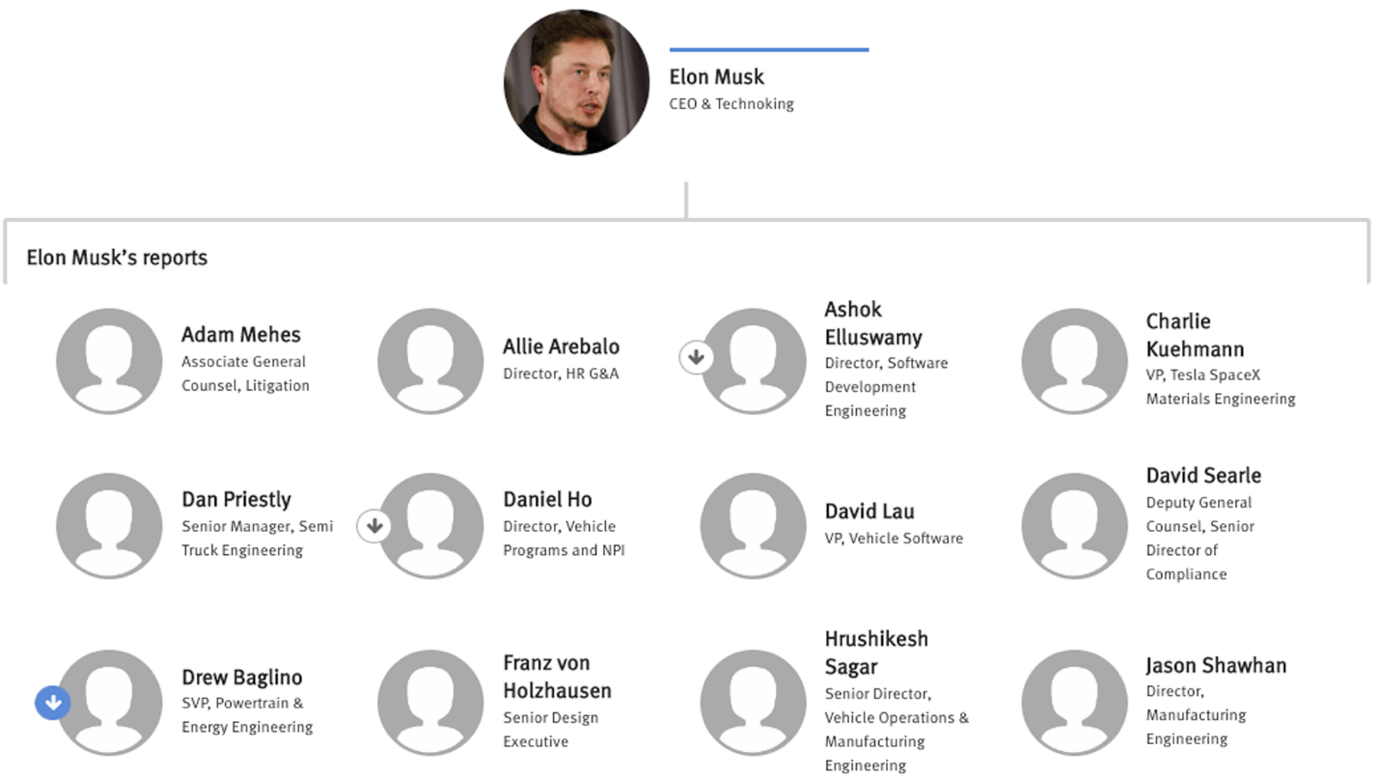
Figure 1 below shows the organizational chart for Tesla, which I consider an ideal structure for the industry. Tesla has a functional structure because it groups similar employees; this structure enables an environment conducive to specialization and innovation (Robbins & Judge, 2019). I believe that the streamlined decision-making process is critical for a car manufacturer. Employees across all levels experience autonomy, which is rare in traditional corporate settings. The given autonomy allows them to contribute ideas and make decisions rapidly; therefore, agility becomes a defining trait for Tesla, especially critical in the fast-paced realms of technology and the automotive industries.
Furthermore, Tesla emphasizes functional teams that combine specific skill sets, thereby promoting a targeted approach to problem-solving and project development. Such an approach positions Tesla as a leader in innovation by addressing complex challenges with proper solutions. Regarding stakeholders, Tesla’s organizational framework ensures sufficient transparency and accountability.
Streamlined communication channels lead to quick responses to market shifts and customer feedback, thereby improving customer satisfaction and loyalty (Robbins & Judge, 2019). Shareholders witness the company’s adaptability and innovation, which enable growth and enhance shareholder value. In essence, Tesla’s organizational structure represents an ideal mix of flexibility, efficiency, and innovation, which is why it offers considerable benefits to the firm and its stakeholders.
Organizational Design
Crate Entertainment is a small video game development company with a simple organizational structure. Arthur Bruno is the founder, lead designer, and owner, and 13 employees work under him (Crunchbase, 2024). The reason is that the authority is centralized in one person, yet it remains flat.
The United States Postal Service (USPS) exemplifies bureaucracy; its hierarchical structure and clear rules ensure daily efficiency in mail handling. The bureaucratic model supports its mission to deliver postal services nationwide, which is why it maintains consistency and reliability. Similar to Tesla, Google operates within a functional structure, with departments such as marketing and engineering that focus on specialized tasks. The latter deepens skills and knowledge – it enables innovation and efficiency in developing new technologies.
Walmart adopts a divisional structure, segmenting operations by region, product, or service. By doing so, the company can effectively meet the differential needs of its global customer base by adjusting its products and services to local preferences. Siemens has a matrix structure, combining functional and project-based teams (Robbins & Judge, 2019). This way, it enhances flexibility and innovation in addressing complex engineering challenges through resource sharing and cross-disciplinary expertise.
Alibaba operates on a virtual structure, leveraging the internet to coordinate its network of partners and suppliers, enabling it to operate with scalability and agility. Pixar Animation Studios has a team structure – project teams collaborate on films. As a result, creativity and innovation grow as different talents and ideas come together to produce proper animated products. Valve Corporation is an example of a circular structure, which is why it does not adhere to traditional hierarchies and instead favors a more collaborative approach. Valve employees select projects based on their interests, which encourages autonomy and innovation within the company.
Organizational Culture
Firstly, a culture that enables dishonesty and corruption ruins an organization’s reputation and erodes trust among partners, clients, and employees. Employees will experience moral dissonance, leading to lower job satisfaction and increased stress. Secondly, organizations might push employees towards dishonest or corrupt behavior to achieve short-term financial gains or competitive advantages. Corruption can offer personal benefits, such as financial rewards or career advancement; however, a strong organizational culture that emphasizes ethical behavior can mitigate such temptations.
Finally, as a new employee under pressure to compromise my ethical standards, I would document the instances and seek advice from a mentor or use the company’s anonymous reporting tools. Midlevel employees might directly address the issue with their superiors or human resources (Robbins & Judge, 2019). Senior managers have the authority to enact change, and they should lead by example to uphold ethical standards.
Conclusion
In sum, a solid understanding of organizational behavior requires an extensive analysis of organizational cultures, structures, designs, and conflict management strategies through negotiation. In addition, organizational design and culture massively impact a company’s ethical behavior, operational efficiency, and ability to innovate. Companies that prioritize clear communication, ethical behavior, and a flexible organizational structure showcase better adaptability and innovation. These are not just beneficial but essential for long-term success.
References
Crunchbase. (2024). Arthur Bruno.
Peterson, B., & Matousek, M. (2024). Tesla org chart. The Information.
Robbins, S. P., & Judge, T. A. (2019). Organizational behavior (18th ed.). Pearson.