
Introduction
The aviation industry is in a delicate position, having to address both issues: avoiding financial losses and adopting a sustainable operating model (See Rashid and Yu, 2024). This report analyzes the performance of the two major players, Qantas Airlines and Air France, in light of the challenges they face. The following section examines how these airlines respond to rising environmental, governmental, and social stressors. The purpose of this part of the research, therefore, is to ensure a broad understanding of how airlines adapt to the market.
Furthermore, businesses, such as Qantas and Air France, are focusing on creating regulations and procedures that comply with international agreements, such as the Paris Agreement, and on responding to external factors, including economic fluctuations and environmental disasters. The report evaluates the efficacy of the measures credited within by carrying out a comprehensive analysis of the operational changes, fleet modernizations, and stakeholder engagement techniques used (Grosche and Klophaus, 2024). Furthermore, the aviation industry implications are also provided. The results of the research are intended not only to show the difficulties airlines face but also the opportunities they have if they try to address the dilemma of success and environmental responsibility simultaneously.
The Impact of Sustainability Expectations on the Aviation Industry
The aviation industry faces increasing pressure to transition to sustainability due to stricter regulations, evolving governance structures, and rising public expectations (IATA, 2023). Well-known airlines like Qantas and Air France are adjusting to this new environment by investing in research and technology, as well as creative strategies. This includes following international and national environmental standards established by organizations such as the International Civil Aviation Organization (ICAO).
ICAO seeks to cut net aviation carbon emissions by 50% by 2050 compared to 2005 levels. The Paris Agreement provides a foundation for international cooperation, but its effectiveness is called into question by issues such as low national ambition and weak transparency requirements (Raiser et al., 2020). Nevertheless, by implementing eco-friendly procedures, airlines are coordinating their operations with Australia’s obligations under the Paris Agreement.
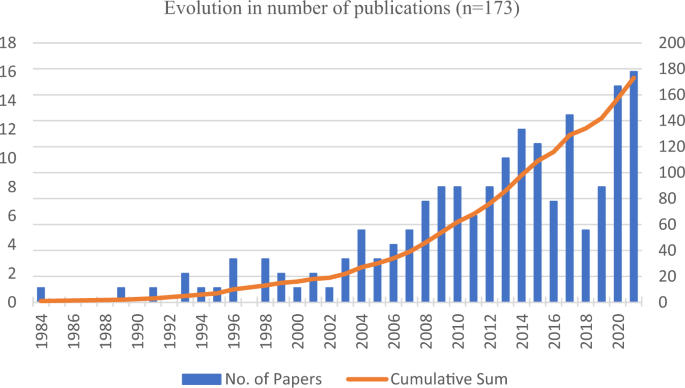
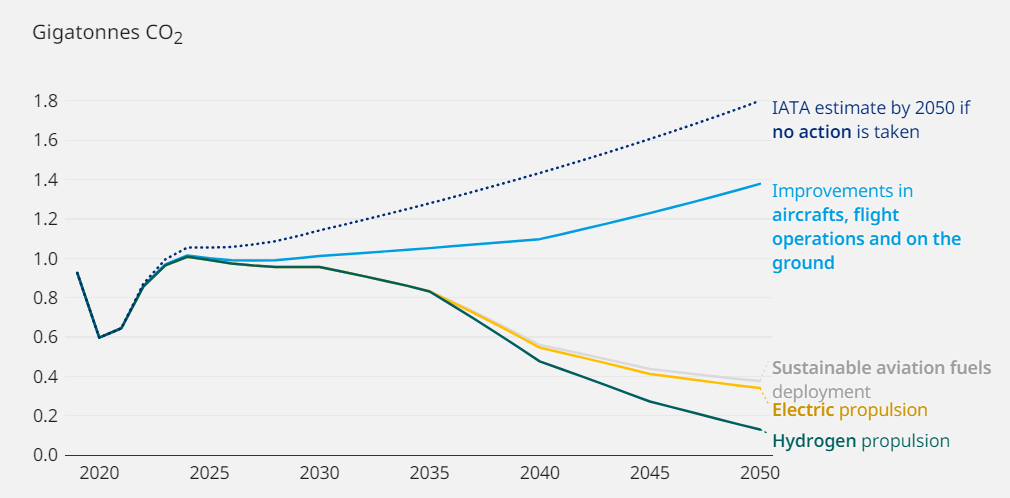
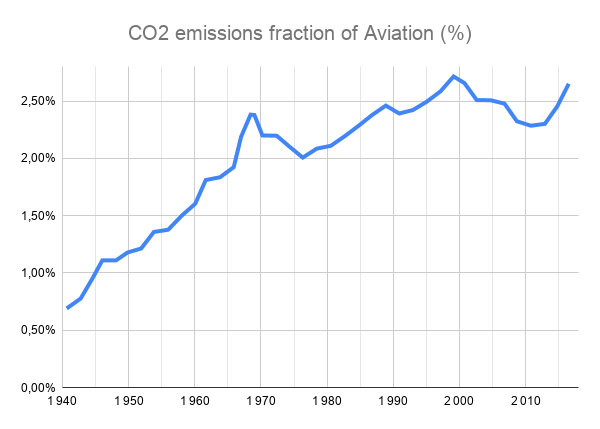
To build a strong brand image, reduce risk, and ensure long-term profitability, the boards of directors of Qantas and Air France have incorporated sustainability goals into their strategic decision-making processes (Ellis and Foster, 2023). Air France’s 2030 sustainability strategy aims to lower CO₂ emissions per passenger-kilometer to the level recorded in 2005 (FORD, 2021). Similarly, Qantas has launched the “Qantas Future Planet” initiative to support sustainability through the development of renewable fuels, trash minimization, and carbon offsetting. Figure 2 projects the future state of CO2 emissions if suitable action is not taken to reduce them.
Both airlines are required to comply with the national emission-reduction goals established by their host nations. As a member of the EU, France is taking part in the “Fit for 55” project, which aims to reduce greenhouse gas emissions by at least 55% by 2030 (FEDERAL, 2023). As a result, Air France has modified its operations and fuel efficiency. Qantas is projected to reduce its carbon footprint in Australia in line with government initiatives on sustainable aviation fuels and technology, even if laws there might not be as strict as those in Europe (Wittmer and Bieger, 2021).
Qantas has pledged to attain net-zero carbon emissions by 2050 and to keep its net emissions at 2019 levels (Gonçalves, 2022). Despite pandemic hurdles, the airline reports in its 2021 sustainability report an 8% decrease in absolute net emissions from 2019 levels. The newer Air France fleet uses 20–25% less fuel, aligning with international goals and lowering operating expenses. According to the airline, CO2 emissions per passenger-kilometer decreased by 6% in 2020 (Gonçalves, 2022). These tactics, however, may not be financially feasible in the long run since they depend on ongoing investment in innovative and sustainable technology.
The airline business, which is supposed to be sustainable nowadays, goes beyond legal, operational, and ethical aspects (Şenol and ACAR, 2020). Airlines such as Qantas and Air France are not only reacting to these pressures but are also pioneers in implementing proactive measures that promote sustainability at every stage of operations. This holistic strategy not only ensures compliance with existing regulations but also positions these airlines at the forefront of the global airline industry’s green transformation (Baxter, 2023). These initiatives serve not only as guidelines for the industry but also as evidence that the industry can pursue environmentally conscious targets (Ambrose and Waguespack, 2021).
Examining these projects critically is necessary to determine their effectiveness, though. Questions remain about the actual impact of these initiatives on achieving the planned sustainability goals, even though they comply with legislation and project a favorable public image. To satisfy regulators and customers, the airline sector must ensure these reforms are concrete steps that deliver significant advancements rather than mere token gestures.
Stakeholder Demands and Financial Viability in the Aviation Industry
The multilateral nature of the worldwide aviation industry involves airlines such as Qantas and Air France in certain delicate balancing acts among various actors. At the same time, the financial viability is undertaken (Thibeault and Evans, 2021). This is a dynamic equilibrium achieved through smart adaptations, novel business practices, and prudent stakeholder engagement, all within the realm of economic realities and regulations (Cook and Billig, 2023).
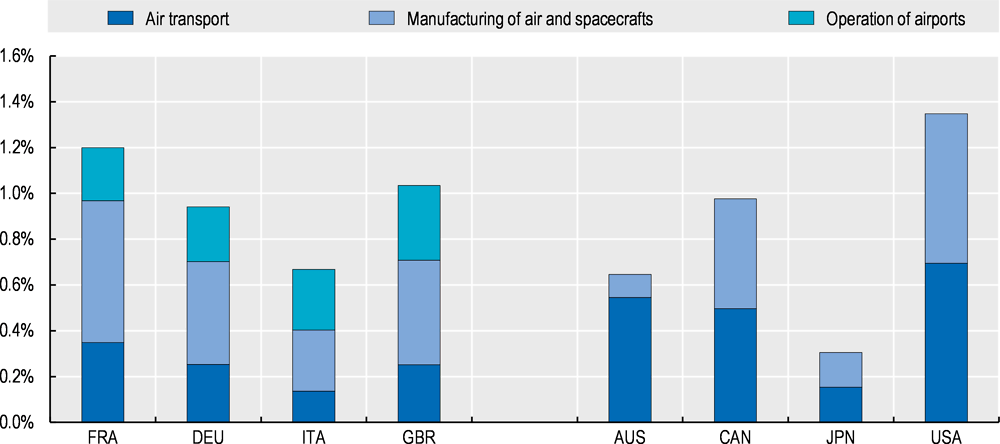
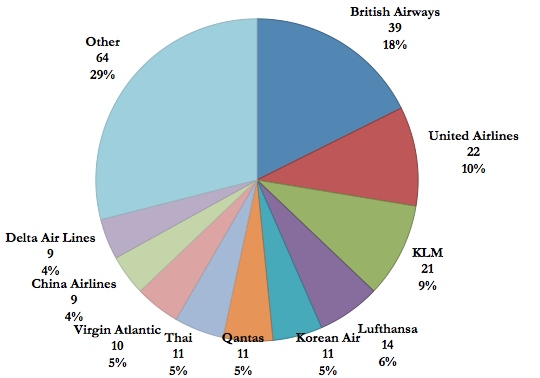
In addition, to stay financially fit, airlines have to squeeze profits even amid rising fuel costs, labor expenses, and a competitive environment (Öztürk, 2022). The effective strategies that Qantas and Air France have adopted include, but are not limited to. Take, for instance, the fact that both airlines have made massive investments in rebranding their fleets to more environmentally friendly aircraft. According to recent reports, Air France plans to replace all 70% of its fleet by 2030 with new, more efficient models (Kettler and Walls, 2022). Figure 3 shows the changes in the aviation industries of leading countries during the pandemic.
The aerospace stakeholders are governments, regulatory boards, consumers, environmental organizations, and investors (Reddy, 2023). There is a variety of such obligations that, on the one hand, coincide, but on the other hand, can conflict with each other. For instance, governmental and international regulations governing the use of green technologies impose financial strain by requiring significant investments. Although the initial investments in sustainable tourism activities are high, they also reflect the growth of environmentally friendly travel products in higher demand, thereby building a long-term customer base and market power (Asker and Kiracı, 2022).
The governments and regulatory agencies are vital players. In France, Air France must comply with European aviation policies and national laws that encourage sustainable practices (Morrell, 2021). The French government’s introduction of a “green tax” on airline tickets, which compels airlines to cut emissions and uses the money raised to finance environmentally friendly transportation initiatives, is a significant contributing factor. Qantas has also been under pressure in Australia, where environmental policies have become a massive part of airline operations (Critchley, 2022). Nevertheless, these regulations could burden airlines excessively, raising their operating expenses and perhaps lowering consumer access to and affordability of air travel.
Consumers are increasingly choosing airlines that adhere to sustainable and ethical business practices, which directly affects airlines’ bottom lines. Data show that 60% of consumers are ready to spend more on products and services from firms that make positive social and environmental contributions (Higham et al., 2022). By implementing this tactic, Qantas and Air France can increase consumer loyalty and create new business prospects. Nevertheless, there’s also a chance that sustainability standards may be overemphasized at the expense of other important components of the consumer experience, such as cost and convenience. This could turn off some customers who value price more than environmental considerations.
Local communities and pressure groups also occupy a considerable space, especially near airports, where environmental and noise pollution are matters of concern (Ellis and Foster, 2023). An active dialogue with these communities during consultations and community development activities helps mitigate opposition and build local support. For instance, Qantas has established a comprehensive community engagement program that includes noise mitigation procedures and regular community meetings to discuss the impacts of its operations (Grosche and Klophaus, 2024).
Economic efficiency is also based on multidirectional revenue streams and innovative services (FORD, 2021). Qantas and Air France have both developed ancillary services such as cargo, tour packages, and loyalty programs. According to Qantas, the frequent flyer program is the most profitable segment of the airline’s business, which proves how value-added services can increase revenue (Şenol and ACAR, 2020).
In addition, the implementation of digital innovations helps airlines reduce operational costs and enhance customer service (Cui, Hu, and Yu, 2022). For instance, employing state-of-the-art data analytics enables optimizing fuel use and maintenance schedules, thereby lowering costs and enhancing performance. Therefore, Qantas and Air France can maintain their financial stability despite multiple demands from their stakeholders only through tough balancing acts (see Rashid and Yu, 2024). However, the rapid pace of technological change may require continuous updates and adaptations, adding to long-term costs.
Additionally, by investing in sustainable technology, embracing innovation, diversifying income streams, and including early stakeholders, the airlines position themselves for financial success in a competitive global aviation industry (Wittmer and Bieger, 2021). These strategies showcase a comprehensive approach to tackling economic uncertainties and align with social and environmental goals, thereby guaranteeing their leadership position in the sector (Cook and Billig, 2023).
Strategic Adaptation in Aviation: Balancing Cost Efficiency and Legislative Compliance
Airlines like Qantas and Air France are constantly adapting to changes in aviation regulations, stakeholder expectations, and environmental mandates (Asker and Kiracı, 2022). Policy and procedure formulation complied with the relevant laws; however, cost-effectiveness and stakeholder satisfaction remain challenges. These airlines frequently face these challenges and seek the best solutions, especially when the government imposes restrictions and international agreements, such as the Paris Agreement, impose requirements (IATA, 2023).
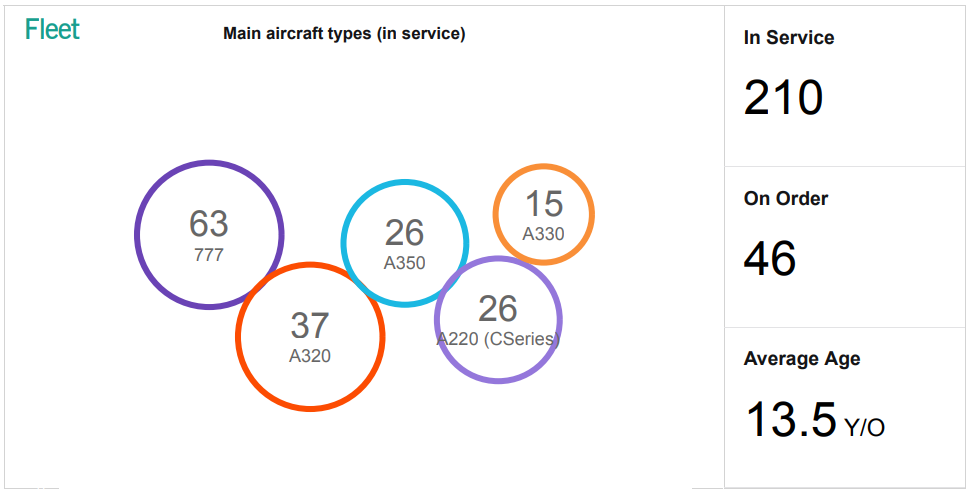
Qantas and Air France have responded to this strategy by purchasing more modern, fuel-efficient aircraft to not only meet emissions standards but also lower operational expenses (Ellis and Foster, 2023). For instance, the newest Airbus A350, which uses around 25% less fuel, is part of Air France’s fleet (Boreadas, 2020). Lightweight, high-strength materials invariably play a key role in improving fuel efficiency and performance (Airbus, 2021). This implies that airlines may lower the price of gasoline, which is the primary expense item in their budget. In turn, the Australian company only aims to start using the newest aircraft in 2025 (Qantas, 2022a). The current Air France fleet makeup is depicted in Figure 4.
Adopting a contemporary aircraft also offers advantages beyond fuel savings. Modern engines, lightweight construction, and sophisticated aerodynamics are frequently used in these aircraft, improving overall performance and reducing emissions (International Civil Aviation Organization, 2022). Additionally, Qantas has added the Boeing 787 Dreamliner, which has comparable fuel efficiency, to its fleet (Cirium, 2024). Their profile is shown in Figure 5.
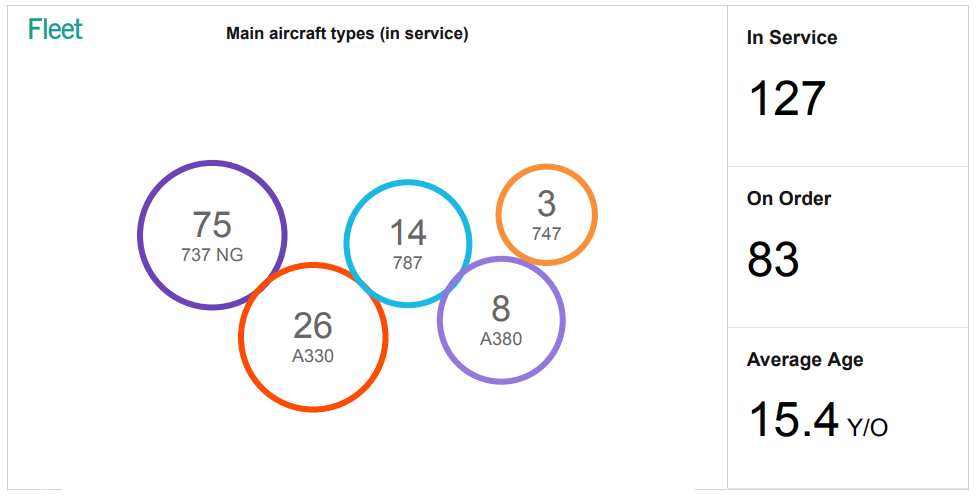
After analyzing the fleets of both airlines, it can be concluded that Air France’s aircraft are more fuel-efficient and lighter than Qantas’s. These tactical fleet upgrades are needed not only to meet emissions goals but also to maintain the bottom line as fossil fuel prices rise.
These initiatives are part of the response to the Paris Agreement to which both France and Australia are parties (Ambrose and Waguespack, 2021). The Agreement obliges countries to adopt a comprehensive approach to climate change and, consequently, leads to revisions in green policies in the aircraft industry. Airline compliance with such international agreements is not merely a call for a substantive change in operations, such as renewing the fleet, investing in sustainable aviation fuels, and joining carbon offset programs (See Rashid and Yu, 2024).
Operating an airline is more challenging due to extreme weather and geopolitical hazards (Öztürk, 2022). The “fog of war” in Ukraine, in particular, hurts aviation services, raises fuel prices, and blocks international travel routes. To solve these problems, which often lead to increased operational expenditures, airlines must employ dynamic management systems (Ambrose and Waguespack, 2021). To overcome this issue, Qantas and Air France must install similar solutions that are costly but ensure safety and compliance with international aviation standards (Thibeault and Evans, 2021).
Airlines have found it tough to stay afloat amid climate change events, such as cyclones and storms, which are becoming more intense and more frequent (Wittmer and Bieger, 2021). These events often lead to increased fuel and maintenance costs, service disruptions, and security issues. Besides that, both organizations have invested funds into developing technology and infrastructure to improve weather forecasting and response plans. Such an example would be meteorological data, which is nowadays more advanced and used in flight planning to reduce weather-related delays and cancellations (Asker and Kiracı, 2022).
The airline industry, including Qantas and Air France, is influenced by several factors, such as fluctuating fuel costs, shifting global environmental legislation, and growing customer demand for sustainability and justice (Kettler and Walls, 2022). Though technological innovations such as hydrogen or electric aircraft have the potential to transform the aviation sector, their practical application is still in its infancy. While they can significantly contribute to reaching environmental objectives, they may encounter practical obstacles, including cost and infrastructural constraints (Critchley, 2022).
Careful planning and creative thinking are necessary for effective risk management in the aviation industry. Navigating the sector’s complexity requires constant attention to changes in regulations, stakeholder expectations, and global economic situations (See Rashid and Yu, 2024). On the other hand, long-term stability could not be ensured by relying solely on diversified revenue streams, such as growing cargo operations and loyalty programs like Qantas’ frequent flyer program. These tactics may not adequately shield airlines from broader market concerns and could result in varying revenue (Cook and Billig, 2023).
Environmental Strategies and Sustainability in Aviation: Qantas vs. Air France
As interest in environmental impact rises and regulatory pressures on airlines grow, airlines will begin to consider sustainability across their operations and business models. Qantas Airways and Air France are two of the leading airlines in their respective countries, each with different approaches to addressing climate change and environmental strategies (Cui, Hu, and Yu, 2022). This study aims to conduct a comparative analysis of the sustainability strategies of the two airlines in question, objectively evaluate their effectiveness, and draw conclusions based on their current and future activities.
With an ambitious goal of achieving net-zero carbon emissions by 2050, Qantas Airways has positioned itself as a leader in the aviation industry’s reaction to climate change (Thibeault and Evans, 2021). Purchasing fuel-efficient aircraft, such as the Boeing 787 Dreamliner, which offers a 20% increase in fuel efficiency over its predecessors, is a key component of this approach. Furthermore, Qantas has introduced the “Qantas Future Planet” program, which includes many carbon offset projects (Leandro, 2020). Although Qantas customers have participated significantly in carbon offset programs as a result of these efforts, it remains unclear whether the company’s emphasis on offsets takes priority over more immediate, substantial actions, such as funding the development of green technologies or sustainable aviation fuels.
Nevertheless, Air France operates within the strict regulatory framework of the European Union, which has set very challenging targets for reducing greenhouse gas emissions. Nevertheless, Air France has pledged to reduce its overall carbon dioxide emissions per passenger-kilometer by 50% by 2030 compared to a 2005 baseline (Chatterjee et al., 2021). However, the organization currently plans to reduce emissions by 30% by 2030.
Air France’s approach includes fleet renewal, with the addition of Airbus A350S. In contrast, Qantas proposes a strategy to reduce CO2 emissions by 25% by the same year, which would play a significant role on a global scale (Qantas, 2022b). In addition, the French airline is part of the Air France-KLM Group’s broader commitment to using cleaner aviation fuels.
Although airlines have encountered complexities in their sustainability journey, especially in balancing economic pressures with the high costs of transitioning to green technologies, the UIA has made progress in this area (Shvindina and Heiets, 2023). Take Qantas, for instance: the airline has had to cope with the challenges of Australia’s vast territory and low population density, which negatively affects the efficiency of its domestic routes. On the contrary, Air France finds itself in the middle of highly populated Europe, where high passenger volumes can cover the costs of the newest and most expensive technologies faster than in other parts of the world (Suk and Kim, 2021).
The comparison of the strategies of both airlines illustrates that they both are taking very good steps toward sustainable development (Leandro, 2020). However, how you see their effectiveness depends on your perspective. Qantas implements the offsetting method, which is often seen as a remedy for symptoms rather than the actual cause, as critics argue.
Air France’s strategy, which is much more affected by EU regulations, is more focused on reducing direct emissions through technological measures and operational improvements (Shvindina and Heiets, 2023). One advantage the airline has is sustainability, which it can leverage to set itself apart from rivals, attract eco-conscious customers, and foster brand loyalty (Shvindina and Heiets, 2023). The future aviation sector will need to address rising fuel costs, the need for new and innovative aircraft designs, the development of sustainable fuels, and new laws.
Conclusion
It is concluded that Qantas and Air France have adapted to meet growing sustainability concerns while balancing financial pressure and stakeholder expectations. Both airlines have demonstrated a commitment to reducing their environmental footprint through strategic investments in more fuel-efficient aircraft and broader sustainability initiatives. Although all the airlines operate under different regulatory environments, their proactive approaches represent a significant change in the industry towards more sustainable aviation.
Given that Qantas is introducing new aircraft more slowly than Air France and aims to reduce emissions less, we can conclude that Air France is developing faster. The discussion has shown that a balanced approach to compliance with regulations, cost efficiency, and stakeholder satisfaction requires innovation and development. The evolution of climate change, technological development, and economic fluctuations is continually testing the resilience and adaptability of these airlines. Moving forward, Qantas and Air France will have to face these complexities and continue exploring leadership prospects in aviation sustainability on a global scale.
Reference List
Air France (2022) Sustainable Development, Air France Corporate.
Airbus (2021) A350 Less Weight. Less Fuel. More Sustainable, Airbus.
Ambrose, S. and Waguespack, B. (2021) Fundamentals of Airline Marketing. Routledge.
Asker, V. and Kiracı, K. (2022) ‘Sustainability and Financial Performance: Examining the Airline Industry’, Accounting, Finance, Sustainability, Governance & Fraud: Theory and Application, 1, pp. 73–92.
Baxter, G. (2023) ‘An Assessment of the Role of Carbon Offsets Programs as an Airline Carbon Footprint Mitigation Strategy’, 5(1).
Boreadas, J. (2020) Airbus A350, Innovation and Sustainability, EAS Barcelona.
Chatterjee, T. et al. (2021) ‘A Modeling Framework for Evaluating Safety of Complex Aerospace Systems’, AIAA Scitech 2021 Forum, p. 1802.
Cirium (2024) Cirium Profiles, Cirium.
Cook, G.N. and Billig, B.G. (2023) Airline Operations and management: a Management Textbook. Routledge.
Critchley, P.J. (2022) A Case Study into Supplier Dominance in the Commercial Airline Industry.
Cui, Q., Hu, Y. and Yu, L. (2022) ‘Can the Aviation Industry Achieve Carbon Emission Reduction and Revenue Growth Simultaneously under the CNG2020 strategy? an Empirical Study with 25 Benchmarking Airlines’, Energy, 245.
Davis, J. (2022) Aviation Sustainability: Our Future, Oliver Wyman.
Ellis, D. and Foster, A. (2023) ‘Buying Airline partners: Parallels between Swissair and Etihad Airways’, Transportation Research Procedia, 75, pp. 106–114.
FEDERAL, A. (2023) Issues in Aviation Law and Policy.
FORD, S.C.S. (2021) Issues in Aviation Law and Policy.
Gonçalves, J.D. do C. (2022) Air France-KLM : Equity Valuation, repositorio.ucp.pt.
Grosche, T. and Klophaus, R. (2024) ‘Codesharing and Airline Partnerships within, between and outside Global Alliances’, Journal of Air Transport Management, 117.
Heiets, I., Oleshko, T. and Leshchinsky, O. (2021) ‘Airline-within-Airline Business Model and Strategy: Case Study of Qantas Group’, Transportation Research Procedia, 56(1), pp. 96–109.
Higham, J. et al. (2021) ‘Reconfiguring Aviation for a Climate-Safe Future: Are Airlines Sending the Wrong Message?’, Journal of Travel Research, 61(6).
IATA (2023) Declines in Unit Cost and Yield Expected to Continue in 2023.
International Civil Aviation Organization (2022) Innovation for a Green Transition, ICAO Environmental.
Kettler, J. and Walls, J.L. (2022) ‘Airline Perspective’, Management for Professionals, pp. 109–136.
Leandro, S. (2020) ‘The Tale of the Airfreight Cartel Case’, Air & Space Law, 45(2), pp. 201–226.
Morrell, P.S. (2021) Airline Finance. 5th edn. Routledge.
Öztürk, C. (2022) ‘Some Observations on IFRS 15 and IFRS 16 in the Airline Industry: the Case of Air France – KLM’, Perspectives on International Financial Reporting and Auditing in the Airline Industry, 35, pp. 51–80.
Qantas (2022a) 1 Aircraft Every 3 Weeks over the next Few Years.
Qantas (2022b) Qantas Group Climate Action Plan.
Raiser, K. et al. (2020) ‘Is the Paris Agreement effective? A Systematic Map of the Evidence’, Environmental Research Letters, 15(8).
Reddy, W.M. (2023) ‘To Fly the plane: Language games, Historical narratives, and Emotions’, History and Theory, 62(1), pp. 30–61.
See, K.F., Rashid, A.A. and Yu, M.-M. (2024) ‘Measuring the Network Capacity Utilization, Energy Consumption and Environmental Inefficiency of Global Airlines’, Energy Economics.
Şenol, S. and Acar, A.B. (2020) ‘Crew Resource Management in Aviation: the Analysis of the Air France Flight 447 Crash’, Journal of Organizational Behavior Review, 2(2), pp. 172–200.
Shvindina, H. and Heiets, I. (2023) ‘A Comparative Performance Analysis of Airline Strategic Alliances: In a Search for Coopetition Drivers through DEA’.
Suk, M. and Kim, W. (2021) ‘COVID-19 and the Airline industry: Crisis Management and Resilience’, Tourism Review, 76(4), pp. 984–998.
Thibeault, C. and Evans, A.D. (2021) ‘Medical Events on Board Aircraft: Reducing Confusion and Misinterpretation in the Scientific Literature’, Aerospace Medicine and Human Performance, 92(4), pp. 265–273.
Wittmer, A. and Bieger, T. (2021) ‘Airline Strategy – from Network Management to Business Models’, Classroom Companion: Business, pp. 139–184.