Introduction
I examined the influence of screen use on elementary school-aged children (ages 5 to 11). The prominence of electronic gadgets in everyday life and their availability to younger children has sparked widespread controversy among parents, educators, and medical professionals. Through extensive study of academic sources, parenting blogs, and health organization guidelines, I encountered significant contradictory guidance on the optimal duration of screen time for children and the possible advantages and disadvantages of digital media.
Screen Time
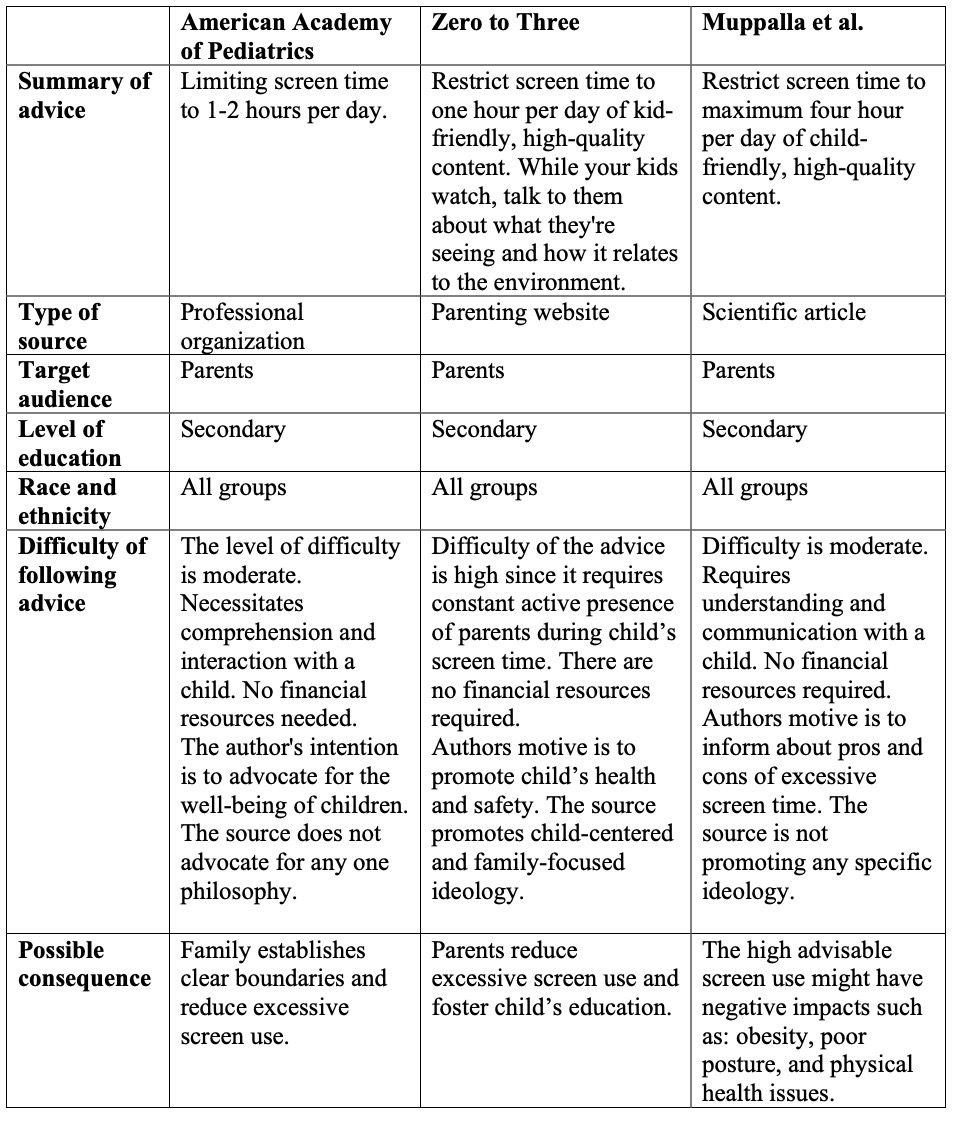
An important issue in guidance concerns the allowable duration of screen use for kids in this young age group. The American Academy of Pediatrics (AAP) recommends implementing regular restrictions on media usage for children aged 6 and above. Parents must ensure that the time spent using screens does not disrupt sufficient sleep, physical activity, or other crucial habits for maintaining good health (American Academy of Pediatrics, 2019). Their recommendation is to limit screen time to 1-2 hours per day and focus on high-quality content.
On the other hand, certain educational specialists contend that in the era of digital technology, the time children spend in front of screens can have positive effects on their growth and development, provided that the content is high-quality and used interactively rather than passively (Cohen, 2020). Such sources often lack a specific restriction, suggesting that the emphasis should be on the quality of the information rather than the amount of time spent on screens.
Pros and Cons
Another source of disagreement concerns the perceived advantages and disadvantages of screen use. Several sources highlight the capacity of educational applications and programs to facilitate learning in topics such as mathematics, reading, and science. The interactive nature of many digital platforms is emphasized, as they can engage children in a more dynamic learning process than traditional approaches (Screen-Time Recommendations for Children Under Six, n. d.). Moreover, numerous research and health organizations emphasize the risks associated with excessive screen time. These risks include sleep disturbances, obesity, behavioral issues, and diminished academic achievement.
The differences in advice can partly be attributed to the type of source. Academic research and guidelines from health organizations tend to be more conservative in their recommendations, prioritizing the health implications of screen time. In contrast, educational technology advocates and some parenting blogs may emphasize the potential educational benefits and adaptability of digital media to modern learning environments (Muppalla et. al., 2023). The target audience also plays a significant role, as content aimed at educators might focus more on the pedagogical value of digital media. In contrast, health-focused audiences receive cautionary advice on limiting screen time to protect physical and mental health.
Conclusion
After carefully analyzing the various pieces of advice and considering many perspectives, I urge guardians to adopt a thoughtful, responsible approach to managing digital media exposure. It is crucial to prioritize material that is not only of exceptional quality but also instructive, and to promote active rather than passive interaction with screens. Establishing strict limits on screen time is crucial to protect against its negative impact on physical activity, sleep quality, and face-to-face social contact.
Parents are encouraged to actively participate in their children’s online activities, engaging in conversations about the content they encounter and the knowledge they gain, to guide them towards a more beneficial use of the internet. Recognizing the unique characteristics of every kid and their specific responses to viewing time is essential. Therefore, the capacity to adjust and closely observe is key in effectively navigating the digital world with elementary school-aged children.
References
American Academy of Pediatrics. (2019). Healthy Digital Media Use Habits for Babies, Toddlers & Preschoolers. HealthyChildren.
Cohen, P. N. (2020). The family: Diversity, inequality, and social change (3rd ed.). W. W. Norton & Company.
Muppalla, S. K., Vuppalapati, S., Pulliahgaru, A. R., Sreenivasulu, H., & Kumar Muppalla, S. (2023). Effects of excessive screen time on child development: an updated review and strategies for management. Cureus, 15(6).
Screen-Time Recommendations for Children Under Six. (n.d.). ZERO to THREE.
Appendix
Table 1. Comparison of advice