
Introduction
The proliferation of solar power has sparked a search for sustainable, environmentally friendly alternatives to meet the growing energy demand. The electric pump uses solar cells to generate electricity, which powers the extraction of liquid from the soil. Photovoltaic (PV) panels convert sunlight into electricity, while the pump’s motor converts electricity into mechanical power, enabling the extraction of liquid (Indragandhi, Selvamathi, and Subramaniyaswamy 2022). A green water pump system consists of two DC water pumps, a water storage tank, a fuse box, electrical wires, a solar-powered controller, and photovoltaic cells.
Solar-powered water pumps outperform diesel- or grid-powered pumps in terms of efficiency, environmental impact, and maintenance and installation costs. This novel strategy is widely used in rural areas for agricultural purposes, particularly in areas that require alternative energy sources. Additionally, these pumps meet domestic requirements and serve as the primary water source in numerous isolated areas. Nonetheless, it is vital to conduct a comprehensive examination of both electric and solar water pumps to determine the most suitable option for a given environment.
Renewable Energy Solutions
A solar water pump is a device that uses sunlight to pump water downstream. Renewable power pumps come in a variety of forms, the most common being solar energy panels, solar thermal systems, and domestic hot water pumps. Solar-powered pumps for water use solar cells to convert sunlight into energy, which operates the pumping mechanism.
Figure 1 depicts the workings of a water pump powered by sunlight. Photovoltaic water pumps are a feasible and ecologically beneficial alternative to conventional electric and gas pump sets (Goswami, 2023). They are part of an ecologically sustainable plan and may be used to improve any place, whether ancient or new.
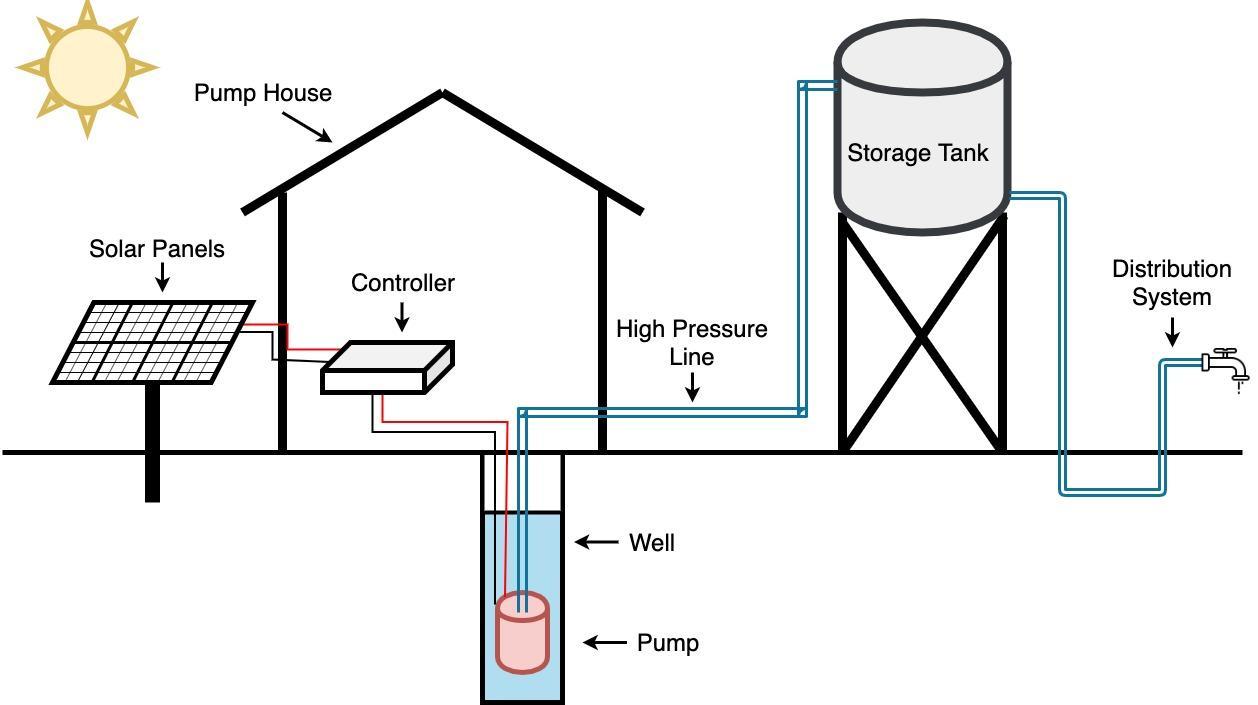
There are many different kinds of renewable energy pumps, the most notable of which are solar photovoltaic, solar thermal, and domestic water heating pumps. These pumps are powered by sunlight and use electricity to move fluids rather than using fossil fuels. According to Goswami (2023), solar pumps are being lauded as environmentally benign and cost-effective alternatives to conventional electric and fuel-powered pump sets.
They use photovoltaic cells to convert ultraviolet sunlight into energy, enabling them to drive pumping machinery effectively (see Figure 1 for an example of solar pump efficiency). According to Lazzarin (2020), the increased demand for this technology reflects the global shift towards greener energy sources occurring amid the present energy crisis. This shift makes regular electric pumps less desirable.
However, to conduct an objective analysis, it is necessary to consider solar pumps alongside electric pumps. Electric pumps have consistently demonstrated efficiency and reliability, despite being dependent on resources that do not replenish themselves. In contrast, solar water pumps are environmentally sustainable, particularly in off-grid areas, as solar energy is abundant and readily accessible. This is especially true in areas without a grid connection. Solar-powered pumps are becoming increasingly effective as a result of ongoing developments in solar panel design and performance, which align with broader programs for energy efficiency and eco-conscious living (Goswami, 2023).
A significant benefit of solar pumps is their low environmental impact. Compared with conventional electric pumps, solar pumps do not emit any hazardous gases or pollutants into the atmosphere. This eco-friendliness makes a substantial contribution to reducing carbon footprints and aligns with worldwide initiatives to manage energy responsibly and promote sustainability. Solar water pumps offer a sustainable, eco-friendly solution amid the global shift towards cleaner energy. Conversely, electric pumps boast dependability as their advantage.
Raw Materials Required
Solar water pumps require a wide range of essential materials and parts, with solar panels serving as the main components that transform solar energy into electrical energy. Consisting of silicon, glass, electrodes, and other elements, these panels may require particular coatings such as anti-reflective or insulating layers (Kalogirou, 2024). Inverters and charge controllers are vital electrical components that regulate the energy conversion process and ensure optimal operation of solar water pumps.
The mechanical components of solar water pumps include motors, rotors, and various metals and plastics, all of which contribute to their operational capabilities (Goswami, 2023). The interconnections between solar panels and pumps, as emphasized by Lazzarin (2020), are established via cables and wires. Water storage tanks and pipes are crucial for transporting water from its source to the pump and, ultimately, to the point of use. Solar water pumps can be housed in specialized containers or enclosures to guarantee their safety and convenience during transit and operation.
In terms of analysis, both R and SPSS can perform precise quantitative analyses, such as regression, to identify factors that influence pump performance. Additionally, these software packages employ cost modeling techniques to assess the long-term economic viability and support decision-making when selecting and deploying pumps (Kalogirou, 2024).
However, MATLAB and Simulink are useful tools for simulating various pump designs, operating circumstances, and strategies to improve energy efficiency. This simulation capacity helps evaluate their impact on system performance, energy use, and cost efficiency, supporting the optimization of pump systems for both efficiency and profitability. Nonetheless, it is crucial to conduct a well-rounded evaluation that encompasses both electric and solar water pumps to gain a thorough understanding of their individual benefits, constraints, and suitability for different uses.
Battery System
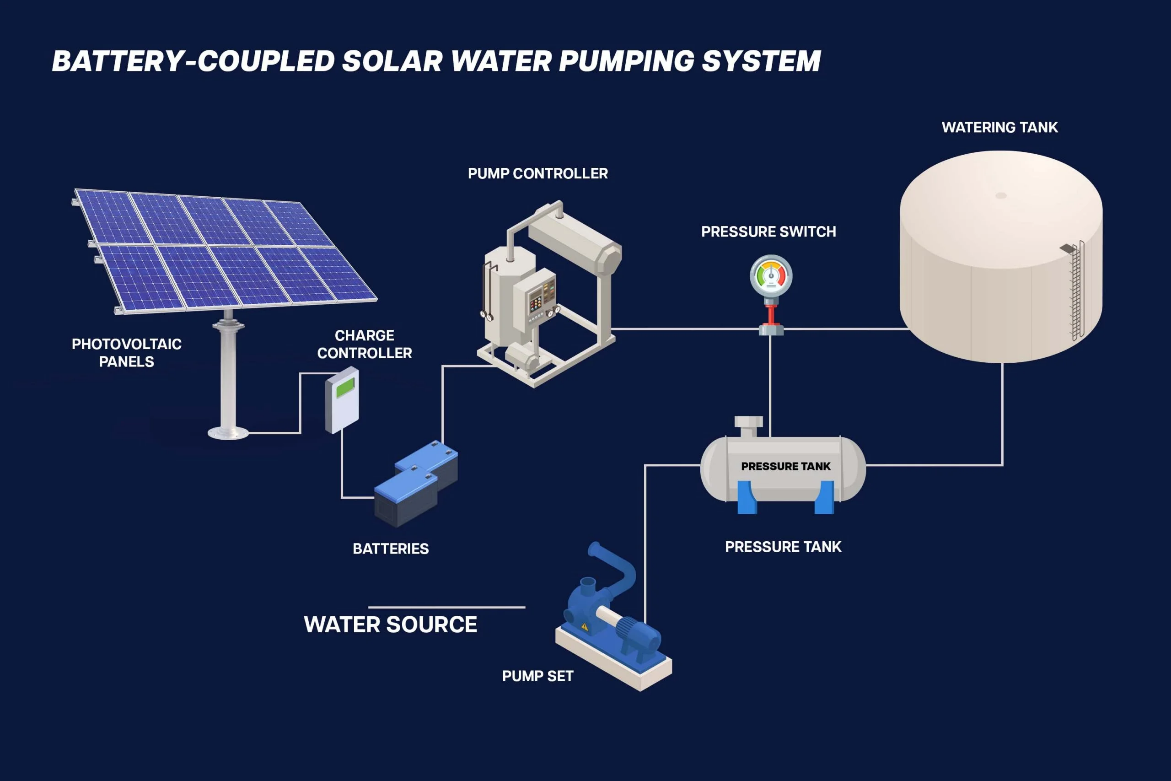
Solar water pump battery systems store excess solar energy, allowing the pump to run at night or when sunlight is insufficient. It is worth noting that solar water pump solutions do not require a continuous connection to the power grid, making them ideal for rural or off-grid settings. This is analogous to a battery for an electric pump, which may supply backup power in the event of a power loss or voltage dip, ensuring continued operation.
Solar water pump battery systems, on the other hand, provide greater control over energy consumption and enable water flow to be adjusted as needed. Solar energy can power pumps, and excess energy can be stored in batteries to reduce long-term energy costs (Goswami, 2023). Figure 2 displays a schematic diagram of a solar water pump.
Cost-Effective Solutions
Solar pumps offer an appealing, cost-effective alternative to electric pumps, despite their higher initial cost. Their enduring advantages include reduced energy costs and maintenance expenses, thereby enhancing their economic feasibility (Lazzarin, 2020). Solar pumps have a more streamlined design than electric pumps, resulting in fewer moving components. This improves their dependability and decreases the need for maintenance in the long run.
Nevertheless, electric pumps offer many benefits, particularly their lower initial cost and widespread availability. Although they may result in higher energy costs and maintenance charges over time than solar pumps, their straightforward design and well-established technology make them a dependable option for a wide range of uses. Solar pumps offer a distinct environmental sustainability benefit by reducing dependence on conventional energy sources and associated costs and ecological impacts (Kalogirou, 2024). As technology continues to advance, solar-powered solutions are expected to become more efficient and cost-effective. This would further increase their attractiveness as a financially prudent and ecologically conscious choice.
The economic efficiency of solar water pumps, quantified in Excel, initially estimates the cost of replacement parts, then adds an approximation of other operational costs. Standard pumps had power expenses about $500 higher per year than solar water pumps. The use of Excel tools resulted in a payback period of approximately 3.4 years (calculated by dividing $500 by $ 1,700) and an Internal Rate of Return (IRR) of 10%. Table 1 presents a concise overview of the analysis results, emphasizing the cost-effectiveness of investing in solar water pumps. Nevertheless, it is crucial to consider context-specific variables and prerequisites when deciding between solar and electric pumps for specific applications.
Many raw materials and components are needed to make solar water pumps. Silicon cells, tempered glass, aluminum frames, and junction boxes make up the solar panel, which costs $0.30 to $0.70 per watt. The pump head, impeller, motor, and controller cost $50 to $500 or more, and the controller costs $20 to $100.
Piping and fittings, mounting structures, and batteries (if incorporated), costing $100 to $1000 per kWh, are also necessary. Installation labor can cost $500 to $2000, and overhead and profit margins add 10% to 30% to production costs. Market conditions, supplier price, and project scale affect these costs, requiring extensive cost analysis and competitive sourcing to optimize production costs.
High-efficiency solar panels, efficient pump components, competitive sourcing of raw materials, and streamlined installation methods can reduce solar water pump production costs while maximizing performance and durability. A cost-effective UK solar water pump solution might include high-efficiency solar panels, optimized pump design for low energy consumption, and smart control systems to maximize performance and reduce operational costs. Analyzing market demand trends and aligning production volumes with scalable manufacturing methods helps reduce costs and meet the growing need for sustainable water management systems.
Table 1: Cost-Effectiveness of Solar Water Pump
Conclusion
An evaluation comparing electric and solar water pumps is necessary to determine the feasibility of investing in a solar water pump. Although solar water pumps promote sustainability and forward-thinking water resource management, electric pumps remain a dependable and widely used technology across diverse environments. Solar water pumps powered by renewable energy sources offer a sustainable solution that can become more efficient and cost-effective as technology advances. Investing in solar pumps not only benefits enterprises but also contributes to a more sustainable and eco-friendly future.
Additionally, electric pumps are reliable but need a power grid. Despite higher running costs, they are feasible in areas with stable power. Solar pumps, grid-independent, are great for remote areas, despite high initial costs.
Reference List
Goswami, D.Y. (2023) Principles of Solar Engineering. Boca Raton: London; New York: CRC Press, Taylor et Francis Group.
Indragandhi, V., Selvamathi, R. and Subramaniyaswamy, V. (2022) Electric motor drives and their applications with simulation practices. San Diego: Elsevier Science & Technology.
Kalogirou, S.A. (2024) Solar Energy Engineering: Processes and Systems. San Diego: Academic Press, an imprint of Elsevier.
Lazzarin, R. (2020) ‘Heat pumps and solar energy: A review with some insights in the future’, International Journal of Refrigeration, 116, pp. 146–160.
Morca Pumps. (2024) Batteries in solar pumps (5+ tips for efficient battery), Morca.
Volunteer Village. (No date) Solar Water Pumping.