
Introduction
In essence, social media is the use of mobile and web-based technology for communication. Internet forums, weblogs, podcasts, social blogs, wikis, videos, social bookmarking, and ratings include some of the various forms of social media. Today, most people extensively use Facebook, Twitter, WhatsApp, LinkedIn, and Skype to keep pace with the digital revolution. Auxier and Anderson (2021) asserted that the online sharing of information promotes an increase in social and communication skills, especially among young people. Subsequently, this offers people the platform to express their views and opinions on various subjects. Freedom of speech is a fundamental element of human rights. Social media should be regulated to protect fundamental freedom to seek, receive, and send information or ideas using any medium.
Social Media Use
Social media serves as a powerful communication tool that allows people to express themselves. Principally, this makes information and freedom of speech accessible to all (see Figure 1). While this perspective applies to positive social media use, it further allows perspectives from the negative side. People on any social media platform have the choice to become anonymous or make their profile public. Anonymity implies that an individual is unlikely to be held accountable for their online actions (Andalibi et al., 2018).
In most cases, anonymous online users often express critical opinions since they are free from any liability when their opinions go under public scrutiny. The converse is becoming an identified user such that one is accountable for all their online activity. In social platforms such as Facebook and Instagram, an individual’s identity can be labeled by the public based on their actions in real life and online.
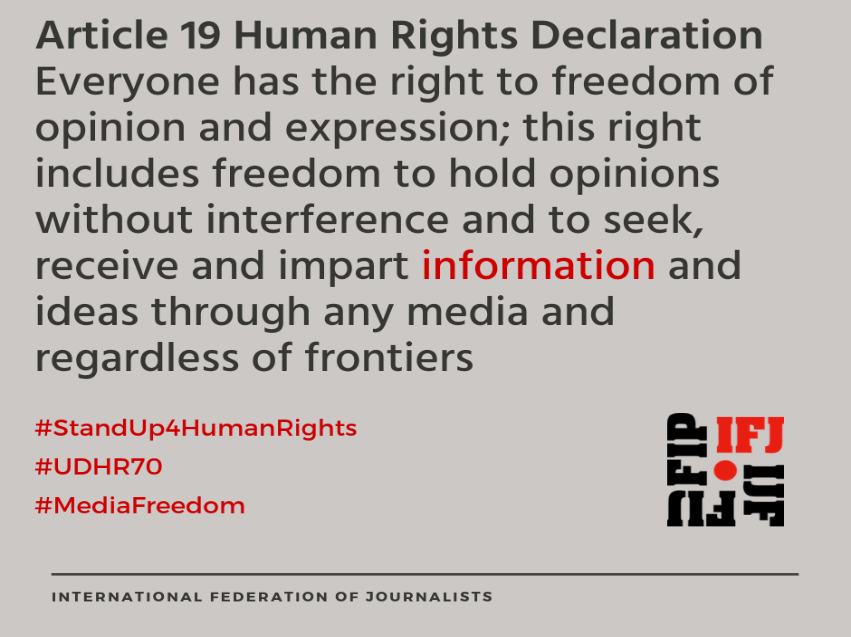
Note. Article 19 Human Rights Declaration (China: Websites and social media shutdown for ‘unlawful activities).
Anonymous and identified users share the freedom of expression when they share their views online. In context, free expression and speech are double-edged to the public. Positive views affect other users positively, while negative ones do the opposite (Alkiviadou, 2019).
Social media may allow expression of negative opinions and could be widely viewed and accepted as exercising the freedom of expression. Reading something online can change one’s view on a certain topic since opinions can bring to light information that may be hidden or unknown by other readers. People can change their perspectives when presented with substantive information, especially when they are backed by credible sources. However, the problem arises when the information is misleading or perpetuates unproductive conflict in the online community. For example, an individual might post content online and affirm that it is true when it might not be the case. People can do this due to free expression, which implies a mass of perspectives guided by misleading information online.
Free expression principally encourages people to share their opinions online free from unjust consequences. While the primary goal of free expression has been achieved, it creates an opportunity for some online users to share misinformation without any consequences (Slutskiy, 2020). Therefore, social media can be too much when it misuses the fundamentals of freedom of expression to exacerbate issues like racism, body dysmorphia, and online bullying that can result in self-harm and suicidal tendencies. For example, Chi et al. (2020) reported that at least 45 percent of students experience cyberbullying (see Figure 2). Key measures such as setting an age limit can protect younger users. Readjusting people’s relationships with social media will make the process more gradual and efficient in monitoring online activity.
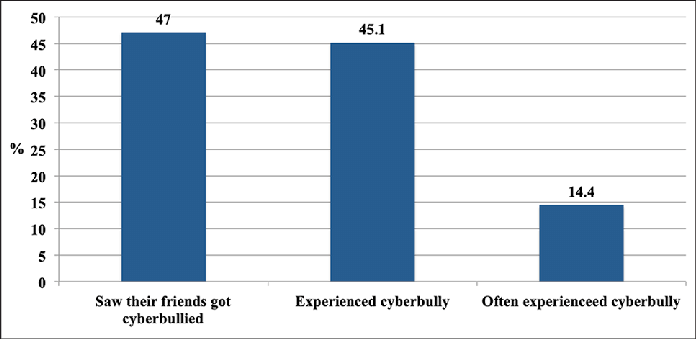
Note. The percentage of students in Hanoi experiencing cyberbullying (Chi et al., 2020).
Regulating Punishment
Social media platforms often lack safeguards to control the content that oversteps boundaries. The upsurge of the latest trends on Instagram, Facebook, and other platforms is particularly concerning. Khairy et al. (2021) highlighted that post may constitute cyber-bullying and privacy invasions that fail to justify free expression and illustrate unlawful online conduct. Thus, a major problem of social media is that most people often fail to consider the ramifications of their posts.
For example, posting a video of a reckless driver speeding depicts unlawful and dangerous conduct, but it is still uploaded making the photographer equally guilty of negligence. Social media raises complex issues of principle that should be confronted by service providers, the police, and the courts. Misuse of social platforms can include sexual harassment, a breach of contract, and serious misconduct. Fair punishment for such misuse can include imprisonment, imposing fines, banning some users from using and accessing social media platforms. Nonetheless, the legal consequences should be regulated based on the nature of the offense.
Conclusion
Social media has significantly transformed communication and how businesses and various institutions relate in a global space. Additionally, the rapid growth of innovative solutions and globalization necessitates more advanced means of communication. Nonetheless, a greater capacity exists for people to organize and participate in social action as more digital systems emerge, a hallmark of contemporary society. Expression through online platforms mode becomes more effective and efficient when facilitated by social media. The conceptualization of freedom of expression is increasingly associated with access and sharing of information.
However, Instagram, Facebook, Twitter, and other social media platforms have been criticized for their incompatibility with free expression principles. Regulating social media use, including placing age limits and setting fair punishment for overstepping punishments can potentially increase social media responsibility among users.
References
Alkiviadou, N. (2019). Hate speech on social media networks: Towards a regulatory framework? Information & Communications Technology Law, 28(1), 19-35.
Andalibi, N., Haimson, O. L., Choudhury, M. D., & Forte, A. (2018). Social support, reciprocity, and anonymity in responses to sexual abuse disclosures on social media. ACM Transactions on Computer-Human Interaction (TOCHI), 25(5), 1-35. Web.
Auxier, B., & Anderson, M. (2021). Social media use in 2021. Pew Research Center, 1, 1-4. Web.
Chi, P. T. L., Lan, V. T. H., Ngan, N. H., & Linh, N. T. (2020). Online time, experience of cyber bullying and practices to cope with it among high school students in Hanoi. Health Psychology Open, 7(1). Web.
China: Websites and social media shutdown for ‘unlawful activities’ / IFJ. (2018). International Federation of Journalists – IFJ. Web.
Khairy, M., Mahmoud, T. M., Abd-El-Hafeez, T., & Mahfouz, A. (2021). User awareness of privacy, reporting system and cyberbullying on Facebook. In International Conference on Advanced Machine Learning Technologies and Applications (pp. 613-625). Springer, Cham. Web.
Slutskiy, P. (2020). Freedom of expression, social media censorship, and property rights. Blanquerna School of Communication and International Relations, (48), 53-67. Web.