
Introduction
The United Kingdom attracts millions of travelers annually, which not only puts it on the list of essential places to visit for international tourists but also helps create jobs and strengthen its economy. As seen in Figure 1, before the pandemic, the UK was the sixth most popular tourist destination worldwide (Adamiak and Szyda, 2021; Knight, 2022). This position enabled the nation to attain a significant amount of funds through this source of income. In 2019 alone, foreign visitors spent £28.4 billion, making it the fifth-largest export industry in the country (Knight, 2022). This figure shows the importance of such services to the UK economy as a whole.
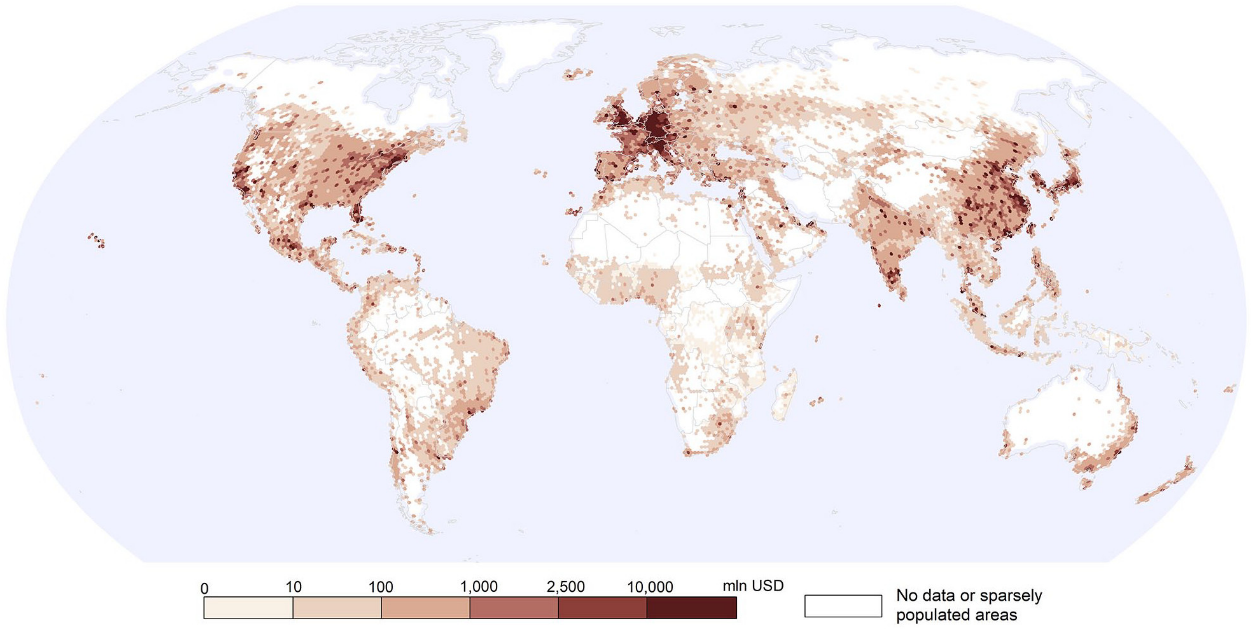
The current state of the country’s tourism industry shows that many households continue to rely on it as their primary source of income. Hospitality service providers enjoy the booming status of this industry in the UK. In 2019, room occupancy averaged 78%, ensuring that each facility’s capacity was utilized at all times (The Value of Tourism in England, 2020). This factor also ensures that the labor market experiences a constant demand for workers. No region in the UK had fewer than 100,000 employees in this sector, with average salaries ranging from £22,000 to £44,000 (Knight, 2022; Tourism salaries in the United Kingdom, 2023). Changes related to COVID-19 reduced these statistics, which will be discussed later in the paper.
The income from this sector provides a significant support structure for society. Almost 5% of all employees in the UK were working in tourism and hospitality companies before the pandemic hit (Keep and Ward, 2020). This notion reveals the full extent of the threat posed by the sharp decline in international travelers. Both domestic and foreign visitors generate $220 billion in annual revenue for the UK tourism industry, making it the sixth-most-profitable country for firms operating in this sector (Adamiak and Szyda, 2021). Adjacent markets also depend heavily on a steady influx of travelers. While this data is less apparent, the overall changes in gross domestic product (GDP) stemming from domestic and international visitors indicate a larger impact on the country’s economy (Figini and Patuelli, 2021). As can be seen, the prominence of tourism implies the interconnectedness of countless factors affecting the economy and society as a whole, which governments are obliged to take into consideration.
Factors for Attracting Tourists to the UK
Porter’s Diamond Model sheds light on the crucial factors for the UK’s tourism industry. The structure and rivalry of this sector rely on macroeconomic factors, political instabilities, sustainability efforts, openness to international trade and travel, and other factors (González-Rodríguez, Díaz-Fernández, and Pulido-Pavón, 2023). Moreover, the region that ensures accessibility increases tourism revenue. Consistency in the availability of travel opportunities for Europeans enhances countries’ attractiveness by enabling people to easily cross borders among major tourist destinations (González-Torres, Rodríguez-Sánchez, and Pelechano-Barahona, 2021). However, this notion also implies that the industry’s competitiveness puts immense pressure on the UK due to possible perceptions of similarities between countries.
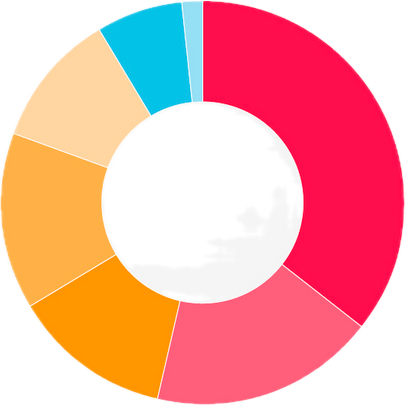
In this case, the strategic part of the model relies on differentiation from other locations through unique offers, such as historical sites and natural attractions. As seen in Figure 2, these types of places are most beneficial to the UK’s economy, generating over £300 million in annual revenue (The UK’s most lucrative landmarks, 2022). Fitch et al. (2022, p. 1) state that this form of capital “equates to 0.9% of the UK GDP” and even more for the Scotland and Wales regions. These sources also supply numerous local businesses with high-value customers, making these areas more lucrative for both small and big companies (UKInbound, 2019). This is a self-perpetuating boost to a degree since more tourists select such well-developed locations. British museums hold a large number of valuable artifacts from across the globe (Radun, Sossai, and Coelho, 2022). The country’s prominent position enabled it to accumulate and store countless items that boost its economy through tourism.
Political support for the UK’s tourism has a significant positive influence on the sector. The government’s Tourism Recovery Plan recognizes this source of income as of great importance (Department for Culture, Media & Sport, 2023). Demand conditions are further improved by the UK’s accessibility as a tourist destination. The visa required to enter the country can be obtained within three months of the application and costs £115 for a six-month standard visitor visa (no date). This makes the UK both an easy and affordable choice, which requires the country to rely on maintaining high visitor numbers.
However, the same support also causes international conflicts between the UK and other nations. Mastrandrea (2023, p. 177) states that national treasures from countries across the globe were brought into the UK for this purpose, boosted by the massive export of “objects of cultural interest”.
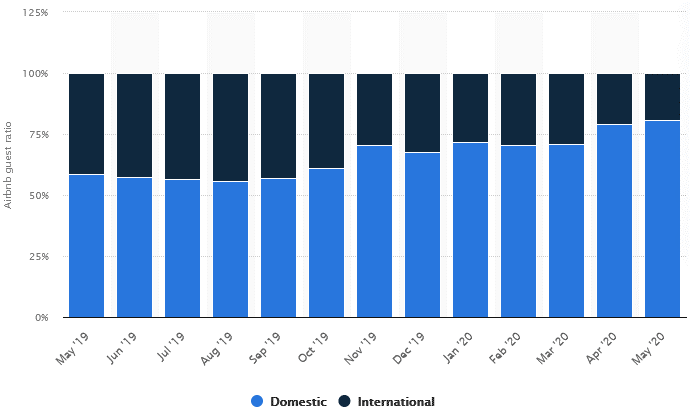
Technology, through which the knowledge of the UK’s attractions spreads, also enhances the number of annual visitors to the country. Services that promote this destination online are using their position to boost the economy through digital campaigns that capture public attention worldwide (UKInbound, 2019). Thus, creativity, communication, and cooperation between businesses and authorities are paramount for the UK’s future as a prime location for travelers. As seen in Figure 3, the responses of digital platforms to crises can help protect the nation’s economy from a crash.
The final part of Porter’s Diamond Model consists of industries that support the one that competes on the international stage. A highly developed infrastructure, including a wide range of hospitality service providers, is pivotal to achieving a comparative advantage in the tourism market. Local events, prominent restaurants, holiday festivals, and even discounts on transportation tickets add value to businesses in this sector in the UK (Lu et al., 2021). This notion gives the UK a comparative advantage over other European countries that are similarly popular among travelers, such as Italy and Spain.
Hotels and Airbnb hosts create a competitive landscape that enables customers with varying financial capabilities to find suitable places to stay during their visits (The Accommodation Club, 2023). While shifts stemming from government decisions and customer trends weigh on these businesses, their ability to adapt and incorporate these factors into daily operations demonstrates their resilience (Ferrie, 2023). Whether this section will remain highly influential on tourists’ intentions to visit the UK remains to be seen amid current post-COVID turbulence.
The Impact of the Global Pandemic
The COVID-19 outbreak led to a severe decline across numerous industries, especially those that relied on international travel. In the UK, tourist expenditures fell by 78% in 2020 (Newson, 2021). This would have been a disastrous indicator, especially considering the lack of preparedness for such a crisis. In fact, the projections made by the United Nations World Tourism Organization (UNWTO) in early 2020 were more optimistic than the actual state of affairs within the next two years (Gössling, Scott, and Hall, 2020). The adjustments to the new reality required significant sacrifices, which the UK authorities had to offset.
2020 became the most challenging year for tourism and hospitality businesses. Forecasts regarding the following period failed miserably, causing political, social, and financial turmoil (Botha and Saayman, 2022). Big corporations were set to survive through their accumulated wealth, although layoffs were inevitable.
Simultaneously, smaller firms within the industry, such as family-owned ones, became particularly threatened by the prospect of international lockdowns (Fernández, Martínez, and Martín, 2022). This notion led to a further decline in financial equality within the country. Many households lost their only source of income in a single moment and required immediate external help (Blundell et al., 2022; Williams, 2020). Without any form of support, the unemployment rate would have led to a collapse of many other markets, even those unrelated to tourism.
To understand how the UK recovered from this crisis, the government’s actions must be analyzed. A specific model was conceived by officials, based on cooperation between companies and authorities, which helped both prevent the virus from spreading and the industry from falling apart entirely (Robina-Ramírez et al., 2021). Furthermore, hospitality companies themselves effectively covered social aspects. Mass confusion over the future of tourism in the UK was resolved through the immediate restructuring of government business support strategies (Price, Wilkinson, and Coles, 2022).
Additionally, firms were supported fiscally based on the size of their workforce. The existing loans were extended by 2 years, and new loans were provided as relief, while smaller businesses could claim subsidies of up to £5,000 to prevent massive layoffs (Hickman, Morris, and McDonald, 2022). Thus, a combination of these actions gave the UK’s economy the resilience it required during a challenging period.
The result became apparent within the first months after most prohibitions were lifted. Postponed trips, new business survival strategies, additional response measures, and greater overall industry preparedness enabled many firms to bounce back within 12-18 months (Freund, 2020; Poncio, 2023; Stacey, 2020). It also became apparent that new sustainability paradigms within this sector and adjacent ones had to be developed to prevent future crises akin to the latest pandemic.
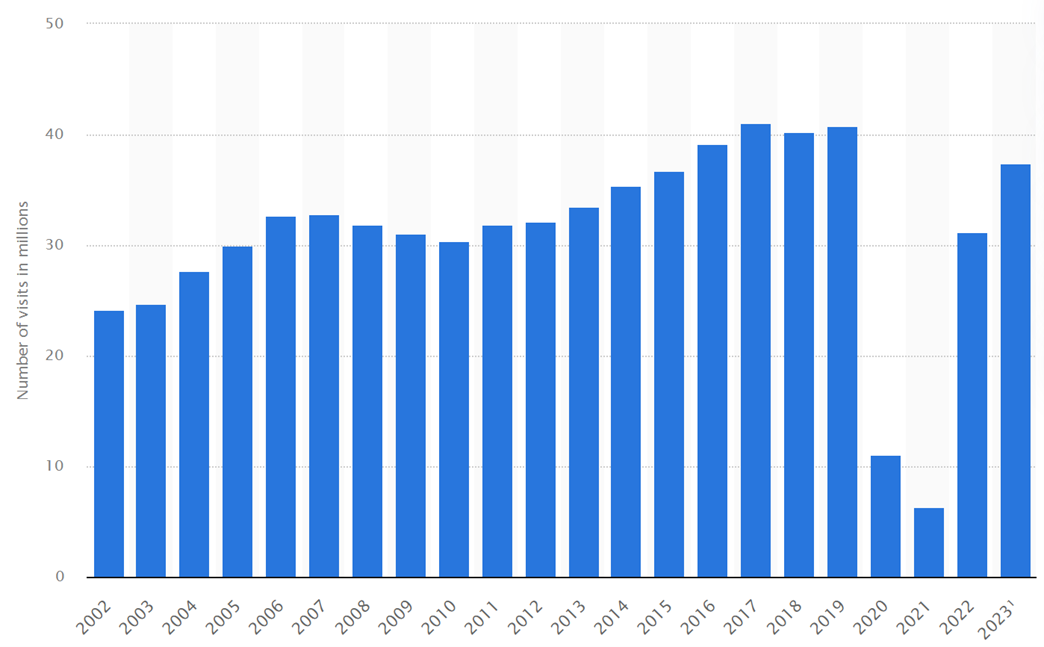
The government’s response to the situation alleviated the burden on tourism businesses, yet the situation remained worrisome. The number of tourists increased by 141% in 2022, yet it remained below the previous norm (York, 2023). As seen in Figure 4, this trend continues, and soon, the UK will return to its standard 40 million annual visitors. A more lasting impact on the country’s economy is the drop in the exchange rate, as demand for it remains lower than before (York, 2023).
The influence of this notion on the determination of exchange rates may significantly influence involved currencies in the long term. It is also worth noting that employment in hospitality firms dropped by 21% despite the outlined efforts (Roberts, 2021). Thus, the government’s strategy gradually fixes the problem, yet there are still steps to be taken to negate it entirely.
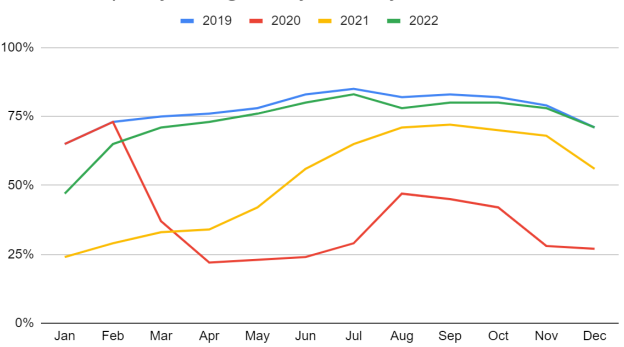
The fiscal recovery process is evident in the statistics for businesses operating in the analyzed industry. As seen in Figure 5, hospitality organizations are almost back to pre-pandemic levels of room occupancy. New pricing strategies, managerial practices, and healthcare-related norms prevent the further decline of hotels, restaurants, and other firms (Spanaki, Papatheodorou, and Pappas, 2021).
The competitive environment remains unstable, though this instability stems primarily from innovative strategies companies are currently testing. However, inflation still plagues the sector, leading to a £2 billion decline in revenue from the same number of customers between 2019 and 2023 (Stalker, 2023). It remains a crucial aspect for the government to strengthen the surviving organizations.
The overall mood toward this plan shows that people are optimistic, primarily because of the conservation of resources and their timely redistribution. As a result of this progress, forecasts of the country’s situation are improving rapidly as the market outpaces experts’ expectations (Edginton, 2023). Thus, the government’s timely response ensured that entrepreneurs received a promising start after the lockdown was lifted.
The UK’s Balance of Payments for Tourism and Hospitality
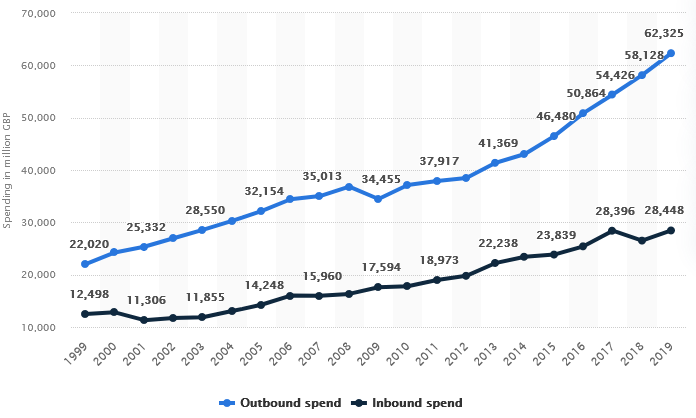
There are both positive and negative aspects of the UK’s decline in tourism when viewed through the lens of fiscal flows. The balance of payments is the record of incoming and outgoing transactions on the international scene, revealing how countries’ residents compare to foreign expenditures (Krugman, Obstfeld, and Melitz, 2018). Figure 6 shows that UK citizens outspend visitors by a significant amount. The exchange rate influences the impact of this parameter on the country’s GDP, which may become a problem if the pound is not stabilized after the decline during COVID-10 (Adeleye et al., 2022). Despite this prospect, it remains essential for the UK to continue expanding its appeal to international tourists and to enable more foreign capital to enter the country.
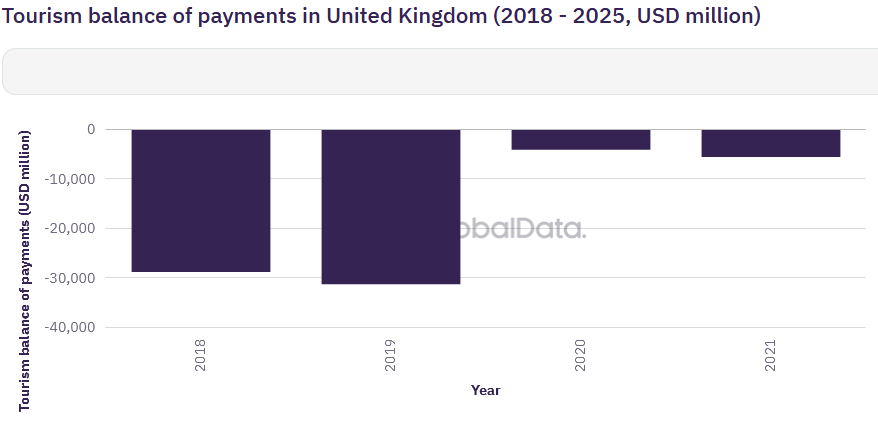
There was a massive reduction in both payments to foreigners from domestic sources within the country and by citizens traveling abroad, as seen in Figure 7. The fiscal forecasts for this sector became obsolete in an instant, leading to a withdrawal of investment (Jones, 2022). While these statistics may be seen as an improvement, the GDP is significantly affected by this factor. This trend reflects the accumulation of international reserve assets, which is a net positive for the UK in the long term.
It remains vital to explore how the market recovered after the COVID-19 pandemic. The financial perspective provides a detailed account of the recent crisis, revealing both positive and negative changes in UK society, politics, and the economy. Recent updates to forecasts in this sector are more favorable than before, driven by rising travel volumes (Edginton, 2023). However, the lasting impact of COVID-19 keeps the revenue below pre-pandemic numbers. Experts warn the government that the viability of hospitality companies is threatened by the constant increases in interest rates over the last 13 months (Roach, 2023). This factor may lead to a further decline in the country’s balance of payments, leaving outgoing transactions as the sole significant factor.
Conclusion
In summary, the government’s response to the pandemic helped the country’s tourism industry survive the challenging period with relative ease, as businesses were protected against bankruptcy through financial support. It was essential for the nation to do so, as 5% of its residents are employed in this sector. The UK is a major tourist destination, attracting tens of millions of foreign visitors each year due to its prestige, highly developed infrastructure, and historical landmarks. Additionally, many citizens choose domestic travel, as the country hosts a significant number of attractions that make it among the most popular destinations in the world. Technology, political events, seasonality, and cultural barriers influence this industry on a massive scale.
The COVID-19 outbreak strained the entire structure, yet it did not break it, mainly due to the preservation of smaller businesses. The Tourism Recovery Plan devised by the UK authorities enabled this sector to preserve its workforce and assets and renew its operations as soon as possible. Throughout the pandemic, funds were dedicated to support businesses that would have otherwise been forced to lay off a significant portion of their employees. Furthermore, this factor gave both workers and customers confidence in the market’s stability and prevented a crisis of uncertainty.
Reference List
Adamiak, C. and Szyda, B. (2021) ‘Combining conventional statistics and big data to map global tourism destinations before COVID-19‘, Journal of Travel Research, 61(8).
Adeleye, B.N. et al. (2022) ‘Moderation analysis of exchange rate, tourism and economic growth in Asia‘, PLoS ONE. Edited by J.E. Trinidad Segovia, 17(12).
Blundell, R. et al. (2022) ‘Inequality and the COVID-19 crisis in the United Kingdom‘, Annual Review of Economics, 14(1).
Botha, I. and Saayman, A. (2022) ‘Forecasting tourism demand cycles: A Markov switching approach’, International Journal of Tourism Research, 24(6).
Department for Culture, Media & Sport (2023) Tourism recovery plan: Update on delivery.
Edginton, T. (2023) VisitBritain upgrades 2023 inbound tourism forecast on the back of stronger recovery, driven by USA, Visit Britain.
Fernández, J.A., Martínez, J.M. and Martín, JM (2022) ‘An analysis of the competitiveness of the tourism industry in a context of economic recovery following the COVID-19 pandemic‘, Technological Forecasting and Social Change, 174.
Ferrie, A. (2023) UK hospitality industry faces mounting challenges, Pinsent Masons.
Figini, P. and Patuelli, R. (2021) ‘Estimating the Economic Impact of Tourism in the European Union: Review and Computation’, Journal of Travel Research, 61(6).
Fitch, A. et al. (2022) ‘Under the influence of nature: The contribution of natural capital to tourism spend’, PLoS ONE, 17(6).
Freund, C. (2020) We can’t travel, but we can take measures to preserve jobs in the tourism industry, WorldBank.
GlobalData PLC (2022) Tourism balance of payments in United Kingdom (2018 – 2025, USD million), GlobalData.
González-Rodríguez, M.R., Díaz-Fernández, M.C. and Pulido-Pavón, N. (2023) ‘Tourist destination competitiveness: An international approach through the travel and tourism competitiveness index’, Tourism Management Perspectives, 47.
González-Torres, T., Rodríguez-Sánchez, J.-L. and Pelechano-Barahona, E. (2021) ‘Managing relationships in the tourism supply chain to overcome epidemic outbreaks: The case of COVID-19 and the hospitality industry in Spain’, International Journal of Hospitality Management, 92.
Gössling, S., Scott, D. and Hall, C.M. (2020) ‘Pandemics, tourism and global change: A rapid assessment of COVID-19′, Journal of Sustainable Tourism, 29(1), pp. 1–20.
Hickman, J., Morris, P. and McDonald, R. (2022) COVID-19: Government support for individuals and businesses, BDO.
Jones, P. (2022) ‘A review of the UK’s Tourism Recovery Plans post COVID-19‘, Athens Journal of Tourism, 9(1), pp. 9–18.
Keep, M. and Ward, M. (2020) Support for the tourism industry after the Covid-19 lockdown. House of Commons Library.
Knight, J. (2022) Promoting Britain abroad . Department for Digital, Culture, Media and Sport Select Committee Inquiry.
Krugman, P.R., Obstfeld, M. and Melitz, MJ (2018) International economics: Theory & policy. 11th edn. Harlow, England: Pearson.
Lu, H. et al. (2021) Factors influencing domestic tourism in the UK and abroad and the role of publicly funded domestic tourism marketing. RAND Corporation.
Mastrandrea, V. (2023) ‘The creation of national treasures in the United Kingdom and the national treasure space‘, International Journal of Cultural Property, 30(2), pp. 177–197.
Newson, N. (2021) Promoting tourism in the UK, House of Lords Library.
Poncio, M. (2023) 80+ UK tourism statistics [2023 update], TravelPerk.
Price, S., Wilkinson, T. and Coles, T. (2022) ‘Crisis? How small tourism businesses talk about COVID-19 and business change in the UK‘, Current Issues in Tourism, 25(7), pp. 1088–1105.
Radun, D.F., Sossai, F.C. and Coelho, I. (2022) ‘UNESCO: The emergence of the ideals of peace and world heritage‘, Contexto Internacional, 44(3).
Roach, T. (2023) The challenges of rising costs in tourism and hospitality, PKF Francis Clark.
Roberts, D. (2021) Coronavirus and the impact on the UK travel and tourism industry. Office for National Statistics.
Robina-Ramírez, R. et al. (2021) ‘Tourism governance during the COVID-19 pandemic crisis: A proposal for a sustainable model to restore the tourism industry’, Environment, Development, and Sustainability, 24, pp. 6391–6412.
Spanaki, M.Z., Papatheodorou, A. and Pappas, N. (2021) ‘Tourism in the post COVID-19 era: Evidence from the hotel sector in the North East of England’, Worldwide Hospitality and Tourism Themes, 13(3).
Stacey, J. (2020) Rebuilding tourism for the future: COVID-19 policy responses and recovery, OECD.
Stalker, F. (2023) Tourism is back: UK holidays are back from break, Industry Insider.
Statista Research Department (2023a) Airbnb: UK domestic to international guests’ ratio 2020, Statista.
Statista Research Department (2023b) Inbound visits to the UK 2005-2018, Statista.
Statista Research Department (2023c) Tourism balance of payments UK 2019, Statista.
The Accommodation Club (2023) The impact of Airbnb on the UK travel and hospitality industry, The Accommodation Club.
The UK’s most lucrative landmarks (2022) Paymentsense.
The value of tourism in England (2020) Visit Britain.
Tourism salaries in the United Kingdom (2023) GlassDoor.
UKInbound (2019) VisitBritain partners with Airbnb to promote local tourism experiences, UKInbound.
Visit the UK as a standard visitor (no date) GOV.UK.
Williams, C.C. (2020) ‘Impacts of the coronavirus pandemic on Europe’s tourism industry: Addressing tourism enterprises and workers in the undeclared economy’, International Journal of Tourism Research, 23(1).
York, I. (2023) From lockdown to landmarks: The UK tourism recovery, Lichfields.